
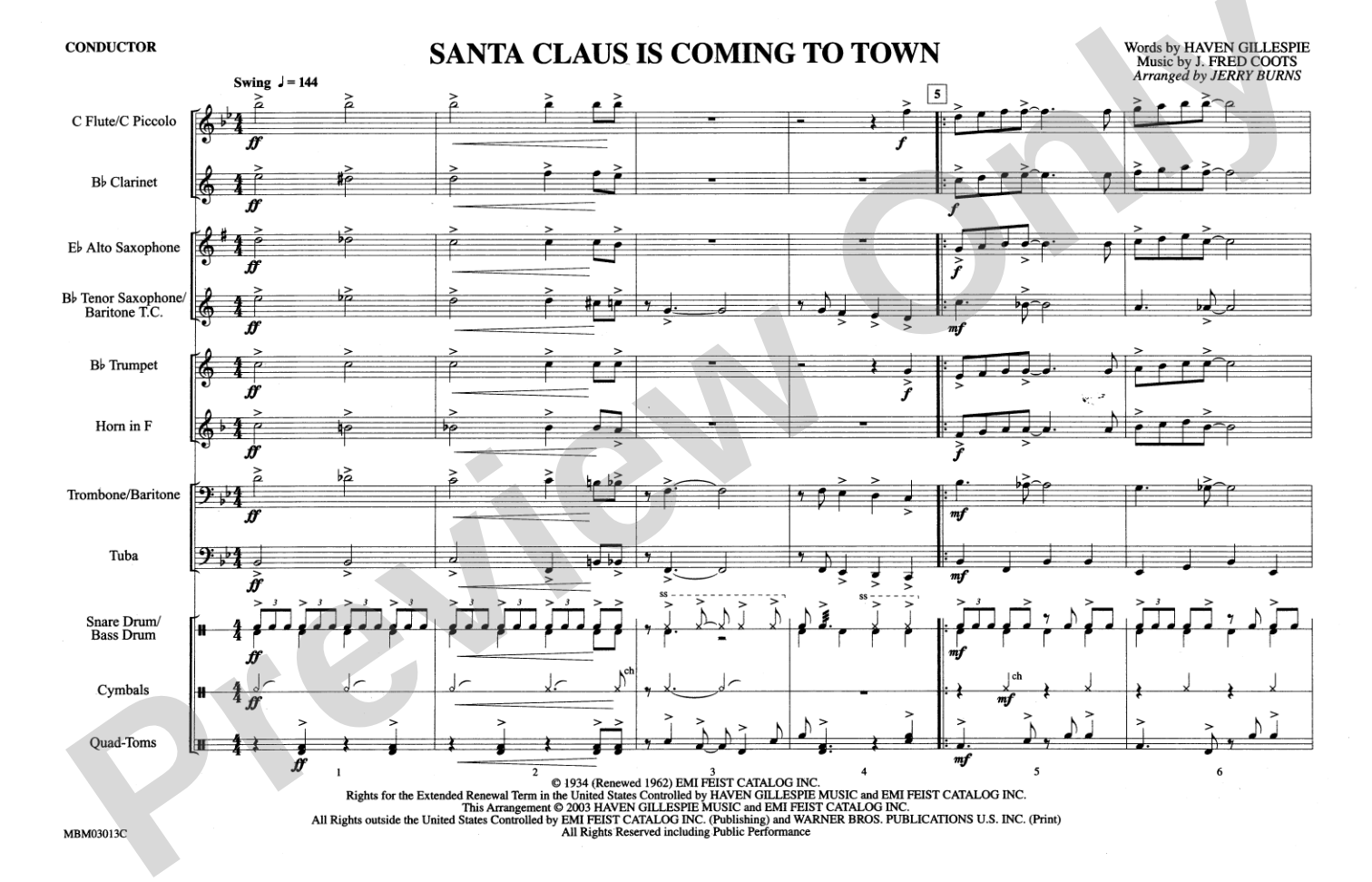
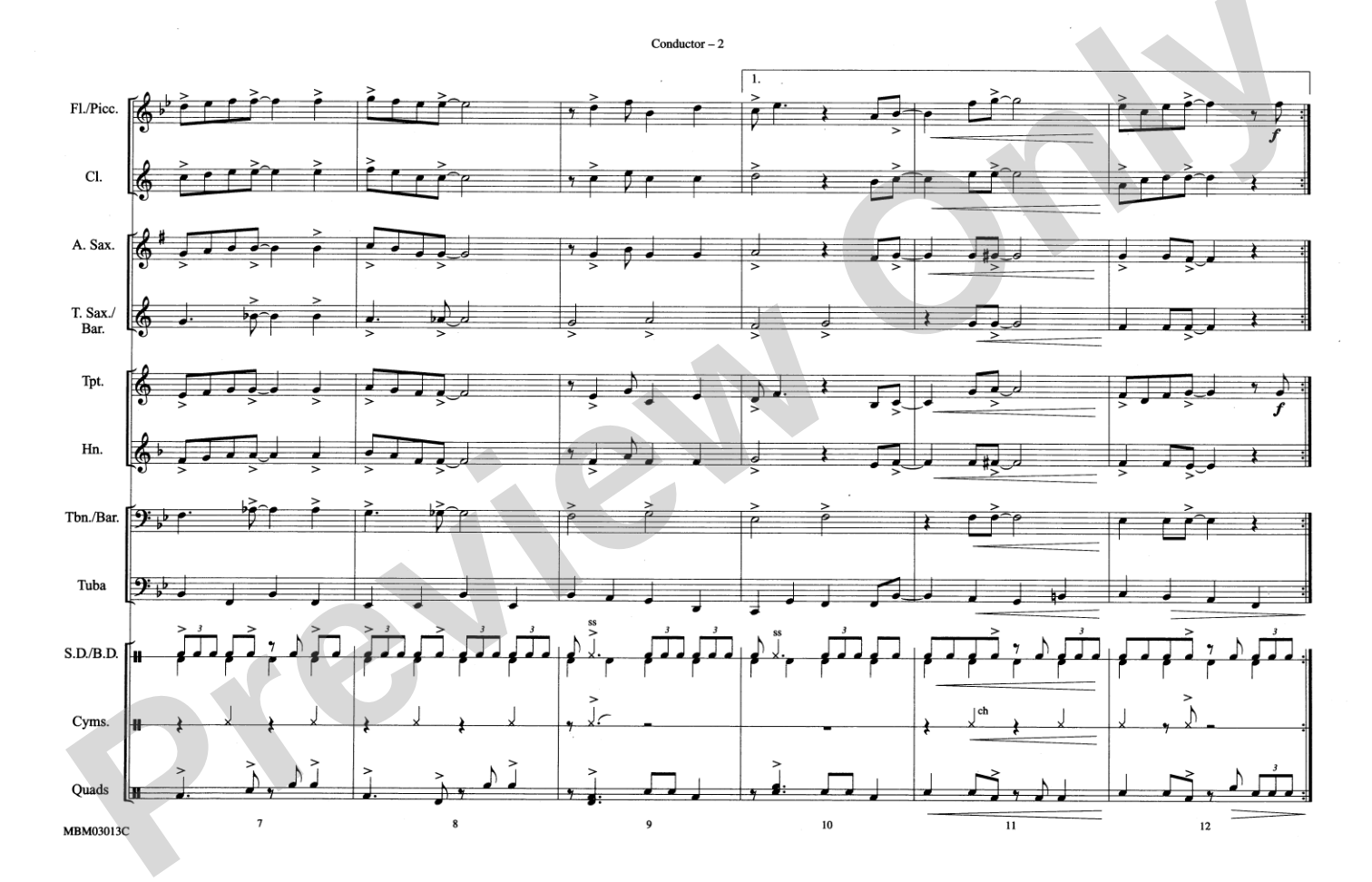
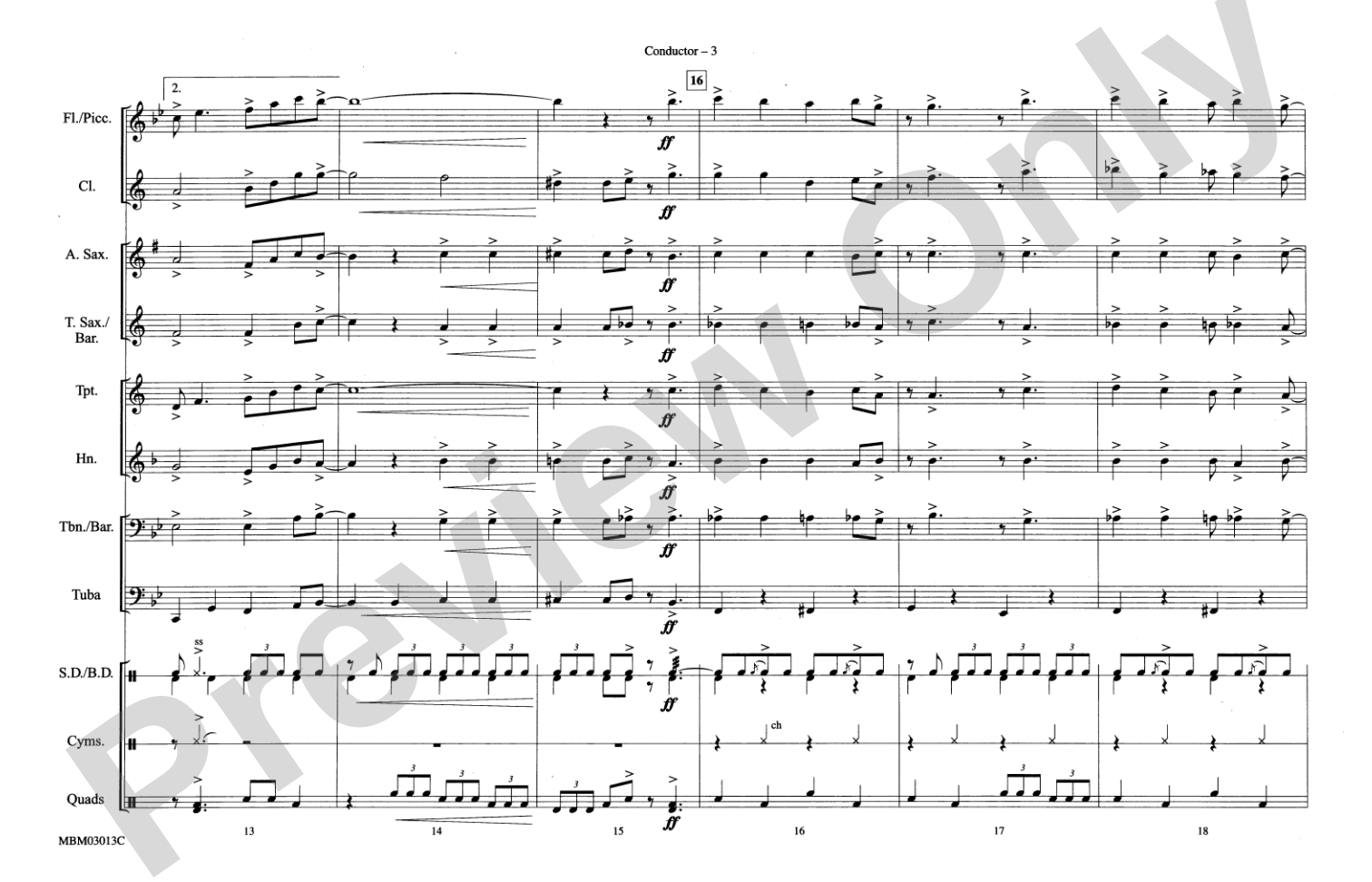
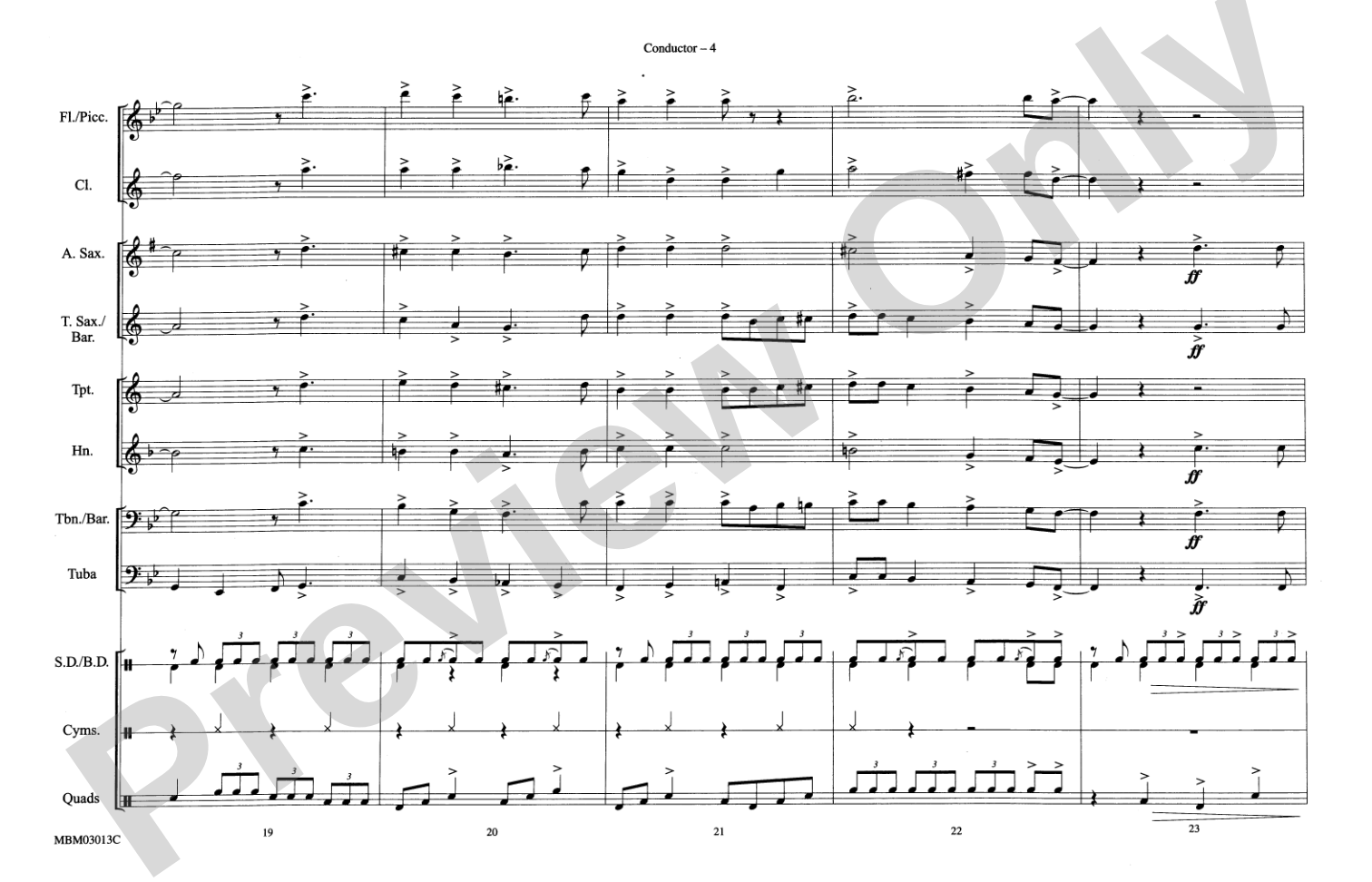
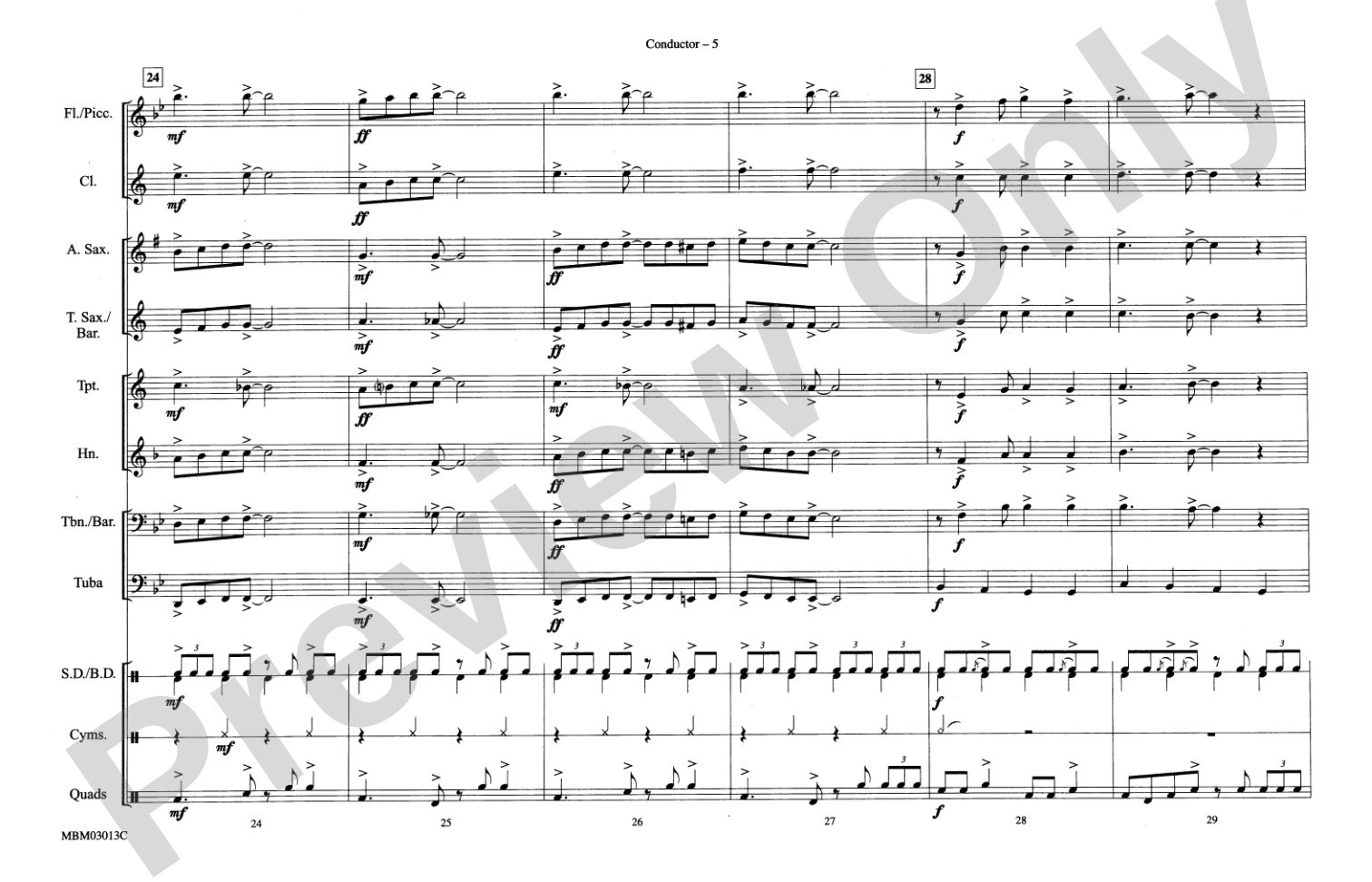
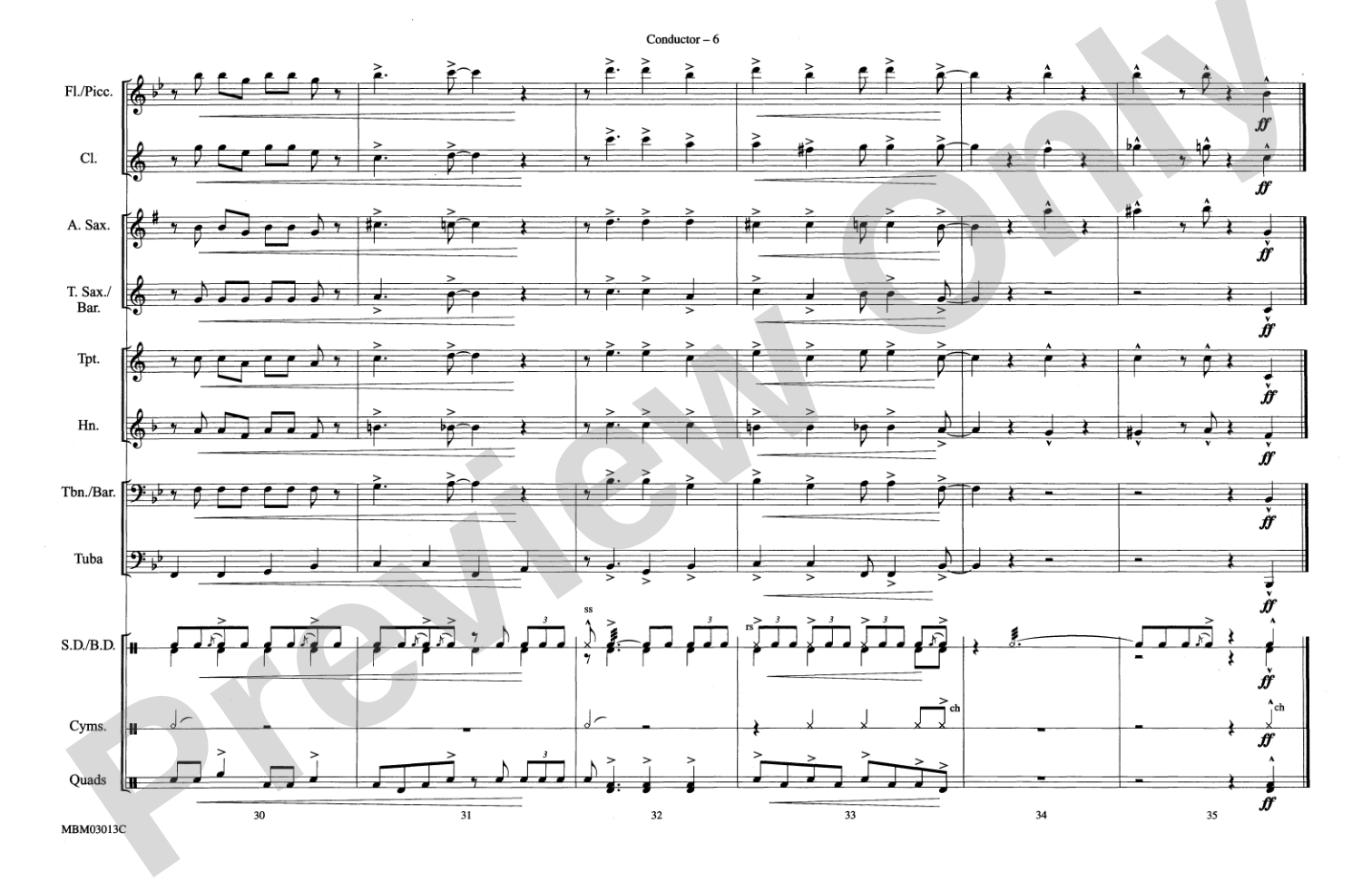

Santa Claus Is Coming to Town: Marching Band Conductor Score & Parts
Words by Haven Gillespie, music by J. Fred Coots / arr. Jerry Burns
Grade: 1.5 (Very Easy)
Item: 00-PK-0008074

$53.00
One moment…
Description
This holiday favorite would be great at a Christmas parade or as a pep band chart. Once again, Jerry Burns proves that easy to play and great sounding CAN go hand-in-hand! (1:15)


Don't just read it, hear it, play along with it, and watch your students grow with it. In MakeMusic Cloud, Santa Claus Is Coming to Town: Marching Band Conductor Score & Parts comes alive with professional accompaniment, adjustable tempo, and built-in practice tools that turn solo practice into real progress.
Open in the Player
Jump straight in and assign it today.
Start Your Free Trial
Open this title and explore the full library in minutes.
Sample Audio
1
Audio File
--:--
0:00
0:00
Sample Video
Additional Details
Series:
Very Easy Pops for Marching Band
Publisher:
Alfred Music
Page Count:
78
SKU:
00-PK-0008074
More about this title
About the Composer: J. Fred Coots
J. Fred Coots (1897-1985) composed one of the most recognizable holiday melodies in American popular music. Though trained in classical composition, Coots found his greatest success writing songs for film and theater during Hollywood's Golden Age, where his gift for memorable, singable melodies made him a sought-after collaborator.
Beyond "Santa Claus Is Coming to Town," Coots contributed to countless standards that remain in the popular repertoire. His work demonstrates how a skilled melodist can create music that appeals equally to performers and audiences, a quality that makes his compositions enduring choices for educational ensembles.
Why we love this
Jerry Burns's arrangement strips away nothing essential while keeping the chart playable for young musicians. The melody rings out immediately, the harmony supports without drowning the line, and there's genuine forward motion built into the piece. Bands this young rarely sound this confident, which is exactly the point of a well-crafted Grade 1.5 arrangement.
What to expect
Bright and purposeful, with the straightforward cheer of a holiday march. The melody is instantly recognizable, but the arrangement gives it a fresh energy suited to movement and outdoor performance rather than concert hall nostalgia.
Who it's for
Marching bands in their first or second year, or any band looking for reliable parade or pep band material that doesn't sound simplified. Directors working with younger students will appreciate how Burns makes the arrangement transparent enough for beginning players while maintaining the tune's character.
How to get the most out of it
- Establish a steady, march-like pulse from the first measure. The tune's strength lies in its rhythmic clarity, so lock the tempo before rehearsal and maintain it throughout.
- Balance the melody against the harmony parts so the tune dominates without effort. Young musicians often play evenly across voices; ask the section carrying the lead to project slightly more.
- Keep articulation consistent across the band, especially in the rhythmic figures that appear throughout. Unified tonguing or striking technique makes the piece sound polished instantly.
- Treat the 1:15 length as an opportunity to build energy toward the ending rather than coast through the familiar tune. A slight tempo lift in the final section gives a real sendoff.
How to use it
This works in rotation throughout the winter season: in a December concert, at a holiday parade, or as a reliable pep band opener. Its short length and high recognition make it ideal for situations where you need the band to sound polished and confident with minimal rehearsal time invested.
Skills your students will build
- Executing clear march articulation across full ensemble
- Balancing melody and harmony in a four-part texture
- Maintaining steady tempo under outdoor performance conditions
- Reading and executing simple rhythmic patterns in unison and parts
- Blending brass and woodwind colors effectively