
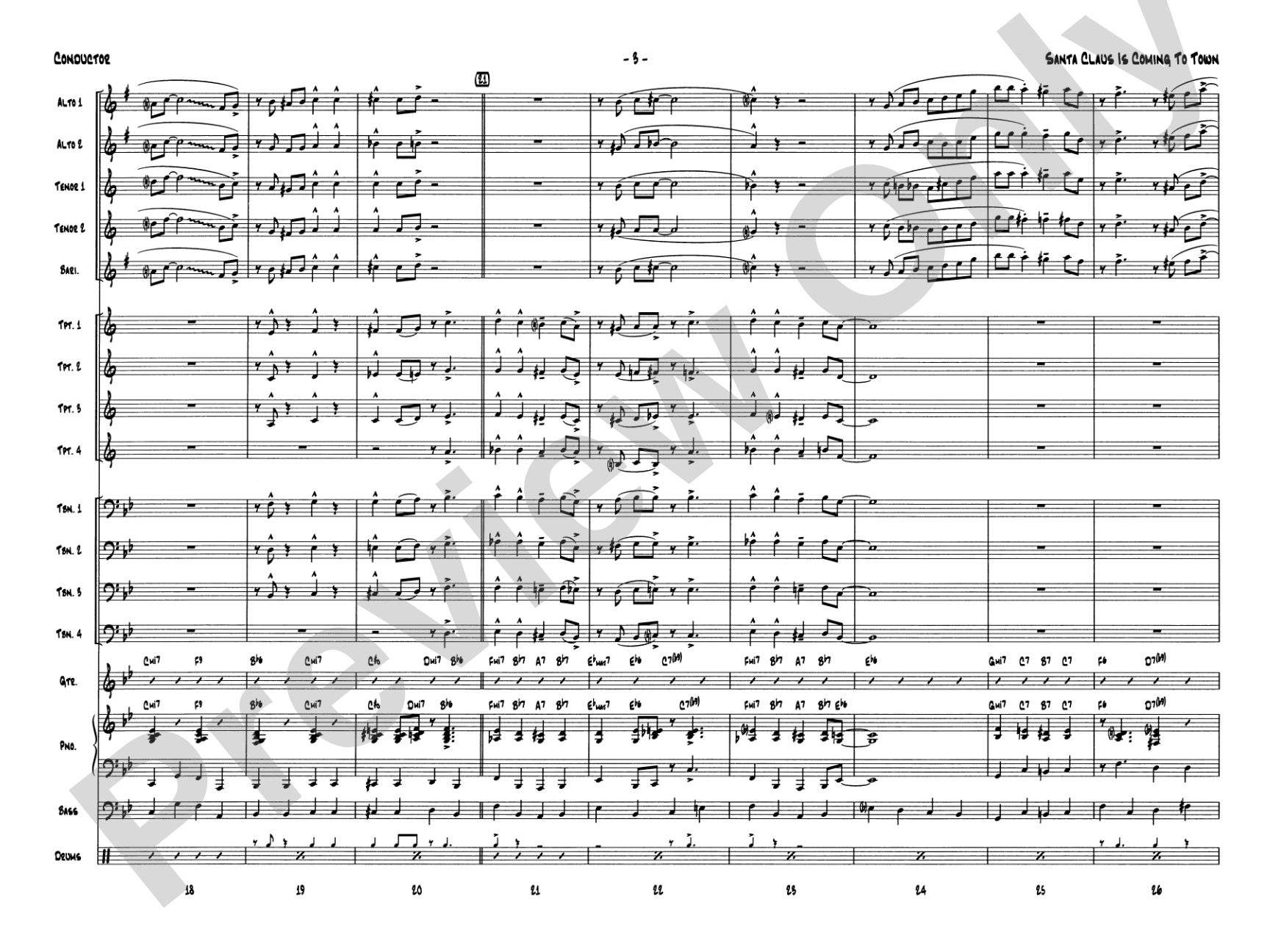
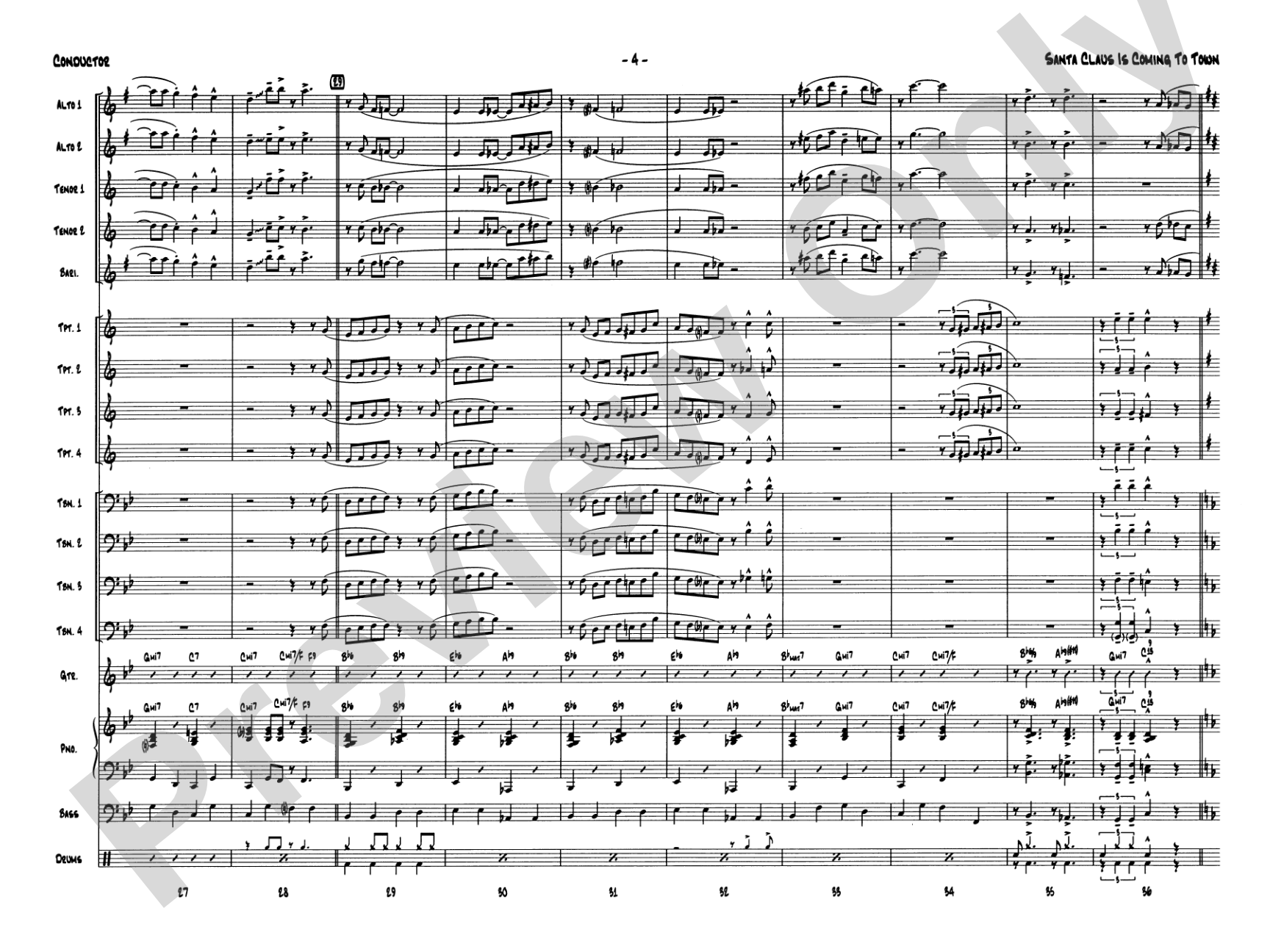
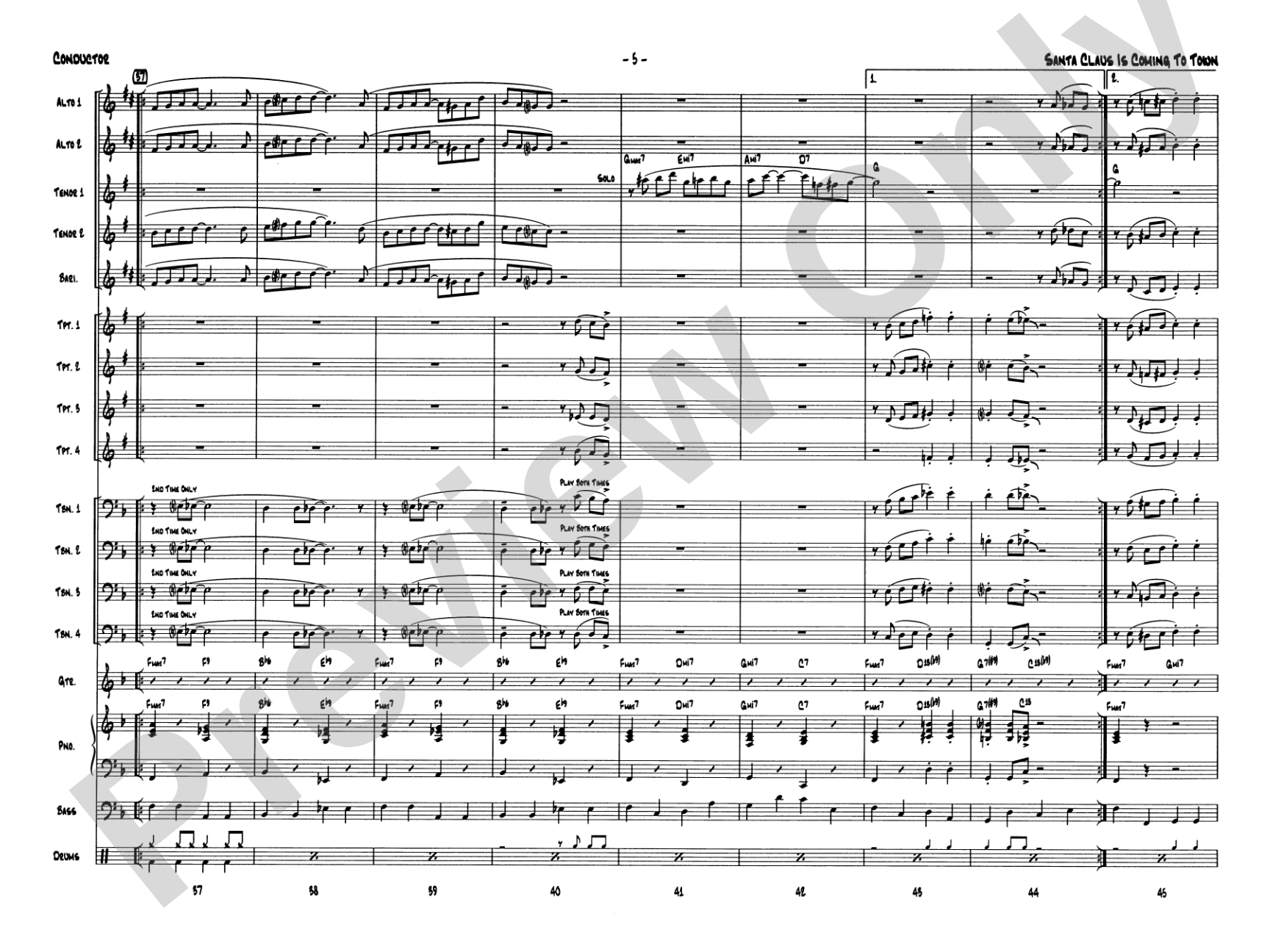
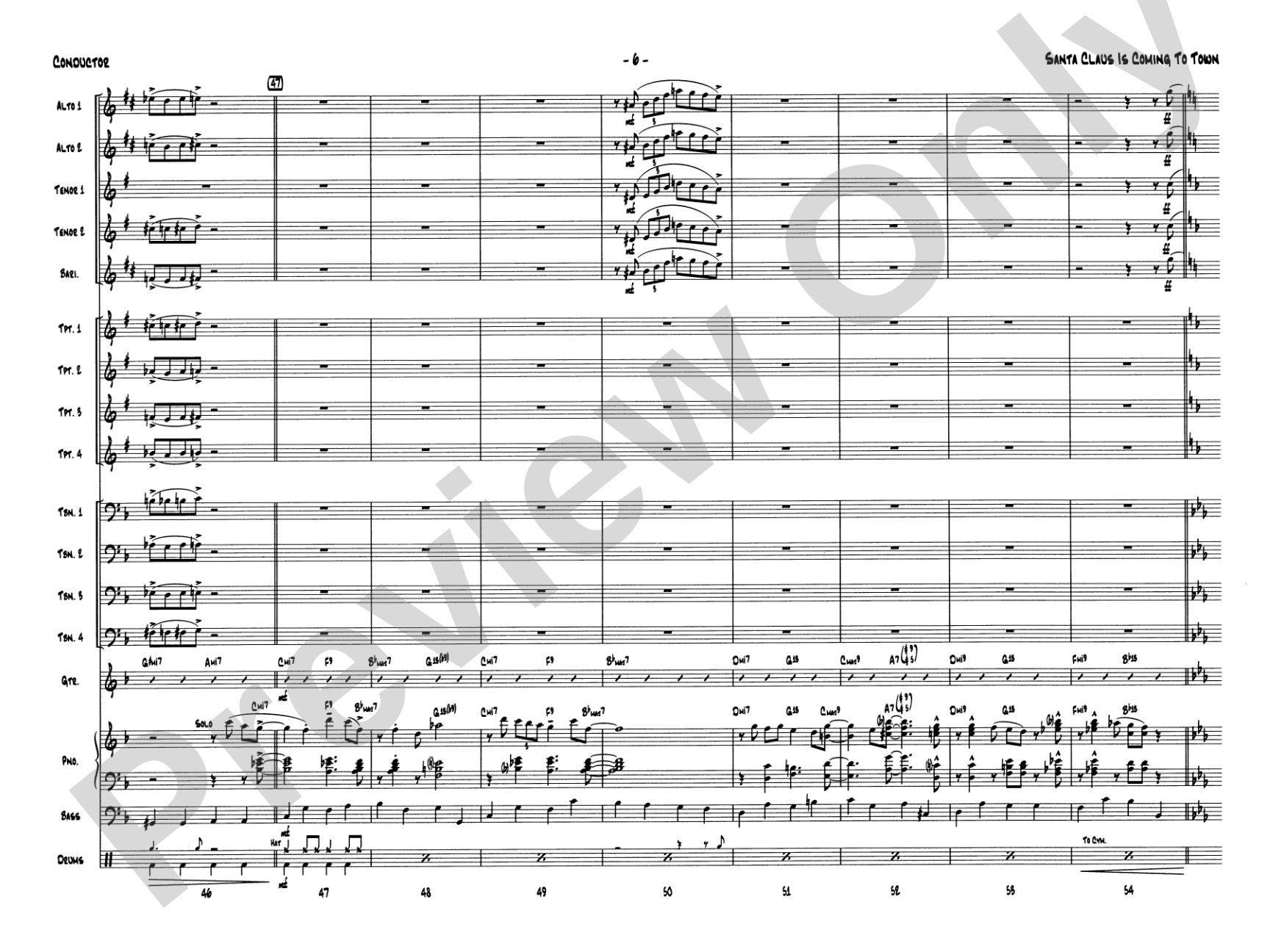



Santa Claus Is Coming to Town: Jazz Ensemble Conductor Score & Parts
Music by J. Fred Coots / arr. Mike Lewis
Grade: 2 (Medium Easy)
Item: 00-PK-0004429

$48.00
One moment…
Description
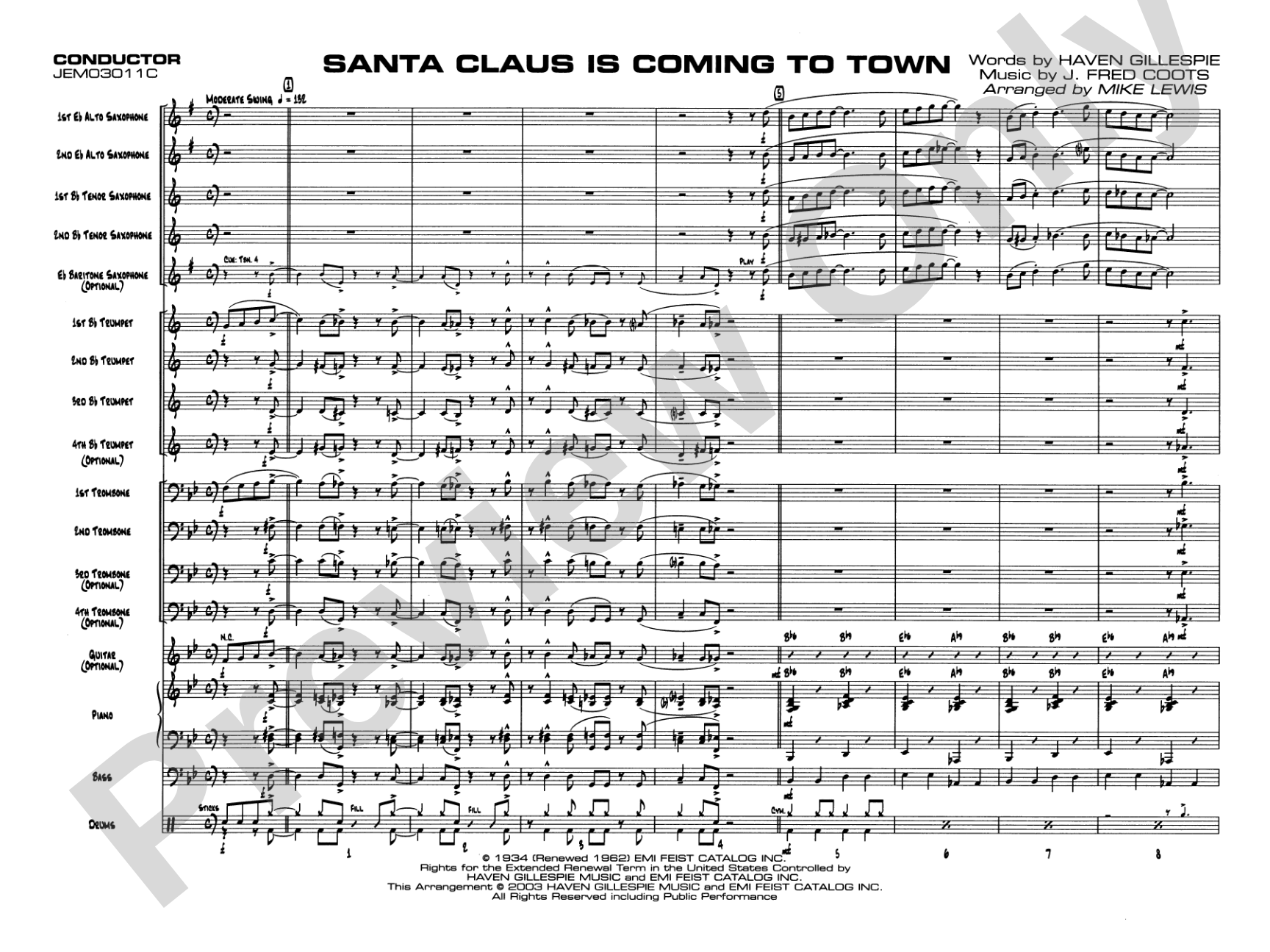
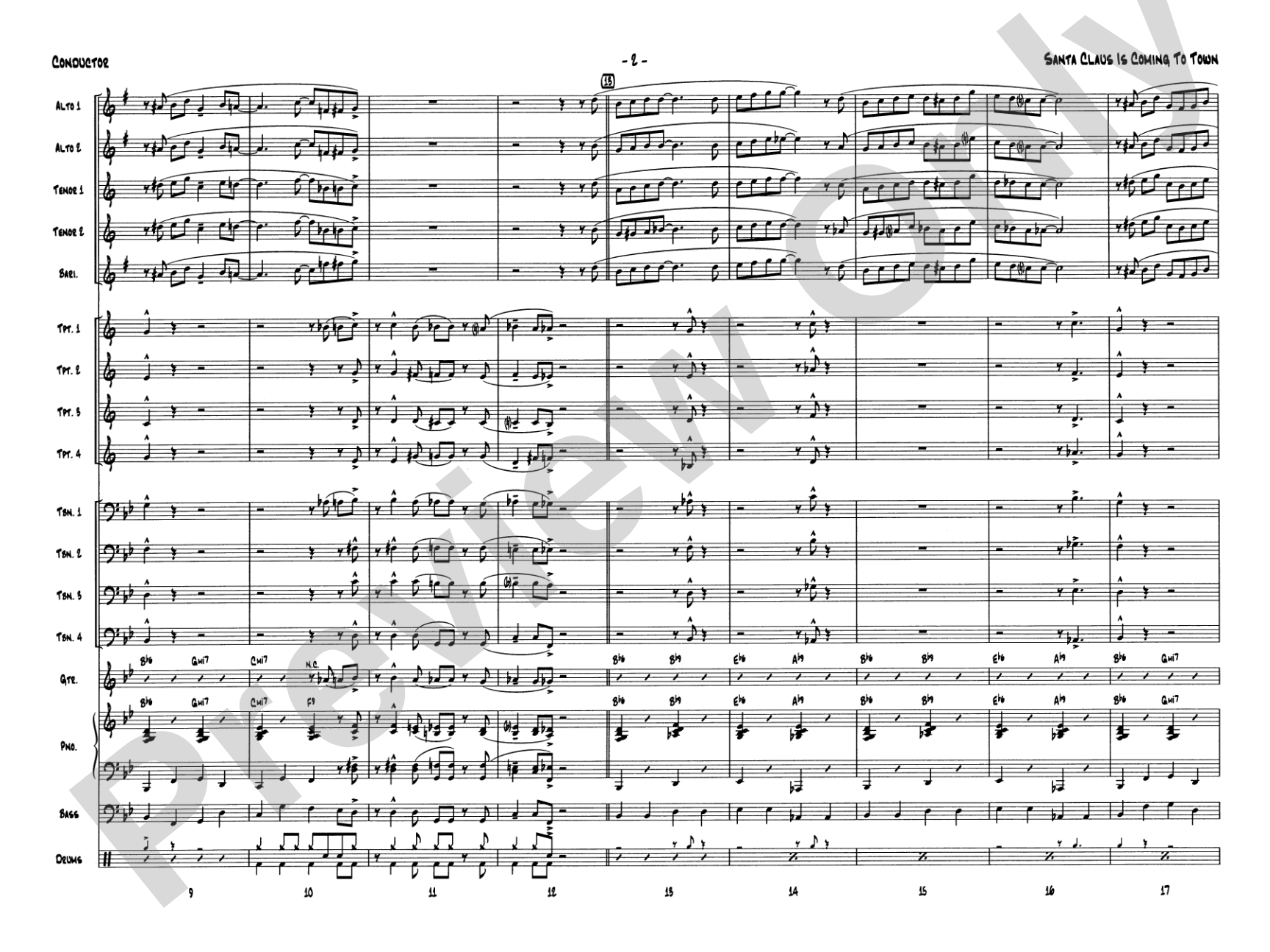
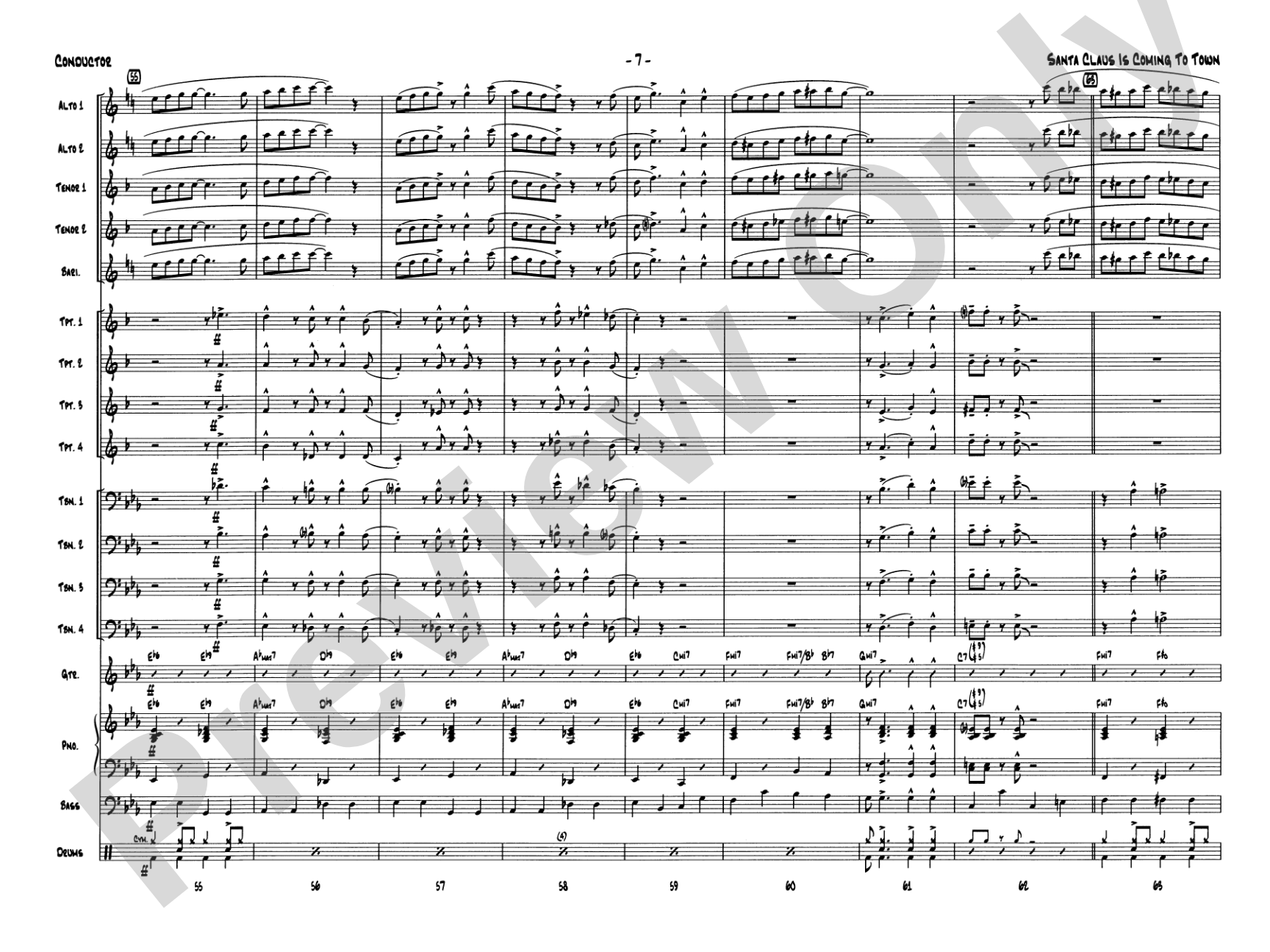
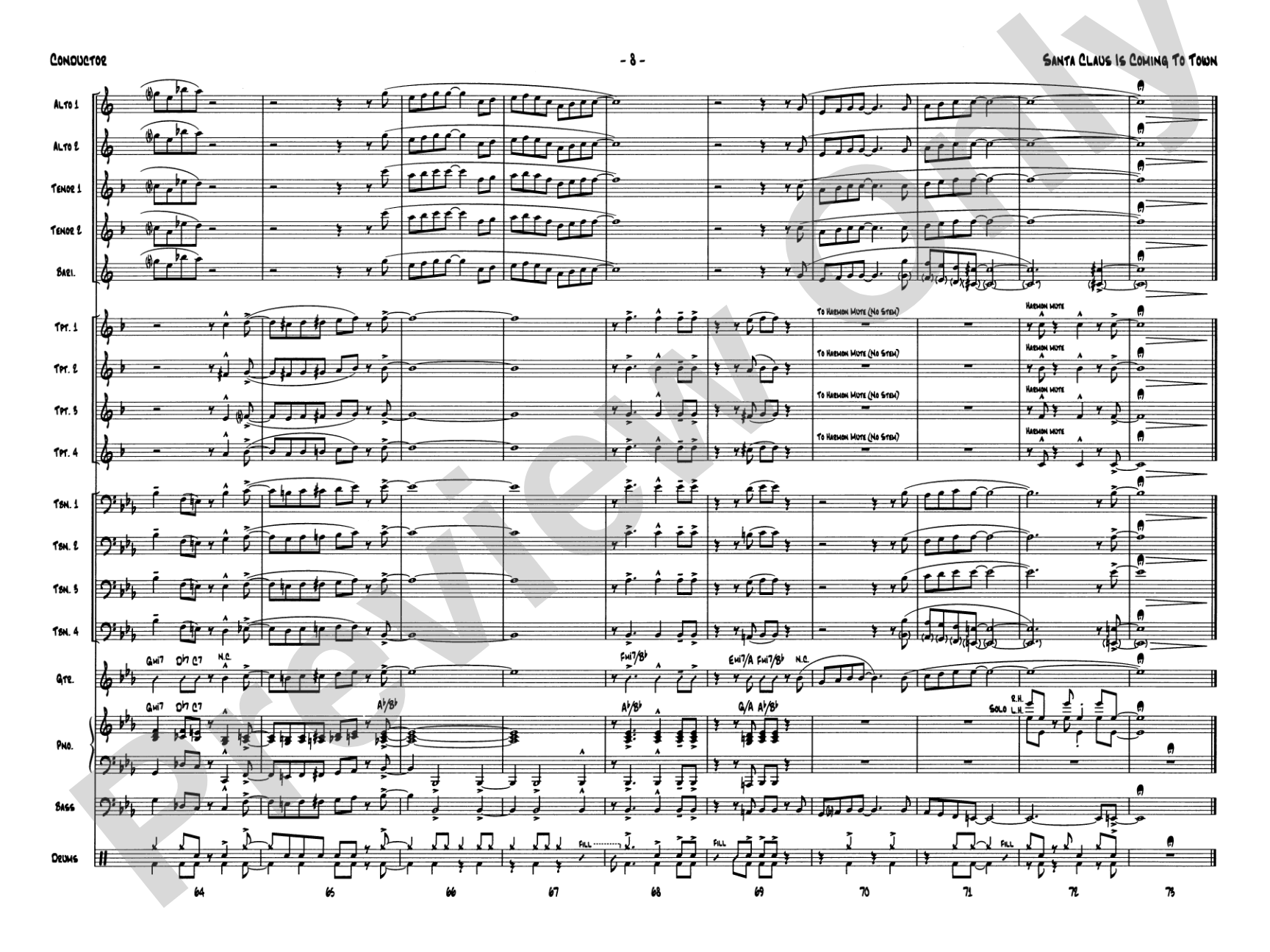
Santa is swingin' into town. Mike Lewis has taken this holiday chestnut and placed it squarely at the ability level of the young jazz player. Logical swing figures, written out or ad-libbed solos for tenor sax and piano, along with lots of ensemble make this chart essential to every library. Toss in a few modulations and you have the perfect holiday swing chart-accessible, recognizable, and easy to rehearse.


Don't just read it, hear it, play along with it, and watch your students grow with it. In MakeMusic Cloud, Santa Claus Is Coming to Town: Jazz Ensemble Conductor Score & Parts comes alive with professional accompaniment, adjustable tempo, and built-in practice tools that turn solo practice into real progress.
Open in the Player
Jump straight in and assign it today.
Start Your Free Trial
Open this title and explore the full library in minutes.
Sample Audio
1
Audio File
--:--
0:00
0:00
Sample Video
Additional Details
Series:
Young Jazz Ensemble
Publisher:
Alfred Music
Page Count:
90
SKU:
00-PK-0004429
More about this title
About the Composer: J. Fred Coots
J. Fred Coots (1897-1964) was a prolific American composer and songwriter who wrote for stage, screen, and popular music. He composed "Santa Claus Is Coming to Town" in 1934 with lyricist Haven Gillespie, creating one of the most enduring holiday standards in American music. The song's straightforward melody and infectious charm have made it a fixture in holiday programming across every musical genre and skill level.
Coots' gift for writing memorable, singable melodies served him well across musical theater and commercial songwriting. His work remains a staple of holiday repertoire precisely because the underlying musical material is so strong that it adapts brilliantly to new arrangements and contexts.
Why we love this
Mike Lewis has stripped away the obvious and kept what makes this tune work: a clear, swingable melody that your students will recognize immediately, plus genuine jazz writing that doesn't talk down to young players. The balance between composed ensemble passages and solo space means you're building real jazz ensemble skills without drowning in complicated changes or dense voicings.
What to expect
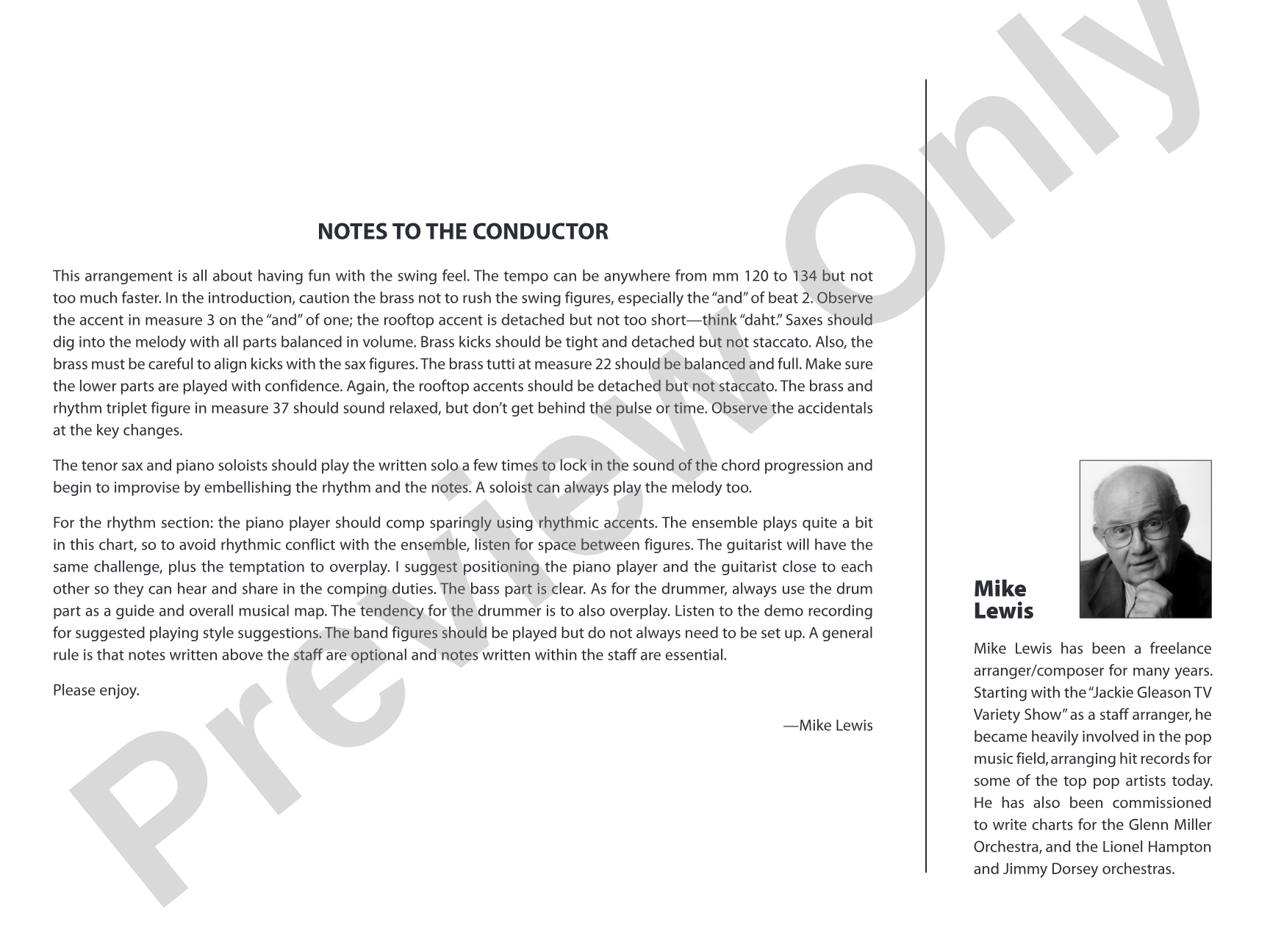
This is jazz holiday music that swings hard without asking for virtuosity. The melody sits perfectly under the fingers, the rhythm section grooves, and the soloists get room to breathe. You'll hear the classic tune you know, but dressed in contemporary swing voicings that feel fresh and playful.
Who it's for
Jazz ensemble directors working with middle school or early high school groups who want students to experience real jazz arranging without getting lost in harmonic complexity. Soloists (particularly tenor sax and piano) get meaningful space to develop their improvisational voices while the rest of the ensemble has plenty to play.
How to get the most out of it
- Establish the swing feel in the opening rehearsal by having the rhythm section lock in first; once the pocket is solid, the soloists will sit comfortably into it.
- Mark the written solos clearly during sectional rehearsals so soloists understand where they begin, where they end, and what the ensemble is doing around them.
- Use the modulations as rehearsal landmarks, not obstacles. Take them section by section to make sure the key change lands cleanly without rushing into it.
- Balance the ensemble textures carefully; this chart lives and dies on crisp hits and clear voicing separation rather than volume.
How to use it
Slot this into a holiday concert where you need a piece that lands between a straight pop arrangement and serious jazz repertoire. It works equally well as a closer (the energy lands naturally) or as a mid-set break (familiar enough that audiences smile). The 90-page full score and parts set means you have everything you need immediately.
Skills your students will build
- Reading and performing swing rhythms and articulation
- Solo improvisation on changes (tenor sax and piano)
- Ensemble balance and blend in jazz voicings
- Following harmonic modulations
- Responding to written and implied cues in an ensemble setting