
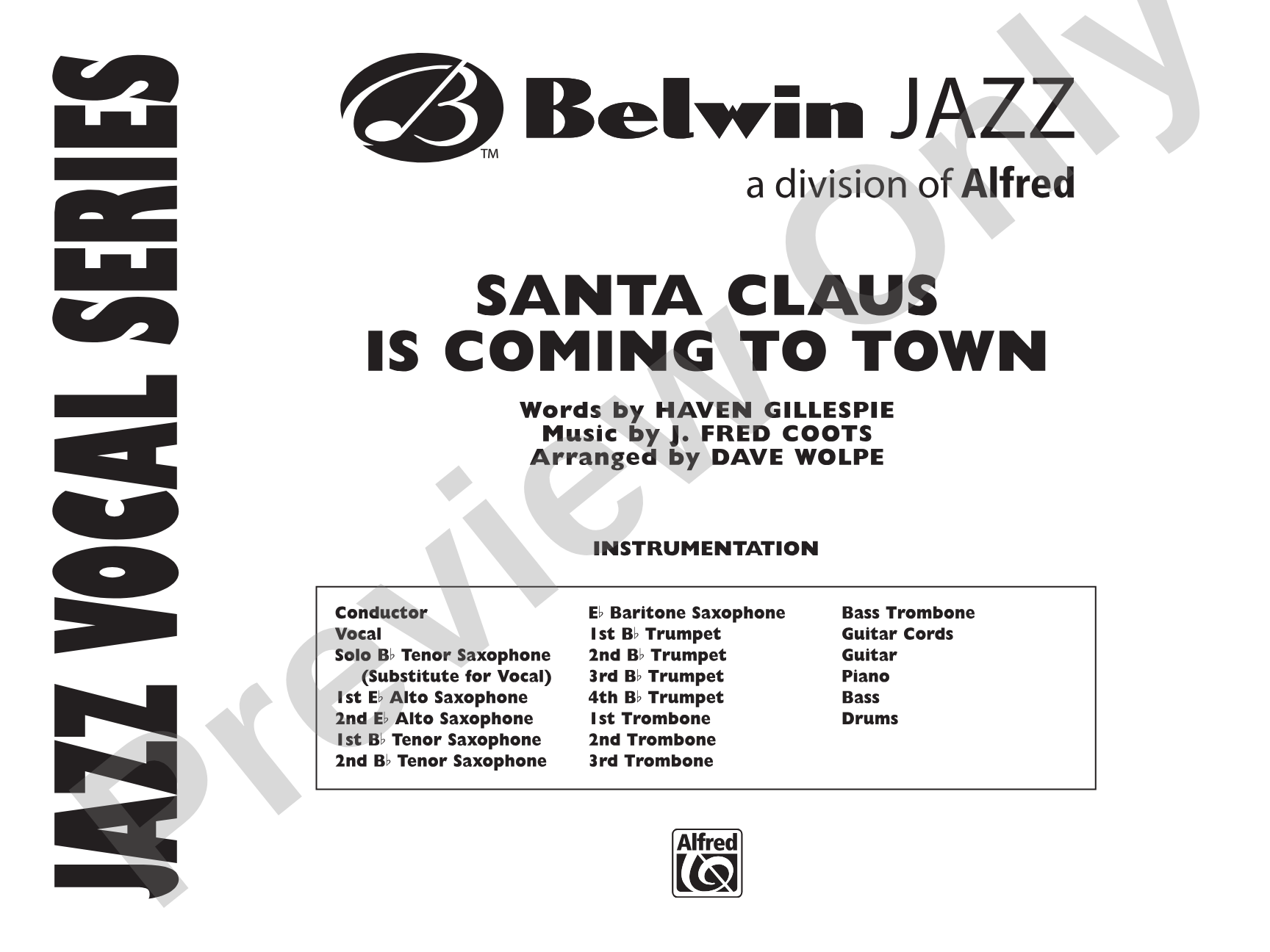
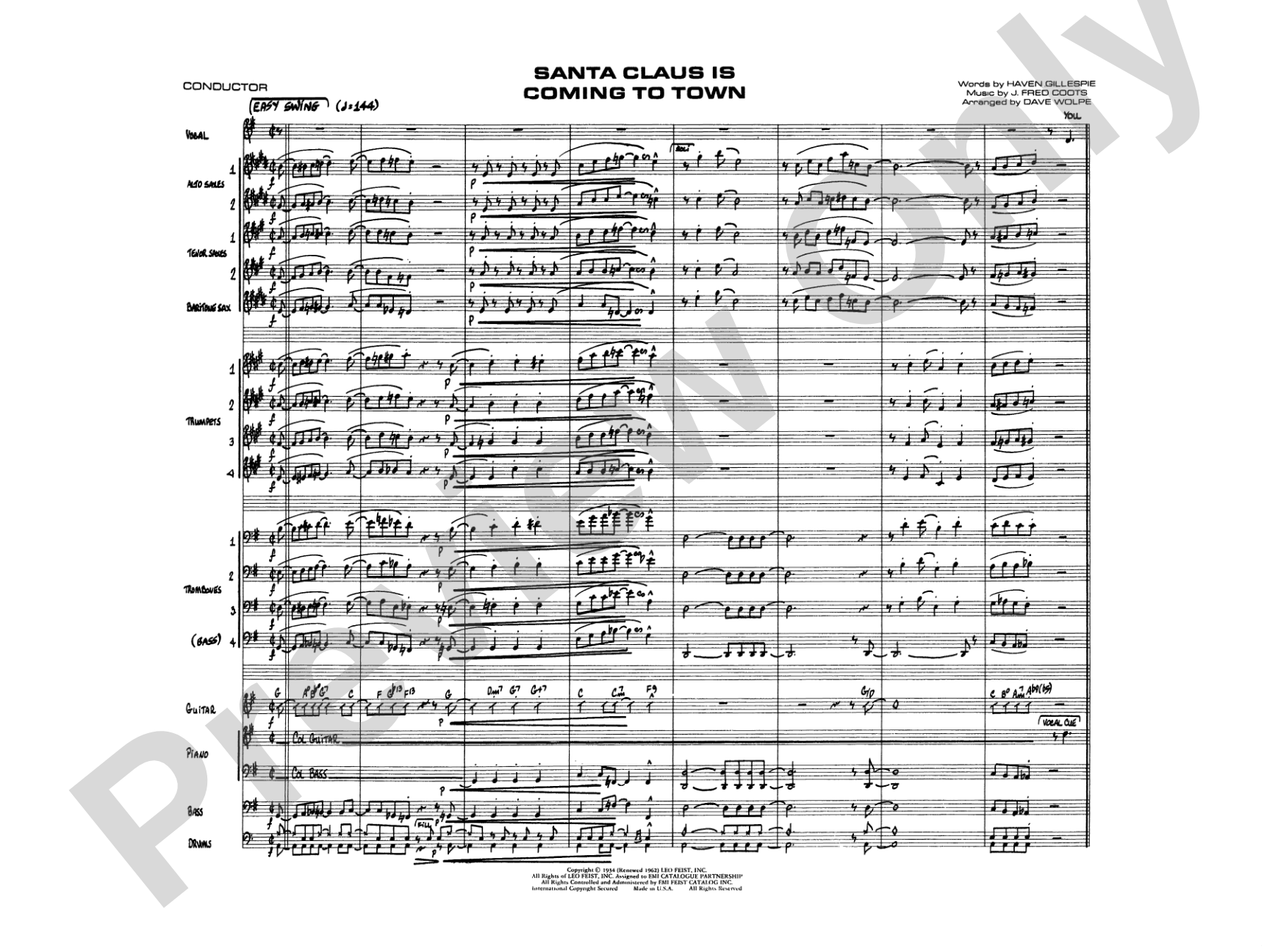
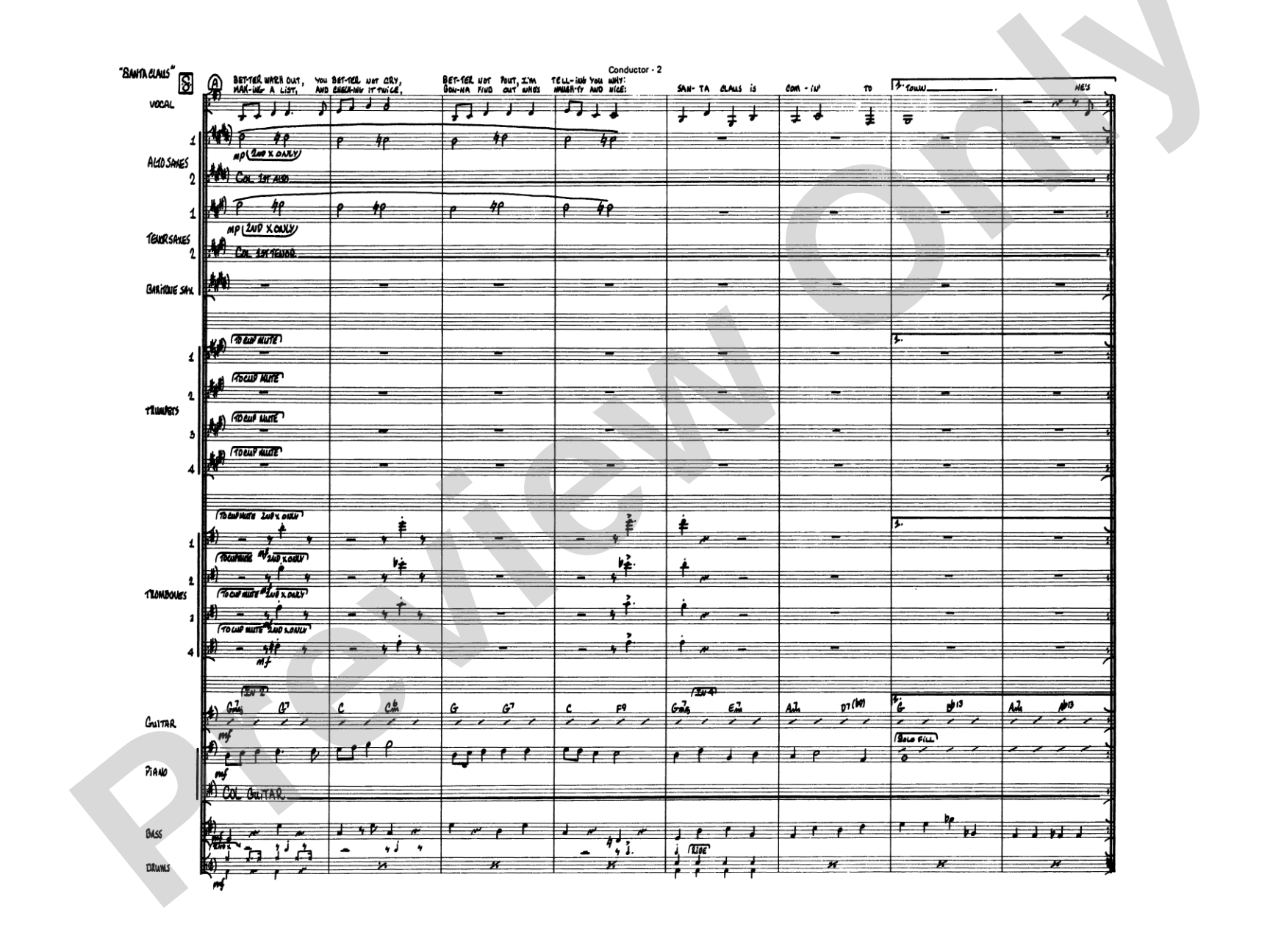
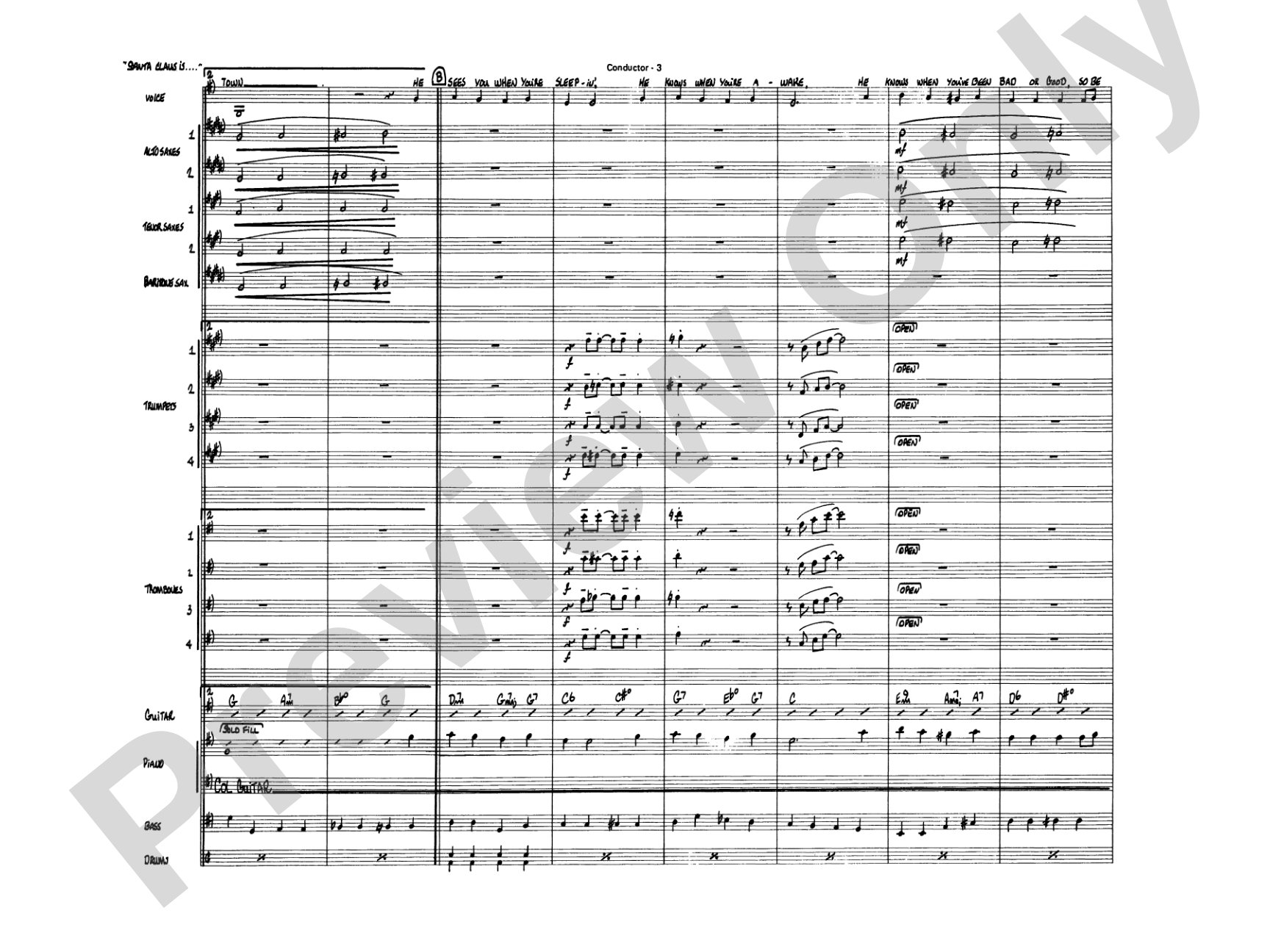
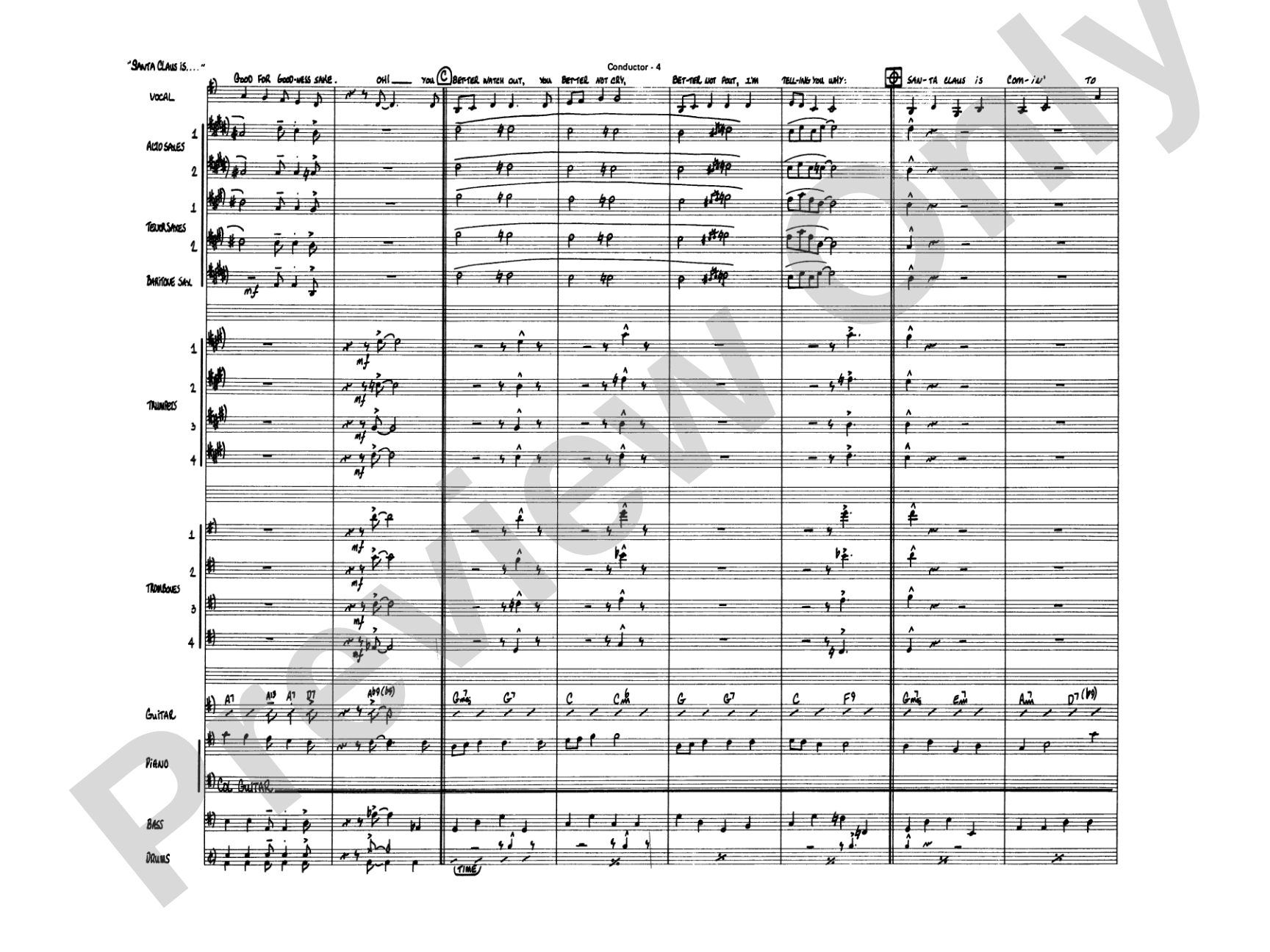
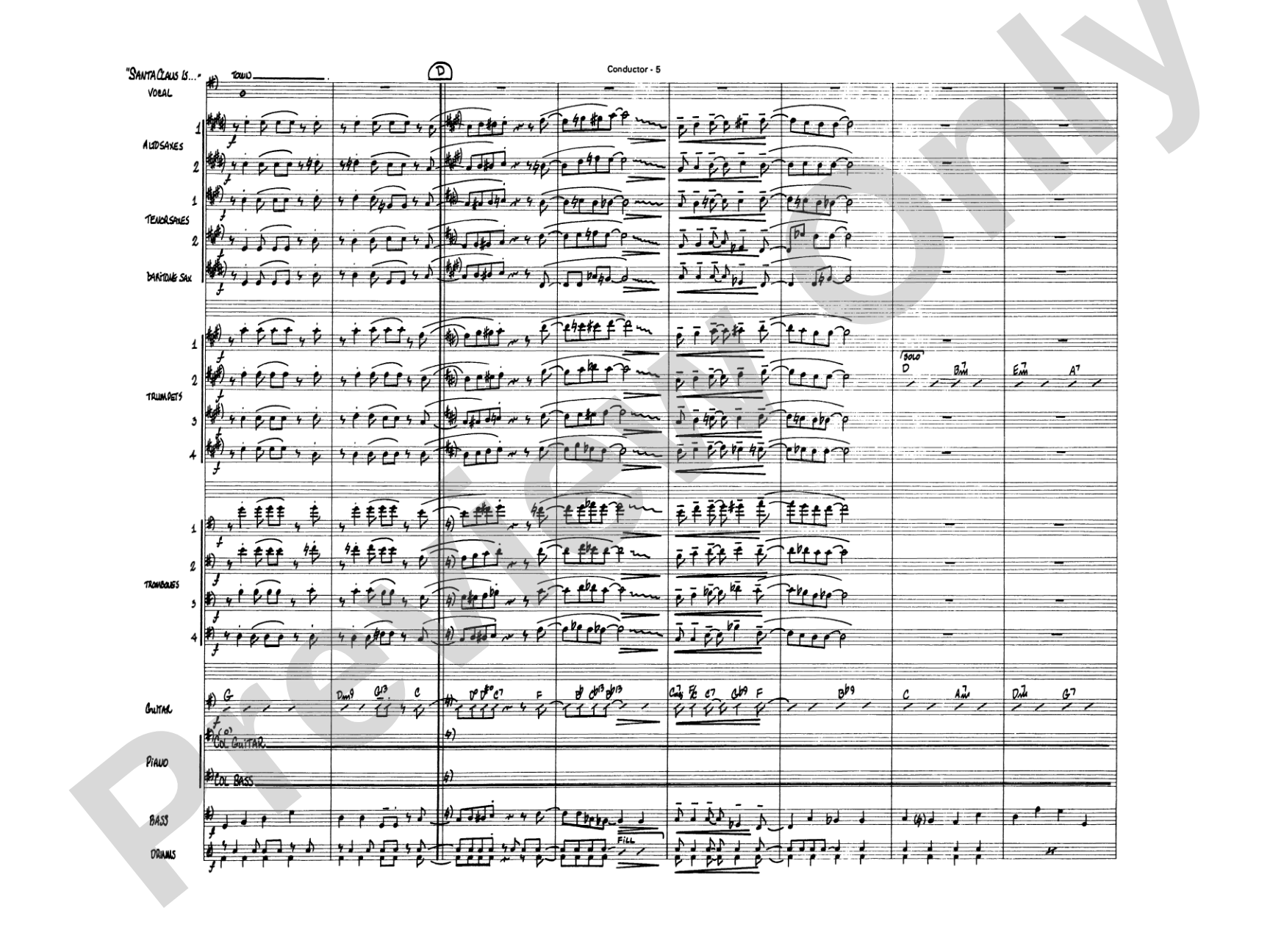
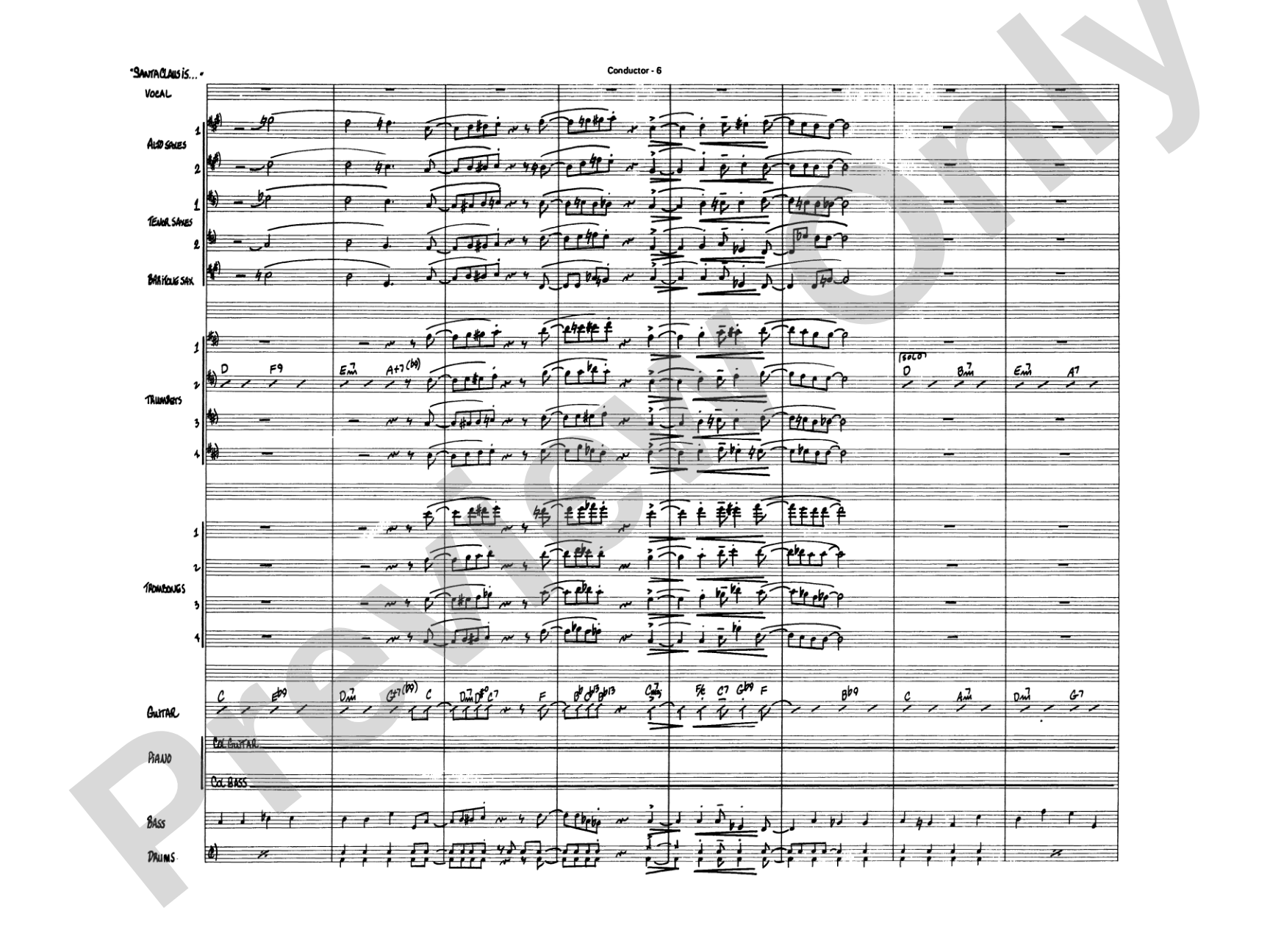
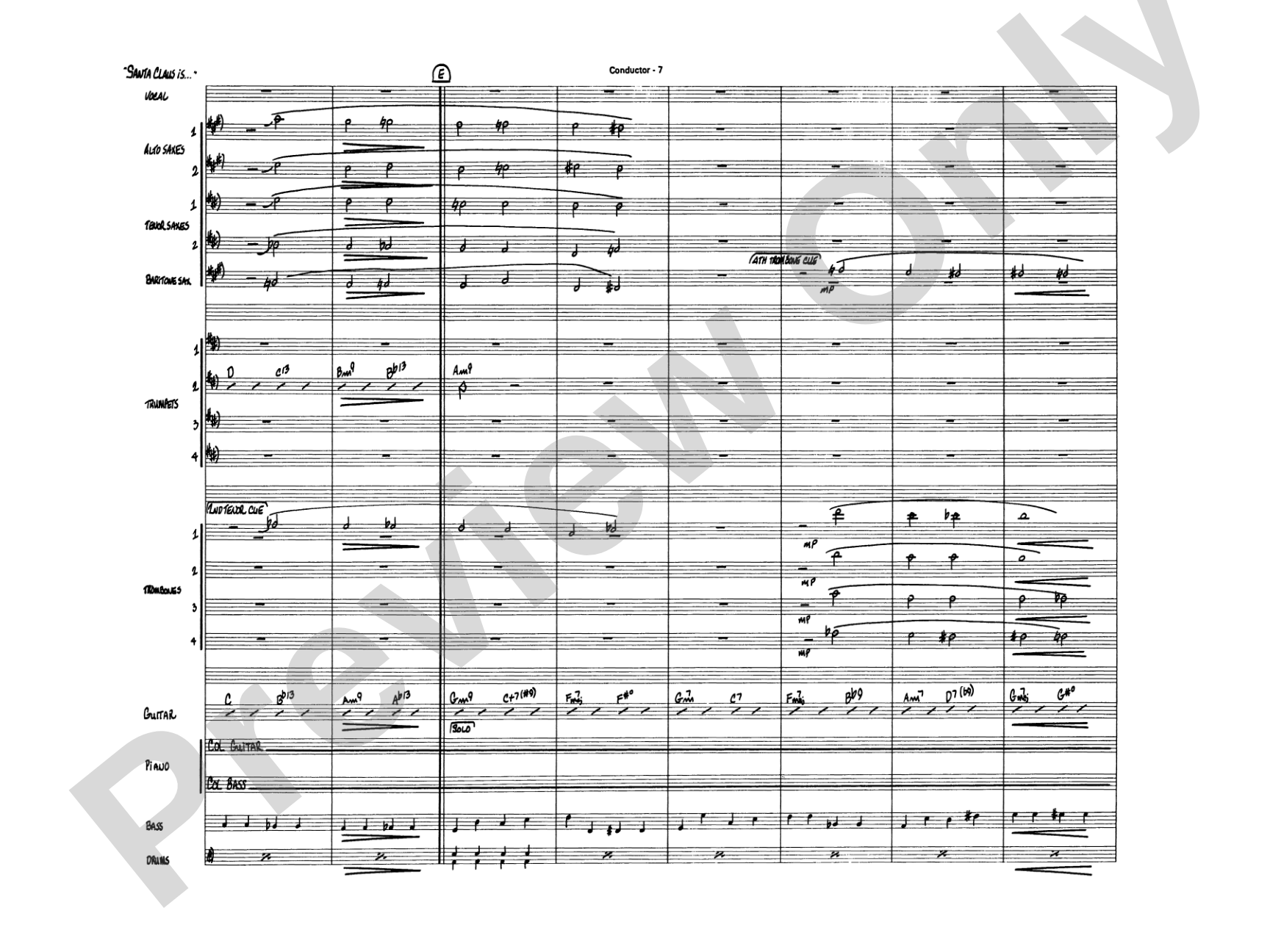
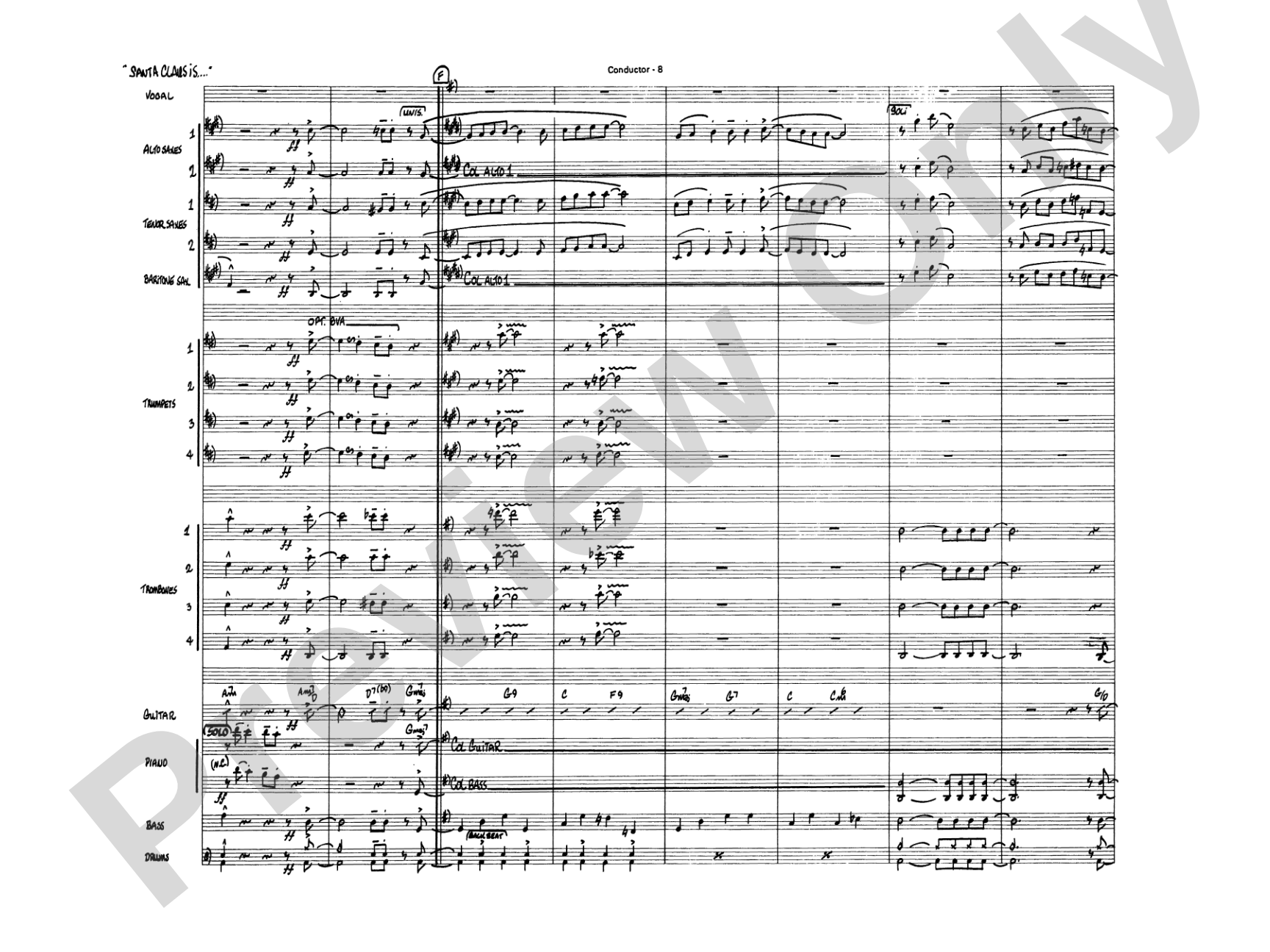
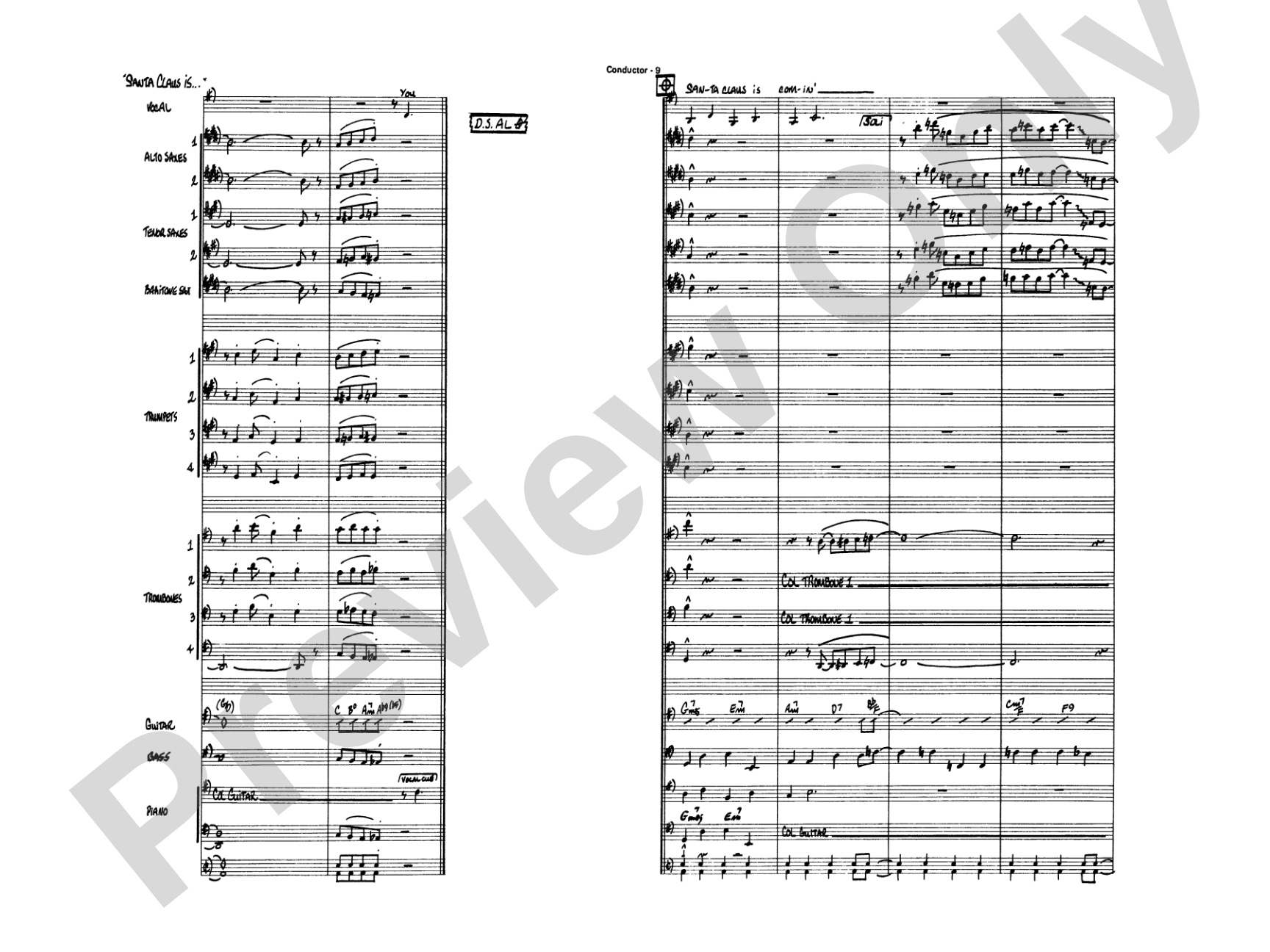
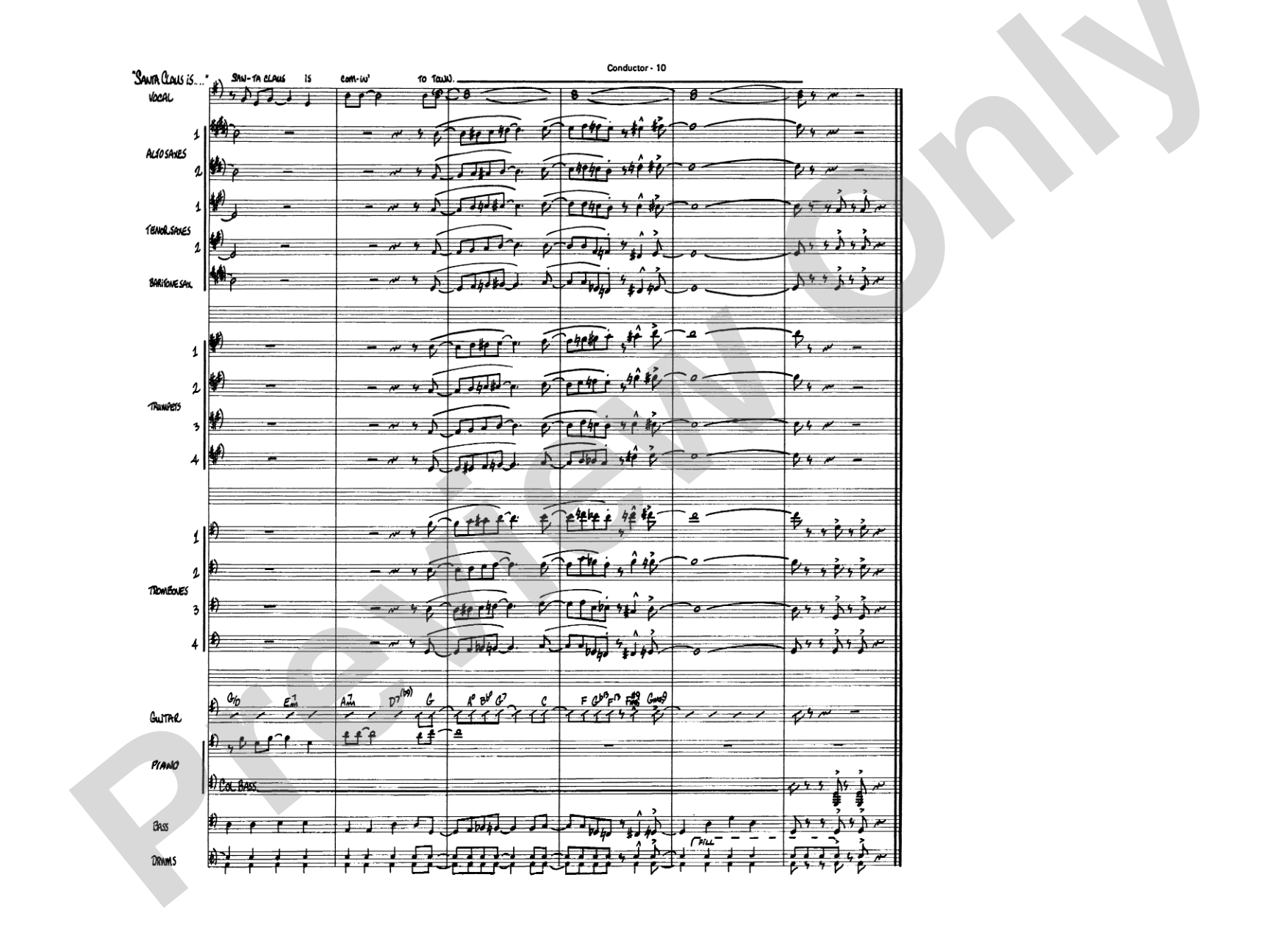


Santa Claus Is Coming to Town: Vocal Solo with Jazz Ensemble Conductor Score & Parts
Vocal Feature - Key of G
By Haven Gillespie and J. Fred Coots / arr. Dave Wolpe
Grade: 4 (Medium Advanced / Difficult)
Item: 00-PK-0002638

$54.00
Pickup currently not available
Buy Extra Parts (Digital PDF Download)
Parts Added to Cart!
Description
You'd better watch out, because Dave Wolpe's up-tempo arrangement of this holiday favorite really brings Santa to town! This one features the vocalist in a special way and includes a tenor sax solo part which can be substituted for the vocal part. Key of G.


Don't just read it, hear it, play along with it, and watch your students grow with it. In MakeMusic Cloud, Santa Claus Is Coming to Town: Vocal Solo with Jazz Ensemble Conductor Score & Parts comes alive with professional accompaniment, adjustable tempo, and built-in practice tools that turn solo practice into real progress.
Open in the Player
Jump straight in and assign it today.
Start Your Free Trial
Open this title and explore the full library in minutes.
Sample Audio
No sample audio found.
Sample Video
No sample videos found.
Additional Details
Series:
Jazz Vocal Series
Publisher:
Alfred Music
Page Count:
96
SKU:
00-PK-0002638
More about this title
About the Composer: Haven Gillespie
Haven Gillespie composed "Santa Claus Is Coming to Town" in 1934 with lyricist J. Fred Coots, creating one of the most enduring holiday songs in American popular music. The tune has become a standard across multiple genres and generations, from children's recordings to jazz interpretations, cementing Gillespie's place in the canon of American songwriting.
Why we love this
Dave Wolpe's arrangement respects the melodic hook that makes this song instantly recognizable while infusing it with genuine jazz vocabulary and swing. The featured tenor sax solo option gives you flexibility in casting and keeps the energy fresh across multiple performances. It's a crowd-pleasing selection that works equally well for a jazz vocal soloist or as a feature for your tenor section.
What to expect
Bright, bouncy, and swinging. Wolpe's arrangement strips away nostalgia in favor of genuine jazz energy, turning a familiar melody into a vehicle for ensemble interaction and soloist showcase.
Who it's for
Jazz ensemble directors looking for a vocal feature that sits comfortably at medium-advanced difficulty and appeals to audiences of all ages. Singers with solid jazz phrasing and ability to navigate an up-tempo groove will thrive with this material.
How to get the most out of it
- Anchor the ensemble's swing feel to the vocalist's phrasing rather than fighting it. The soloist should drive the groove, not follow a metronomic pulse.
- If performing the tenor sax solo substitution, use it strategically across your program to feature different soloists or to give the vocalist breathing room during longer concerts.
- Balance the vocalist's microphone level so the ensemble can breathe as an accompaniment, not competition. In grade 4 jazz writing, the ensemble parts are active and detailed.
- Articulation and transparency matter at this tempo. Cleanly attack rhythmic figures in the saxophone section and rhythm section to keep the arrangement from muddying.
How to use it
Program this as an opener or second selection on a winter concert to immediately engage the audience and set an upbeat tone. It pairs well alongside other jazz vocal standards or holiday selections that lean more traditional, offering stylistic contrast within a single concert.
Skills your students will build
- Swing articulation and phrasing as a soloist
- Comping and rhythmic accompaniment at up-tempo
- Ensemble balance and transparency in medium-advanced voicings
- Flexibility between straight rhythms and swing feel
- Tenor saxophone solo improvisation or lead playing (in optional substitution)