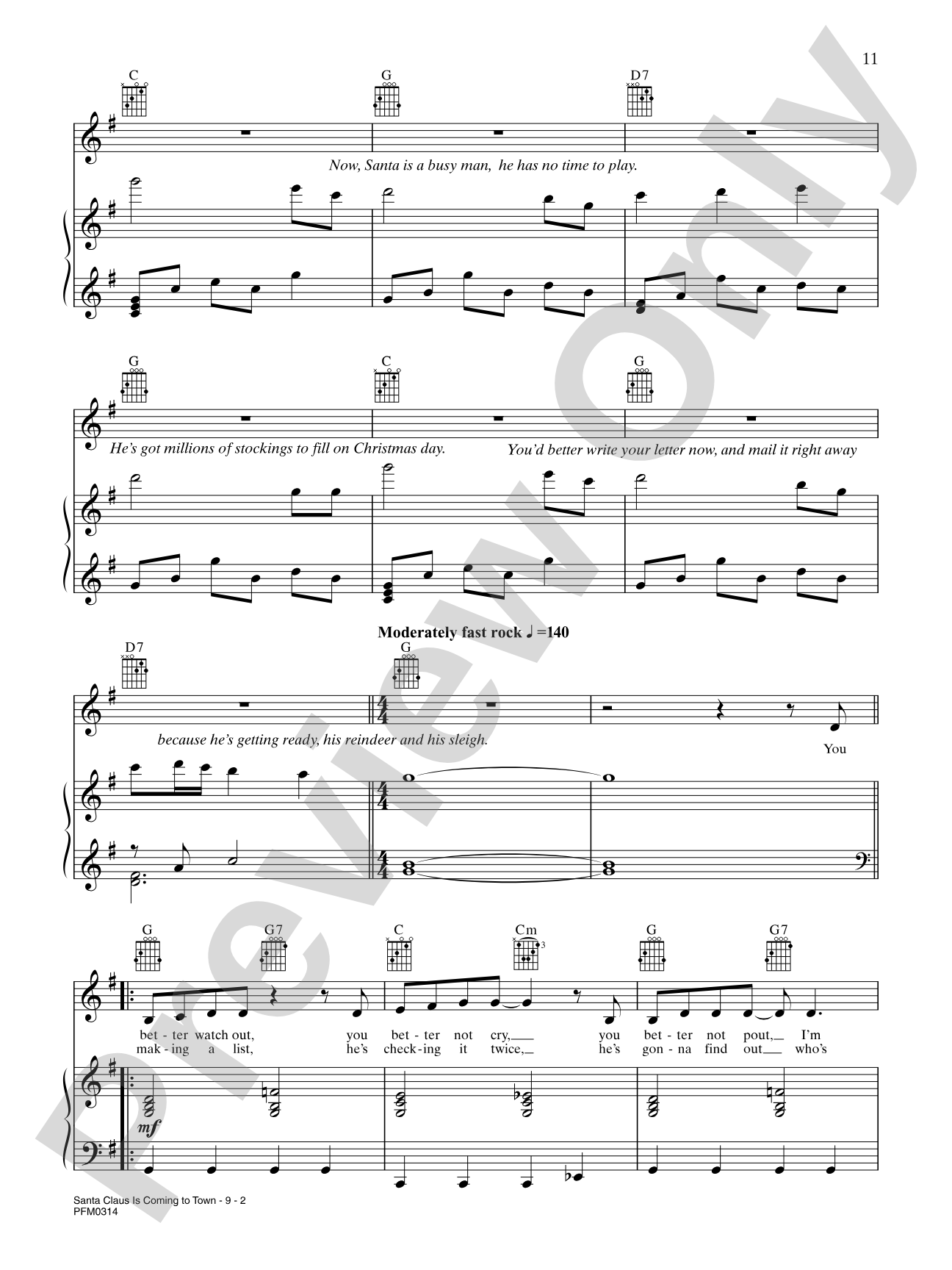
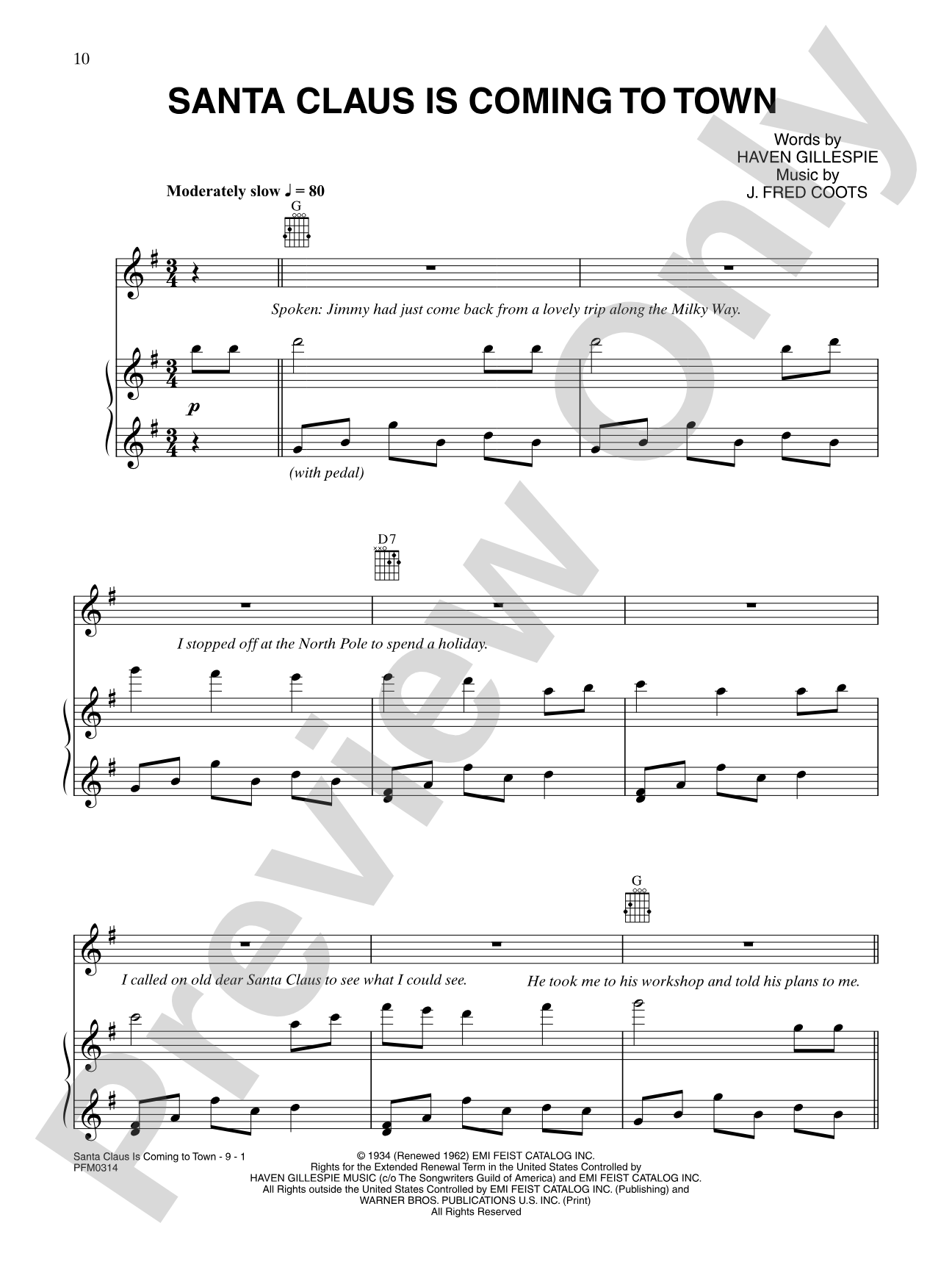
Santa Claus Is Comin' To Town (Vocal) Sheet Music Preview

Santa Claus Is Comin' To Town (Vocal): Piano/Vocal/Chords

Phil Spector

Item: 00-XSP-000346

Digital Download
$5.99

One moment…

Description
Twelve titles as performed by Darlene Love, The Ronettes, The Crystals, and other performers associated with Phil Spector. Titles are: The Bells of St. Mary * Christmas (Baby Please Come Home) * Frosty the Snowman * Here Comes Santa Claus * I Saw Mommy Kissing Santa Claus * Marshmallow World * Parade of the Wooden Soldiers * Rudolph the Red-Nosed Reindeer * Santa Claus Is Coming to Town * Silent Night * Sleigh Ride * Winter Wonderland.

Santa Claus Is Comin' To Town (Vocal): Piano/Vocal/Chords isn't in MakeMusic Cloud just yet...but it could be. Let us know you'd like to see it, and you'll help shape what comes next. In the meantime, start a free trial and dive into thousands of interactive titles your students can play along with today.

Sample Audio
No sample audio found.
Sample Video
Additional Details
Publisher: Alfred Music
Page Count: 68
SKU: 00-XSP-000346

More about this title

About the Composer: J. Fred Coots

J. Fred Coots (1897-1985) composed some of the most enduring American holiday songs, writing melodies that have become standards in seasonal repertoire. "Santa Claus Is Comin' to Town" stands among his most recognizable works, a piece that has been recorded hundreds of times across multiple genres and continues to define Christmas music in American culture.

Coots worked extensively in popular song throughout his career, contributing to both theatrical productions and radio broadcasts during the early-to-mid twentieth century. His gift for memorable, singable melodies made his compositions natural fits for vocalists ranging from jazz singers to pop stars, ensuring their longevity across generations.

Why we love this

This collection captures the Phil Spector sound that defined a generation of Christmas music, and these arrangements preserve the vocal character that made performers like Darlene Love household names. The piano/vocal/chords format gives singers real flexibility: use it for casual performance, teaching purposes, or as a learning resource that connects students to iconic recordings they already know.

What to expect

These songs carry the warmth and brightness of 1960s pop production: lush vocal textures, memorable hooks, and arrangements that feel both sophisticated and immediately accessible. Each title radiates holiday spirit without ever becoming saccharine, capturing the genuine joy that made Spector's Christmas albums beloved standards.

Who it's for

Vocalists preparing holiday repertoire will find these exact arrangements invaluable, whether for recital, community performance, or casual singing. Pianists accompanying singers benefit from having all twelve titles in one resource, with chords written out for reference. Music students studying how classic pop arrangements are constructed will see the Spector production style rendered clearly on the page.

How to get the most out of it

  • Study the original recordings before you rehearse. The rhythmic phrasing and vocal nuances in Spector's productions are part of what makes these songs memorable; knowing that context informs your interpretation.
  • Balance the melody line with the chordal accompaniment. The piano part supports vocal style rather than dominating it, so keep your touch responsive to the singer's phrasing.
  • Pay attention to dynamics and texture shifts between verses and choruses. These arrangements track the recorded versions closely, and those production choices translate into clear musical architecture on the page.

How to use it

Slot individual titles into winter concerts as solo features or ensemble numbers, or structure an entire holiday program around these twelve songs to create thematic coherence. The collection works equally well as a singer's personal reference library, allowing continued engagement with these classics across multiple performance seasons.

Skills your students will build

  • Singing with stylistic authenticity (jazz-influenced phrasing, rhythmic relaxation)
  • Reading lead sheets and interpreting chord symbols in a performance context
  • Understanding how arrangement supports vocal delivery
  • Recognizing production style as a compositional choice that informs interpretation

You May Also Like