

Santa Claus Is Comin' to Town: 2-Part Choral Octavo
Words by Haven Gillespie, music by J. Fred Coots / arr. Tim Hayden
Item: 00-PO-0007561
$2.45
Minimum order quantity: 20 copies
One moment…
Related Items
Santa Claus Is Comin' to Town: SATB Choral Octavo |
$2.45
|
View | |
Santa Claus Is Comin' to Town: SAB Choral Octavo |
$2.45
|
View | |
Santa Claus Is Comin' to Town: SoundTrax Digital Audio Download |
$29.99
|
View | |
Santa Claus Is Comin' to Town: Choral Octavo SoundPax |
$35.00
|
View | |
Santa Claus Is Comin' to Town: SATB Choral Octavo |
$2.45
|
View | |
Santa Claus Is Comin' to Town: SAB Choral Octavo |
$2.45
|
View | |
Santa Claus Is Comin' to Town: 2-Part Choral Octavo |
$2.45
|
View | |
Santa Claus Is Comin' to Town: Choral SoundTrax CD |
$29.99
|
View | |
Santa Claus Is Comin' to Town: Choral Octavo SoundPax |
$35.00
|
View |
Description
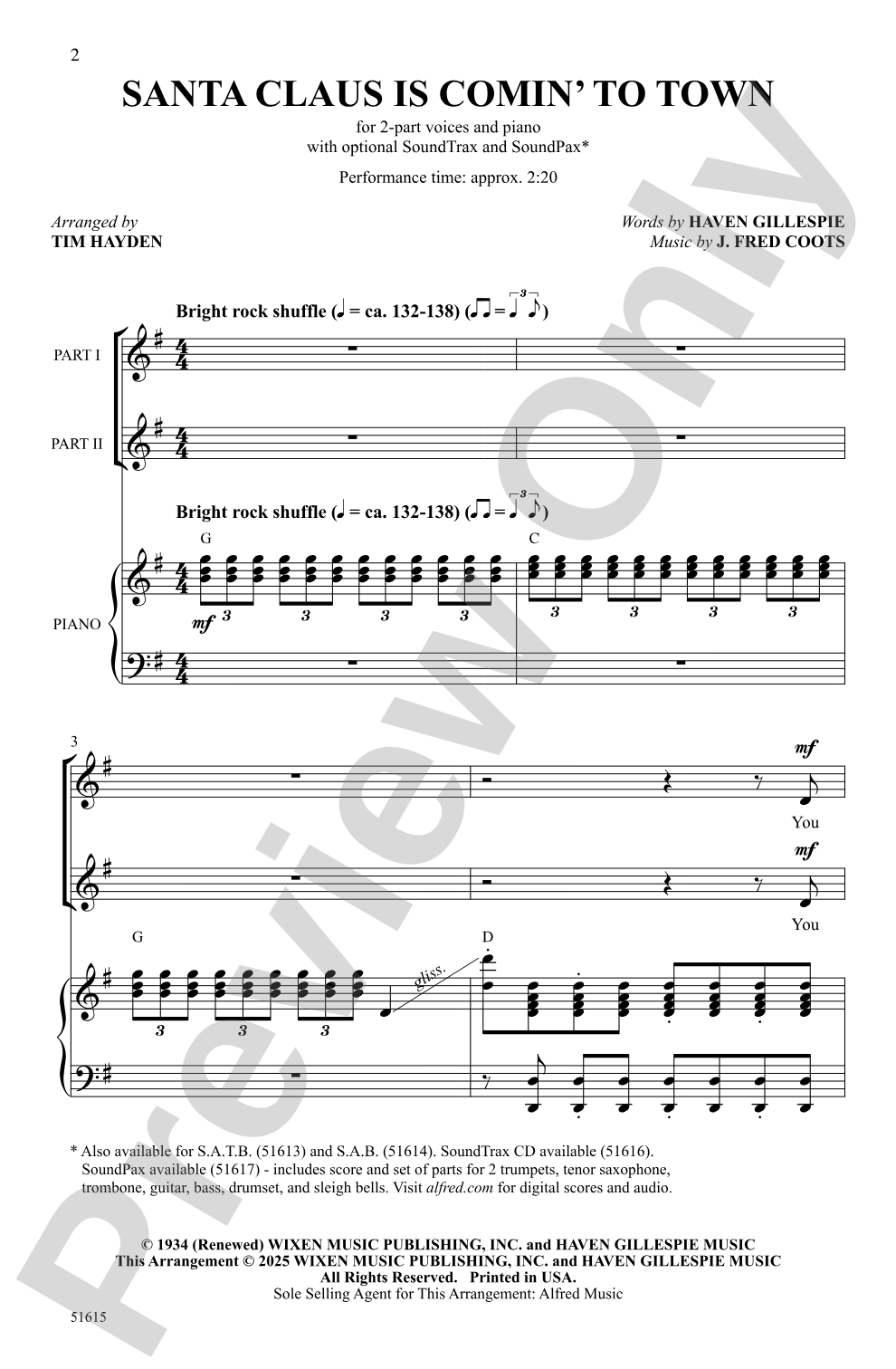
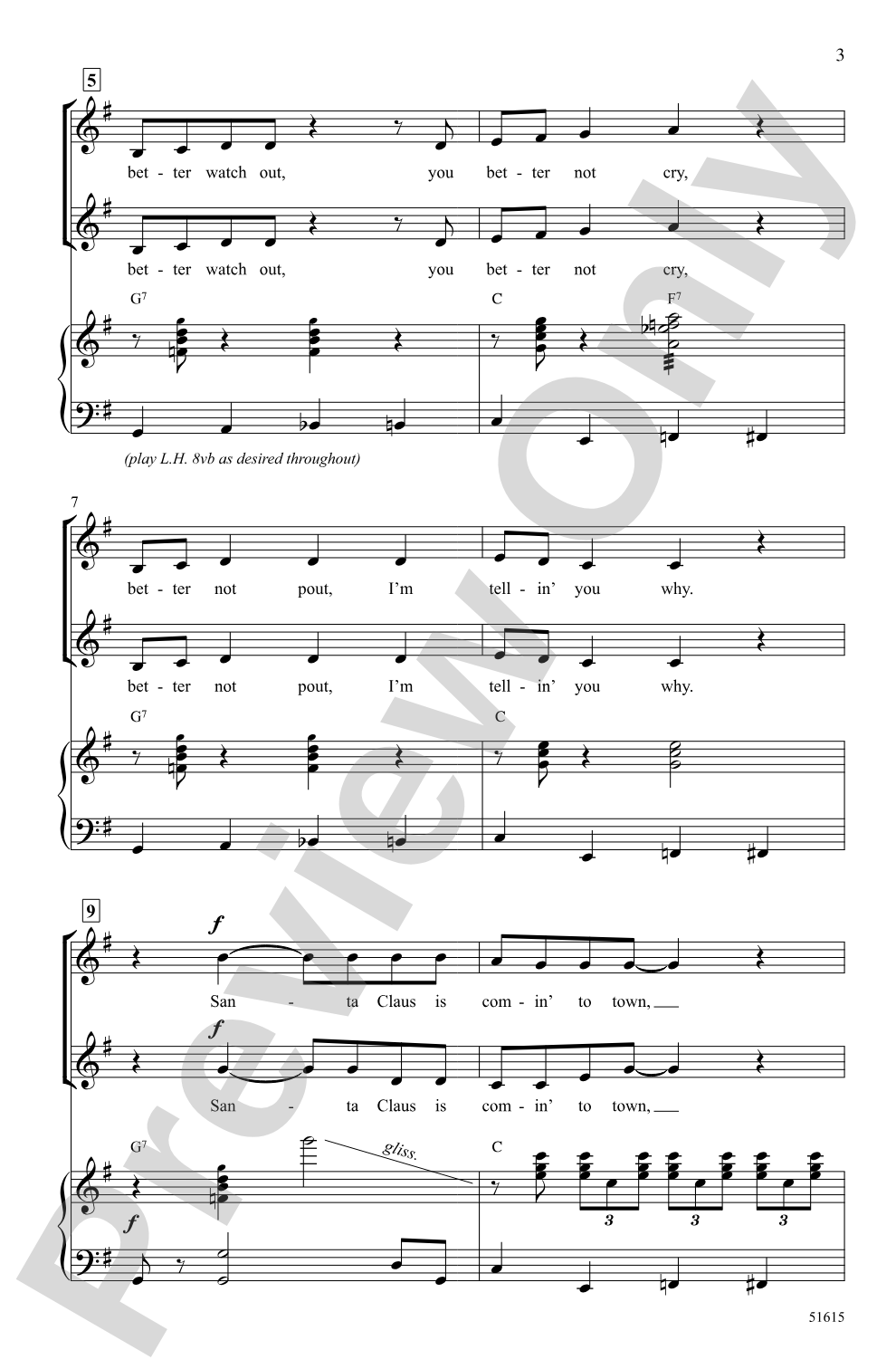
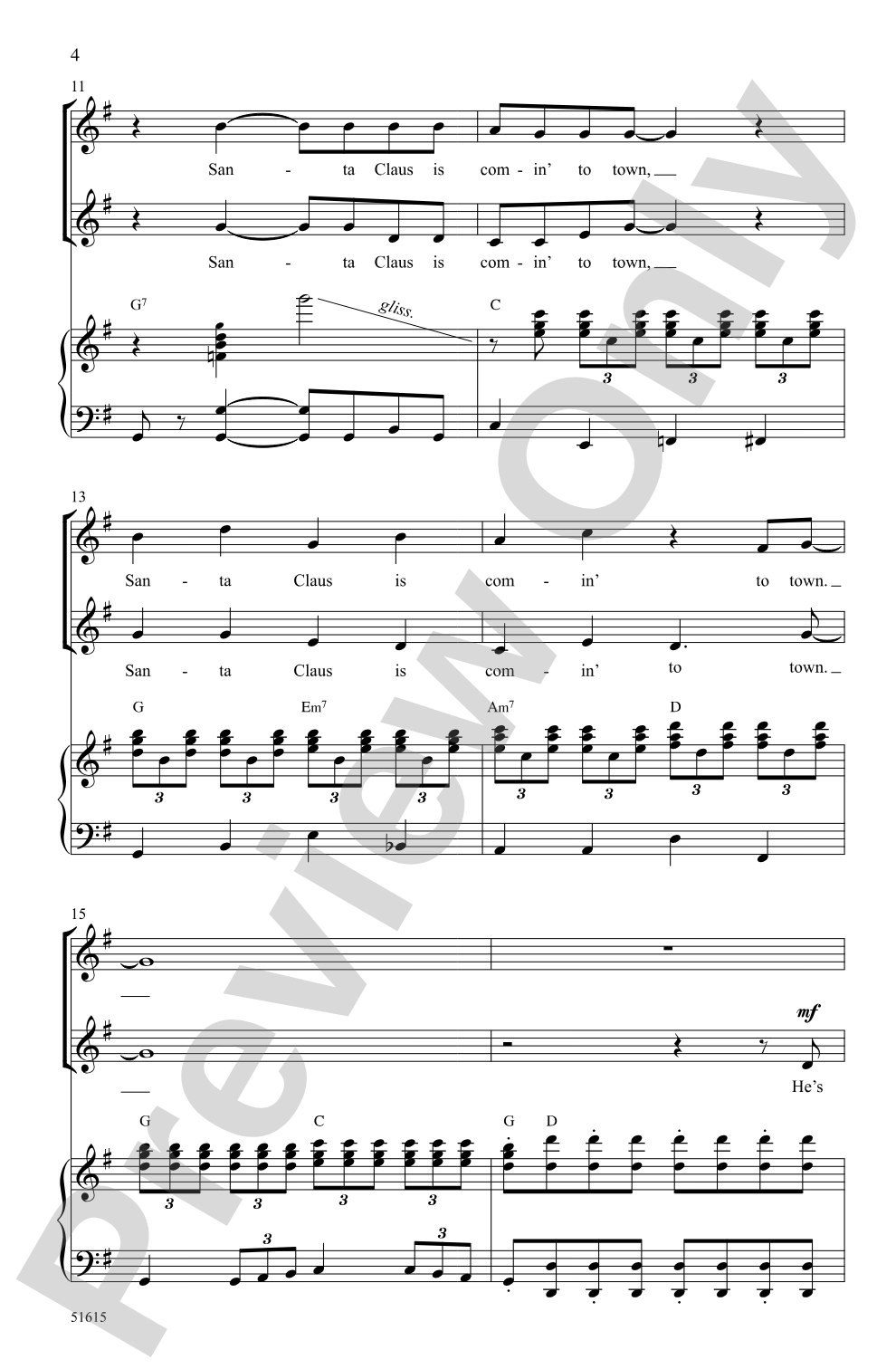
The Queen of Christmas rocks this iconic holiday song! This high-powered arrangement captures all of the energy of Mariah Carey's famous recording, complete with a bright rock shuffle feel, those signature piano triplets, and punchy, accented vocals. It's an electrifying opener, closer, or Santa hat novelty, with or without the horns and rhythm SoundPax and SoundTrax.


Santa Claus Is Comin' to Town: 2-Part Choral Octavo isn't in MakeMusic Cloud just yet...but it could be. Let us know you'd like to see it, and you'll help shape what comes next. In the meantime, start a free trial and dive into thousands of interactive titles your students can play along with today.
Request This Title
Tell us you want it.
Start Your Free Trial
Explore everything that's ready to play right now.
Sample Audio
1
Audio File
--:--
0:00
0:00
Sample Video
Additional Details
Series:
Alfred Pop Choral Series
Publisher:
Alfred Music
Page Count:
16
SKU:
00-PO-0007561
More about this title
About the Composer: J. Fred Coots
J. Fred Coots (1897-1964) composed one of the most recognizable holiday melodies in American music. Working alongside lyricist Haven Gillespie, Coots created "Santa Claus Is Comin' to Town" in 1934, a song that has since become a cornerstone of seasonal celebrations across multiple generations and musical styles.
Coots's gift for accessible, memorable melody made him a prolific contributor to popular song and film scores throughout the early-to-mid twentieth century. His ability to write hooks that stick with listeners explains why his compositions remain relevant to choral educators and arrangers who continually reimagine his work for contemporary ensembles.
Why we love this
Tim Hayden's arrangement strips away the novelty angle and locks into what makes the Mariah Carey version so infectious: the rhythmic propulsion, the vocal punctuation, and the bright shimmer underneath. Your singers get to perform a version they actually recognize from the radio, which builds immediate buy-in while the rock shuffle groove and accented phrases demand musicality and rhythmic precision. It works equally well as an eye-opening show opener or a finale that leaves the audience energized.
What to expect
Bright, propulsive, and fun. The rock shuffle groove and snappy vocal rhythms create a sense of momentum and excitement that feels more like a radio hit than a traditional carol. There's an infectious energy here that lands somewhere between choral precision and pop-music attitude.
Who it's for
Middle school and high school choirs looking for accessible holiday material that doesn't sacrifice musicality or contemporary appeal. The 2-part voicing keeps it manageable across mixed-ability ensembles while the rock arrangement speaks to students who know the tune from modern recordings rather than older standards.
How to get the most out of it
- Let the piano triplet figures anchor the feel. These aren't decorative; they establish the shuffle pocket that everything else hangs on. Mark them in your piano score and listen to them throughout rehearsal.
- Shape the accented vocal phrases as articulate punches, not harsh hits. The energy comes from rhythmic clarity and placement, not volume.
- Drill the two-part split passages for blend and balance. This arrangement relies on both voices occupying similar ranges, so intonation in unison sections sets up confidence for the divisi moments.
- If you add the optional horns and rhythm parts, rehearse them separately first, then layer the choir in last. That builds the texture deliberately rather than asking singers to find their line in a full wall of sound.
How to use it
Open a winter concert with this to set a high-energy tone and signal that your holiday programming includes modern material alongside classics. It pairs well in a set with more traditional pieces, providing stylistic contrast. Alternatively, use it as a finale if you want audiences to leave the concert smiling and tapping their feet.
Skills your students will build
- Rhythmic precision in shuffle feel and syncopated patterns
- Vocal articulation and accented phrasing
- Intonation and blend in two-part divisi
- Interpretation of contemporary popular music arranged for choral ensemble
- Confidence performing a recognizable modern arrangement