Sands Of Time (from Kismet) Sheet Music Preview

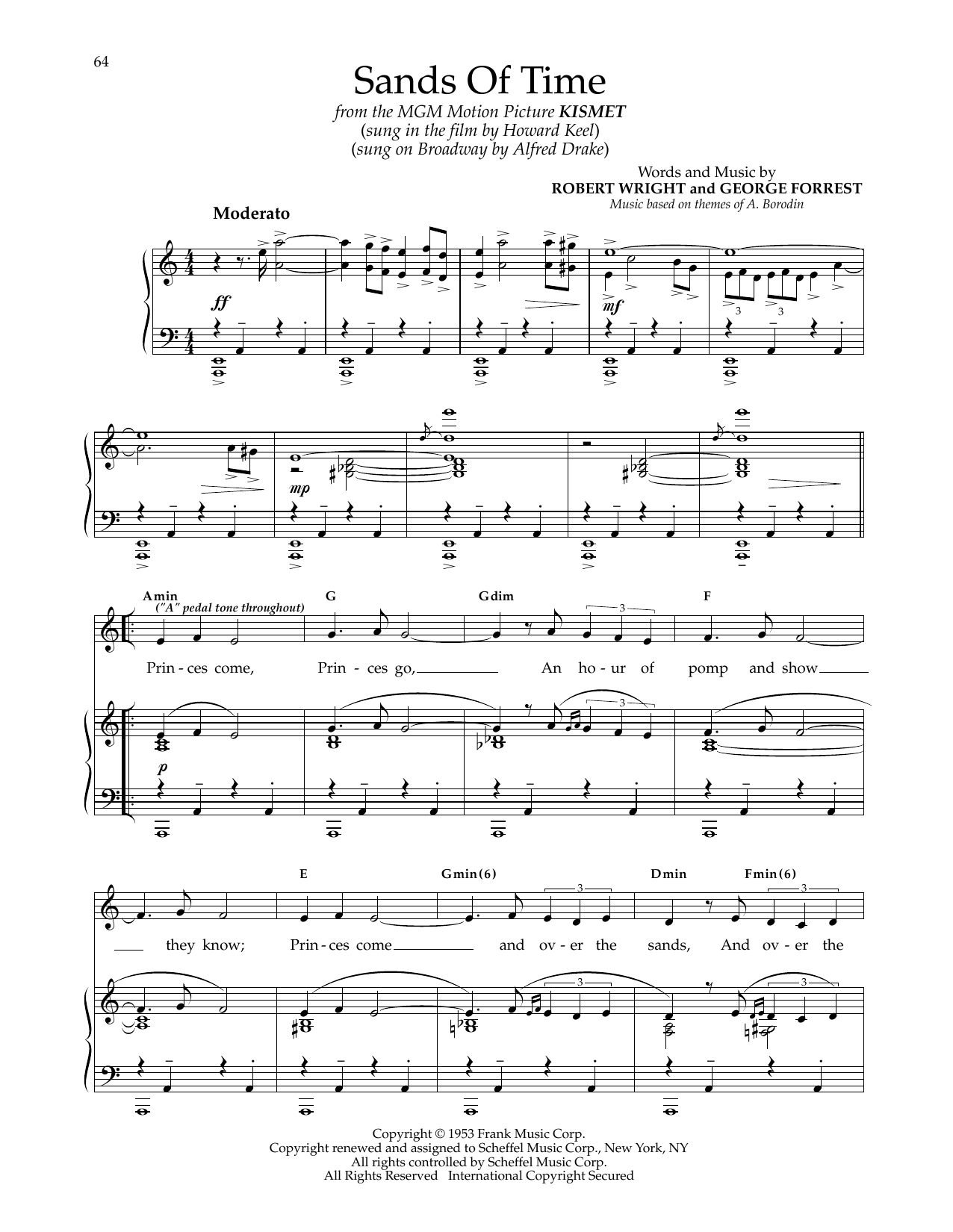
Sands Of Time (from Kismet): Piano Vocal

By Robert Wright / By George Forrest

Item: 35-DS01679772

Digital Download
$5.99

One moment…

Description

Sands Of Time (from Kismet): Piano Vocal isn't in MakeMusic Cloud just yet...but it could be. Let us know you'd like to see it, and you'll help shape what comes next. In the meantime, start a free trial and dive into thousands of interactive titles your students can play along with today.

Sample Audio
No sample audio found.
Sample Video
Additional Details
Publisher: Hal Leonard
Page Count: 3
SKU: 35-DS01679772

More about this title

About the Composer: Robert Wright

Robert Wright was an American composer and lyricist who specialized in operetta and musical theatre during the mid-20th century. Alongside his frequent collaborator George Forrest, Wright crafted memorable melodies and sophisticated harmonies for stage productions that bridged classical music sensibilities with popular appeal.

Why we love this

This song captures the lush romanticism Kismet is known for, with a vocal line that sits beautifully in the middle of the voice while allowing for genuine musical expression. The orchestration translates elegantly to piano, giving singers a polished accompaniment that doesn't overshadow the lyrical content.

What to expect

Sands of Time unfolds with an elegiac quality, evoking the passage of moments and the weight of longing. The harmonic language feels both timeless and distinctly theatrical, inviting singers to inhabit a character's vulnerability.

Who it's for

This arrangement suits intermediate to advanced vocalists who want to explore musical theatre repertoire with genuine musical depth. Pianists accompanying singers in lessons, juries, or recitals will find a score that respects both parts equally.

How to get the most out of it

  • Pay attention to the contour of the melody; it's designed to breathe naturally, so honor the phrase shapes rather than rushing through longer lines.
  • The piano part carries both harmonic and rhythmic weight, so coordinate the accompaniment tempo with the singer's interpretation to maintain vocal flow.
  • Shape dynamics around the text, allowing dramatic moments to emerge without artificially forcing them.
  • Check articulation markings carefully; the style sits somewhere between classical song and Broadway legit singing.

How to use it

Include this in a recital focused on mid-century musical theatre, where it can anchor a set of romantic song selections. It also works as a solo piece for voice jury repertoire or as part of a musical theatre showcase that values lyrical sophistication alongside entertainment value.

Skills your students will build

  • Sustaining legit vocal tone through longer melodic phrases
  • Interpreting text with dramatic intention in a theatrical context
  • Coordinating vocal phrasing with piano accompaniment in art song style
  • Managing key changes and harmonic motion with vocal stability
  • Sight-reading piano/vocal scores with clear part separation

You May Also Like