Sandpaper Ballet: Guitar 2 Sheet Music Preview

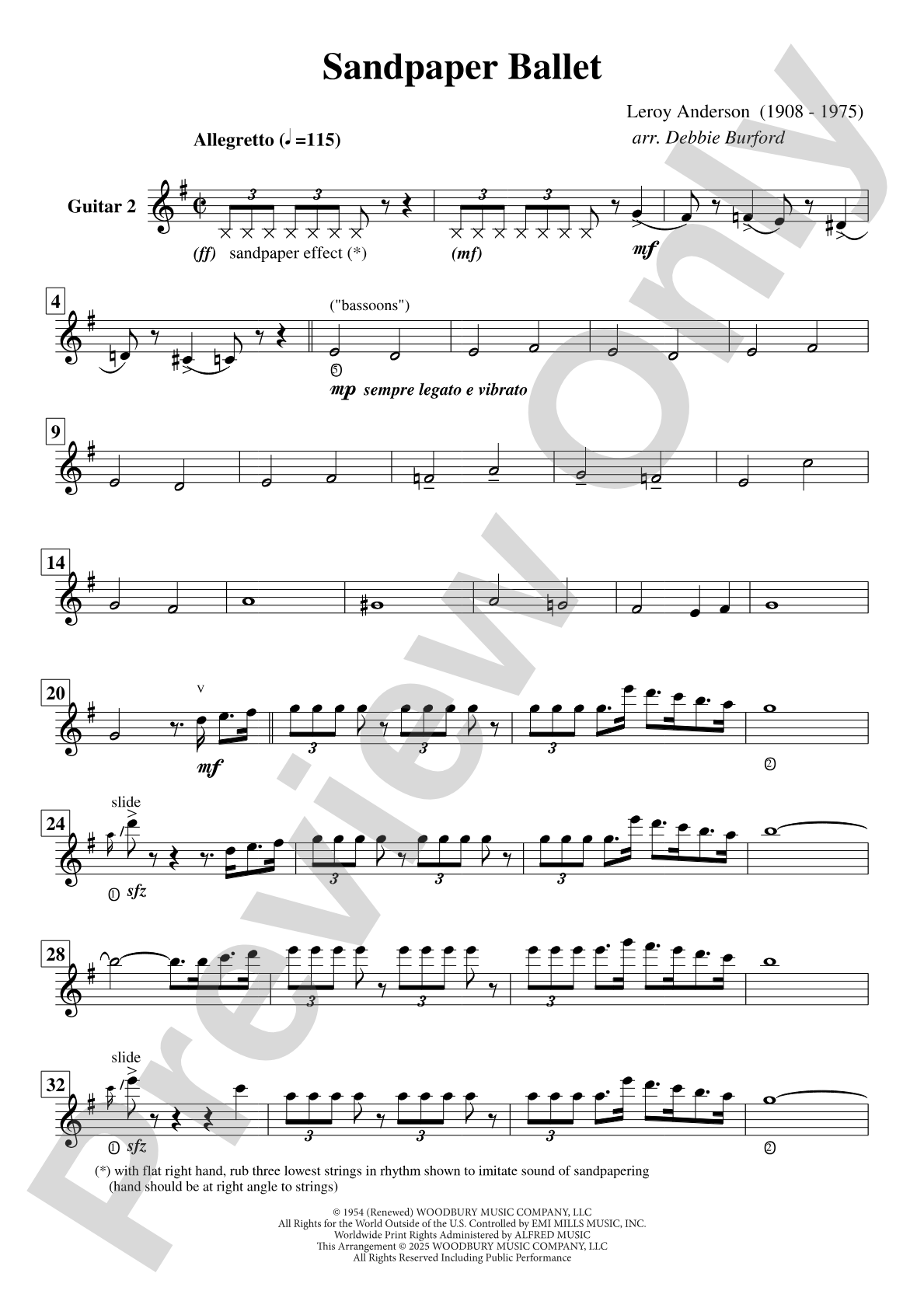
Sandpaper Ballet: Guitar 2

for Guitar Quartet

By Leroy Anderson / arr. Debbie Burford

Item: 00-PC-0019639_GTR2

Digital Download
$3.00
Description
Leroy Anderson's orchestral classic arranged for guitar quartet.

Sandpaper Ballet: Guitar 2 isn't in MakeMusic Cloud just yet...but it could be. Let us know you'd like to see it, and you'll help shape what comes next. In the meantime, start a free trial and dive into thousands of interactive titles your students can play along with today.

Sample Audio
No sample audio found.
Sample Video
Additional Details
SKU: 00-PC-0019639_GTR2

More about this title

About the Composer: Leroy Anderson

Leroy Anderson (1908-1975) was an American composer whose gift for orchestration and melodic invention made him one of the most performed classical composers of the twentieth century. His pops orchestra repertoire became a staple of American concert life, blending sophistication with infectious charm and humor. Anderson's arrangements and original works demonstrated that light classical music could be both musically substantial and endlessly entertaining.

Why we love this

Anderson's orchestral voice translates beautifully to the guitar quartet texture, and this arrangement by Debbie Burford captures the wit and rhythmic precision that make the original so satisfying. Directors value this piece because it delivers immediate audience appeal without sacrificing musical substance; listeners recognize and love the material, while players encounter genuine musical challenges in maintaining clarity across four voices.

What to expect

Lighthearted and rhythmically playful, with a touch of theatrical wit. The piece bounces along with Anderson's characteristic melodic appeal and clever orchestration, creating a performance experience that feels both polished and fun.

Who it's for

Guitar quartet ensembles seeking repertoire that audiences recognize and enjoy while offering legitimate musical substance. Advanced high school and collegiate guitar quartets will find the arrangement accessible without being simplistic, and the piece works equally well for community music groups looking to program something sophisticated yet approachable.

How to get the most out of it

  • Keep the percussion effects (the sandpaper effect that gives the piece its name) distinct and audible; these rhythmic details drive the piece's character and comedy.
  • Balance the four voices so that the melody line reads clearly even when supporting material is active beneath it; Anderson's orchestration works only when each part occupies its own sonic space.
  • Maintain steady tempo and precise rhythmic articulation throughout; the piece's humor depends on crisp execution rather than expressive rubato.
  • Shape phrases by dynamic contour rather than by slowing down; this keeps the forward motion Anderson intended while still allowing musical breathing.

How to use it

Program this in the second half of a concert to shift mood and energy without losing audience engagement; it works beautifully as a palate cleanser between heavier contemporary works or as part of a pops-style program. The piece also serves well as an encore or finale when you want to send the audience out smiling.

Skills your students will build

  • Balancing four independent lines in a compact ensemble texture
  • Maintaining rhythmic precision and ensemble cohesion in syncopated figures
  • Playing percussion effects on guitar (sandpaper or similar techniques)
  • Executing controlled dynamics while keeping four voices in conversation

You May Also Like