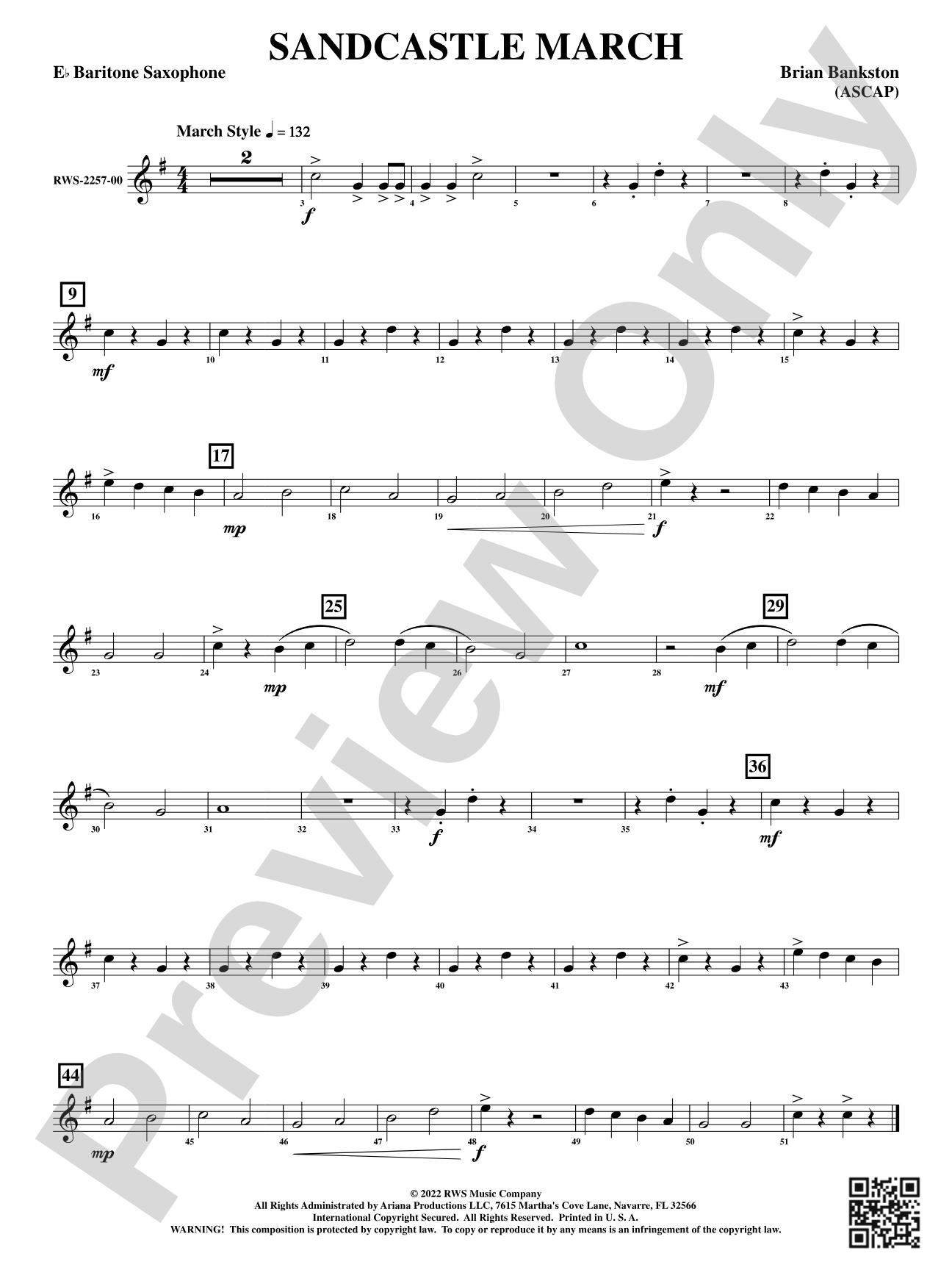
Sandcastle March: E-flat Baritone Saxophone Sheet Music Preview

Sandcastle March: E-flat Baritone Saxophone

By Brian Bankston

Level:.5

Item: 98-PC-RWS2257_BTX

Digital Download
$3.99
Description
From the down beat to stinger, this march is composed to be accessible to the beginning band. It is a wonderful teaching tool for introducing march style. Have your young musicians sounding their best with this short and simple march.

Original Item#: RWS-2257-00

Sandcastle March: E-flat Baritone Saxophone isn't in MakeMusic Cloud just yet...but it could be. Let us know you'd like to see it, and you'll help shape what comes next. In the meantime, start a free trial and dive into thousands of interactive titles your students can play along with today.

Sample Audio
0:00
0:00
Sample Video
Additional Details
Series: RWS - Very Beginning Band
Publisher: RWS Music Company
SKU: 98-PC-RWS2257_BTX

More about this title

Why we love this

Bankston understands what beginning bands actually need: a march with genuine style that doesn't require advanced technical facility. The writing gives every section something meaningful to play without overwhelming young musicians who are still building fundamental skills.

What to expect

Bright and straightforward, with the confident stride of a proper march. The simplicity of the writing lets the genre shine through, giving young musicians the chance to experience what makes a march work without getting tangled in complexity.

Who it's for

Beginning concert bands working at Level 0.5 to Grade 1/2, including middle school groups in their first year of playing together. This march serves as both a performance piece and a teaching tool for understanding march style and phrasing.

How to get the most out of it

  • Establish a steady, confident tempo from the downbeat. Young players often rush marches, so a clear conduct and steady pulse from rehearsal one will lock in the character.
  • Balance the melody across your sections. In beginning band, the tune often lives in multiple parts simultaneously, so check that no single voice overwhelms the others.
  • Treat the stinger (final hit) as a moment of arrival. Give it space in rehearsal so students understand it's the payoff, not just another note.

How to use it

This works well as a concert opener or closer, where its accessibility becomes a strength rather than a limitation. You can also use it in the classroom to teach march style and form before tackling more complex examples.

Skills your students will build

  • Understanding march style and structure
  • Balancing melody and accompaniment parts
  • Maintaining steady pulse and intonation in a rhythmic context
  • Responding to conducted cues for ensemble unity
  • Building confidence in performing accessible, complete works

You May Also Like