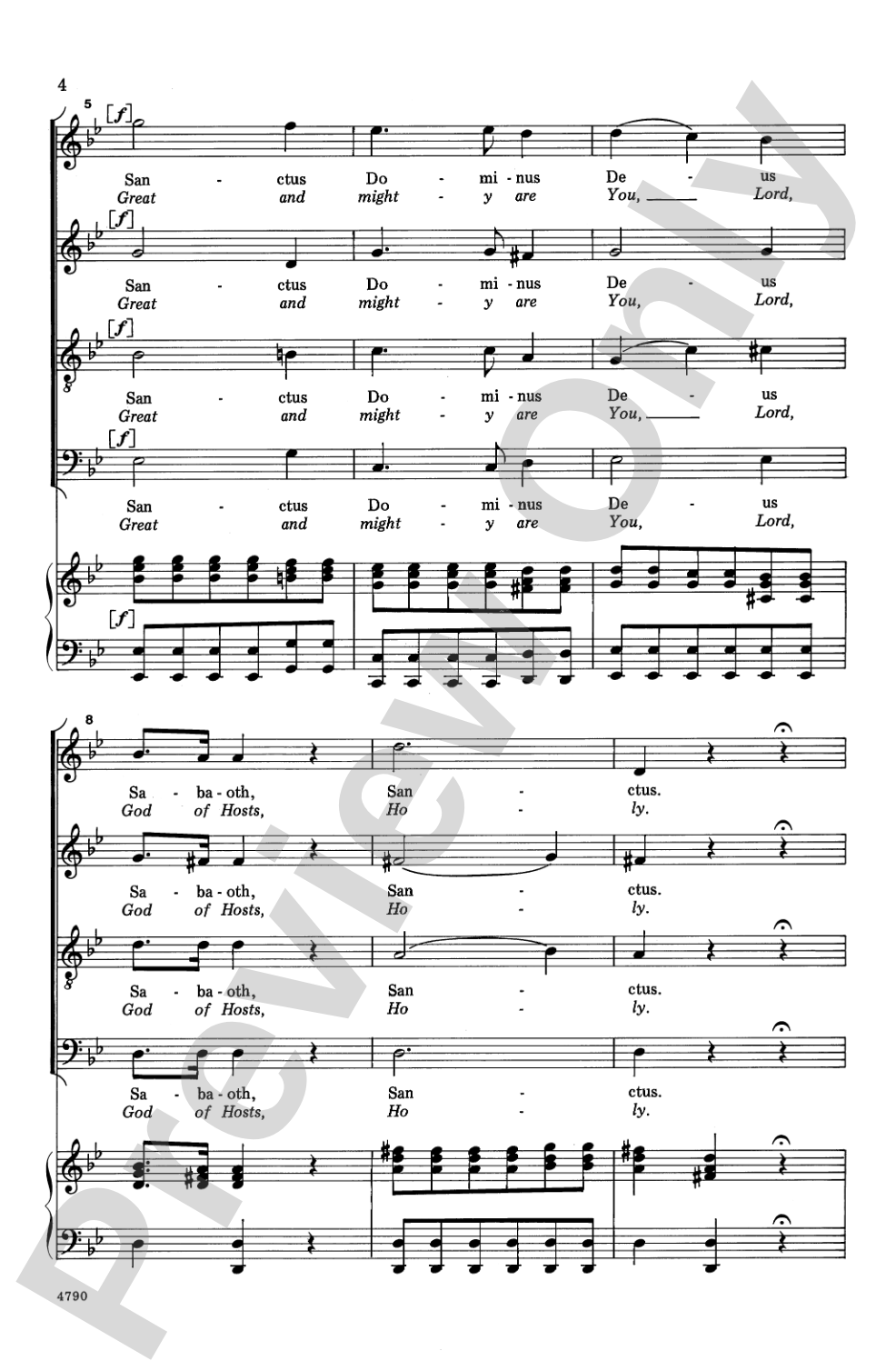
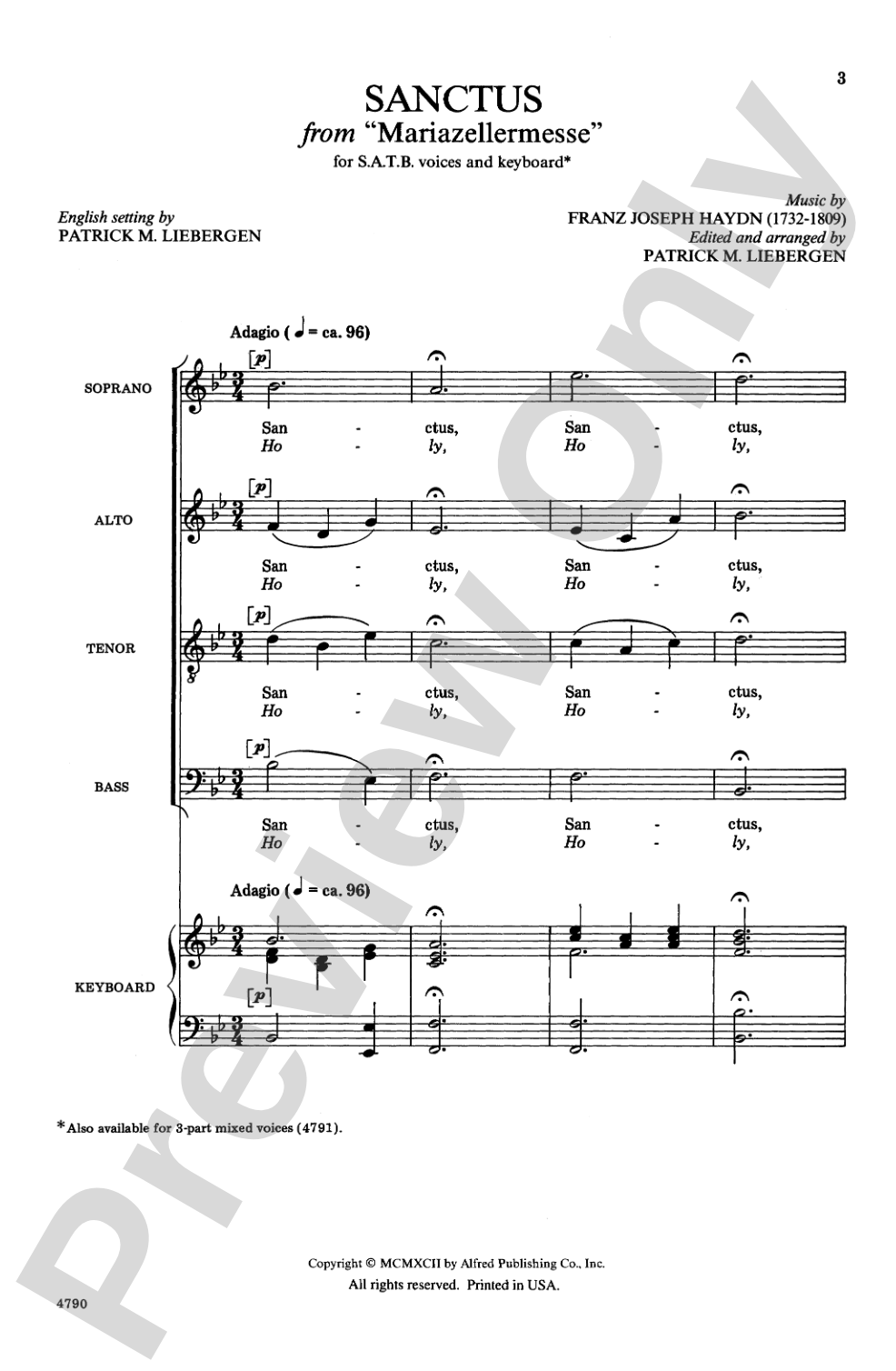
Sanctus (from <i>Mariazellermesse</i>) Sheet Music Preview

Sanctus (from Mariazellermesse): SATB Choral Octavo

From Mariazellermesse

By Franz Joseph Haydn / arr. Patrick M. Liebergen

Item: 00-PO-0004462

Digital Download
$2.25

Minimum order quantity: 20 copies

Description
Patrick Liebergen has carefully edited and arranged this Haydn masterwork for today's school choirs. Opens with a homophonic adagio section with large dynamic changes, followed by a bright allegro section with fine contrapuntal writing. An excellent work for concerts, contests or festivals. Includes English text and Latin pronunciation guide.

Sanctus (from Mariazellermesse): SATB Choral Octavo isn't in MakeMusic Cloud just yet...but it could be. Let us know you'd like to see it, and you'll help shape what comes next. In the meantime, start a free trial and dive into thousands of interactive titles your students can play along with today.

Sample Audio
No sample audio found.
Sample Video
Additional Details
Series: Alfred Archive Edition: Alfred Choral Designs
Publisher: Alfred Music
Page Count: 12
SKU: 00-PO-0004462

More about this title

About the Composer: Franz Joseph Haydn

Franz Joseph Haydn (1732-1809) shaped the Classical symphony and string quartet while serving as Kapellmeister at the Esterházy court for nearly three decades. His sacred music, composed across his entire career, blends the formal architecture of the Classical period with deeply felt reverence. The Mariazellermesse exemplifies his mature style: structural clarity, harmonic sophistication, and moments of genuine spiritual gravity.

Why we love this

Liebergen's arrangement preserves the architectural brilliance of Haydn's original while making it accessible to high school choirs without sacrificing musical substance. The piece rewards careful ensemble work with immediate results: the opening homophonic section is transparent enough for intonation work, while the allegro's counterpoint builds genuine musicianship. It's substantial enough to impress at festivals yet straightforward enough to prepare in a reasonable rehearsal timeline.

What to expect

The opening floats with quiet devotion before surging forward with confident, almost jubilant energy. The contrapuntal writing creates an intricate conversation among the voices, where individual lines weave together into something larger than any single part. It balances classical restraint with moments of genuine warmth.

Who it's for

SATB choirs at the high school level or stronger middle school ensembles seeking substantial repertoire that develops both musicianship and concert presence. Directors preparing for festivals, contests, or special sacred music programs will find a piece that commands respect without requiring advanced ranges or extended rehearsal time.

How to get the most out of it

  • Shape the opening adagio with deliberate dynamic control. The large contrasts between soft and loud sections define the movement's character, so commit fully to each dynamic level rather than hedging toward a safe middle ground.
  • Balance the contrapuntal voices in the allegro by letting each line breathe independently during rehearsal. Isolate soprano and alto, then tenor and bass, so singers understand their melodic role before blending.
  • Observe the Latin text carefully. The pronunciation guide helps, but spend time on clear vowels and crisp consonants so the English text underlay remains intelligible.
  • Support the homophonic passages with a steady, grounded tempo. These sections are where ensemble alignment matters most, and a conductor who moves with clarity and consistency makes the singers' job significantly easier.

How to use it

Program this as a centerpiece for a sacred or classical music concert, where its structural sophistication pairs well with other Baroque or Classical sacred works. It also works beautifully as a contest selection, since the opening homophonic writing and closing allegro showcase both ensemble control and artistic maturity.

Skills your students will build

  • Balancing independent melodic lines in contrapuntal texture
  • Controlling and executing large dynamic contrasts with precision
  • Singing Latin text with proper diction and pronunciation
  • Maintaining ensemble alignment in homophonic writing
  • Understanding Classical-era harmonic progressions and formal structure

You May Also Like