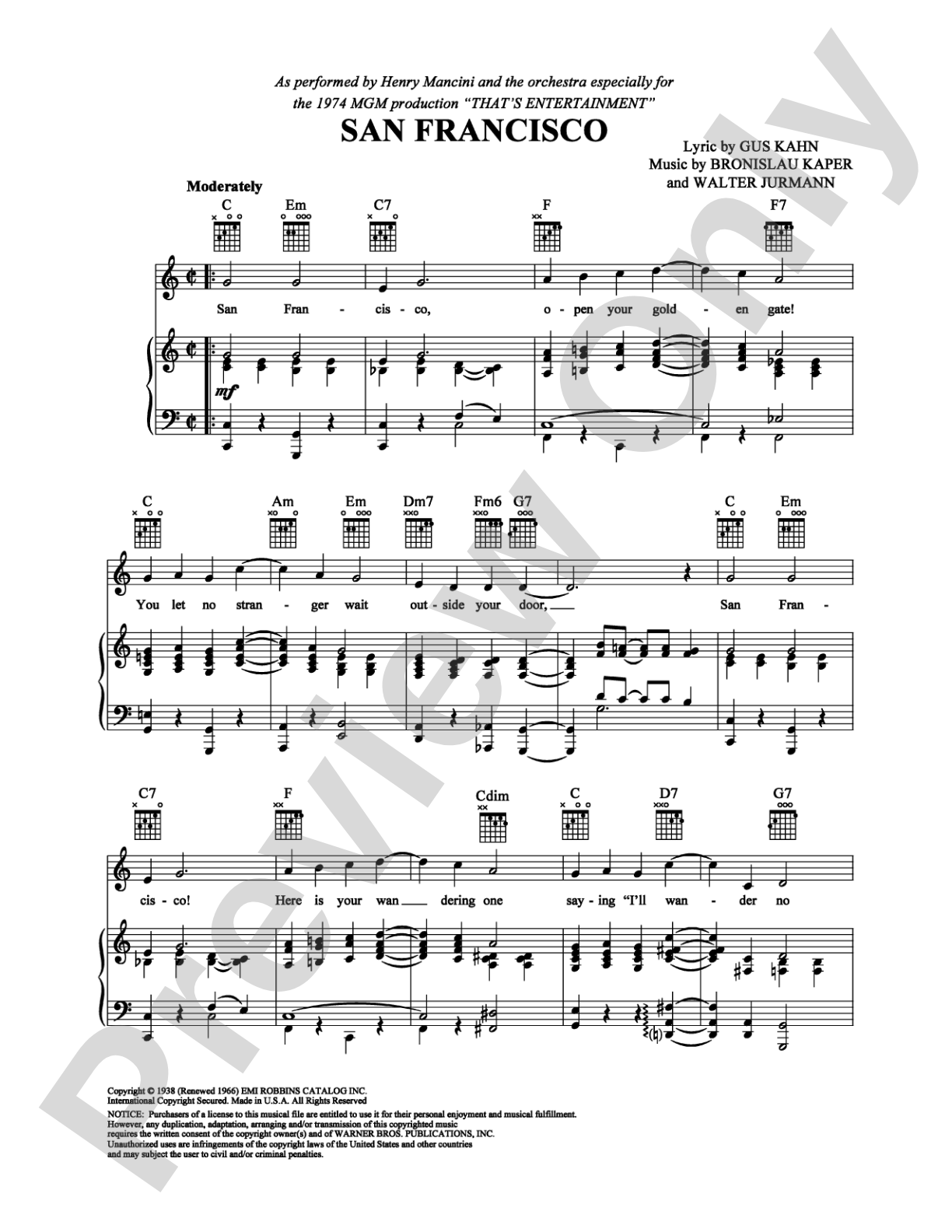
San Francisco: Piano/Vocal/Chords Digital Sheet Music

San Francisco: Piano/Vocal/Chords Digital Sheet Music

Henry Mancini, Brian Kaper, Walter Jurmann

Item: 00-PS-0007058

Digital Download
$3.99
Description

San Francisco: Piano/Vocal/Chords Digital Sheet Music isn't in MakeMusic Cloud just yet...but it could be. Let us know you'd like to see it, and you'll help shape what comes next. In the meantime, start a free trial and dive into thousands of interactive titles your students can play along with today.

Sample Audio
No sample audio found.
Sample Video
Additional Details
SKU: 00-PS-0007058

More about this title

About the Artist: Henry Mancini

Henry Mancini (1924–1994) composed some of the most recognizable melodies in American popular music, with particular mastery in film scoring and jazz-inflected standards. His gift for writing singable, sophisticated melodies paired with accessible harmonic language made his work equally at home in concert halls, jazz clubs, and living rooms.

Why we love this

Mancini's harmonic vocabulary sits perfectly between jazz and pop sensibility, making this a genuinely rewarding piece to learn and perform at the piano. The melody is generous and memorable, but the chord changes require real attention to voice leading, so singers and pianists both grow through learning it well.

What to expect

The piece evokes the cool, contemplative mood of 1960s San Francisco nightclubs. There's an underlying sophistication here, the sort of elegant melancholy you find in late-night conversations, paired with the unmistakable warmth of Mancini's gift for memorable melody.

Who it's for

Jazz singers and pianists working toward more sophisticated repertoire, as well as music theater performers and wedding musicians seeking standards with real harmonic interest. This works beautifully for advanced high school students or college-level singers preparing recitals or jazz ensemble gigs.

How to get the most out of it

  • Treat the piano part as a full harmonic foundation, not just chords. Shape the left hand with subtle dynamic shaping to support (not overshadow) the vocalist.
  • Approach the melody with the phrasing of conversational speech. Mancini wrote singable lines; let the natural contours breathe rather than forcing mechanical phrasing.
  • Pay attention to the jazz-influenced chords and let them color your touch at the keyboard. Minor sevenths and extended chords benefit from a warmer, more resonant sound.
  • Balance clarity of rhythm with rhythmic ease. The piece sits comfortably in a moderate tempo; rushing small note subdivisions will flatten the sophisticated feel Mancini intended.

How to use it

Pair this with other Mancini standards or classic American songbook pieces for a jazz or cabaret-style concert set. It also works well as a recital solo for advanced singers or as a feature in a jazz ensemble's standards repertoire.

Skills your students will build

  • Reading and playing jazz chord symbols and extensions (sevenths, ninths, alterations)
  • Balancing vocal melody with piano accompaniment and maintaining proper dynamic hierarchy
  • Interpreting swing rhythms and triplet feels in a jazz context
  • Voice leading and smooth chord transitions on the keyboard
  • Phrasing and interpretation of standard song form (AABA or similar)

You May Also Like