
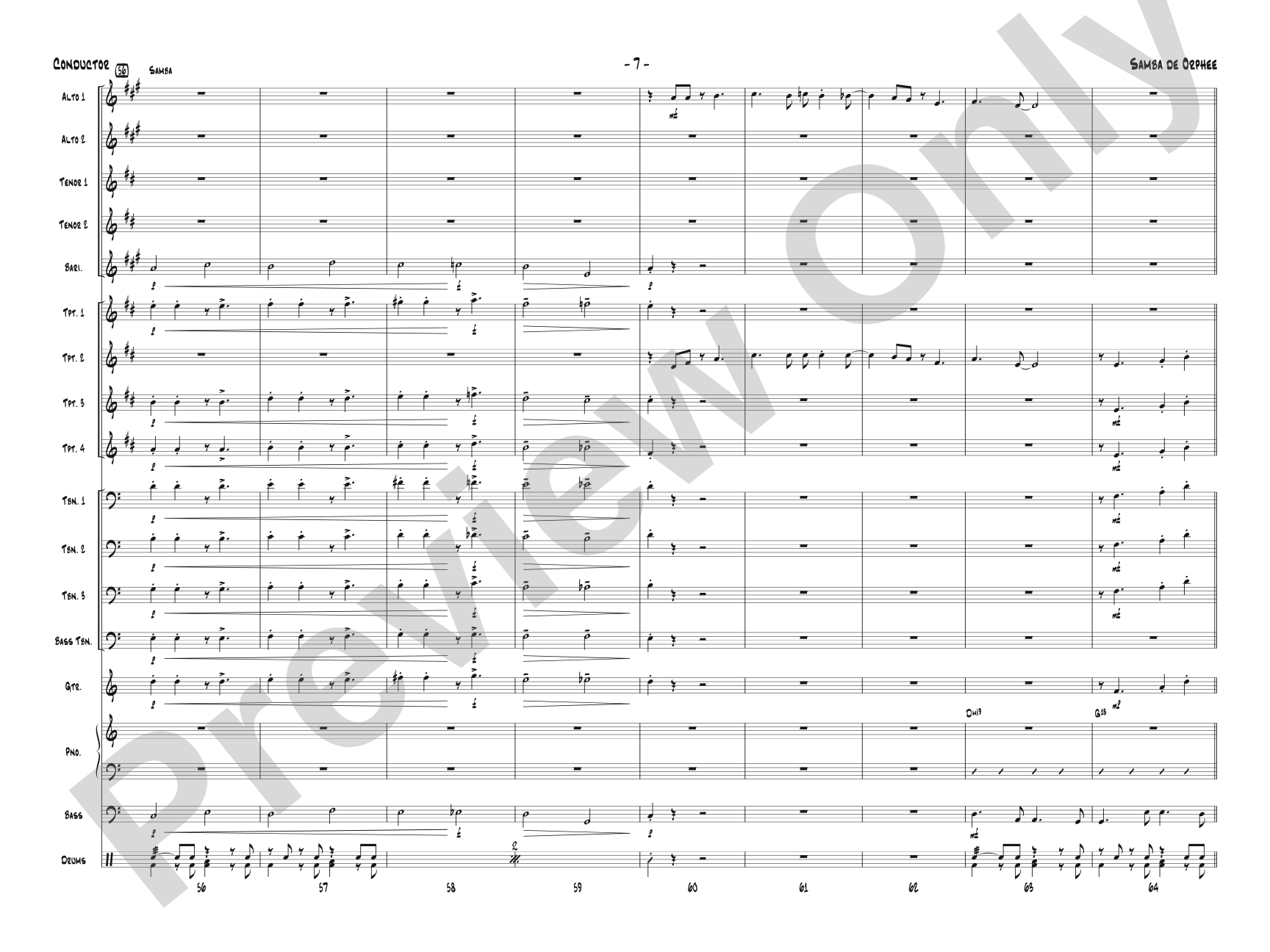
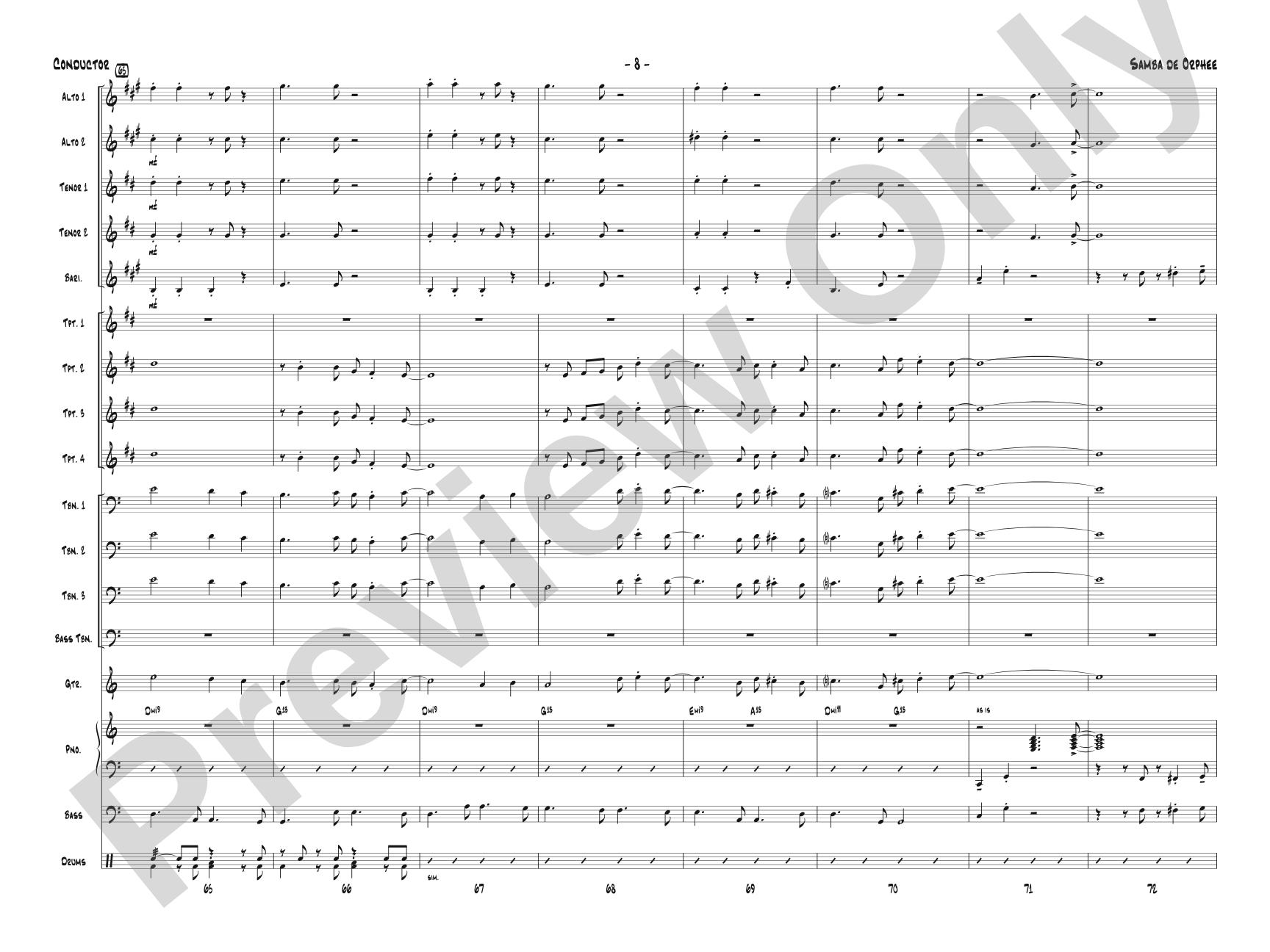
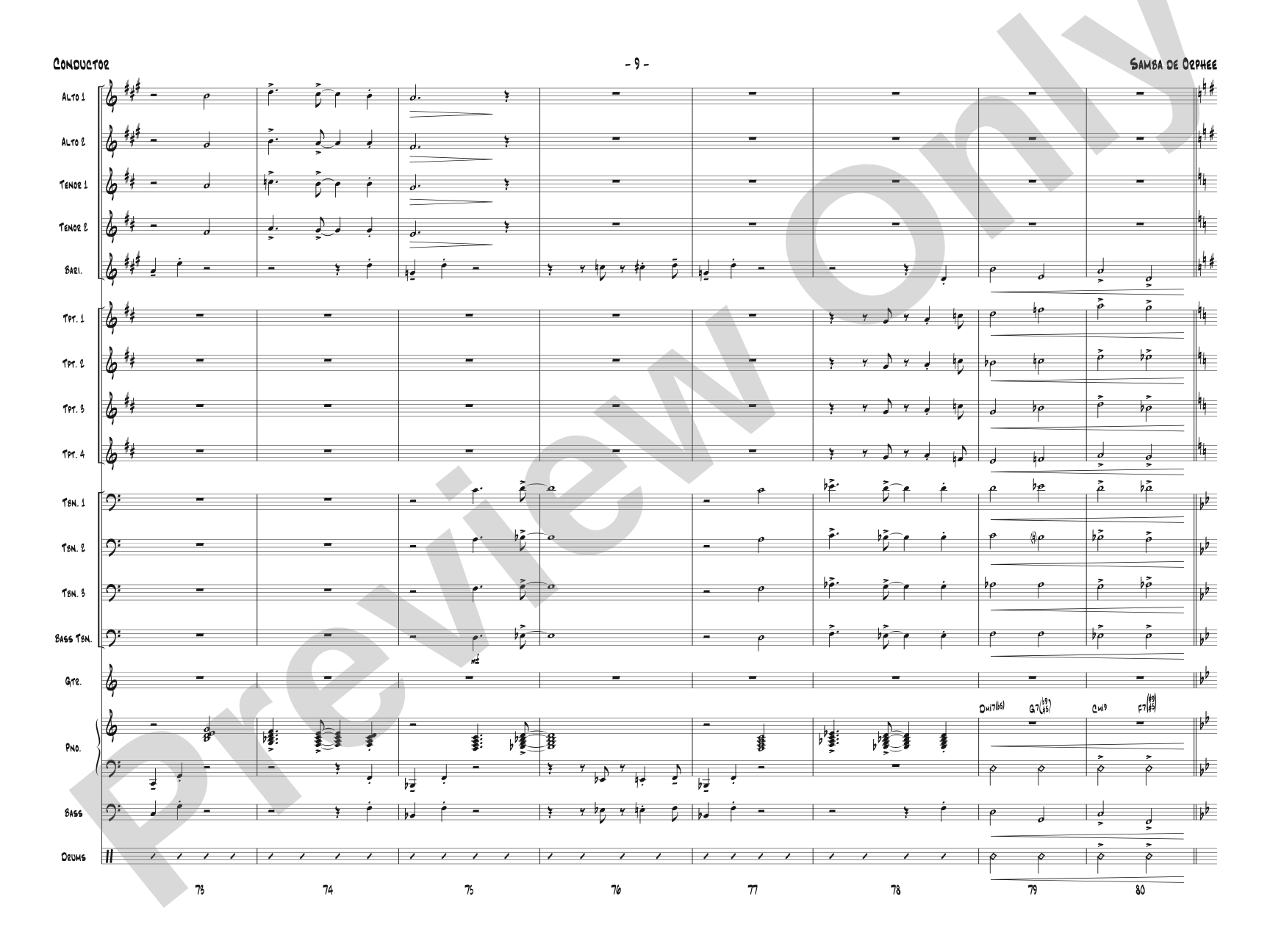
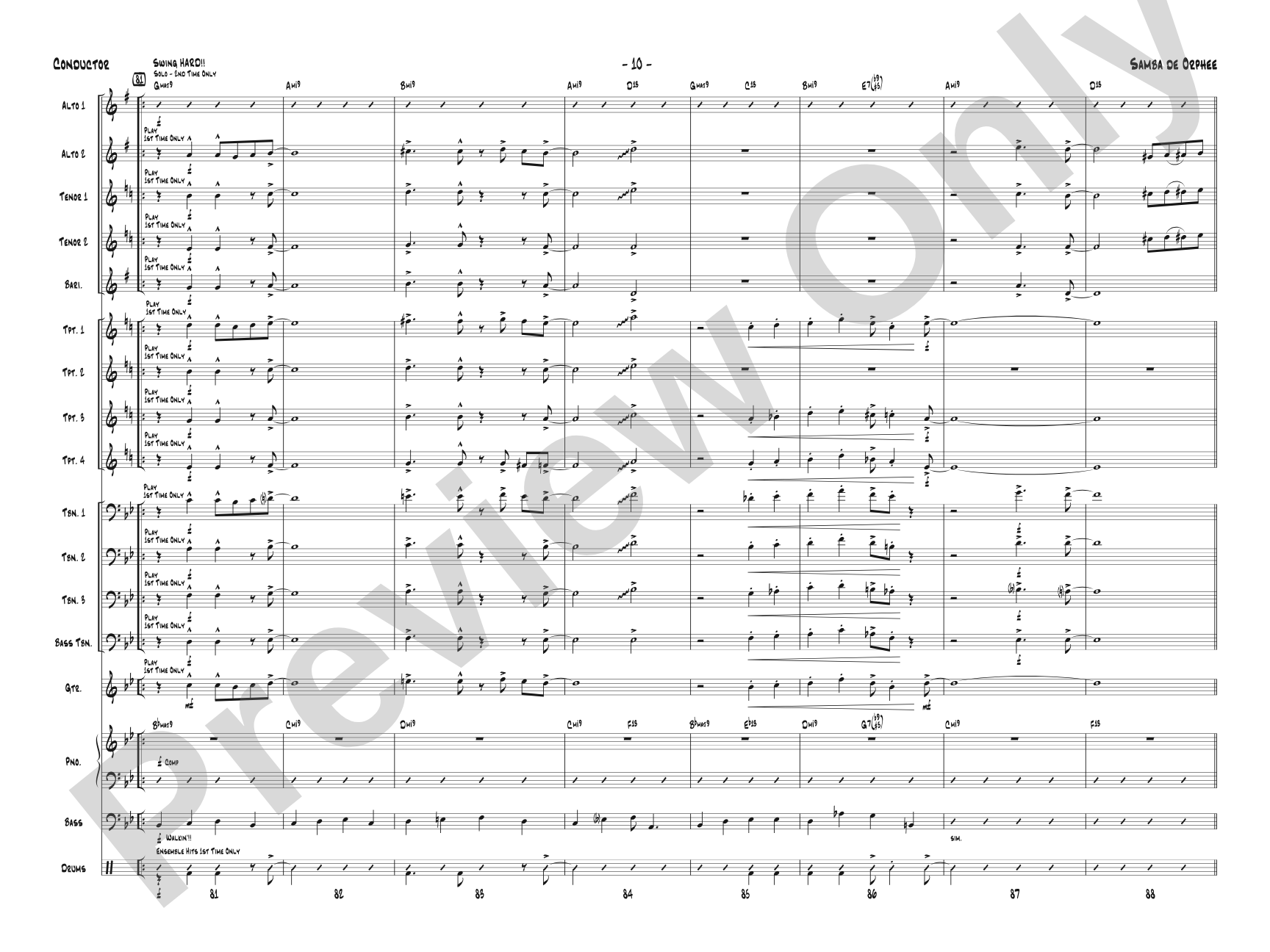
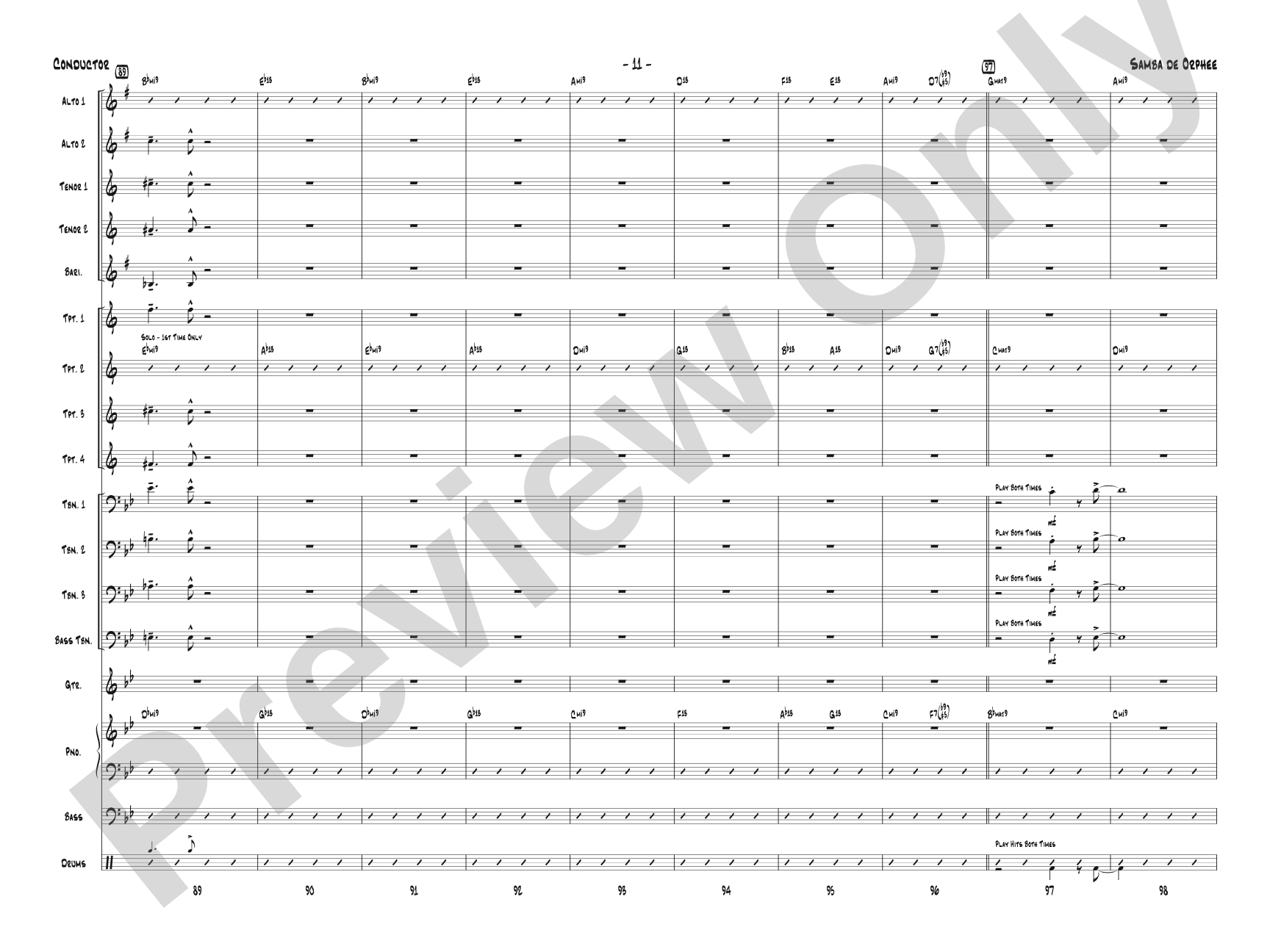
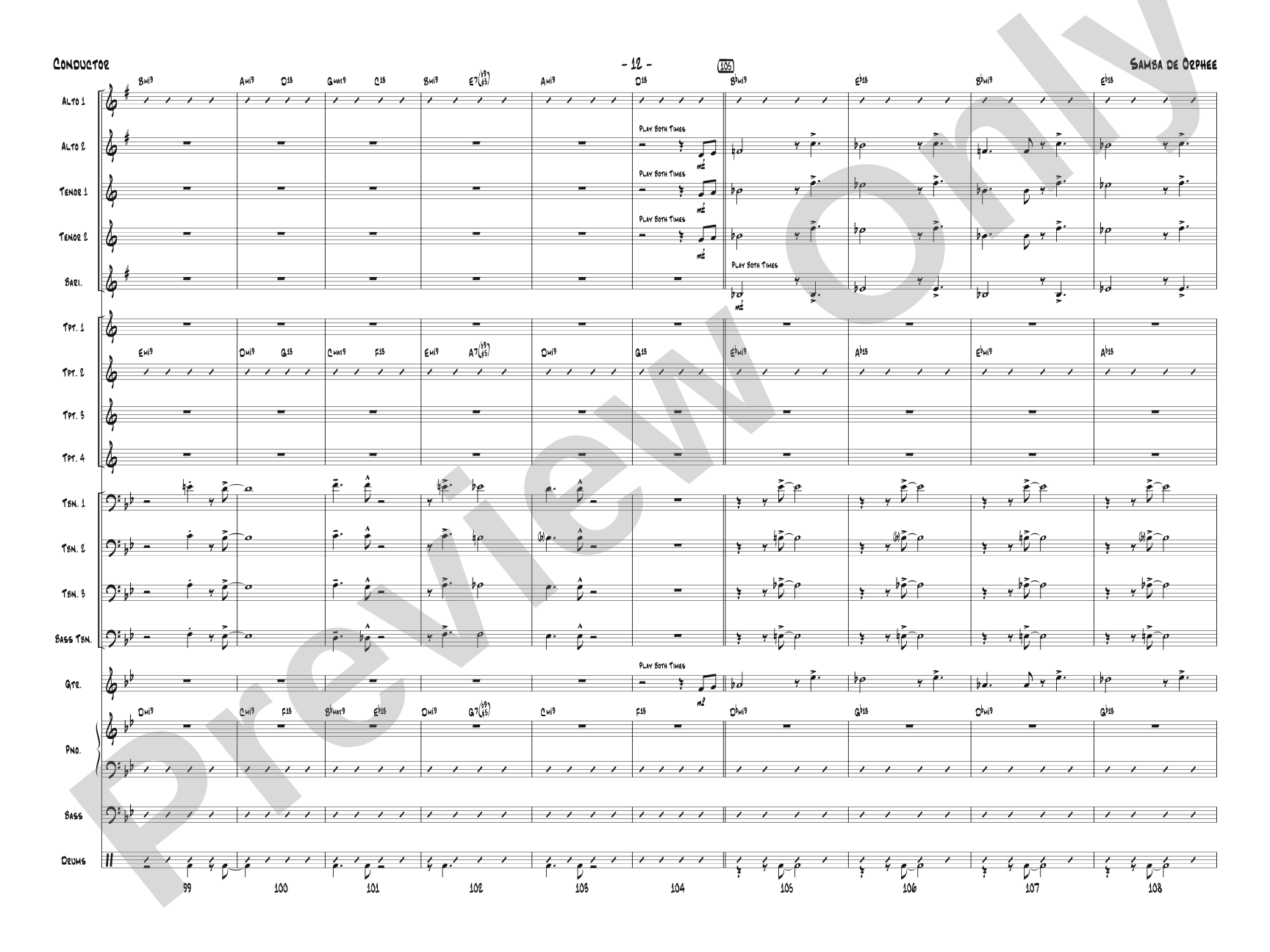
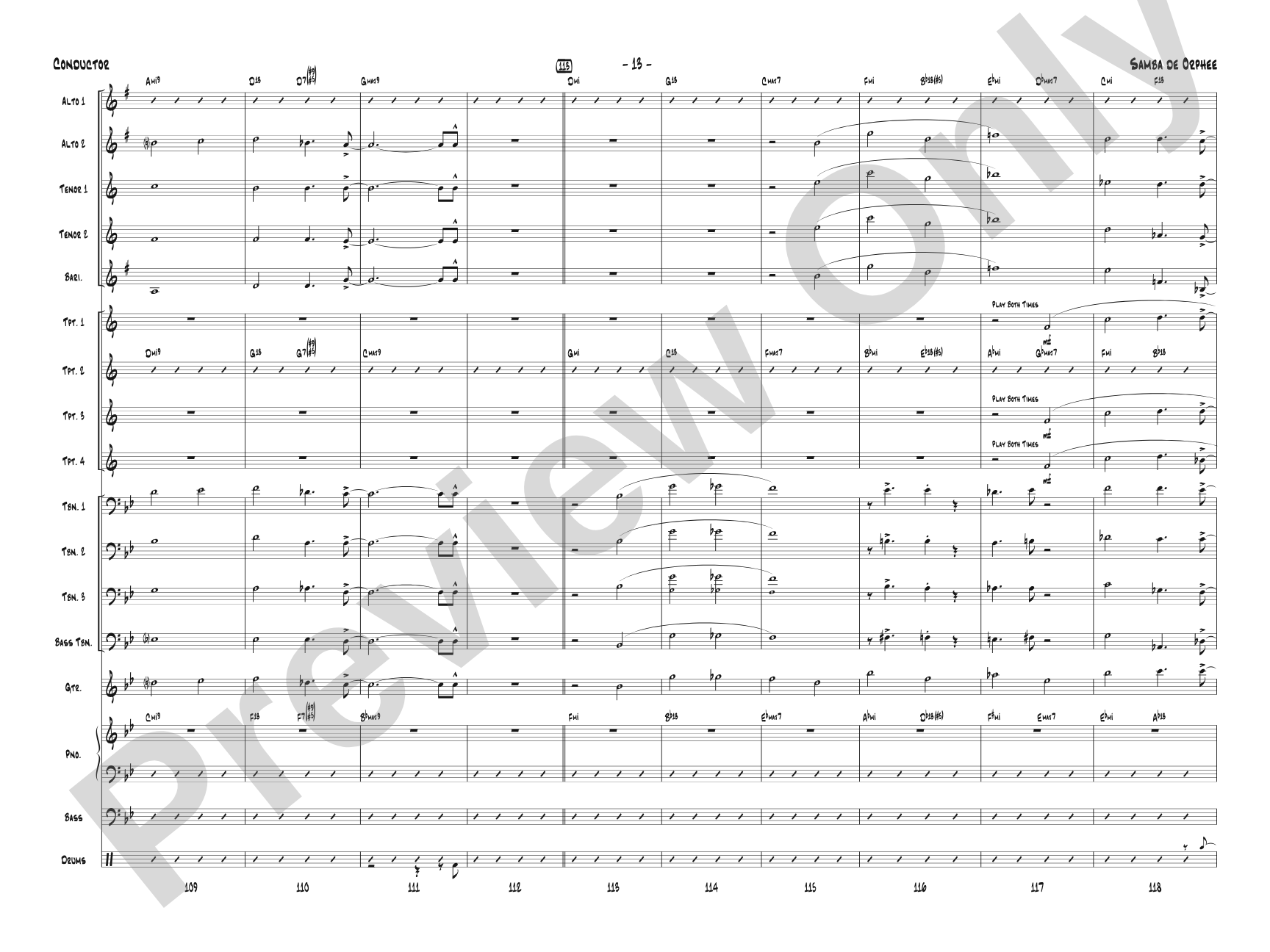
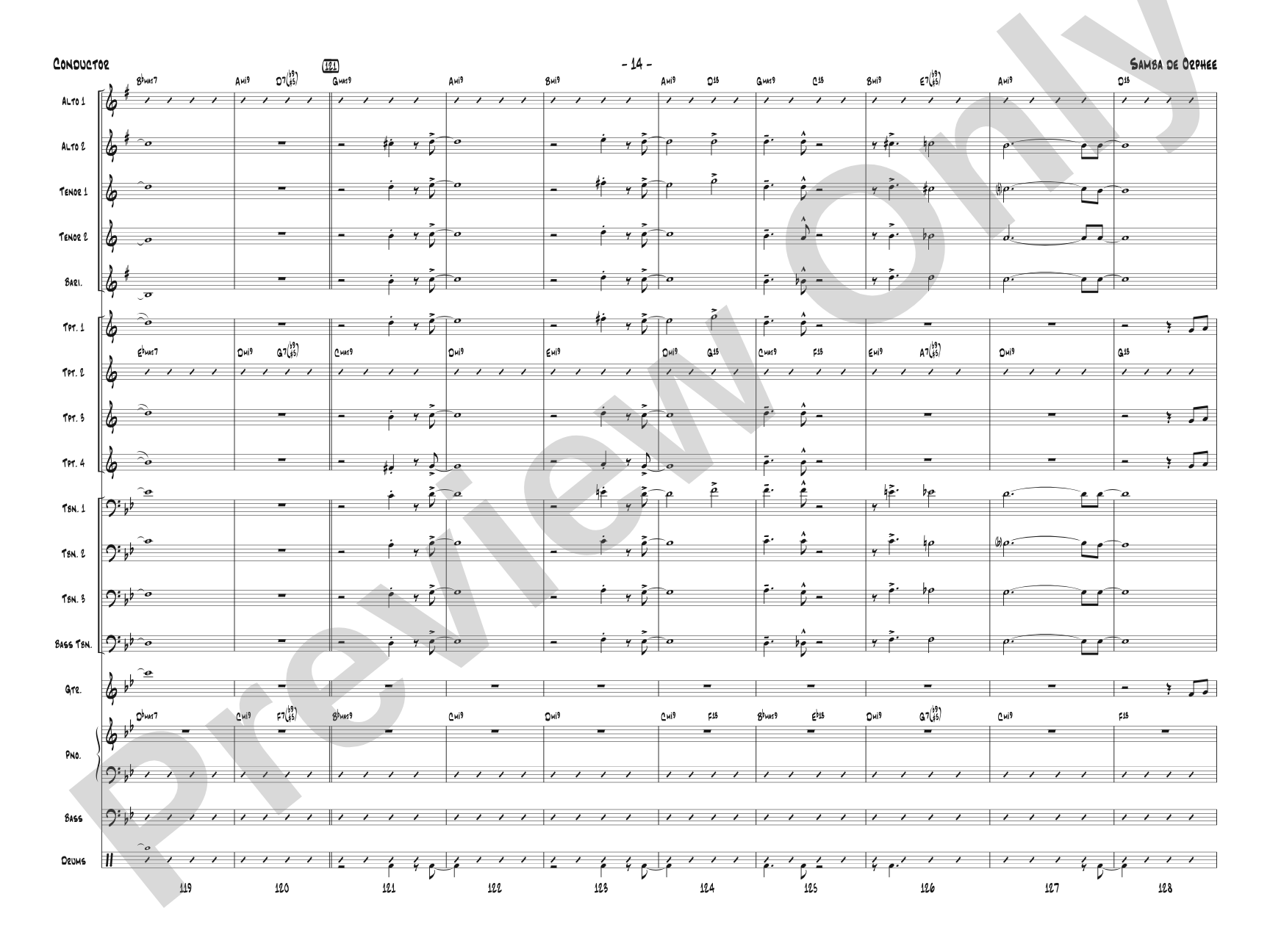
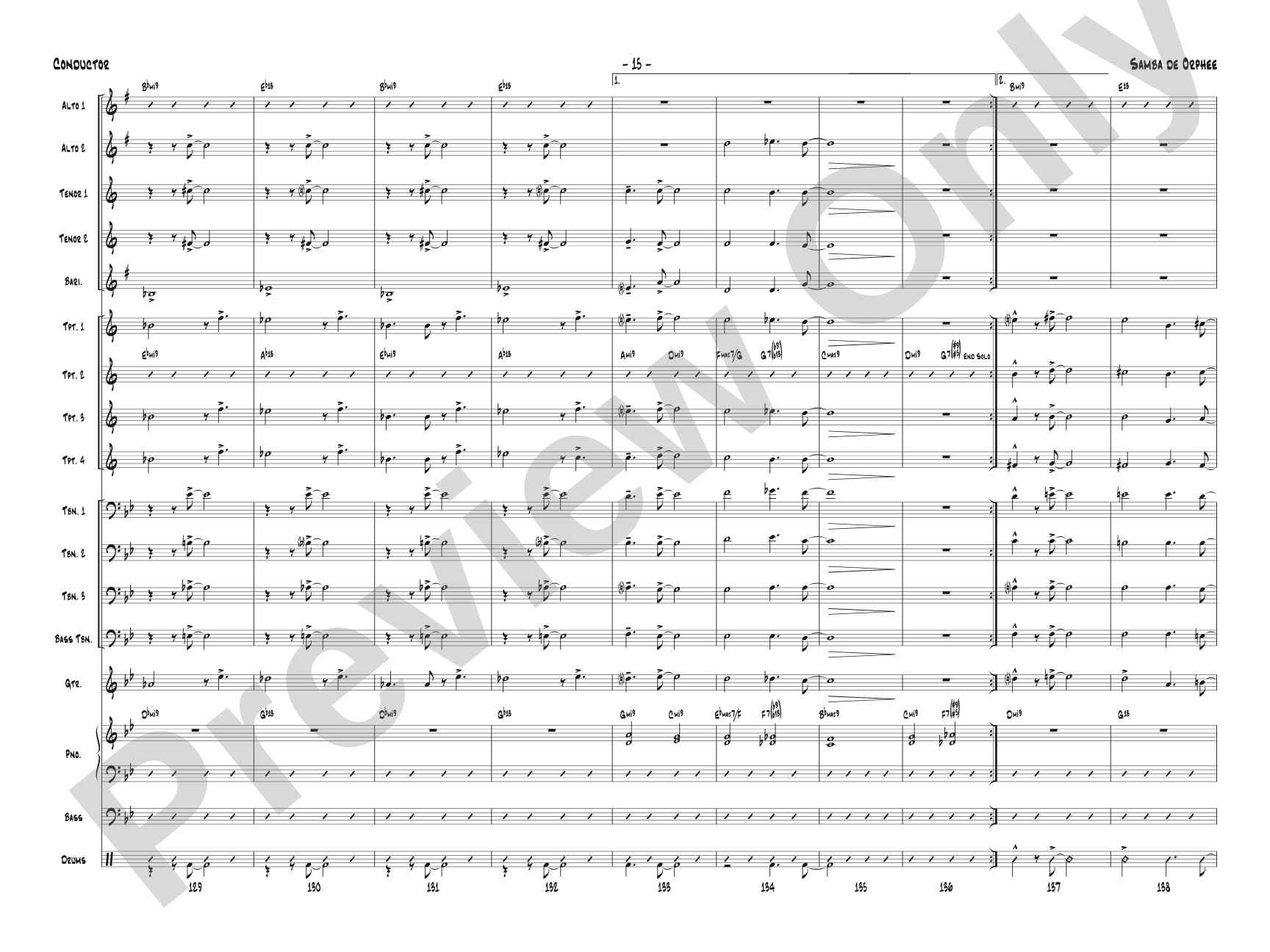
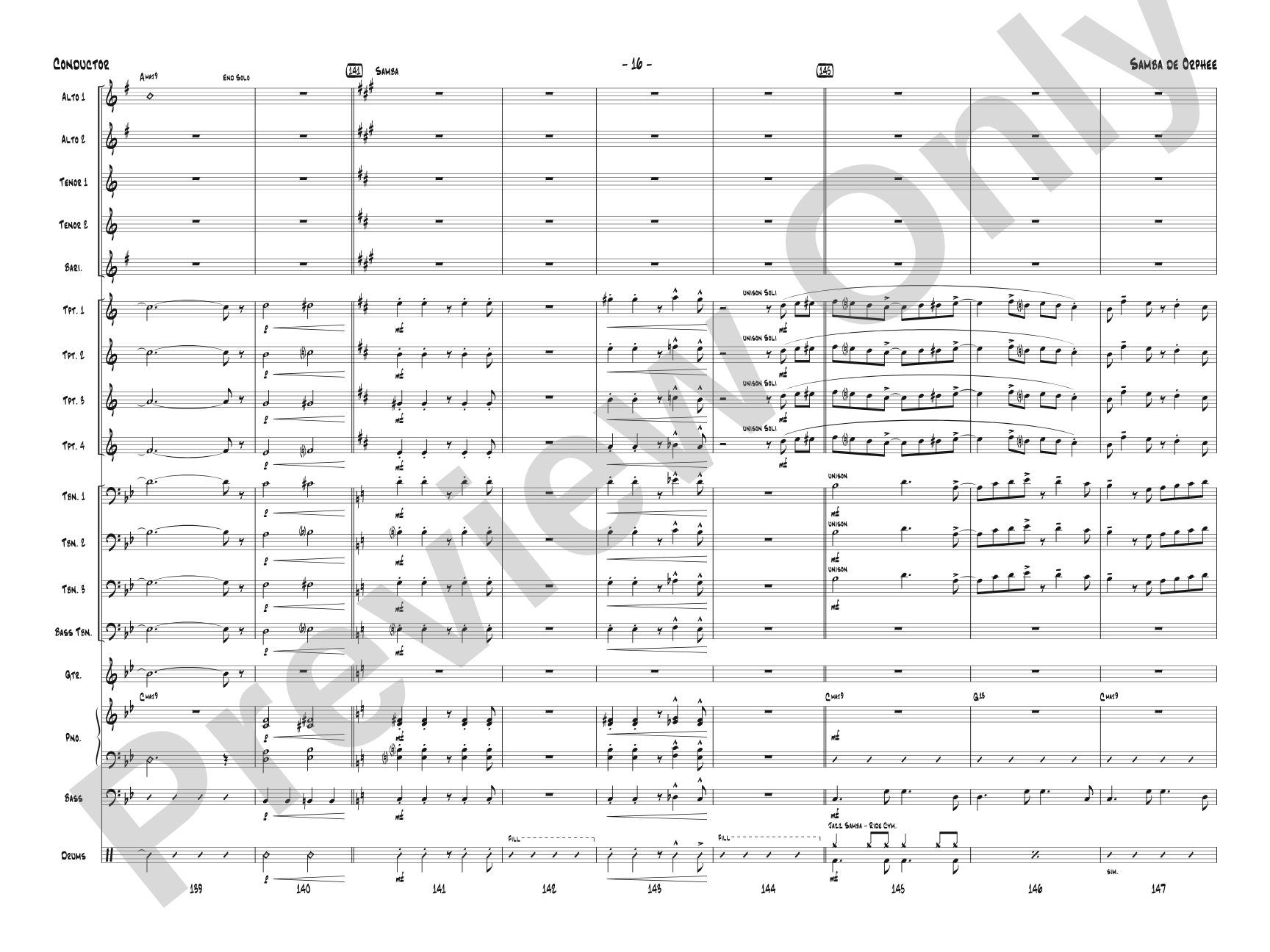
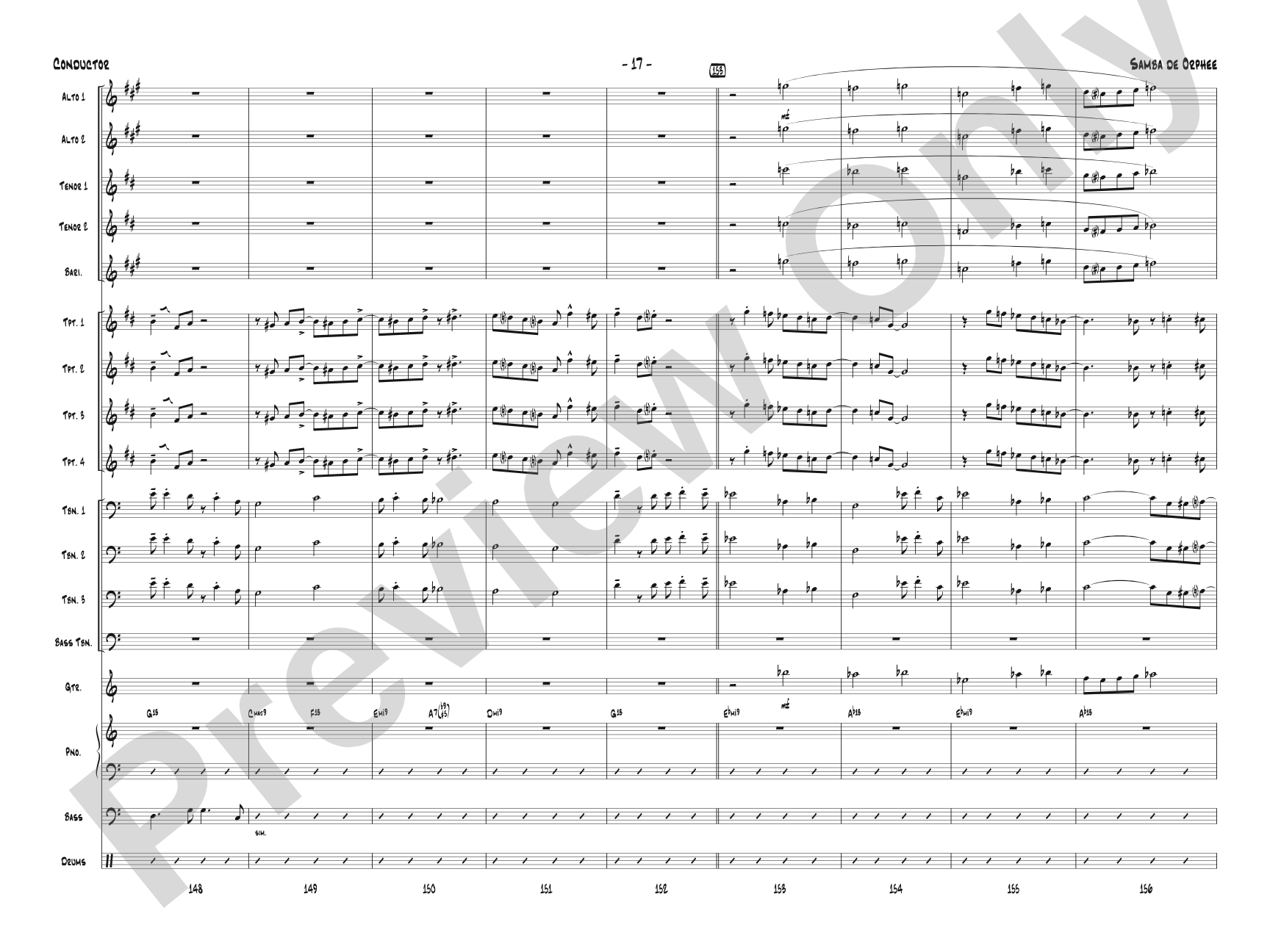
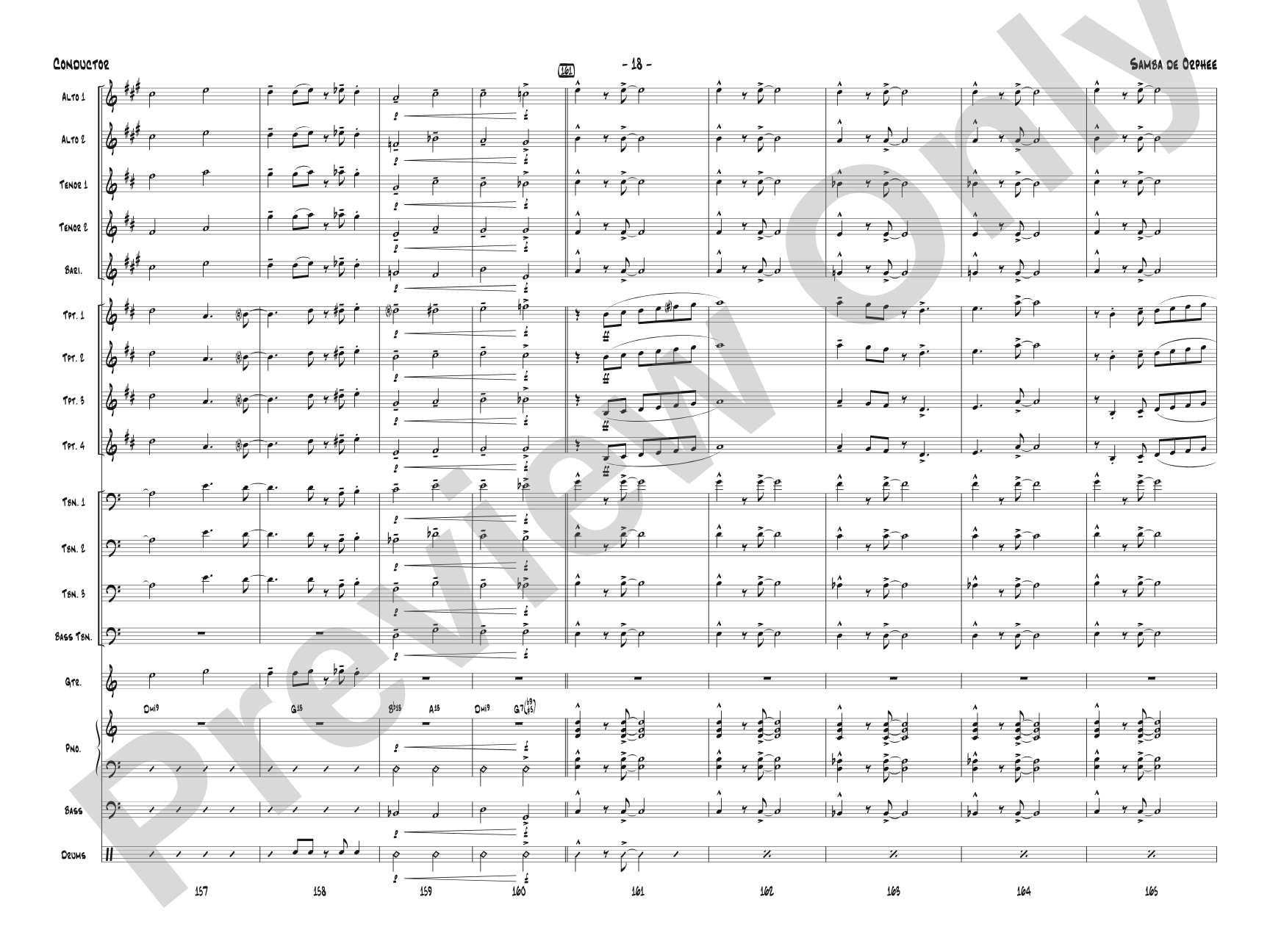
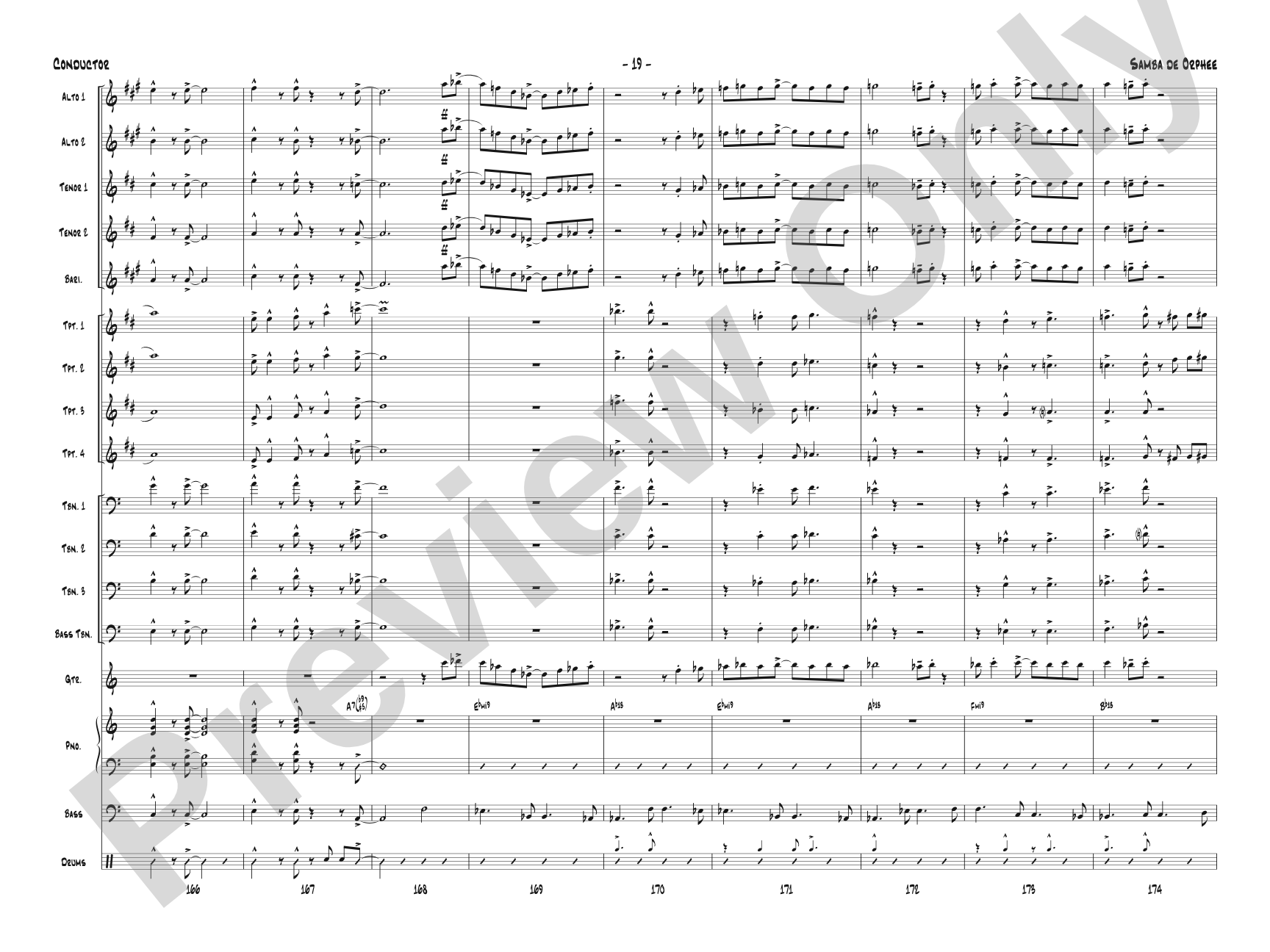
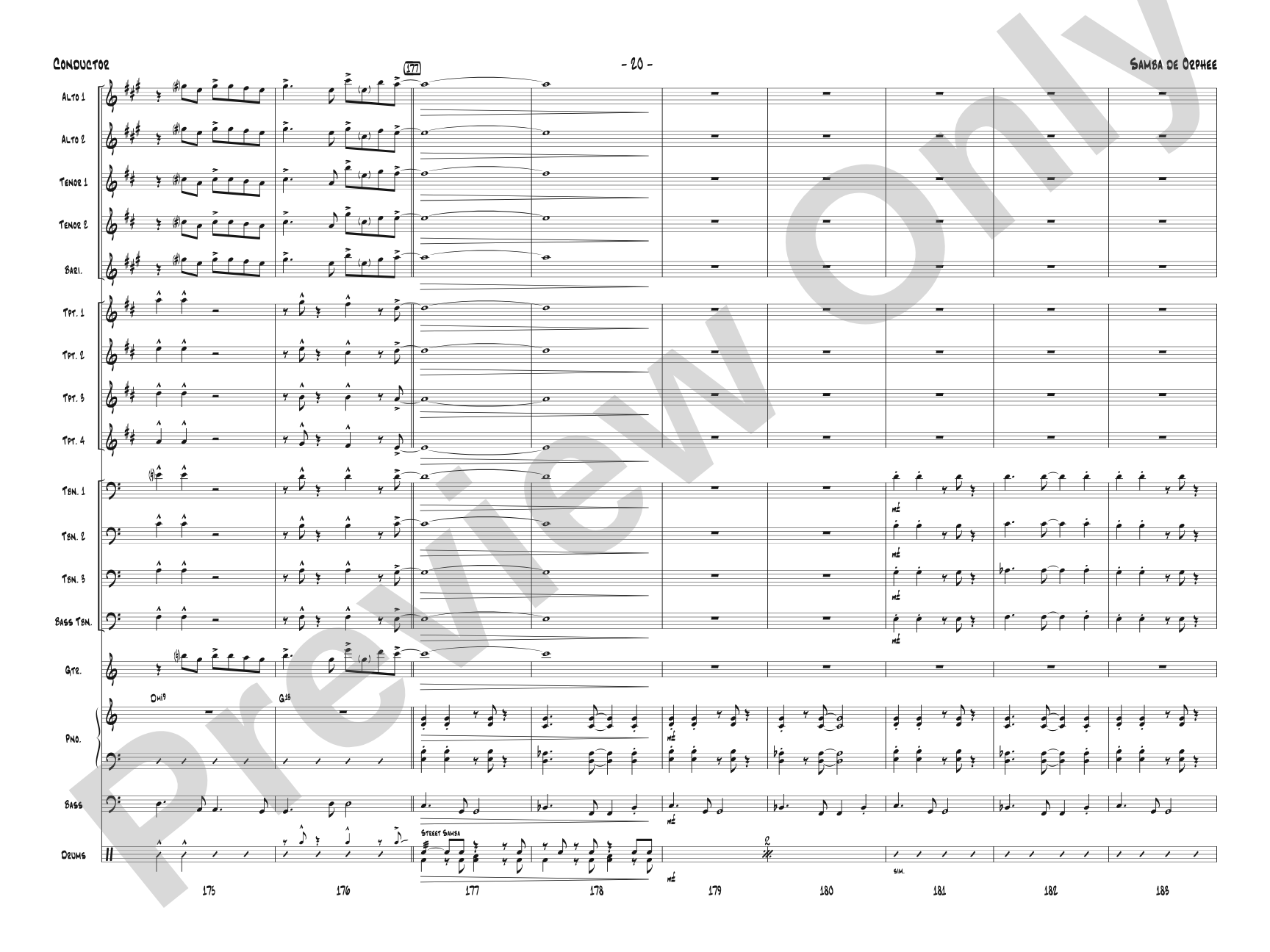
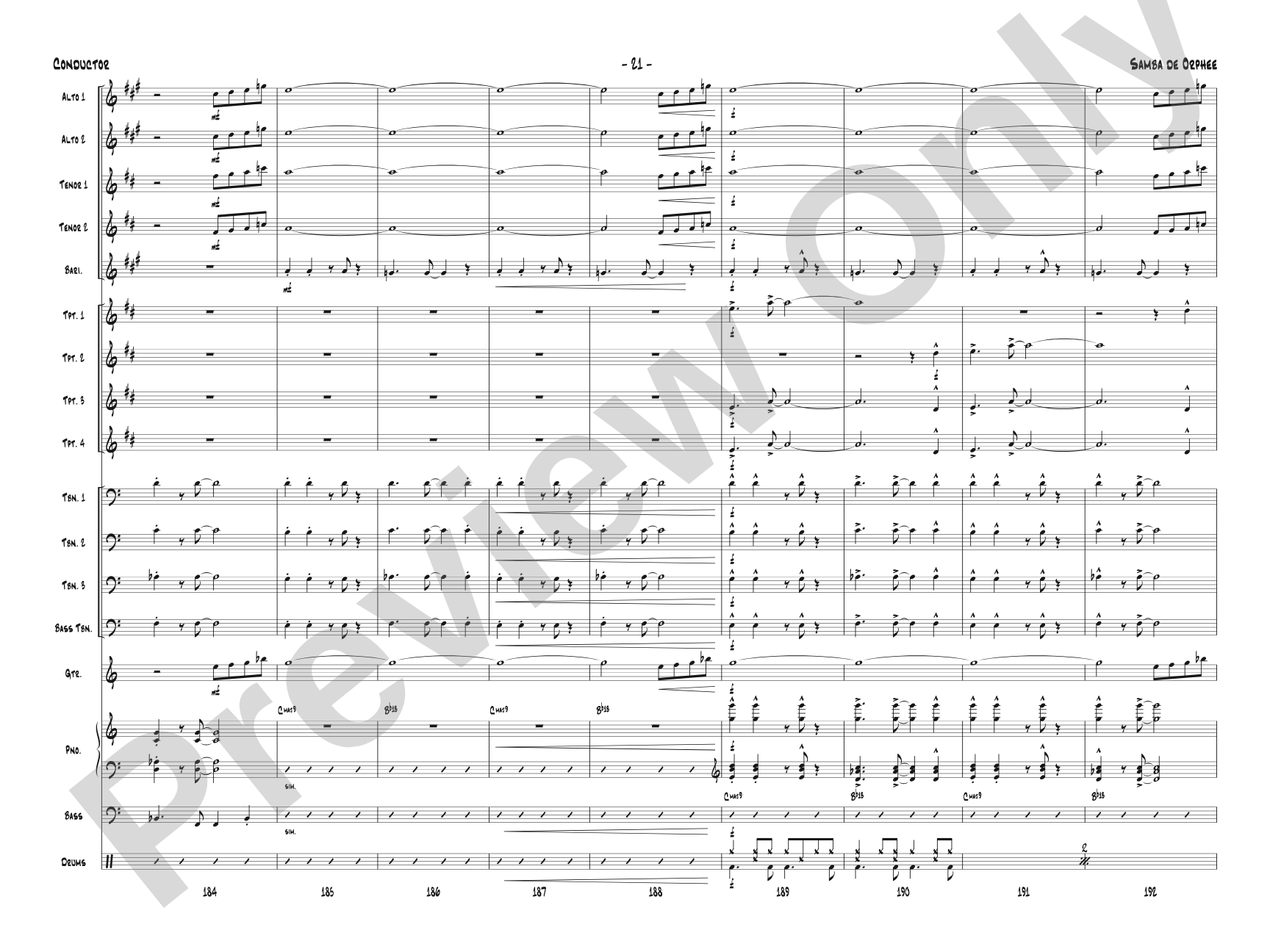
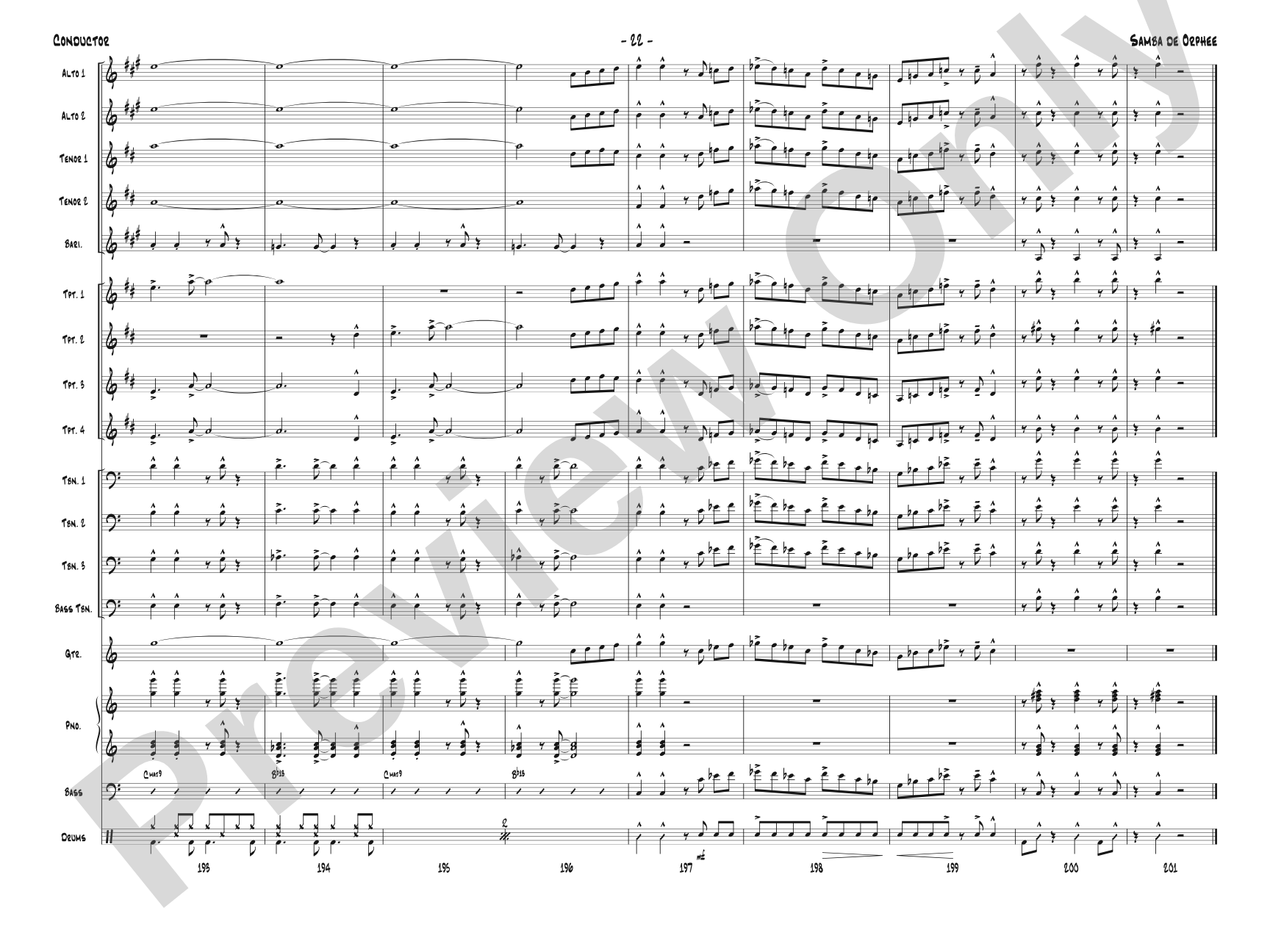

Samba de Orphee: Jazz Ensemble Conductor Score & Parts
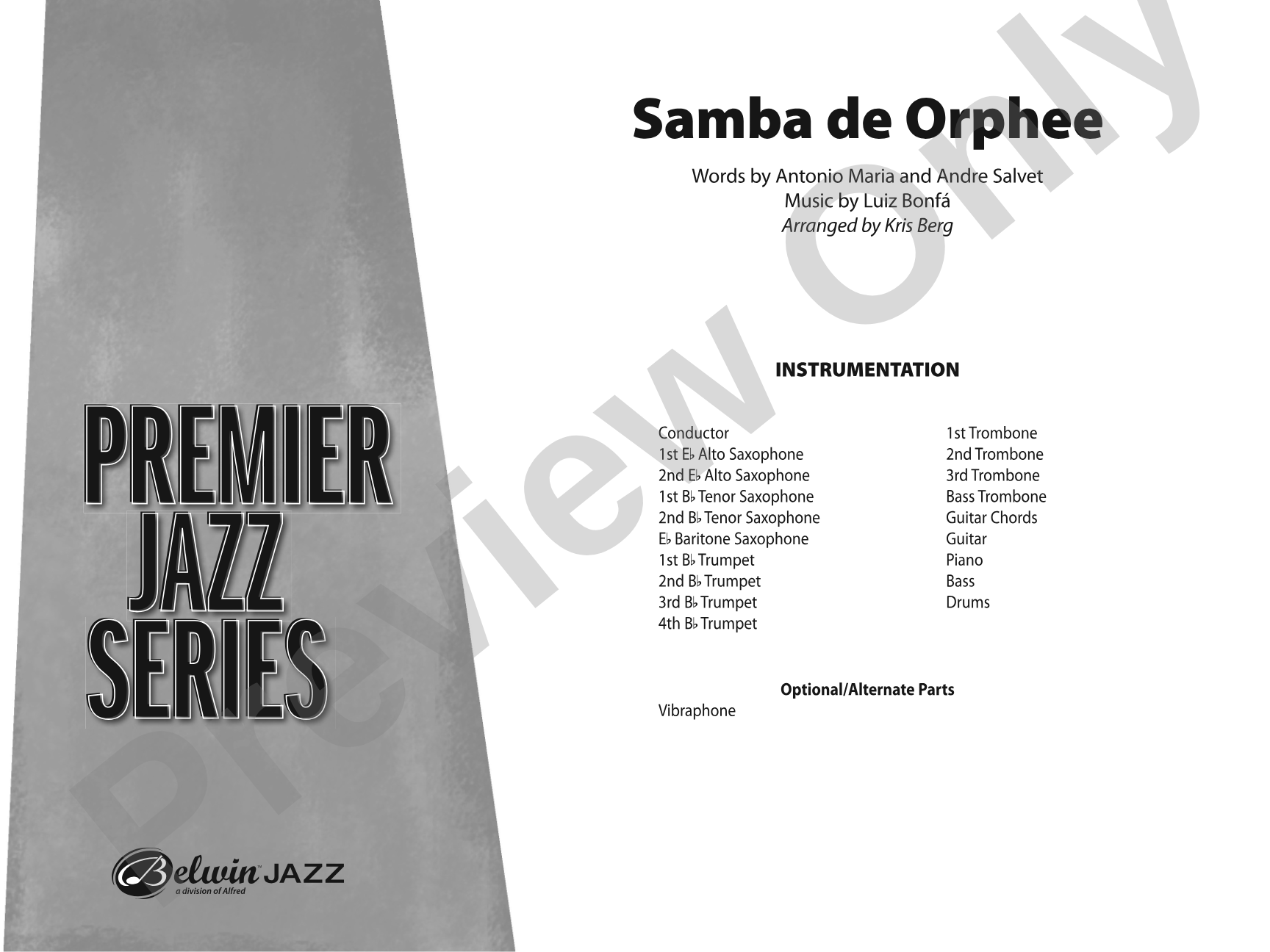
Words by Antonio Maria and Andre Salvet, music by Luiz Bonfá / arr. Kris Berg
Grade: 4 (Medium Advanced / Difficult)
Item: 00-PK-0007245

$60.00
One moment…
Description
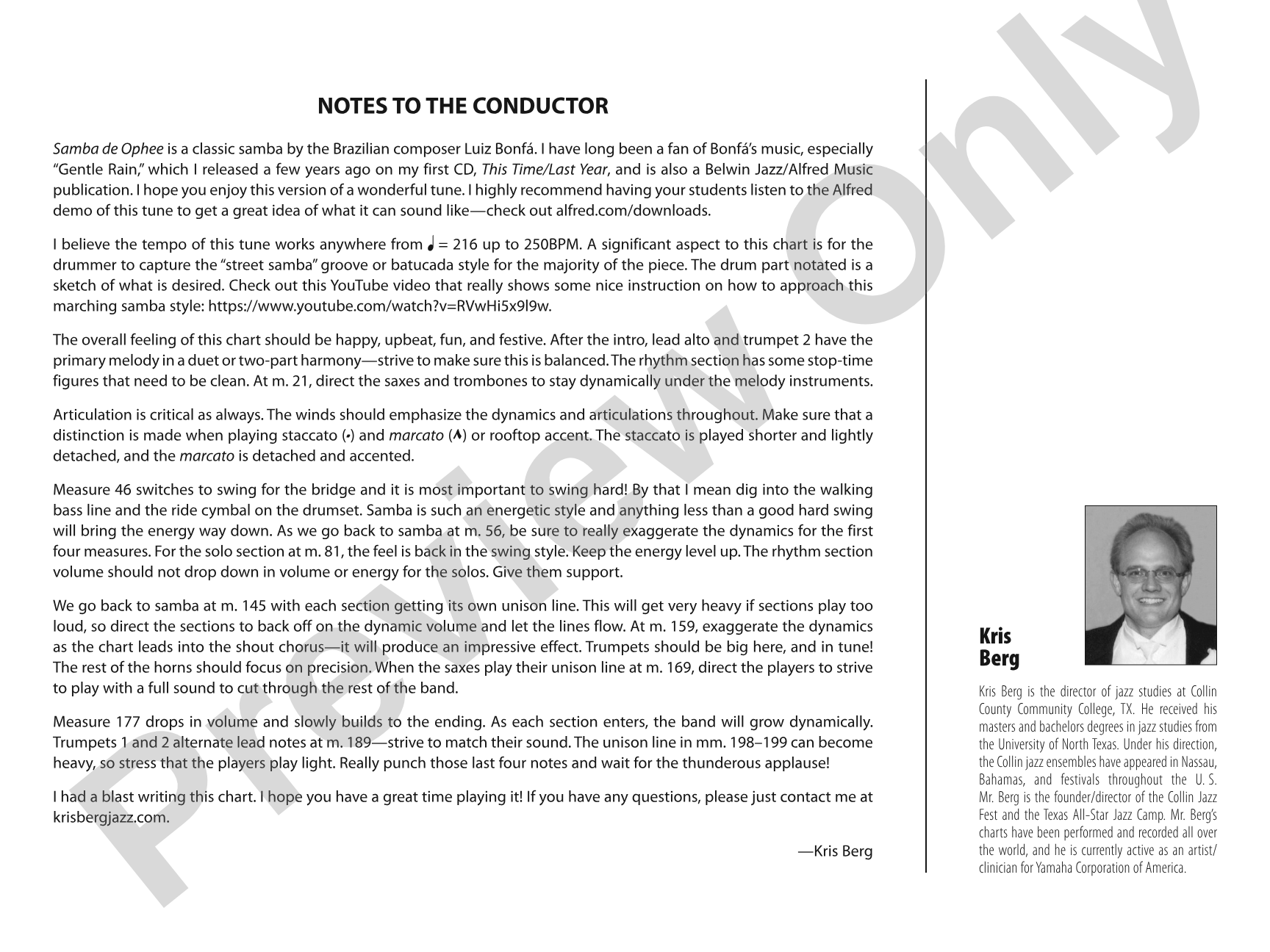
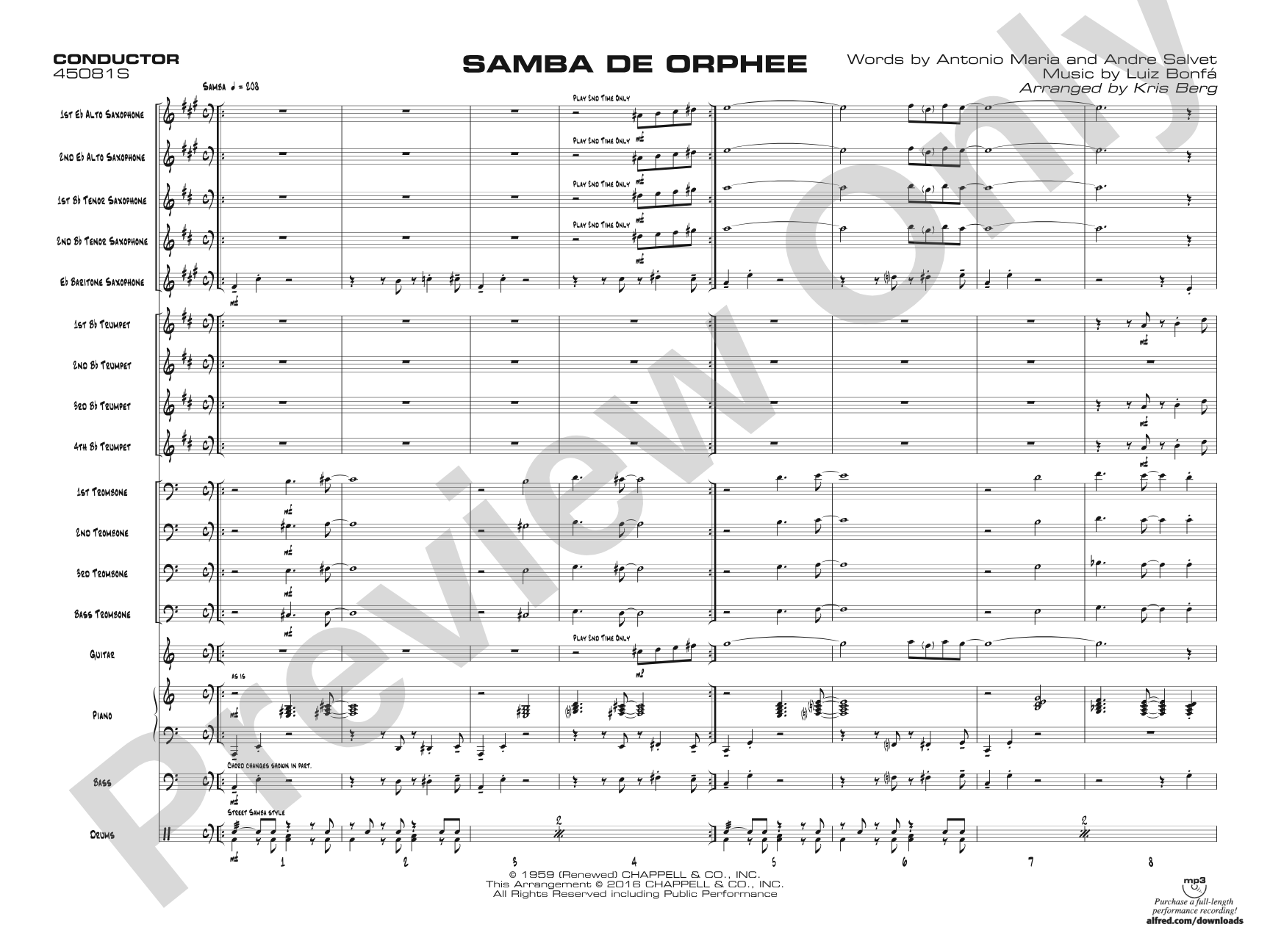
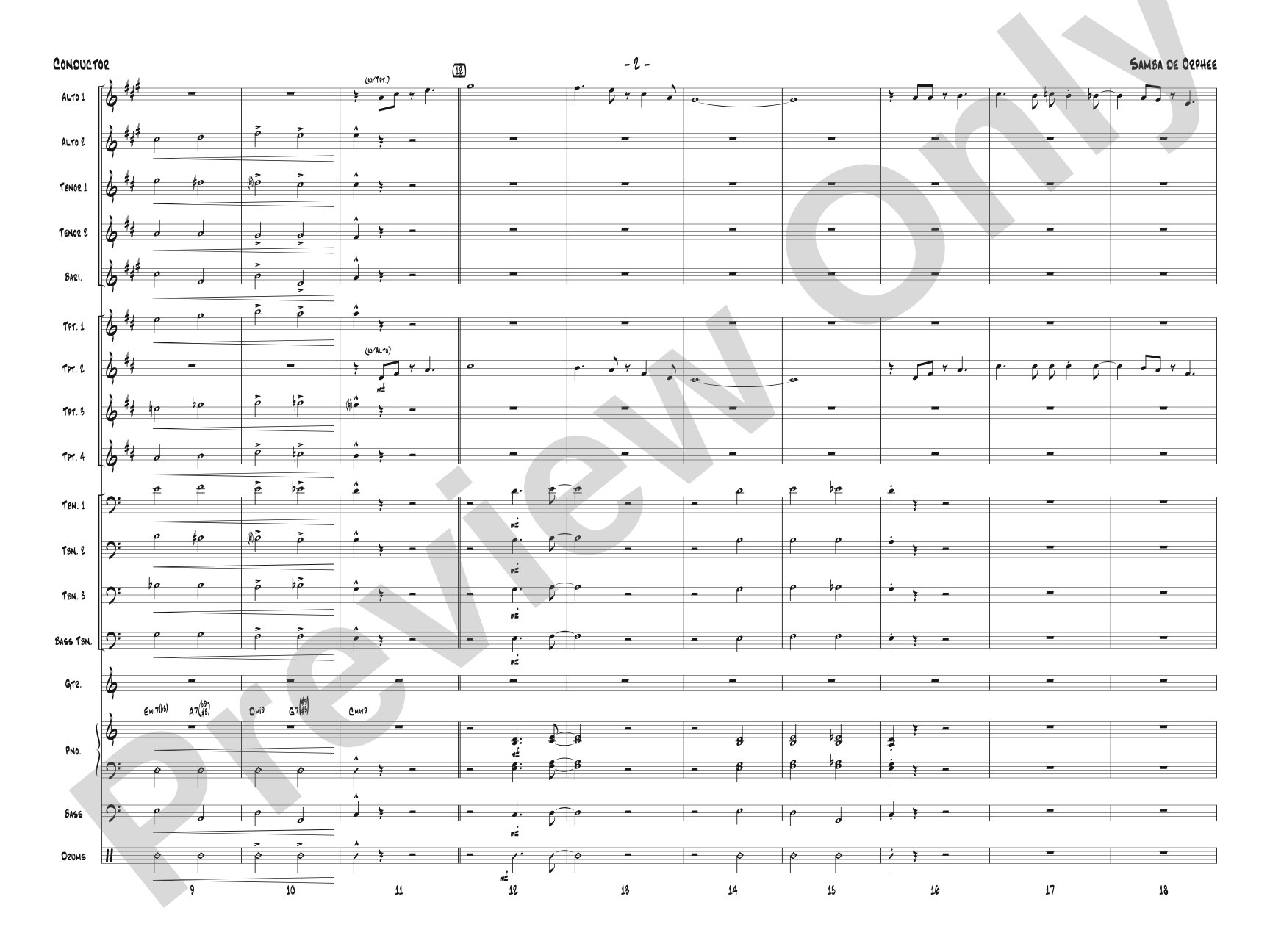
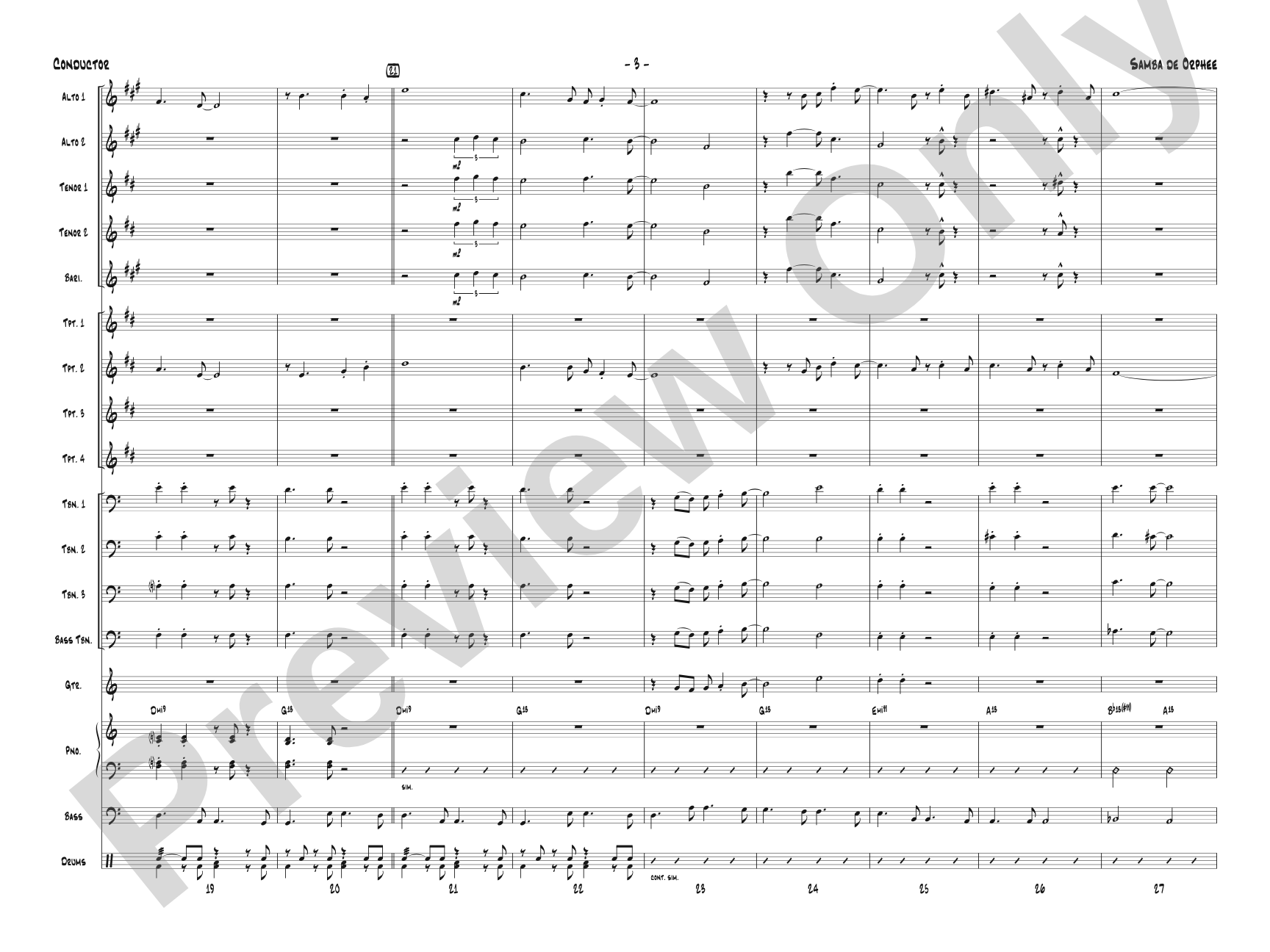
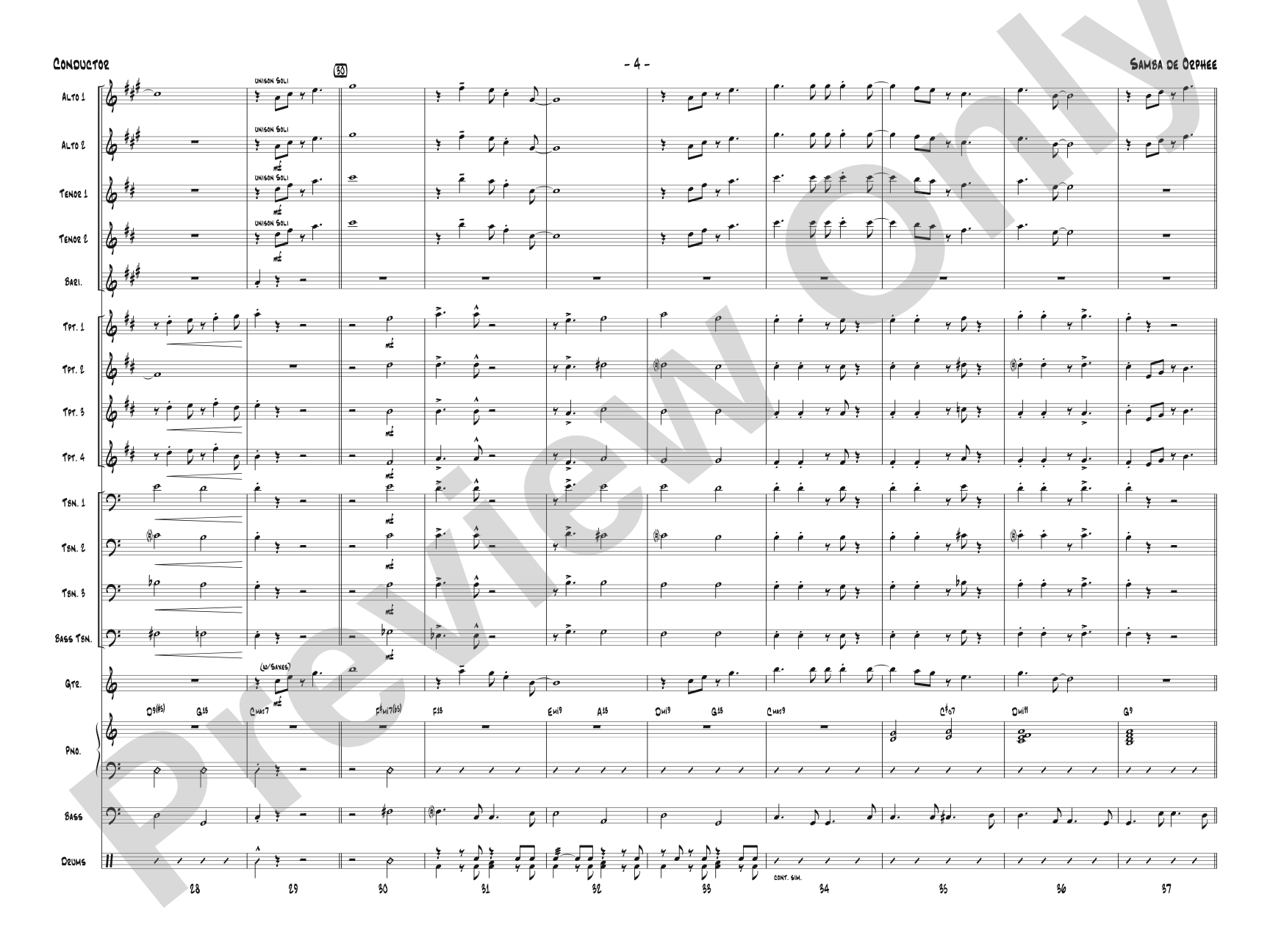
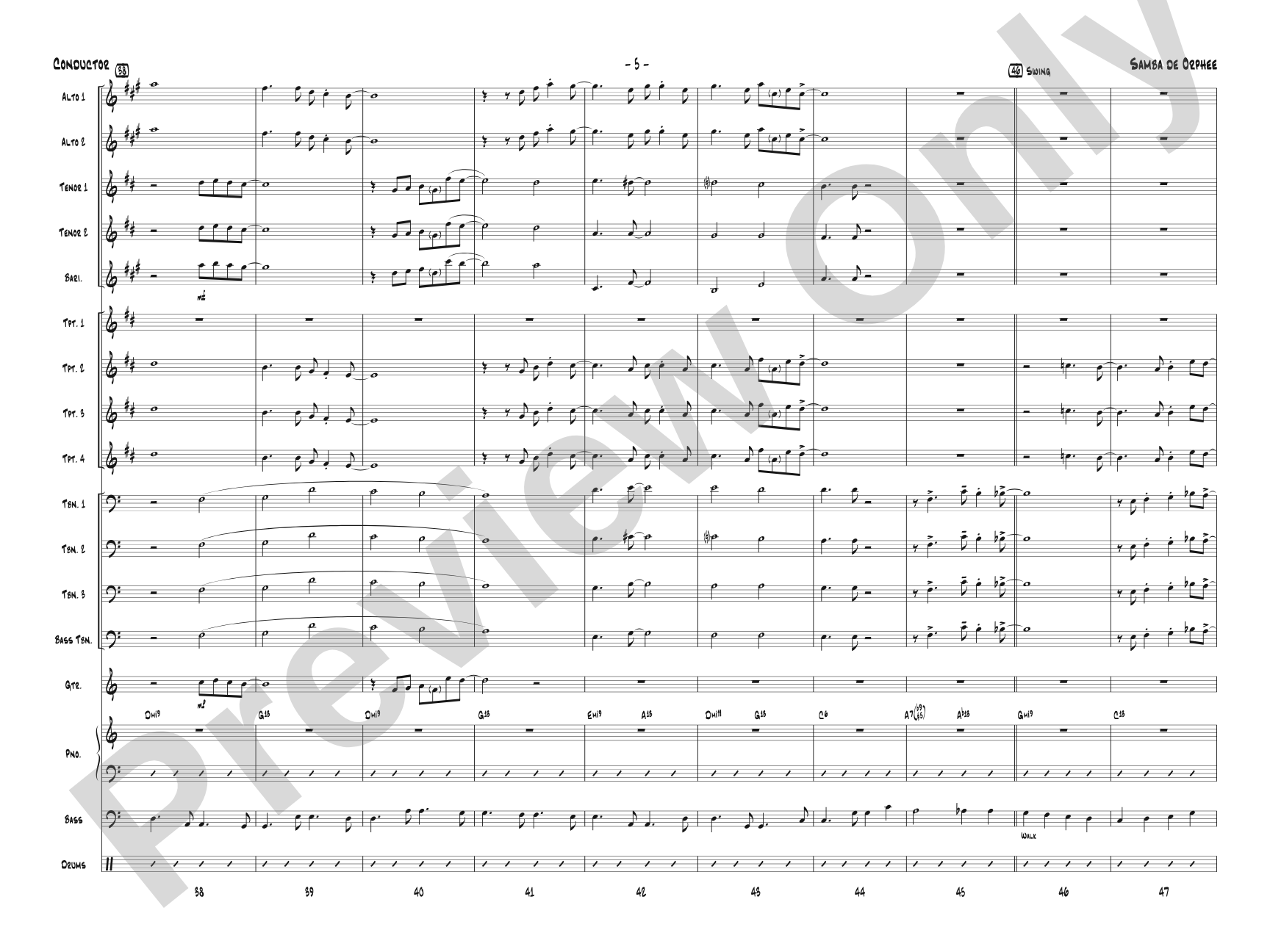
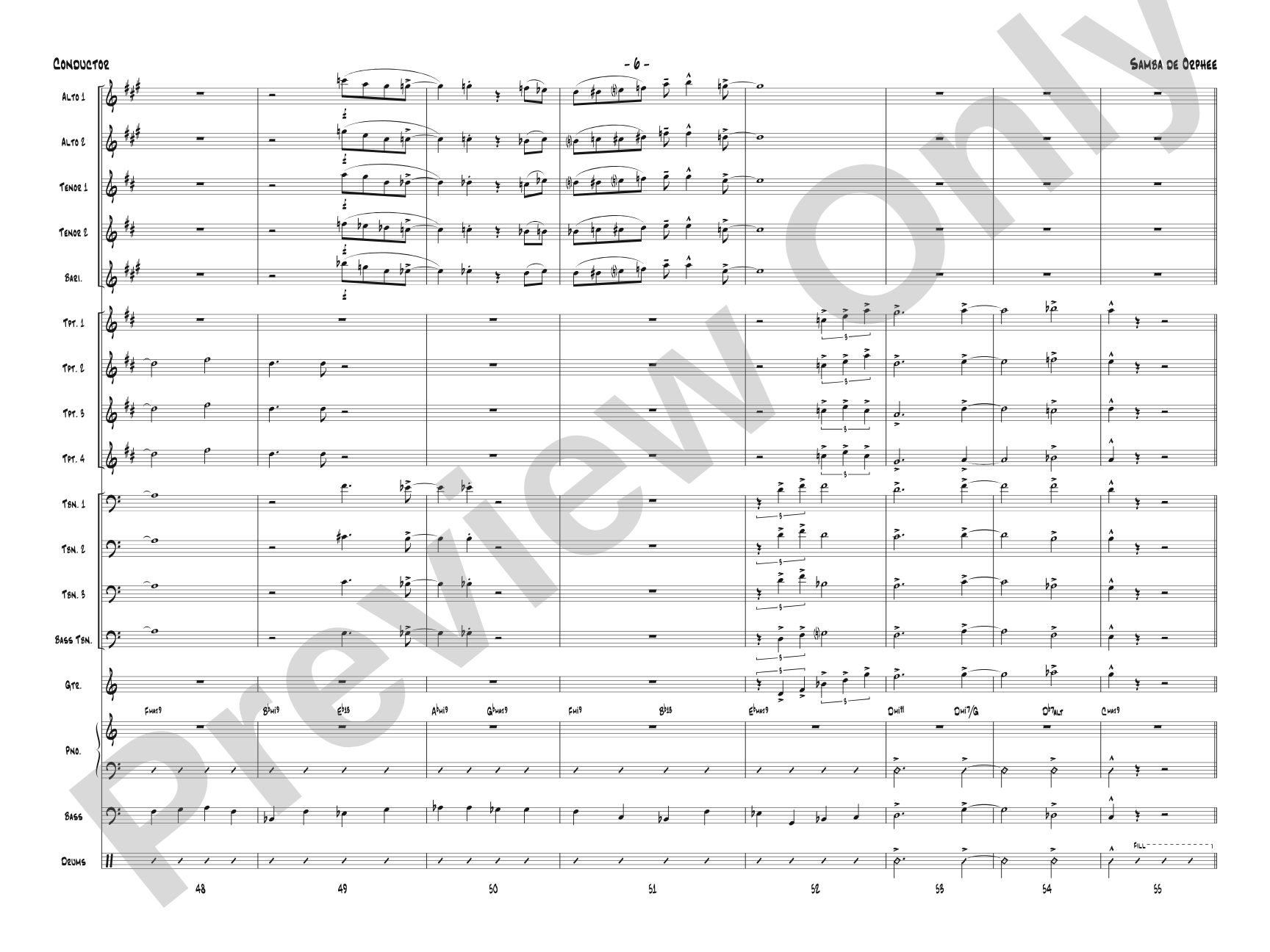
A classic samba played around 208 BPM. "Samba de Orphee" arranged by Kris Berg is bright, happy, upbeat, and festive throughout with the initial melody stated by alto 1 and trumpet 2 with solo chord changes for each. The groove switches to swing midway, then back to the samba feel. A great tune, and superb arrangement from top to bottom. (4:58)


Don't just read it, hear it, play along with it, and watch your students grow with it. In MakeMusic Cloud, Samba de Orphee: Jazz Ensemble Conductor Score & Parts comes alive with professional accompaniment, adjustable tempo, and built-in practice tools that turn solo practice into real progress.
Open in the Player
Jump straight in and assign it today.
Start Your Free Trial
Open this title and explore the full library in minutes.
Sample Audio
1
Audio File
--:--
0:00
0:00
Sample Video
Additional Details
Series:
Premier Jazz Series
Publisher:
Alfred Music
Page Count:
78
SKU:
00-PK-0007245
More about this title
About the Composer: Luiz Bonfá
Luiz Bonfá (1922-2001) was a Brazilian guitarist, composer, and songwriter who shaped the sound of bossa nova and samba during the mid-20th century. His compositions bridged classical guitar tradition with the rhythmic sophistication of Brazilian popular music, earning him recognition as one of the genre's defining voices.
Bonfá's work gained international prominence through film soundtracks and collaborations with artists across jazz and popular music. His melodies remain central to the jazz repertoire, valued for their lyrical elegance and harmonic depth.
Why we love this
Kris Berg's arrangement captures the infectious energy of Bonfá's melody while building sophisticated harmonic layers that challenge musicians beyond basic groove playing. The genre shift from samba to swing midway through keeps both players and listeners engaged, and the featured melody line gives your ensemble a moment of genuine personality rather than collective comping.
What to expect
Sunlit and propulsive, with the instant warmth of a classic Brazilian melody. The samba pulse drives forward with infectious optimism, then the mid-piece swing section reveals a mellower, introspective side before snapping back to brightness.
Who it's for
Jazz ensemble directors seeking a Grade 4 selection that balances accessibility with genuine musical substance. This works for ensembles with solid fundamentals in ensemble playing and groove sensitivity, ready to tackle stylistic nuance rather than just reading notes.
How to get the most out of it
- Lock the rhythmic foundation early. The groove at 208 BPM sits right at the threshold where sloppiness becomes obvious, so anchor your rhythm section (bass and drums especially) before layering ensemble parts.
- Balance the alto 1 and trumpet 2 solo melody against your harmonic background. These voices need space to breathe and be heard, even when surrounded by active ensemble figures.
- Treat the swing section as a genuine stylistic shift, not just a tempo change. The feel should genuinely lighten and settle into a swing pocket rather than maintain samba's directness.
- Let the festive character live in the articulation. Bright, clean attacks on ensemble hits will amplify the joy without sacrificing precision.
How to use it
Program this as a concert centerpiece that appeals broadly while showcasing your ensemble's jazz chops. The 4:58 duration gives it weight without monopolizing your set, and the stylistic variety makes it an ideal neighbor to both straight-ahead swing charts and more contemporary pieces.
Skills your students will build
- Samba groove and forward-motion phrasing at medium-fast tempo
- Stylistic transitions between samba and swing feels
- Solo chord changes and comping awareness
- Balancing melody prominence against harmonic ensemble figures
- Articulation precision at 208 BPM