
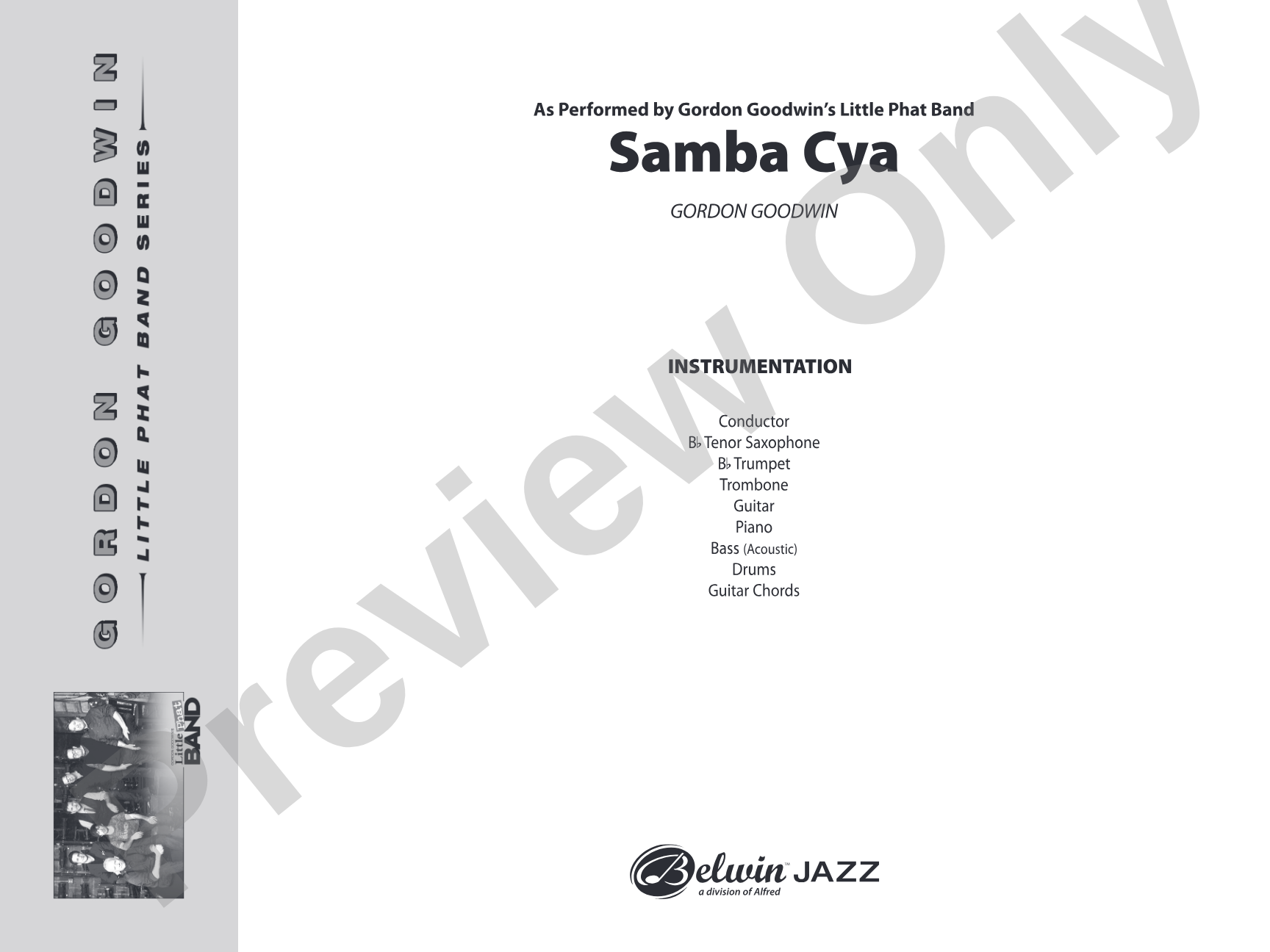
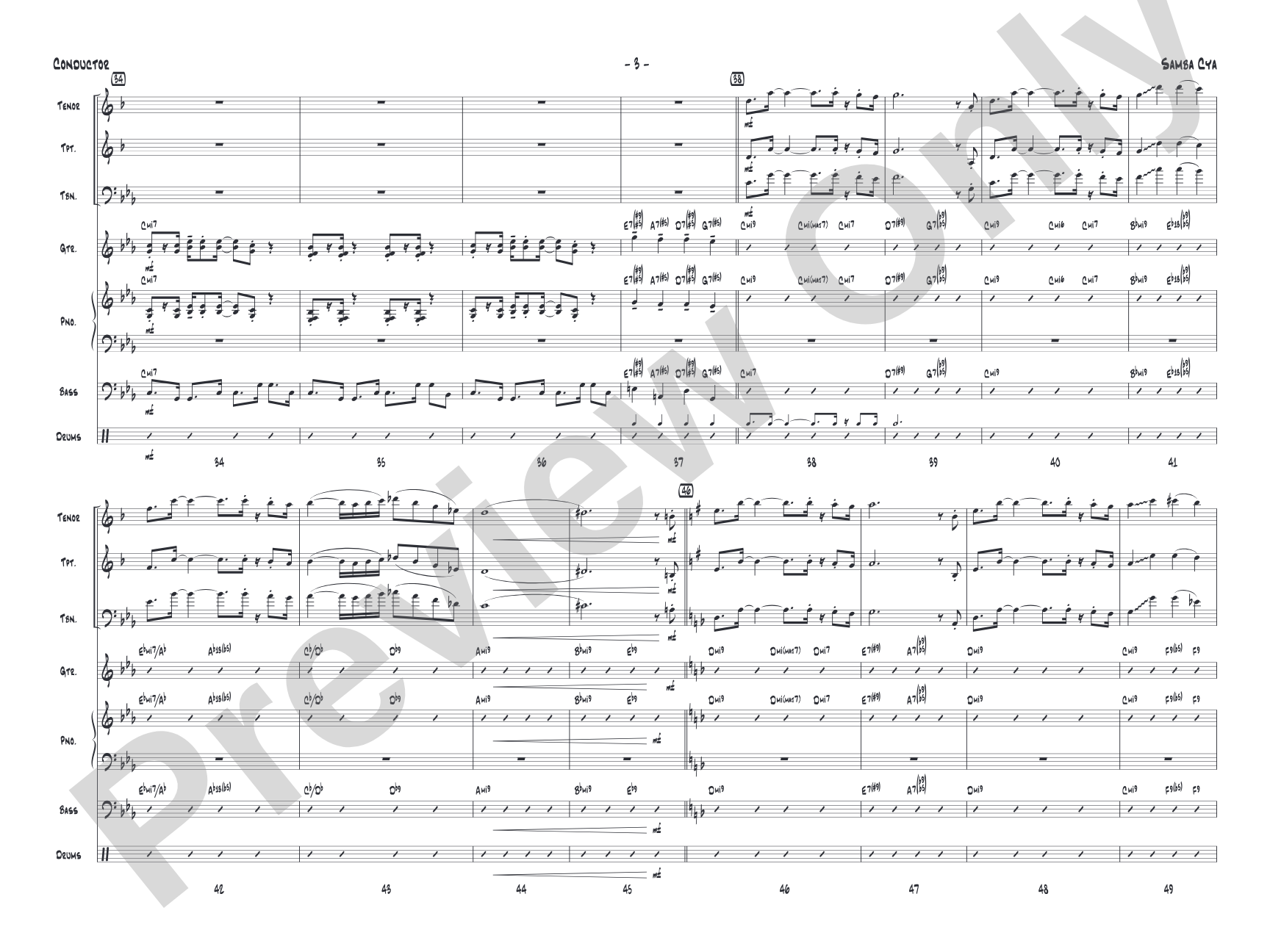
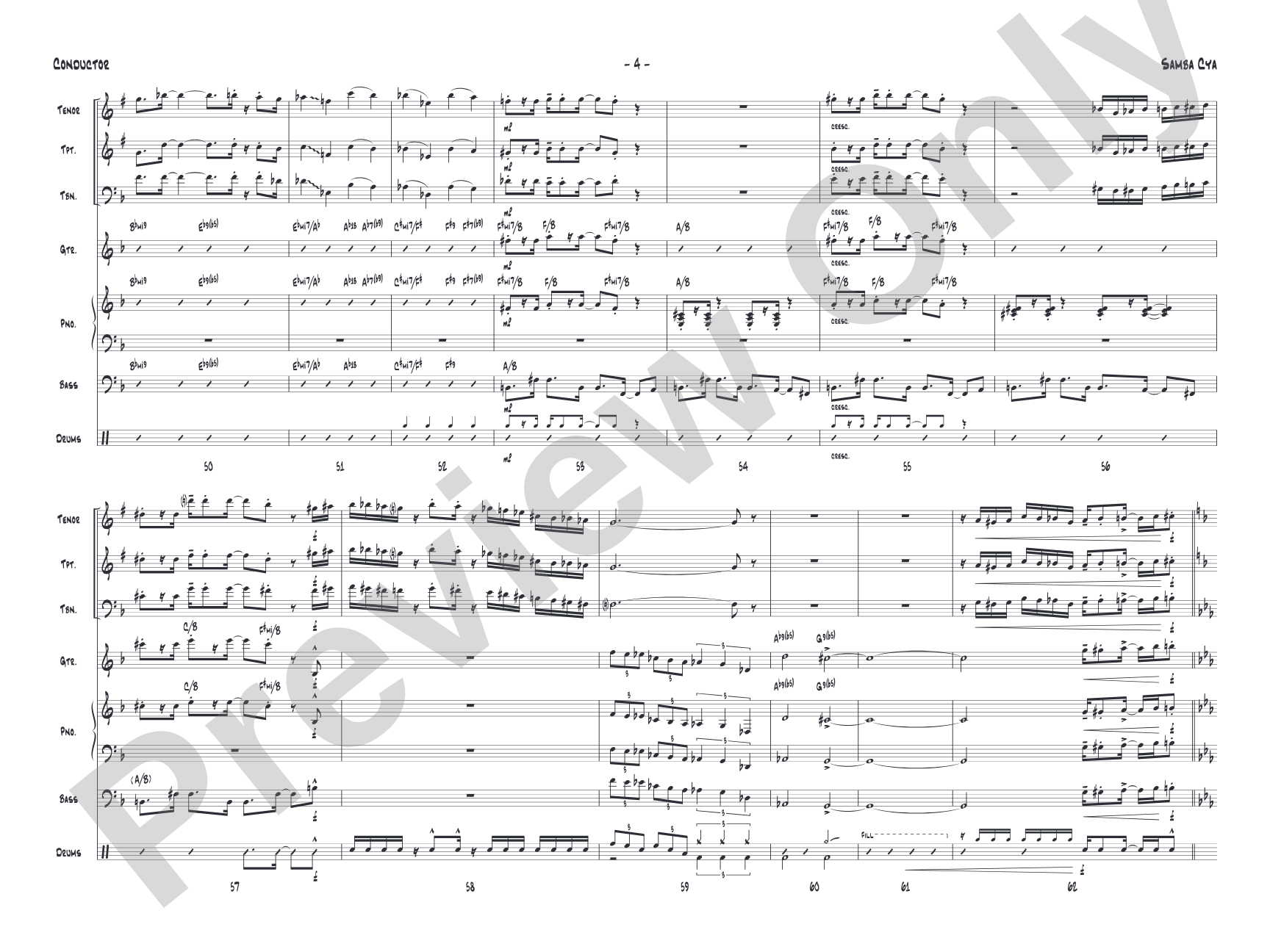
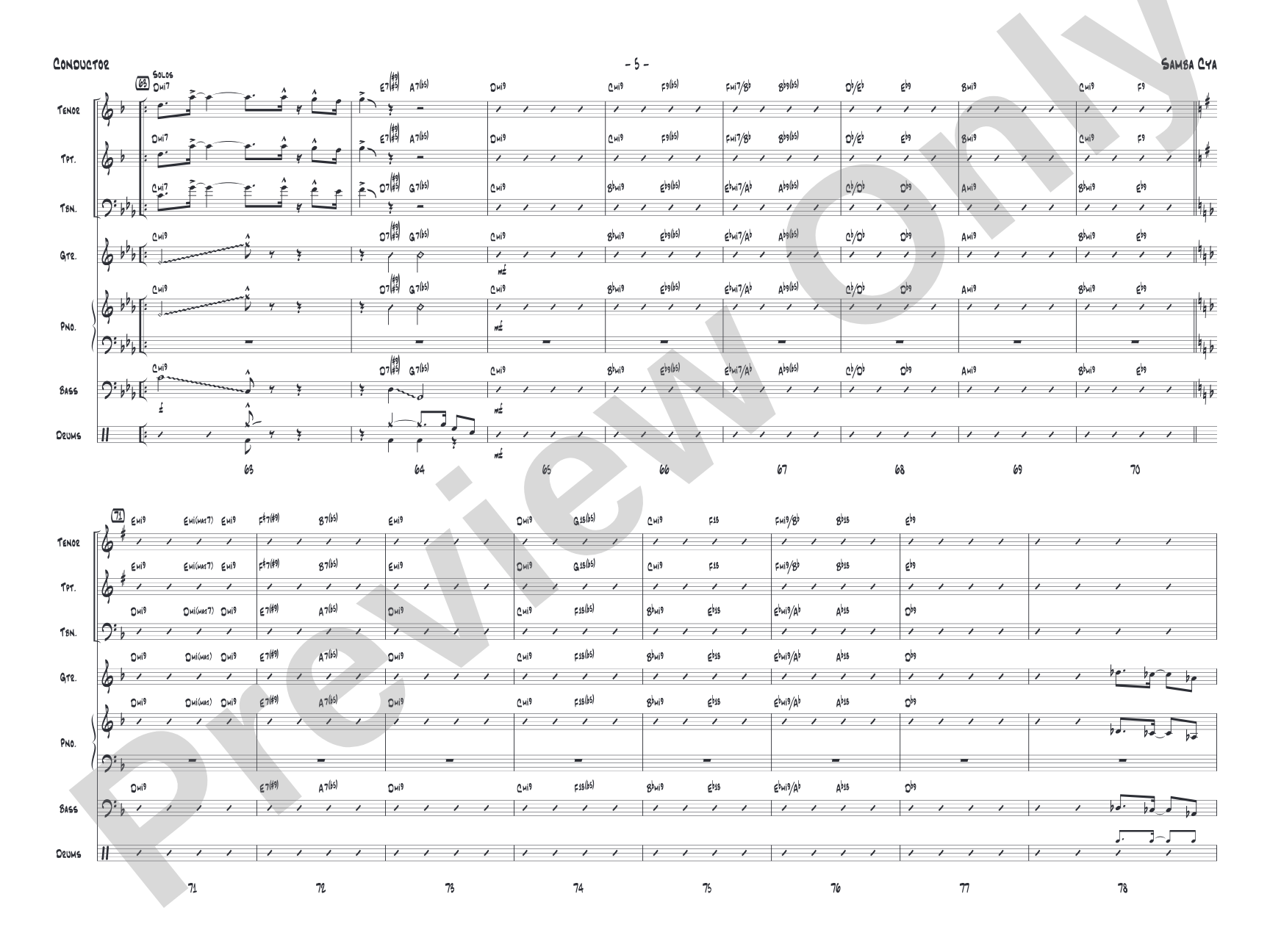
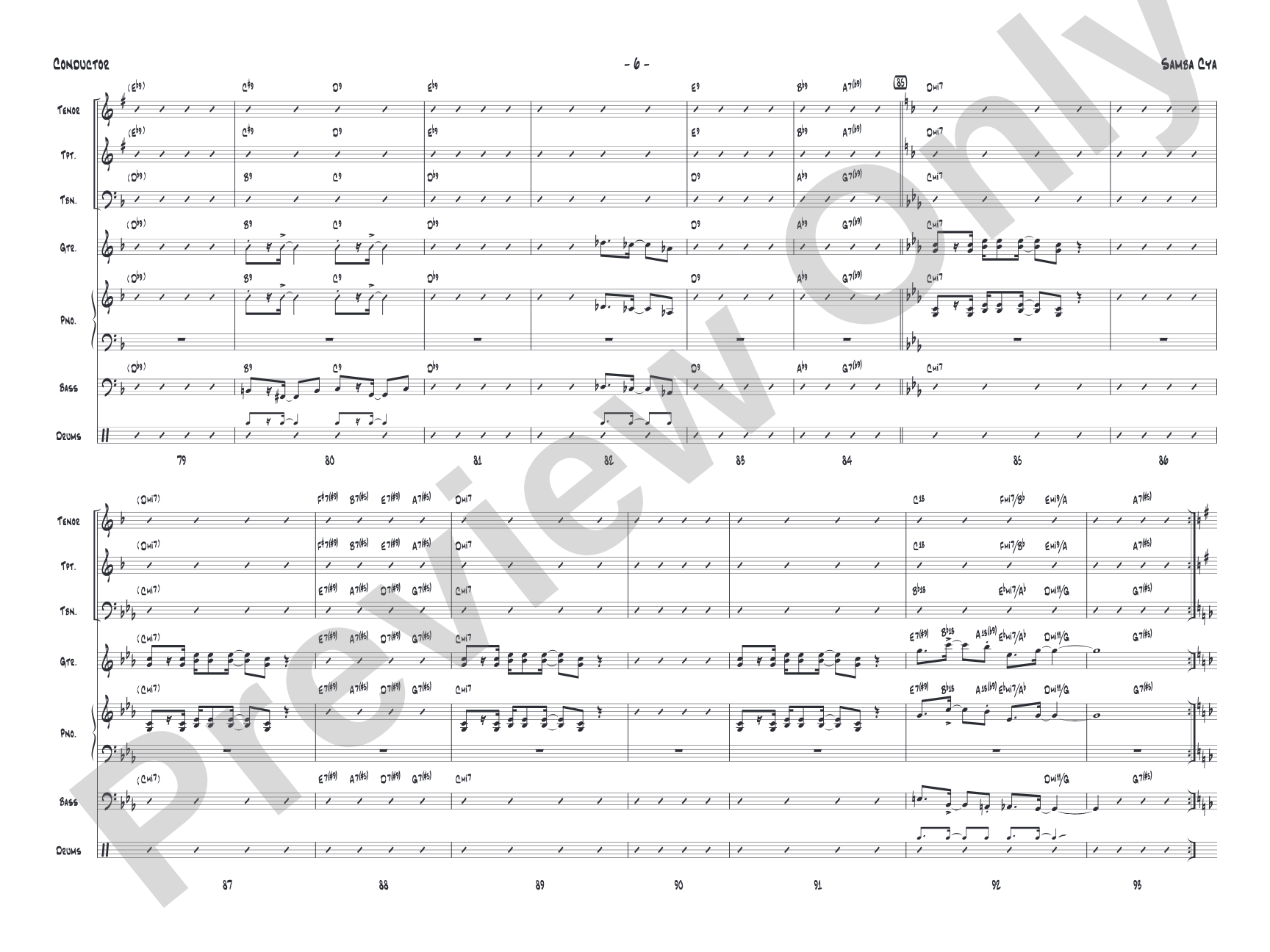
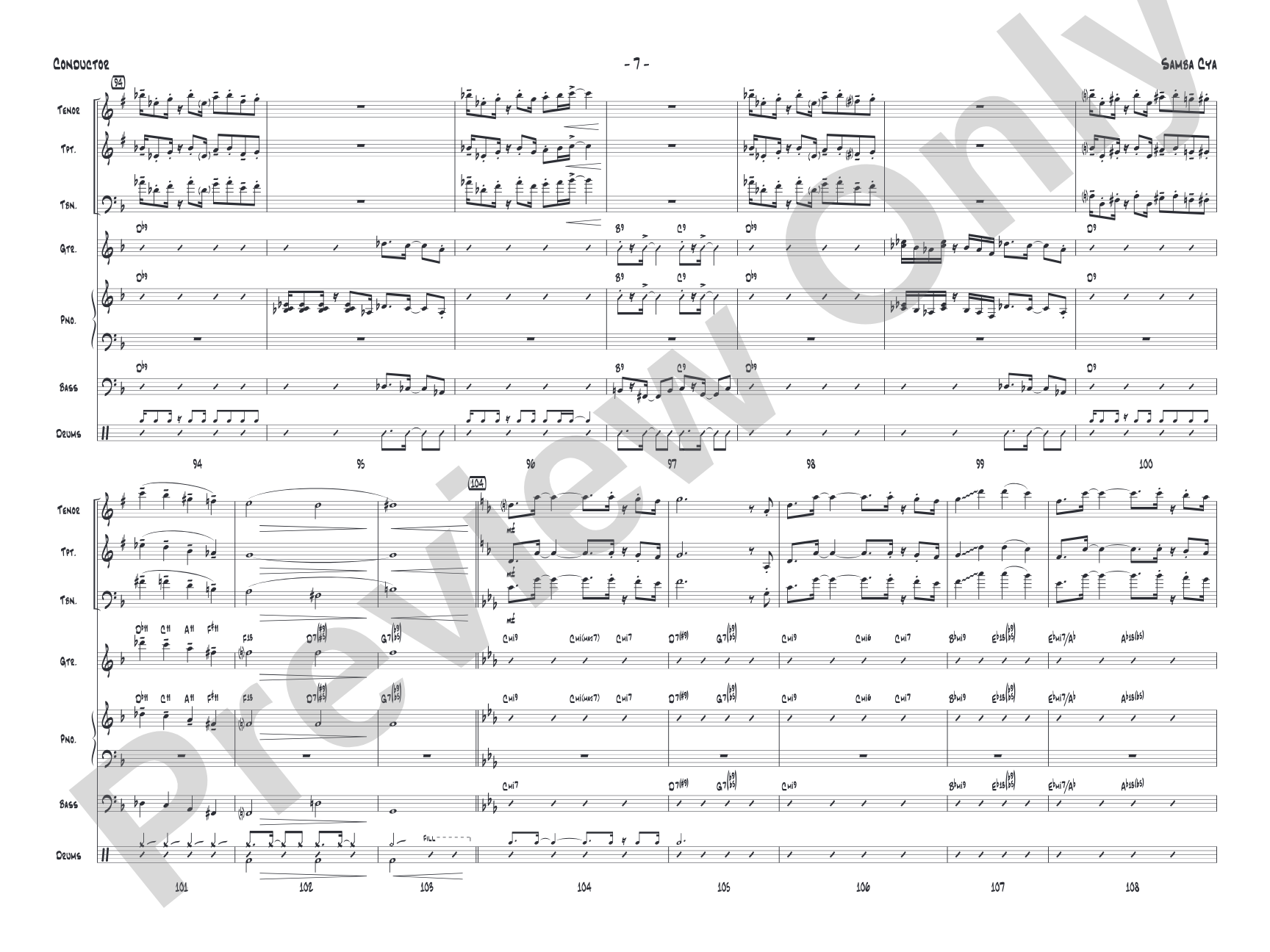
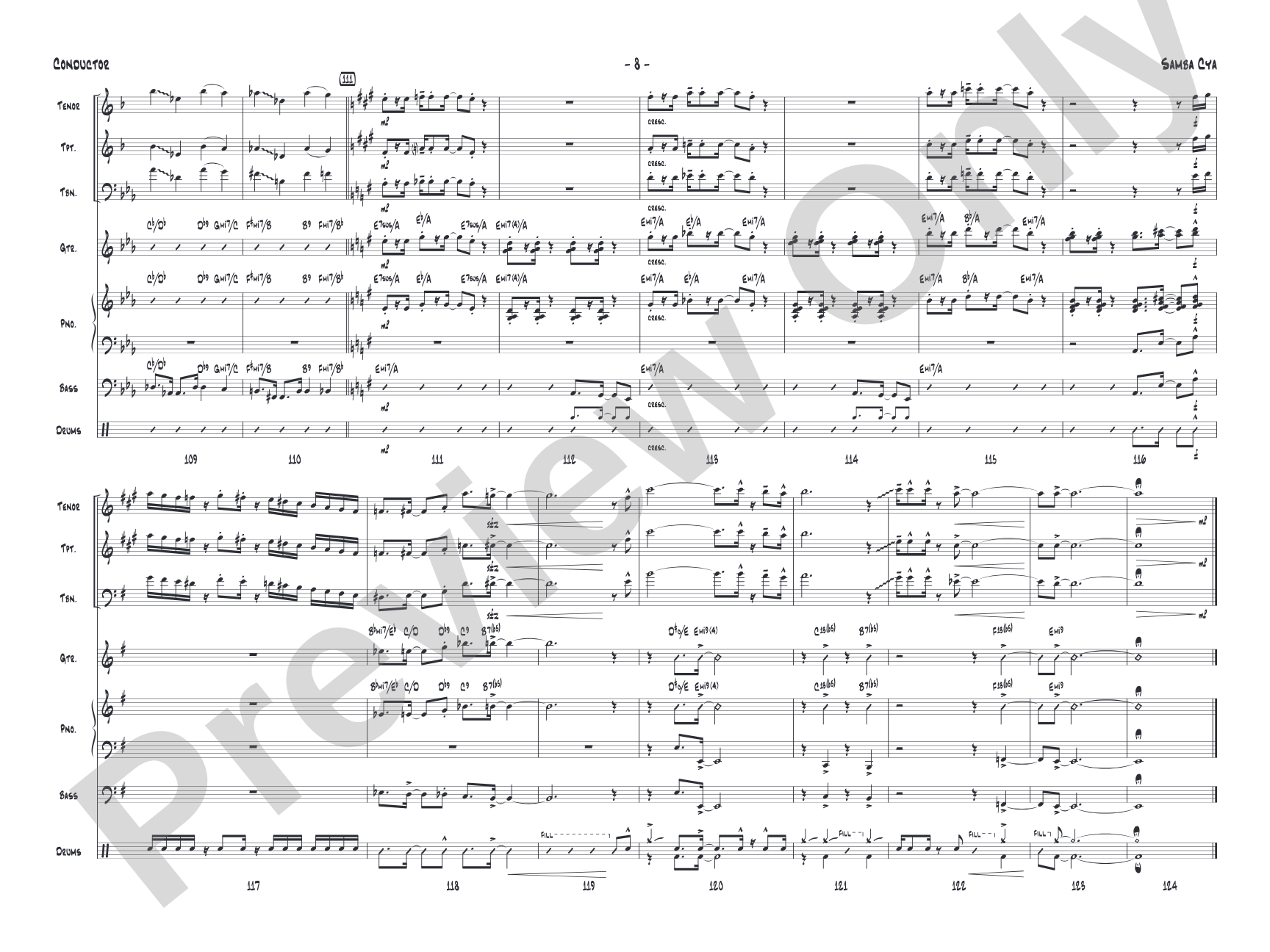

Samba Cya: Jazz Ensemble Conductor Score & Parts
As Performed by Gordon Goodwin's Little Phat Band
By Gordon Goodwin
Grade: 5 (Advanced / Difficult)
Item: 00-PK-0006027

$48.00
Pickup currently not available
Buy Extra Parts (Digital PDF Download)
| Product | Price | Quantity |
|---|---|---|
| Samba Cya: Score | $8.00 | |
| Samba Cya: B-flat Tenor Saxophone | $3.00 | |
| Samba Cya: 1st B-flat Trumpet | $3.00 | |
| Samba Cya: 1st Trombone | $3.00 | |
| Samba Cya: Guitar Chords | $3.00 | |
| Samba Cya: Guitar | $3.00 | |
| Samba Cya: Piano Accompaniment | $3.00 | |
| Samba Cya: String Bass | $3.00 | |
| Samba Cya: Drums | $3.00 |
Parts Added to Cart!
Description
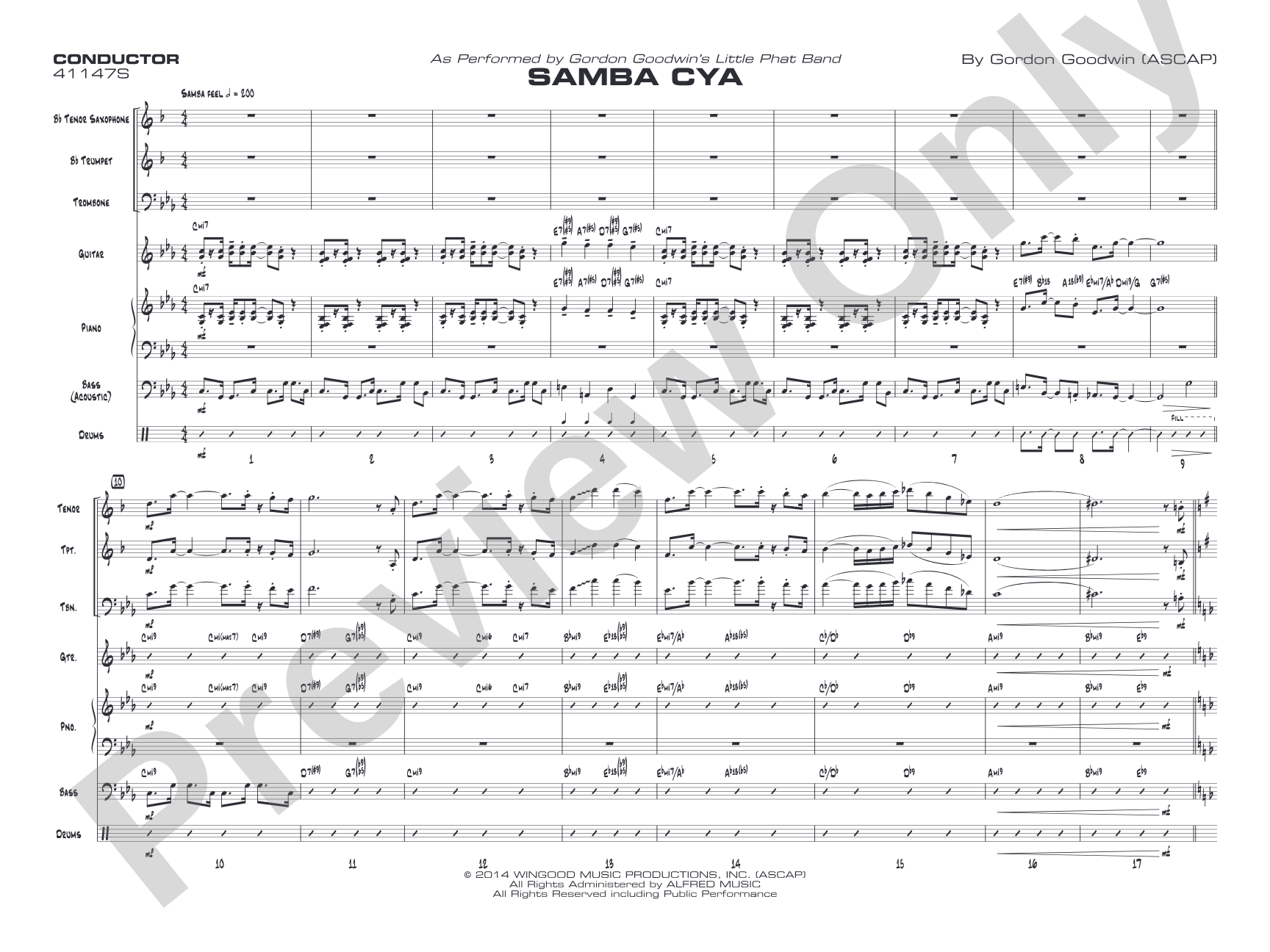
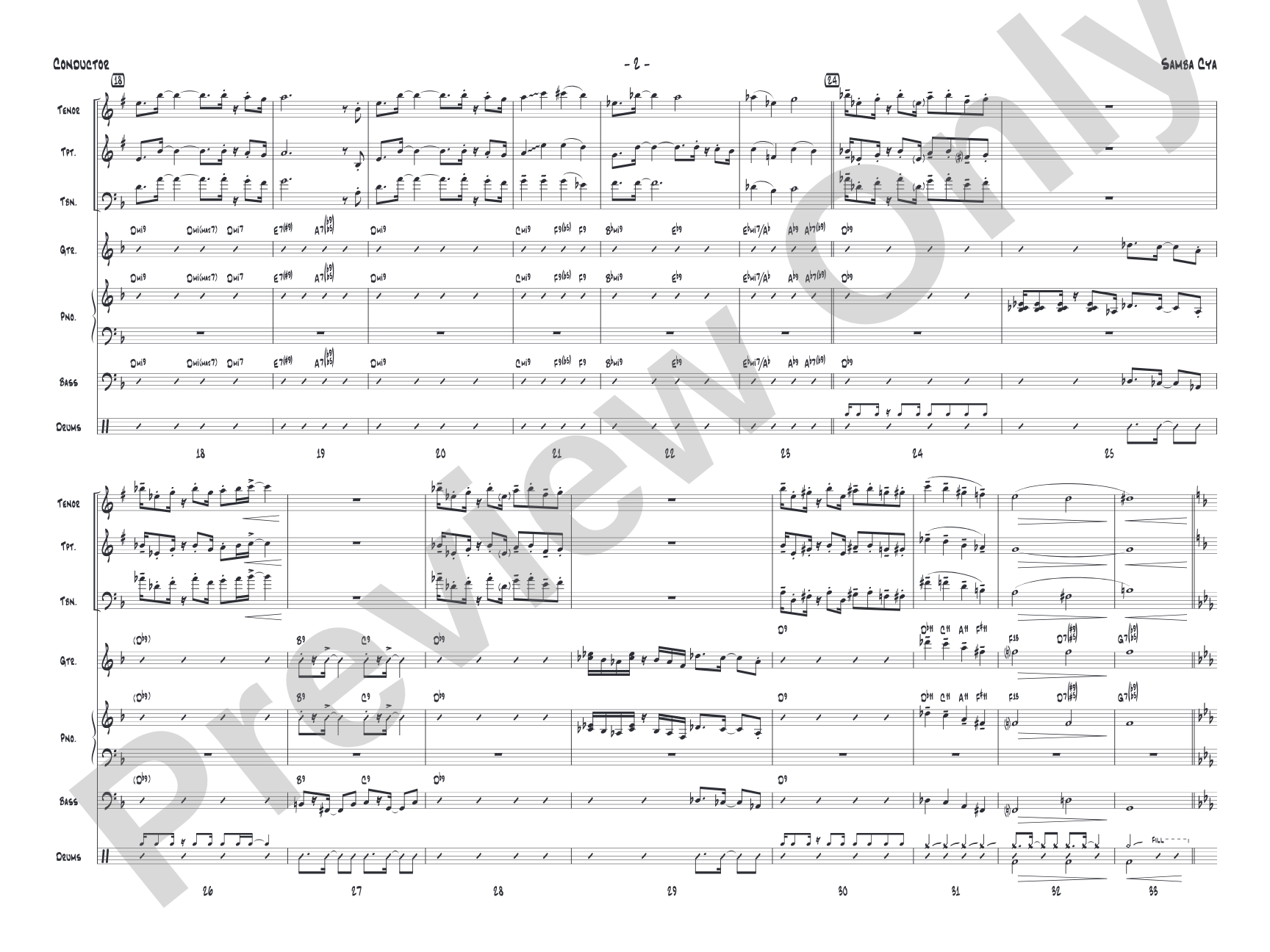
An exciting samba at 200 BPM. Little band instrumentation is tenor, trumpet, trombone, piano, bass, guitar, and drums, and the chart includes solo space for all. (1:35) This title is available in MakeMusic Cloud.


Don't just read it, hear it, play along with it, and watch your students grow with it. In MakeMusic Cloud, Samba Cya: Jazz Ensemble Conductor Score & Parts comes alive with professional accompaniment, adjustable tempo, and built-in practice tools that turn solo practice into real progress.
Open in the Player
Jump straight in and assign it today.
Start Your Free Trial
Open this title and explore the full library in minutes.
Sample Audio
1
Audio File
--:--
0:00
0:00
Sample Video
No sample videos found.
Additional Details
Series:
Gordon Goodwin Little Phat Band Series
Publisher:
Alfred Music
Page Count:
30
SKU:
00-PK-0006027
More about this title
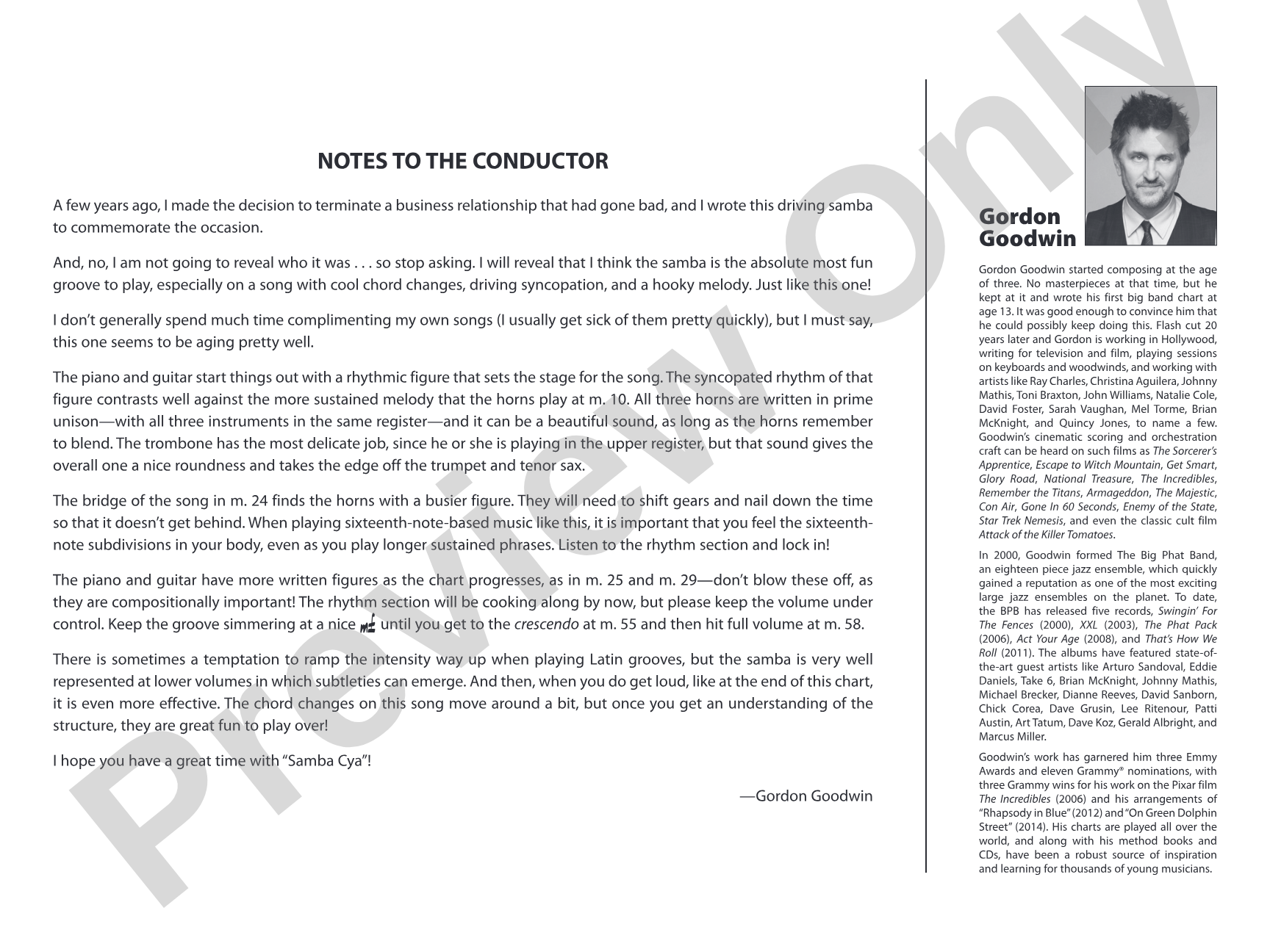
About the Composer: Gordon Goodwin

Gordon Goodwin has been composing music since childhood, writing complete works rather than fragments from the age of five. By thirteen, he had already created his first big band chart, setting the trajectory for a career that would span film, television, and live performance at the highest levels.
His work has earned three Emmy Awards and multiple Grammy nominations, with orchestrations featured in films including Bad Boys II, Con Air, Remember the Titans, and Star Trek: Nemesis. Goodwin has written for and performed alongside artists ranging from Quincy Jones to Christina Aguilera, and has conducted major symphony orchestras across North America and Europe. Since 2000, he has led Gordon Goodwin's Big Phat Band, establishing himself as a dominant force in contemporary big band jazz.
Why we love this
Samba Cya delivers the propulsive energy and sophisticated arranging that Goodwin's ensembles are known for, with genuine solo space woven throughout rather than shoehorned in at the end. At Grade 5, it sits at the advanced edge without becoming a transcription of the professional recording, making it challenging and rewarding without overwhelming developing soloists.
What to expect
Samba Cya swings with the propulsive momentum of a Brazilian rhythm and the harmonic sophistication of modern jazz, propelled by a relentless groove at 200 BPM. The piece balances written precision with open spaces for soloists to shine, creating a performance that feels both crafted and spontaneous.
Who it's for
This score is designed for advanced high school or college jazz ensembles with strong sectional fundamentals and soloists comfortable navigating bebop changes over a Latin groove. Ensembles should have confident rhythm section players and horn soloists who can sustain improvisation for 8-16 bar phrases.
How to get the most out of it
- Lock the rhythm section early in rehearsals. The piano, bass, guitar, and drums need to establish the pocket at 200 BPM before horns layer in their figures.
- Bring soloists into sectionals at least a week before full ensemble rehearsal so they can internalize the harmonic progression and work on phrasing independently.
- Balance the front line carefully; the tenor saxophone and trumpet can easily overshadow the trombone, especially over the samba groove.
- Use the recorded reference (included in MakeMusic Cloud) to nail the exact articulation and rhythmic feel of the written intro and riffs.
How to use it
Program this as a high-energy opener or late-set closer that showcases your ensemble's groove-playing ability and individual soloists in a commercially appealing context. It pairs well with ballads or funk pieces and works equally well in concert settings or adjudicated festivals where contemporary jazz repertoire is valued.
Skills your students will build
- Playing samba rhythms with precision and swing feel simultaneously
- Improvising over jazz changes with clear phrasing and harmonic awareness
- Maintaining ensemble lock during fast tempos (200 BPM) with syncopated written figures
- Sectional balance and blend in a Latin-jazz context
- Trading solos while maintaining the ensemble groove