Salvation is Created: Viola Sheet Music Preview

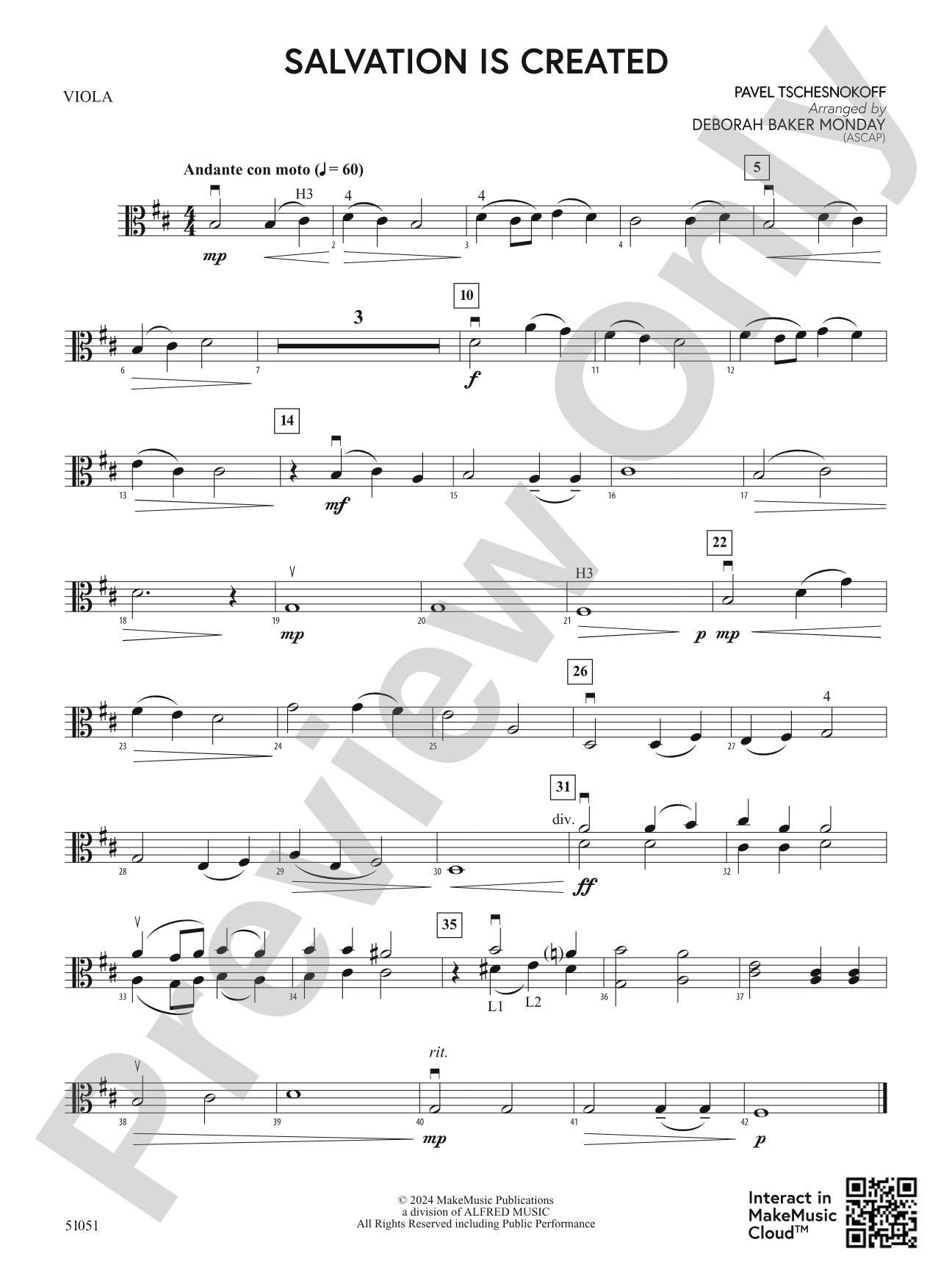
Salvation is Created: Viola

By Pavel Tschesnokoff / arr. Deborah Baker Monday

Grade: 2

Item: 00-PC-0019253_VA1

Digital Download
$3.00
Description
Based on the stunning choral work by Pavel Tschesnokoff, Salvation Is Created is a powerful yet approachable lyrical arrangement. Arranger Deborah Baker Monday's orchestration works exceptionally well for younger groups yet is quite appropriate for advanced ensembles, as well. An optional timpani part takes this to the next level. (2:45)

Don't just read it, hear it, play along with it, and watch your students grow with it. In MakeMusic Cloud, Salvation is Created: Viola comes alive with professional accompaniment, adjustable tempo, and built-in practice tools that turn solo practice into real progress.

Sample Audio
0:00
0:00
Sample Video
Additional Details
Series: MakeMusic Intermediate Strings
Publisher: MakeMusic Publications
SKU: 00-PC-0019253_VA1

More about this title

About the Composer: Pavel Tschesnokoff

Pavel Tschesnokoff (1877-1944) was a Russian choral composer whose sacred works became cornerstones of Eastern Orthodox liturgical music. His compositions are marked by rich harmonic language, spiritual depth, and an instinctive understanding of how voices blend and soar together. Tschesnokoff's choral masterworks remain essential repertoire in choral festivals and concert halls worldwide, valued for their emotional authenticity and musical craftsmanship.

For string orchestras, Tschesnokoff's melodies translate beautifully into instrumental textures. His gift for creating memorable, singable lines means that when arranged for strings, his music retains its lyrical warmth and architectural clarity. Music educators return to his work repeatedly because it offers both spiritual substance and pedagogical value.

Why we love this

Deborah Baker Monday's orchestration captures the emotional core of Tschesnokoff's original while respecting the capabilities of younger ensemble musicians. This is sophisticated repertoire that doesn't demand virtuosity but rewards musical maturity, making it ideal for groups ready to engage with meaning rather than just technique. The optional timpani part lets you scale the piece up when your ensemble is prepared for richer sonority.

What to expect

The piece unfolds with quiet dignity and emotional sincerity. Warm, sustained string lines create an atmosphere of contemplation and peace, with the melody emerging clearly yet nestled within a supportive harmonic cushion. There is a timeless quality to the sound, one that feels both intimate and universal.

Who it's for

String orchestras at Grade 2 level will find this arrangement immediately performable, while advanced ensembles can explore the nuance and spiritual character embedded in the score. It suits school orchestras, youth orchestras, and community ensembles looking for sacred repertoire that communicates without overwhelming. Directors seeking festival or concert material that balances accessibility with artistic substance will return to this arrangement regularly.

How to get the most out of it

  • Shape the opening phrase with a gentle swell; allow the melody to breathe rather than pushing from the start.
  • Balance the sustained inner voices so they support without clouding the primary melodic line.
  • If using timpani, bring them in subtly to reinforce harmonic changes without overpowering the strings.
  • Work the ensemble toward a unified vibrato speed in the sustained passages; this creates warmth and cohesion at Grade 2 level.

How to use it

This works beautifully as a concert opener that sets a reverent or thoughtful mood, or as a centerpiece in a program pairing sacred music across cultures. It's also a natural choice for spring or winter concert programming when ensembles value repertoire with spiritual meaning. The manageable length (2:45) makes it an excellent festival selection without requiring excessive rehearsal time.

Skills your students will build

  • Sustaining long, even tone across phrase arcs
  • Balancing multiple melodic and harmonic lines within the string section
  • Responding to lyrical, song-like conducting gestures
  • Intonation in sustained harmonic contexts
  • Ensemble listening and blend at moderate dynamic levels

You May Also Like