
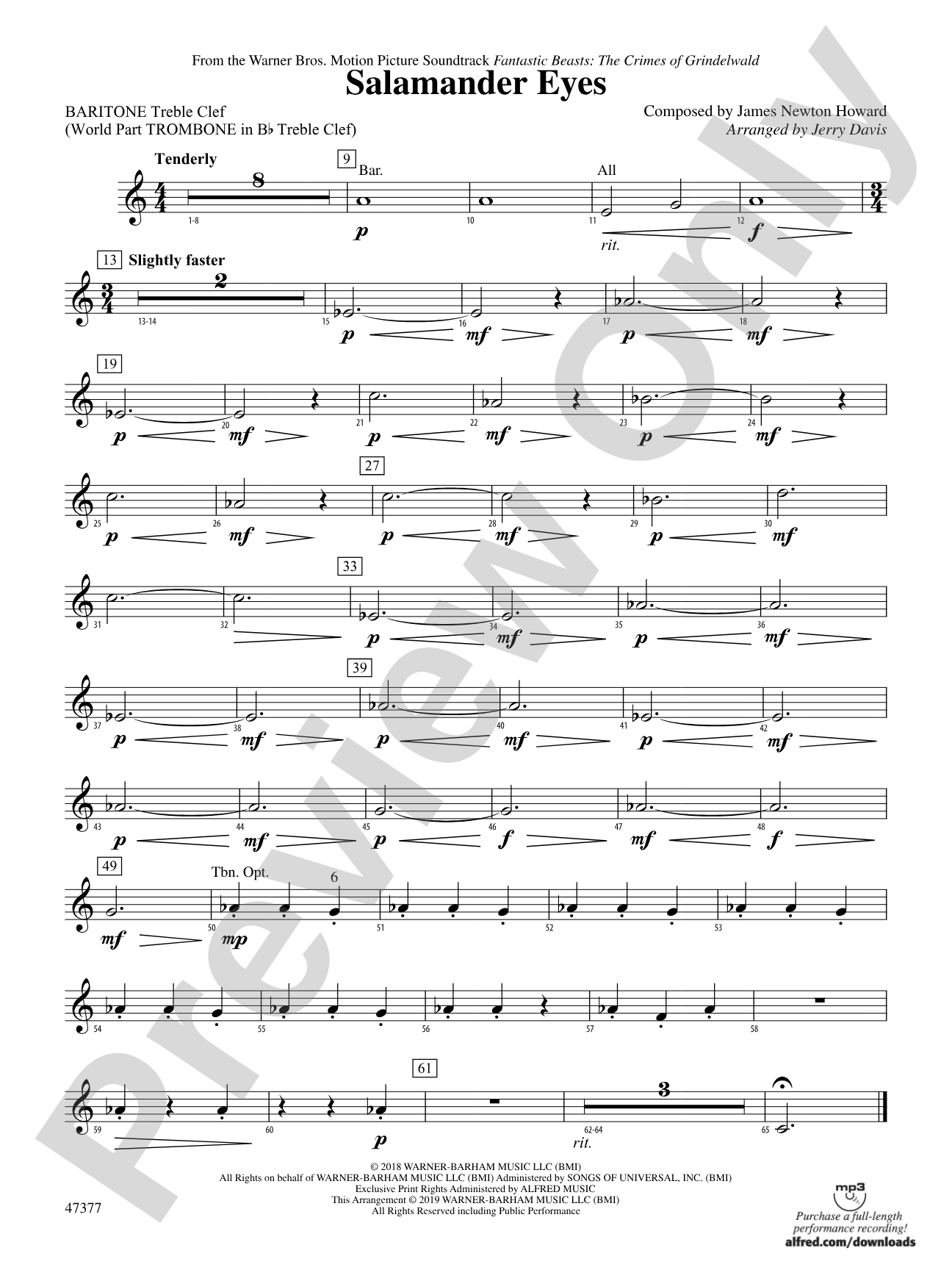

Salamander Eyes: Baritone T.C.
From the Warner Bros. Motion Picture Soundtrack Fantastic Beasts: The Crimes of Grindelwald
By James Newton Howard / arr. Jerry Davis
Grade: 1 (Very Easy)
Item: 00-PC-0017911_BTC1
$3.00
Pickup currently not available
Description
The second installment of the Fantastic Beasts series from J. K. Rowling's Wizarding World features the adventures of Newt Scamander and Albus Dumbledore as they battle the evil wizard Gellert Grindelwald. This compelling James Newton Howard theme is a perfect fit and will have your beginners fired up. (2:30)


Don't just read it, hear it, play along with it, and watch your students grow with it. In MakeMusic Cloud, Salamander Eyes: Baritone T.C. comes alive with professional accompaniment, adjustable tempo, and built-in practice tools that turn solo practice into real progress.
Open in the Player
Jump straight in and assign it today.
Start Your Free Trial
Open this title and explore the full library in minutes.
Sample Audio
1
Audio File
--:--
0:00
0:00
Sample Video
Additional Details
Series:
Pop Beginning Band
Publisher:
Alfred Music
Page Count:
136
SKU:
00-PC-0017911_BTC1
More about this title
About the Composer: James Howard
James Newton Howard is a prolific film composer whose work spans blockbuster franchises, intimate dramas, and animated features. His ability to craft memorable melodic lines that resonate with audiences of all ages has made him a fixture in contemporary cinema, with scores for the Fantastic Beasts series, the Night at the Museum films, and numerous other major productions.
For music educators, Howard's themes offer immediate accessibility without sacrificing harmonic interest. His melodies sit naturally in young musicians' ranges, and his orchestrations reward careful attention to balance and phrasing even at elementary levels.
Why we love this
This arrangement captures everything that makes the Fantastic Beasts theme compelling: a memorable, singable melody that connects instantly with students who know the films. The Grade 1 setting doesn't strip away the theme's character; instead, it strips away unnecessary complexity, leaving you with a piece that sounds assured and polished in even a developing band.
What to expect
The Salamander Eyes theme unfolds with a sense of quiet wonder and adventure. It moves with purposeful ease, neither rushed nor static, carrying the curiosity and slight tension of the film's opening without demanding aggressive dynamics. There's an inherent elegance in the melody that sits comfortably in young players' ranges while still feeling cinematic and engaging.
Who it's for
Beginning to early intermediate concert bands (high school freshman ensembles, intermediate middle school groups, or strong developing bands). This is ideal for programs looking to program contemporary film music without overextending younger musicians, and it works equally well for students excited to perform recognizable material.
How to get the most out of it
- Shape the opening melody with a gentle crescendo into the phrase peaks rather than playing it as a straight line; the theme depends on subtle dynamic contours to breathe.
- Keep the harmonic accompaniment transparent, especially in the lower voices. Young ensemble players often rush or muddy sustained chords, so isolate those sections in rehearsal.
- Balance the upper woodwinds against the melody carrier. If oboes, clarinets, or flutes are sharing the theme, ensure they lock in before adding counterlines.
- Treat articulation consistently across similar phrase shapes. Mark exactly where tonguing changes occur so the band commits to a unified approach.
How to use it
This works beautifully as a showcase piece mid-concert, offering audiences a moment of familiarity and giving your ensemble a confidence boost with recognizable material. It pairs naturally with other Grade 1 popular music selections or adjacent classical themes, and it's substantial enough (2:30) to stand as a complete program segment rather than filler.
Skills your students will build
- Reading and maintaining steady phrasing over multiple measures
- Balancing ensemble melody with harmonic accompaniment
- Sustaining consistent articulation within and across sections
- Dynamic shaping and subtle crescendo/diminuendo control
- Part independence in early counterpoint settings