
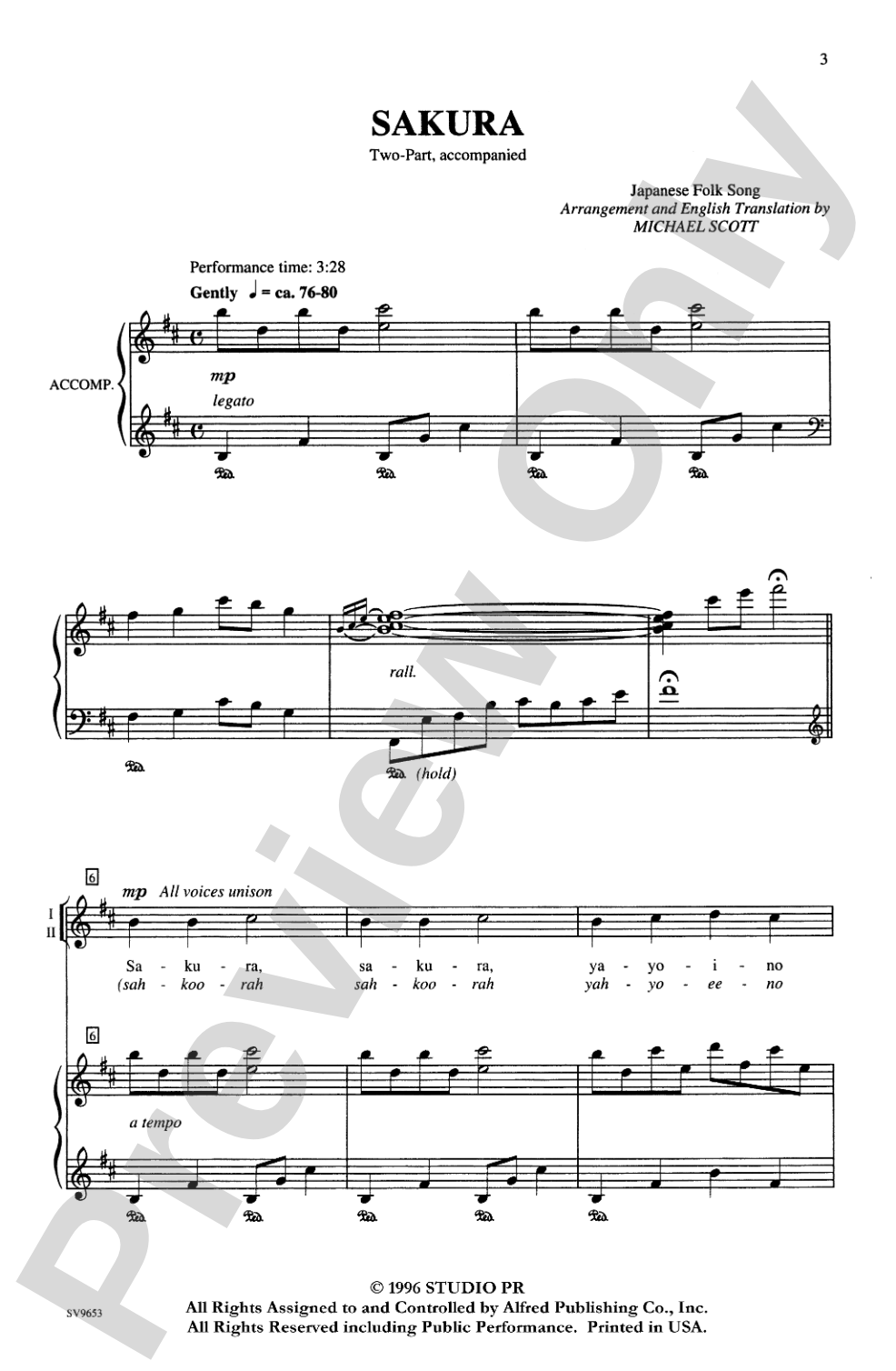

Sakura (Japanese Folk Song): 2-Part Choral Octavo
Arr. Michael Scott
Level: Moderately Easy
Item: 00-PO-0005247
$2.25
Minimum order quantity: 20 copies
Pickup currently not available
Description
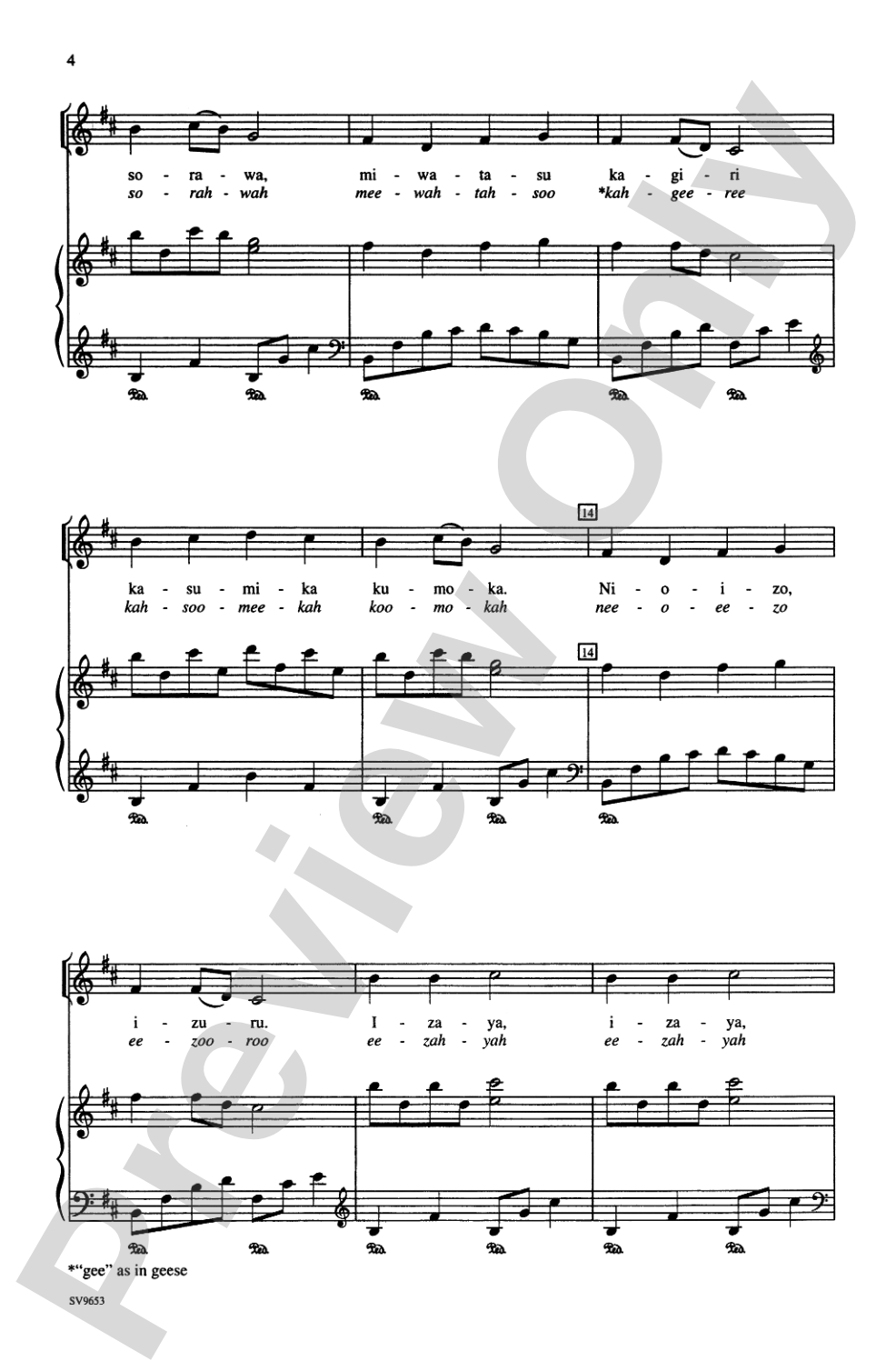
Today's multicultural awareness makes this well-known Japanese folk song a good bet for any concert program. Michael's haunting setting opens with a Japanese text, moves to an English translation and back to Japanese for the ending. It's easy to sing and a pronunciation guide is provided.


Sakura (Japanese Folk Song): 2-Part Choral Octavo isn't in MakeMusic Cloud just yet...but it could be. Let us know you'd like to see it, and you'll help shape what comes next. In the meantime, start a free trial and dive into thousands of interactive titles your students can play along with today.
Request This Title
Tell us you want it.
Start Your Free Trial
Explore everything that's ready to play right now.
Sample Audio
No sample audio found.
Sample Video
No sample videos found.
Additional Details
Series:
Alfred Archive Edition: Studio PR Catalog
Publisher:
Alfred Music
Page Count:
12
SKU:
00-PO-0005247
More about this title
Why we love this
Michael Scott's arrangement respects the essential beauty of this melody while making it genuinely accessible for young singers. The bilingual text structure (Japanese opening, English translation, Japanese close) creates a sophisticated arc that sounds natural to perform, not pedagogically forced. Choirs consistently report that audiences respond with real warmth to this piece, making it a reliable choice for building multicultural awareness without sacrificing musical integrity.
What to expect
Haunting and gentle, this setting draws from the melody's intrinsic quietness while the layered text creates a sense of cultural depth. Singers often describe the experience as meditative; the piece invites the choir to slow down and listen closely to each other.
Who it's for
This arrangement works well for middle school and high school choirs building experience with world music and languages. It suits programs looking for approachable multicultural repertoire that still demands musical thoughtfulness rather than offering a simplified experience.
How to get the most out of it
- Practice the Japanese text section first using the provided pronunciation guide. Singers who learn the sounds before worrying about meaning tend to maintain clearer articulation and better intonation.
- Balance the parts carefully during the English middle section; the arrangement's strength comes from how the text itself guides the voice distribution rather than from driving either line forward.
- Shape phrases around the original melody's contours. This folk song rewards long, sustained lines and resistance to over-punctuating within measures.
How to use it
Position this as a standalone moment on a concert program, perhaps following more energetic fare. Its contemplative quality makes it ideal for spring or end-of-year concerts where thematic programming around unity or cultural bridge-building fits naturally. Many directors use it in festival or competition contexts where it consistently earns recognition for cultural authenticity and musical maturity.
Skills your students will build
- Singing in a non-English language with clear vowel placement and authentic articulation
- Reading and performing 2-part voicing with independent melodic lines
- Understanding and interpreting cultural context through lyrical translation
- Sustaining long musical phrases with dynamic control
- Listening critically to blend and intonation in a partner part