

Sakura
Japanese Folk Song / arr. Victor C. Johnson
Item: 00-PO-0007150
$2.05
Minimum order quantity: 20 copies
Pickup currently not available
Description
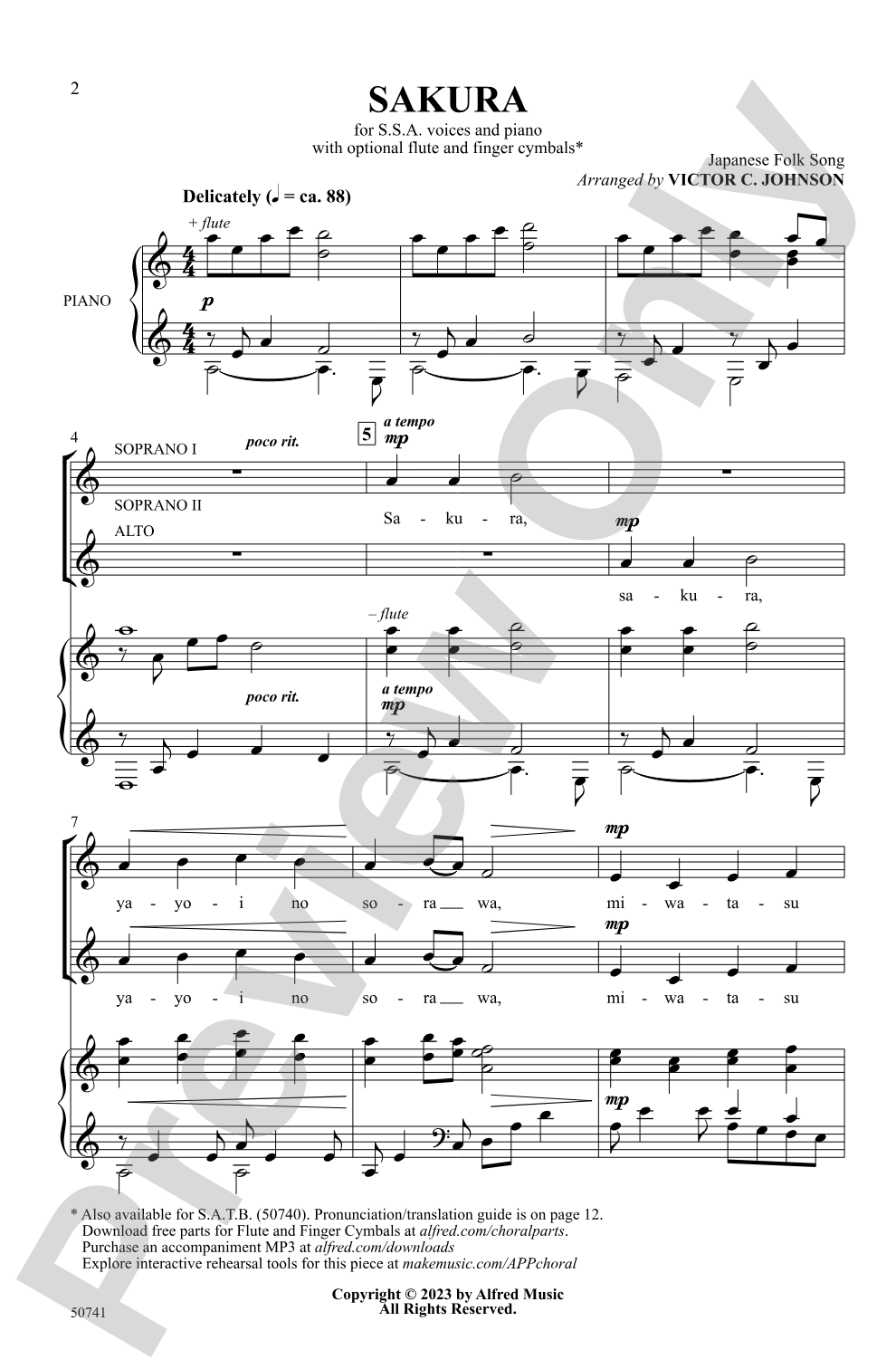
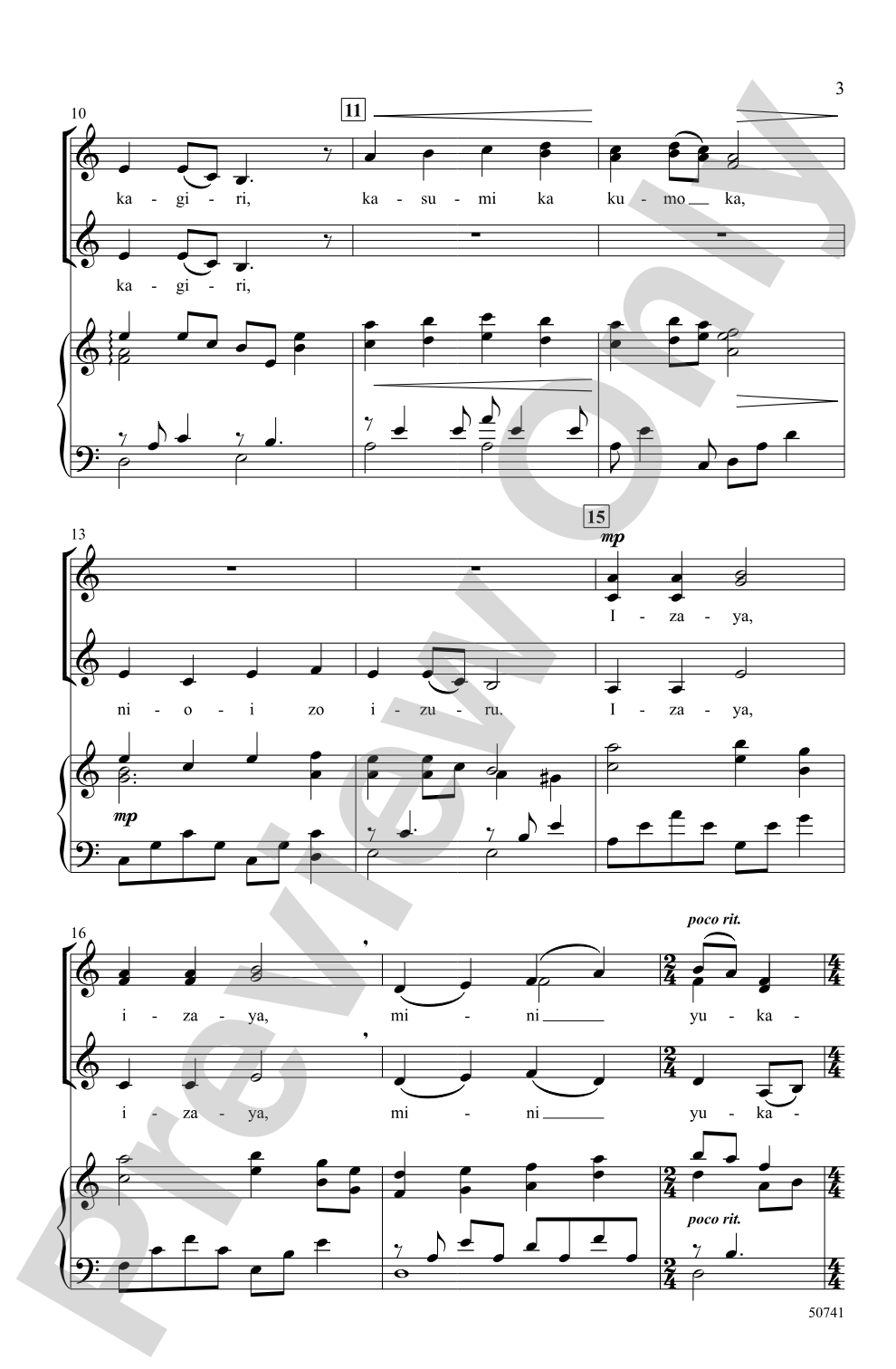
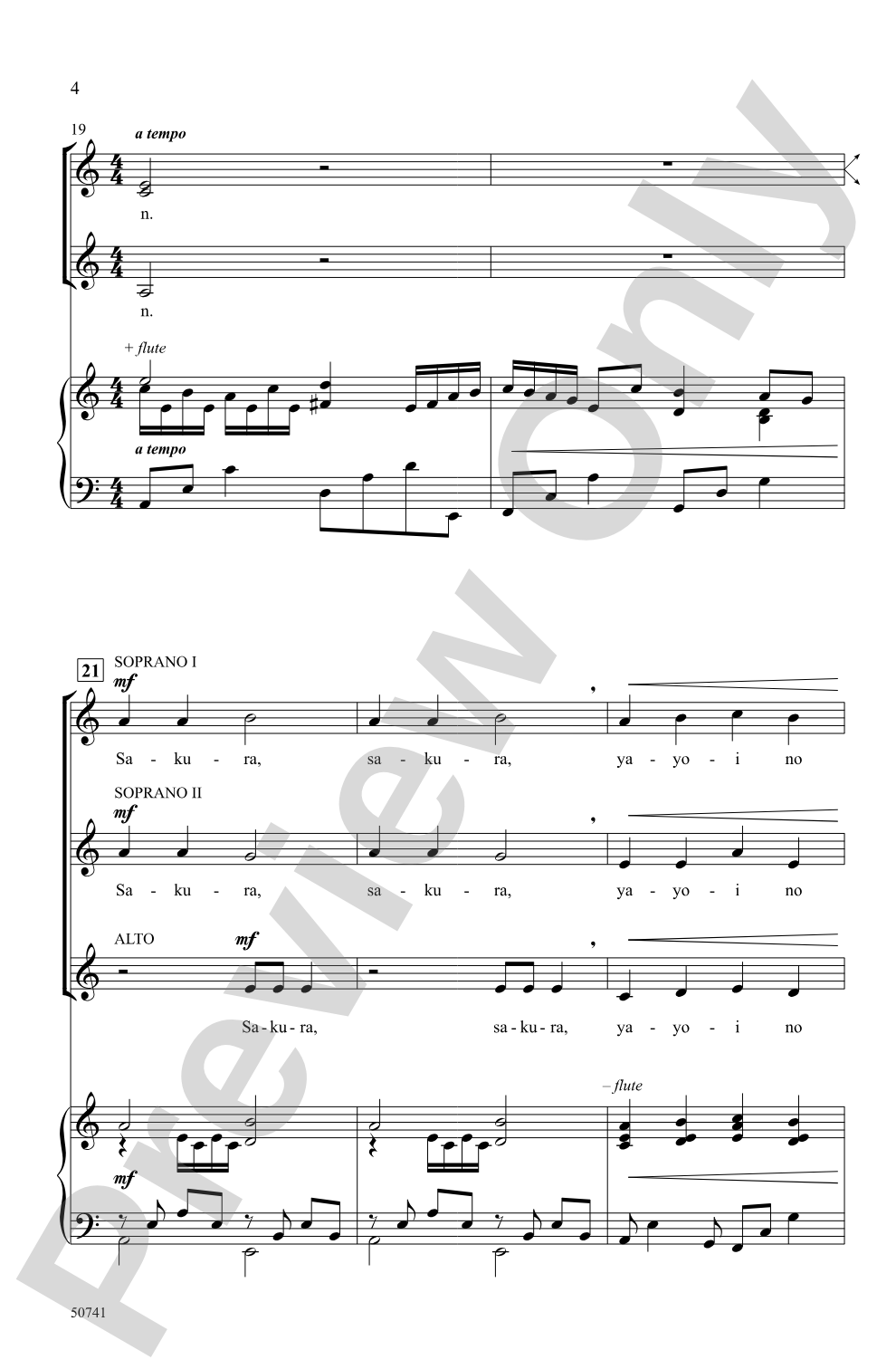
Victor C. Johnson's elegant setting of this traditional Japanese folk song will take your breath away. Each iteration of the delicate tune blossoms further in harmonic depth, musical expression, and textural fullness. Generous rubato and deliberate dynamic shading are encouraged. Finger cymbals and flute are easily added and extremely effective.
The PerformancePlus+ series is an innovative addition to the ever-expanding MakeMusic Cloud interactive library. These engaging selections are presented with educational resources designed to enrich the rehearsal process and create outstanding performances. Including:


The PerformancePlus+ series is an innovative addition to the ever-expanding MakeMusic Cloud interactive library. These engaging selections are presented with educational resources designed to enrich the rehearsal process and create outstanding performances. Including:
- Assignment, recording, and assessment tools within MakeMusic Cloud
- Part-predominant and accompaniment tracks
- Printable sheet music (with a standard MakeMusic Cloud subscription)
- Correlated rehearsal guides and performance notes
- Rights to perform in a live or virtual setting
Sakura isn't in MakeMusic Cloud just yet...but it could be. Let us know you'd like to see it, and you'll help shape what comes next. In the meantime, start a free trial and dive into thousands of interactive titles your students can play along with today.
Request This Title
Tell us you want it.
Start Your Free Trial
Explore everything that's ready to play right now.
Sample Audio
1
Audio File
--:--
2
Audio File
--:--
Audio File
0:00
0:00
Sample Video
Additional Details
Series:
PerformancePlus+
Page Count:
12
SKU:
00-PO-0007150
More about this title
About the Arranger: Victor C. Johnson

Victor C. Johnson serves as School Choral Editor for Sing!, the educational publishing division of Choristers Guild, overseeing a catalog that reflects his deep commitment to accessible choral writing. A Dallas native with over 500 published works spanning choral arrangements, vocal solos, and keyboard pieces, Johnson spent 18 years (2000-2018) directing choirs at Fort Worth Academy of Fine Arts, where he shaped ensembles ranging from middle school singers to the Singing Girls of Texas. Since 2022, he has served as conductor of the Dallas Symphony Children's Chorus Mixed Ensemble, positioning him at the intersection of professional orchestral music and music education. His involvement with ACDA, TMEA, ASCAP, and Phi Mu Alpha Sinfonia reflects the professional networks that inform his compositional and editorial work.
Why we love this
Johnson's approach to this familiar melody strips away predictability. Rather than settling for a single statement of the tune, he builds the piece through careful harmonic evolution, allowing singers to experience the same melody as something perpetually new. The scoring respects the women's choir voice type while the optional finger cymbals and flute create genuine color without demanding additional resources.
What to expect
The piece unfolds like a flower opening in stages. Each return of the melody arrives with richer harmonic surroundings, creating an arc from simplicity to luminous complexity. The optional instrumental colors invite performers to experience familiar material through fresh textures and timbres.
Who it's for
Women's choirs seeking repertoire that honors a cultural treasure while offering genuine musical substance and progression. Directors working with singers ready to explore rubato and expressive nuance will find this piece rewarding for both rehearsal depth and performance impact.
How to get the most out of it
- Shape each iteration distinctly through voicing changes and harmonic shifts rather than relying solely on dynamic contrast; let the harmonic architecture itself guide phrasing.
- Embrace the rubato marking as permission to breathe with the melody's natural contours; this is not a metronomic piece.
- If adding finger cymbals, place them strategically at harmonic turning points rather than throughout; restraint makes them more effective.
- Use dynamic shading to illuminate the inner voices as harmonies deepen in later iterations, keeping the texture transparent even as fullness increases.
How to use it
This works beautifully as a concert centerpiece that acknowledges cultural diversity while avoiding tokenism. Its modest length and optional instrumentation make it flexible for festival settings, and the harmonic development rewards audiences who listen closely across multiple iterations of the tune.
Skills your students will build
- Expressive use of rubato and sustain in non-metered contexts
- Dynamic control and shading across four-part women's voicing
- Listening for harmonic movement within a repeating melodic line
- Blending voices across different harmonic textures and densities