
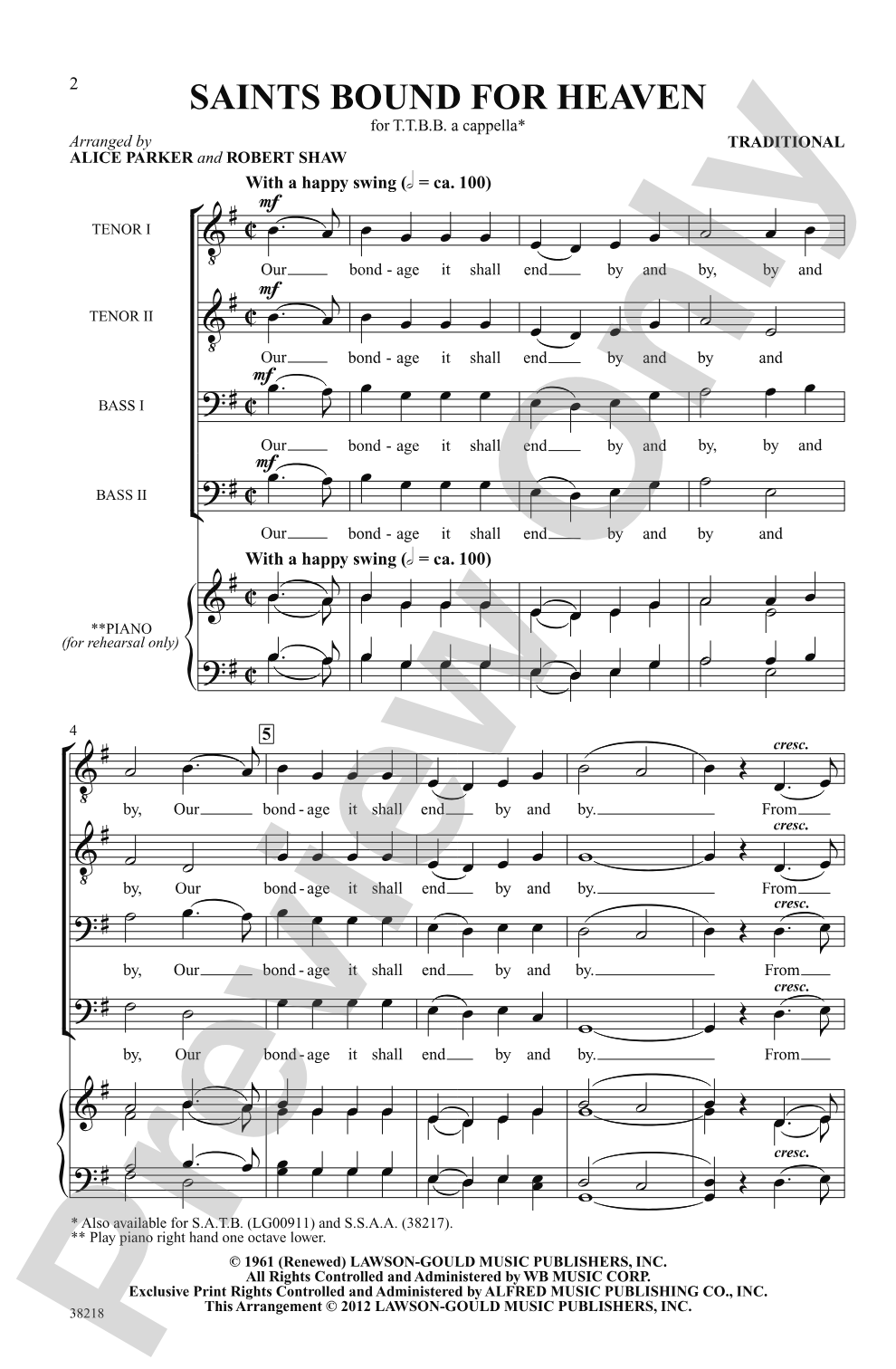
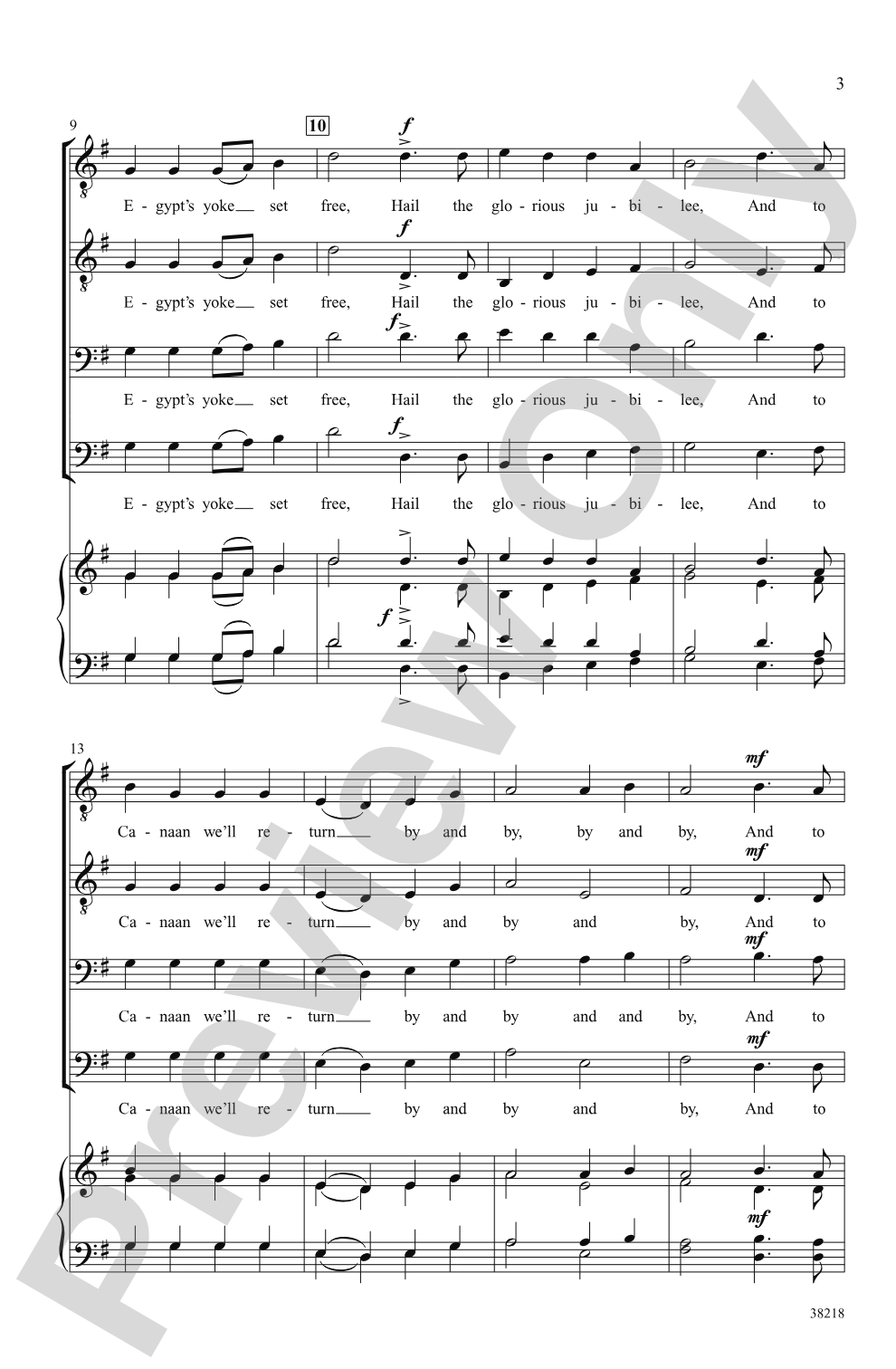
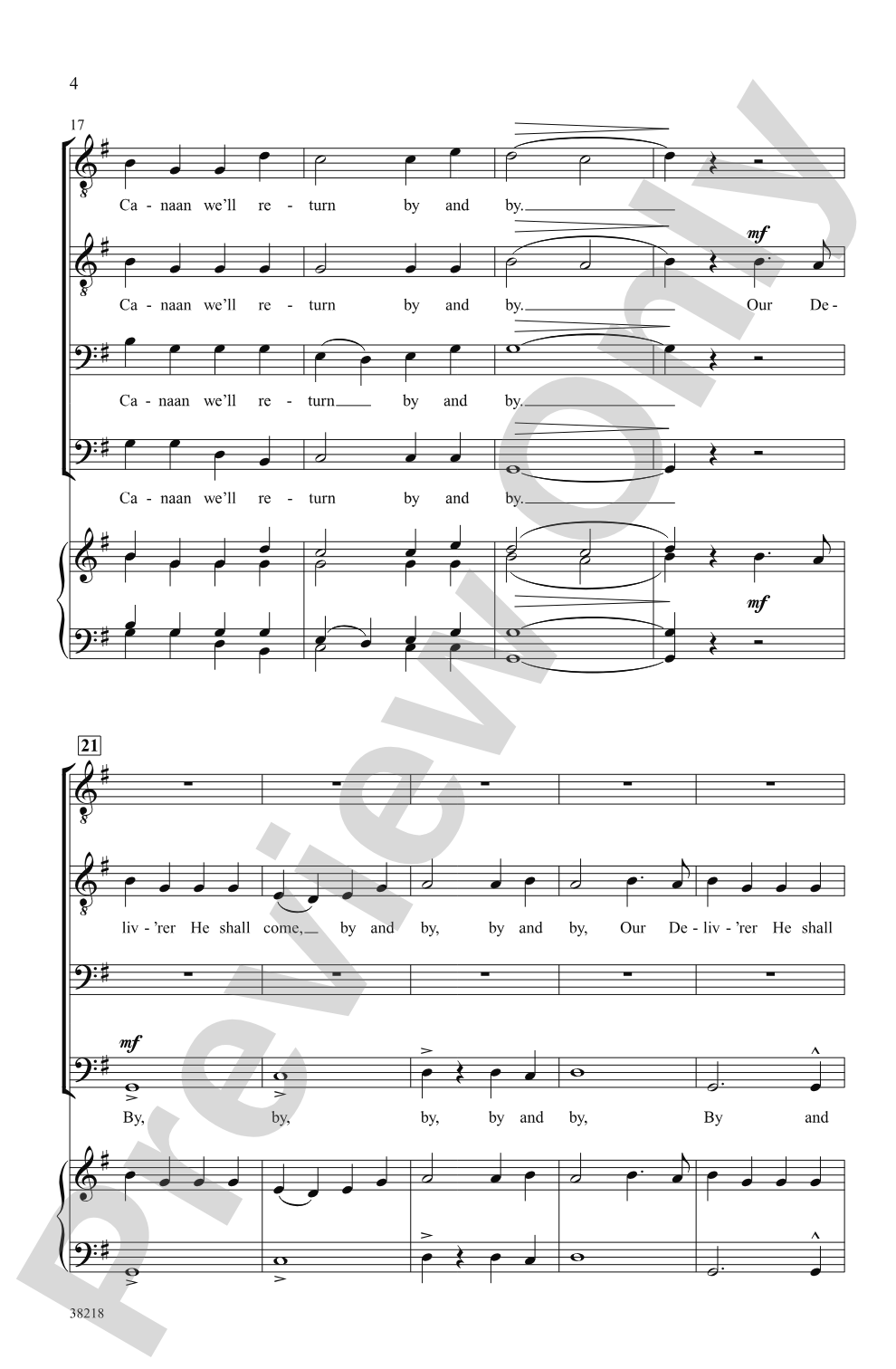

Saints Bound for Heaven: TTBB, a cappella Choral Octavo
Traditional / arr. Alice Parker and Robert Shaw
Item: 00-PO-0001454
$2.25
Minimum order quantity: 20 copies
Pickup currently not available
Related Items
Saints Bound for Heaven: SATB, a cappella Choral Octavo |
$2.05
|
View | |
Saints Bound for Heaven: SSAA, a cappella Choral Octavo |
$2.05
|
View | |
Saints Bound for Heaven: SATB, a cappella Choral Octavo |
$2.05
|
View | |
Saints Bound for Heaven: SSAA, a cappella Choral Octavo |
$2.05
|
View | |
Saints Bound for Heaven: TTBB, a cappella Choral Octavo |
$2.25
|
View |
Description
This lively traditional spiritual, originally recorded by the Robert Shaw Chorale (SATB), reflects the joy of the text. Now available for a cappella SSAA and TTBB choirs. "Hail the glorious jubilee!"


Saints Bound for Heaven: TTBB, a cappella Choral Octavo isn't in MakeMusic Cloud just yet...but it could be. Let us know you'd like to see it, and you'll help shape what comes next. In the meantime, start a free trial and dive into thousands of interactive titles your students can play along with today.
Request This Title
Tell us you want it.
Start Your Free Trial
Explore everything that's ready to play right now.
Sample Audio
1
Audio File
--:--
0:00
0:00
Sample Video
No sample videos found.
Additional Details
Series:
Lawson-Gould
Publisher:
Alfred Music
Page Count:
12
SKU:
00-PO-0001454
More about this title
About the Arranger: Alice Parker

Alice Parker shaped American choral music through her distinctive settings of spirituals, hymns, and folksongs. Her studies at Smith College and Juilliard led to a pivotal collaboration with Robert Shaw that produced hundreds of arrangements now performed by choruses worldwide. Parker's prolific output spans operas, cantatas, song cycles, and individual anthems, with more than five hundred published titles to her name.
Beyond composition, Parker devoted herself to advancing vocal music through teaching, conducting, and writing. She founded MELODIOUS ACCORD, INC. in 1985 to explore the heart of melody and published influential texts on choral improvisation, melodic style, and congregational singing. Her honors include the Robert Shaw Award from the American Choral Directors Association, the Harvard Glee Club Foundation Medal, and six honorary doctorates. She served as Director Laureate of Chorus America and received recognition from organizations including the American Guild of Organists and the Hymn Society of the United States and Canada.
Why we love this
Parker's gift for honoring the character of a spiritual while crafting singable voice parts shines throughout this arrangement. The jubilation in the text finds natural expression through her accessible harmonic language and rhythmic vitality, making this a piece that singers feel as much as they sing. Programming this lets TTBB choirs claim a repertoire staple with the warmth and authenticity that only comes from someone who spent decades studying American vocal music at its source.
What to expect
Pure jubilation set to music. Parker captures the exuberance of the spiritual tradition without sentimentality, letting the text's celebration of heaven shine through clear harmonic writing and rhythmic forward motion. Singers find themselves caught up in the work's infectious energy.
Who it's for
TTBB choirs seeking spirituals that combine accessibility with musical substance. This arrangement works equally well for concert settings and festivals, offering men's voices a chance to explore the genre with repertoire designed specifically for their range and resonance.
How to get the most out of it
- Lean into the textual joy from the opening. The spiritual's spirit lives in conviction, not restraint, so encourage singers to shape phrases with genuine brightness while maintaining ensemble blend.
- Balance the lower voices carefully in passages where they carry harmonic foundation. Tenors and basses should lock into a unified sound without one part dominating the tuning.
- Let the a cappella setting breathe by attending to the natural phrasing of the text. Words like 'jubilee' deserve space and air rather than being rushed through.
How to use it
This pairs naturally with other spirituals or American sacred music on a concert program, or stands beautifully as a closing piece given its celebratory text and energy. It works especially well in festival contexts where audiences expect to hear men's choirs tackle repertoire with both substance and joy.
Skills your students will build
- Balancing four-part TTBB harmony with equal voice independence
- Singing a cappella with secure pitch and intonation across all sections
- Interpreting the rhythmic and emotional character of spiritual repertoire
- Shaping text-driven phrasing in a traditional American genre