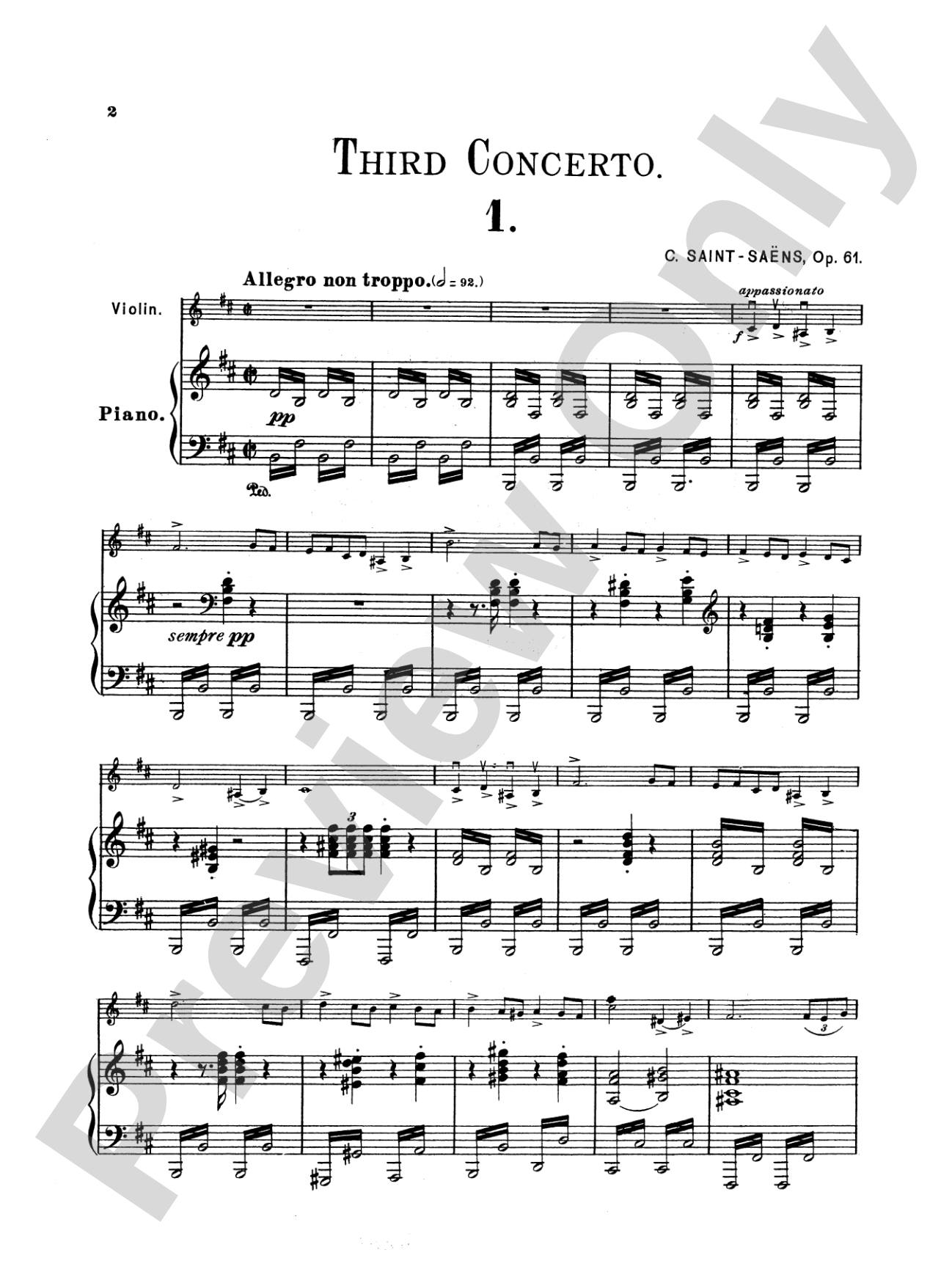
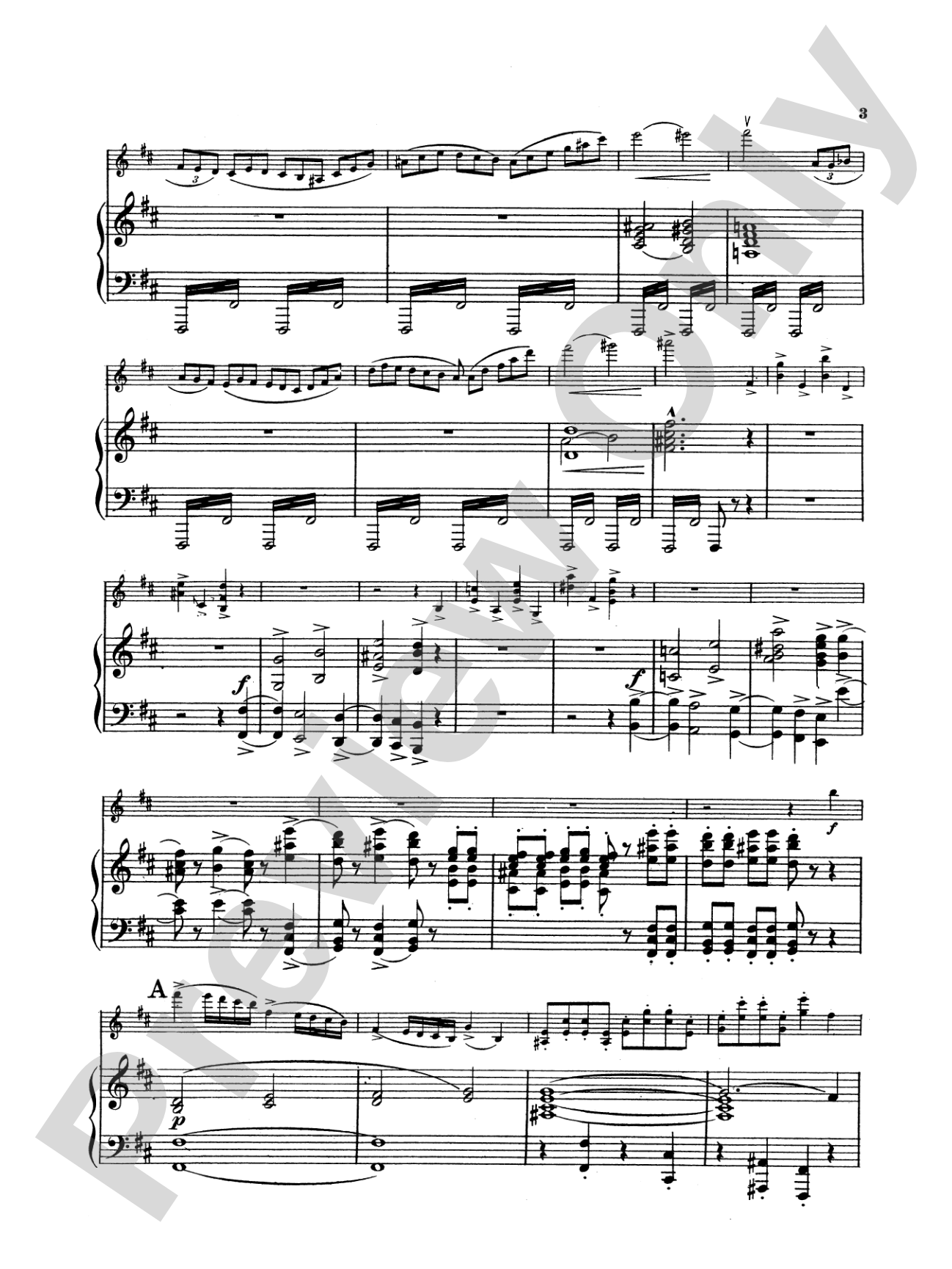
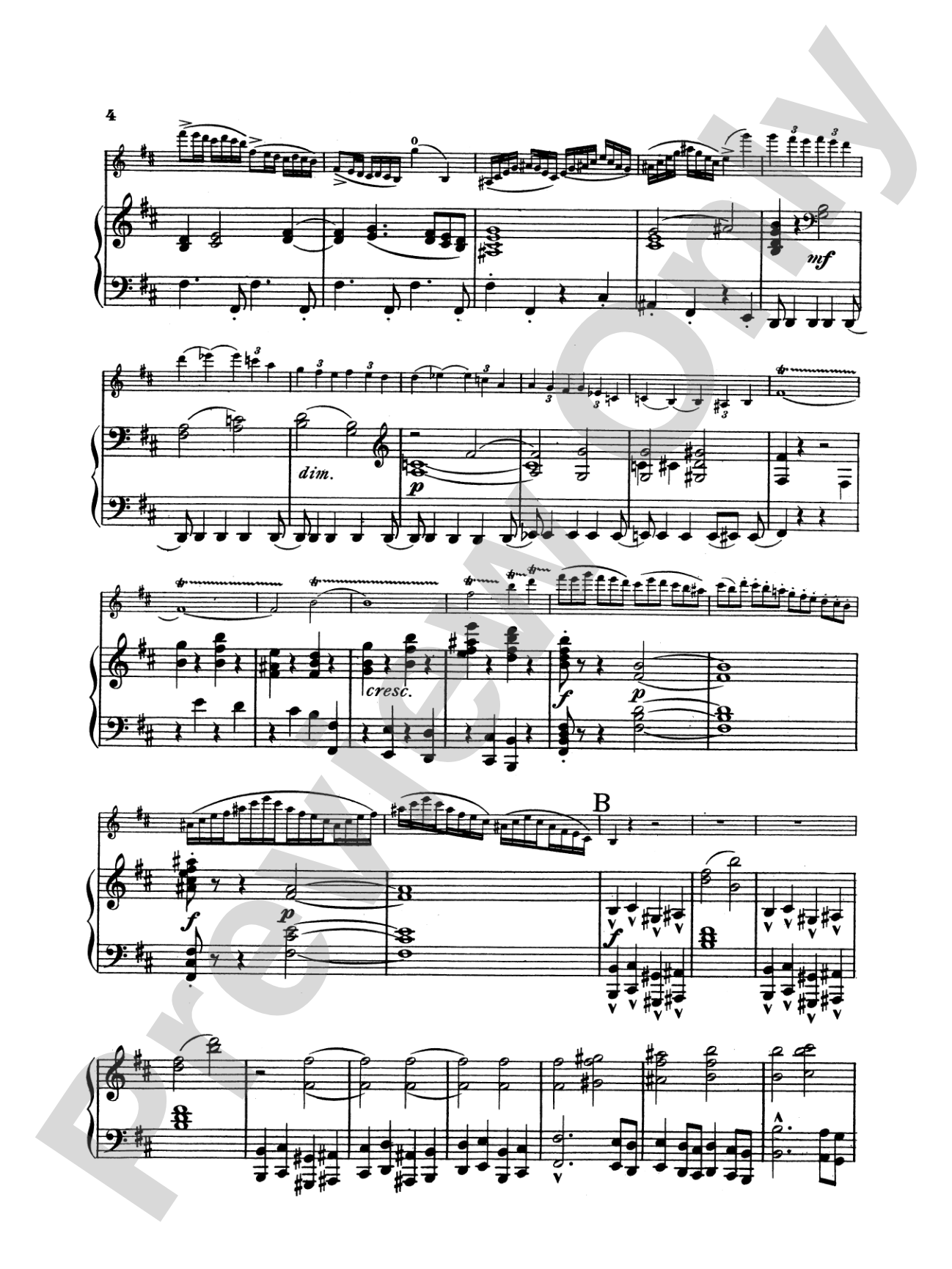
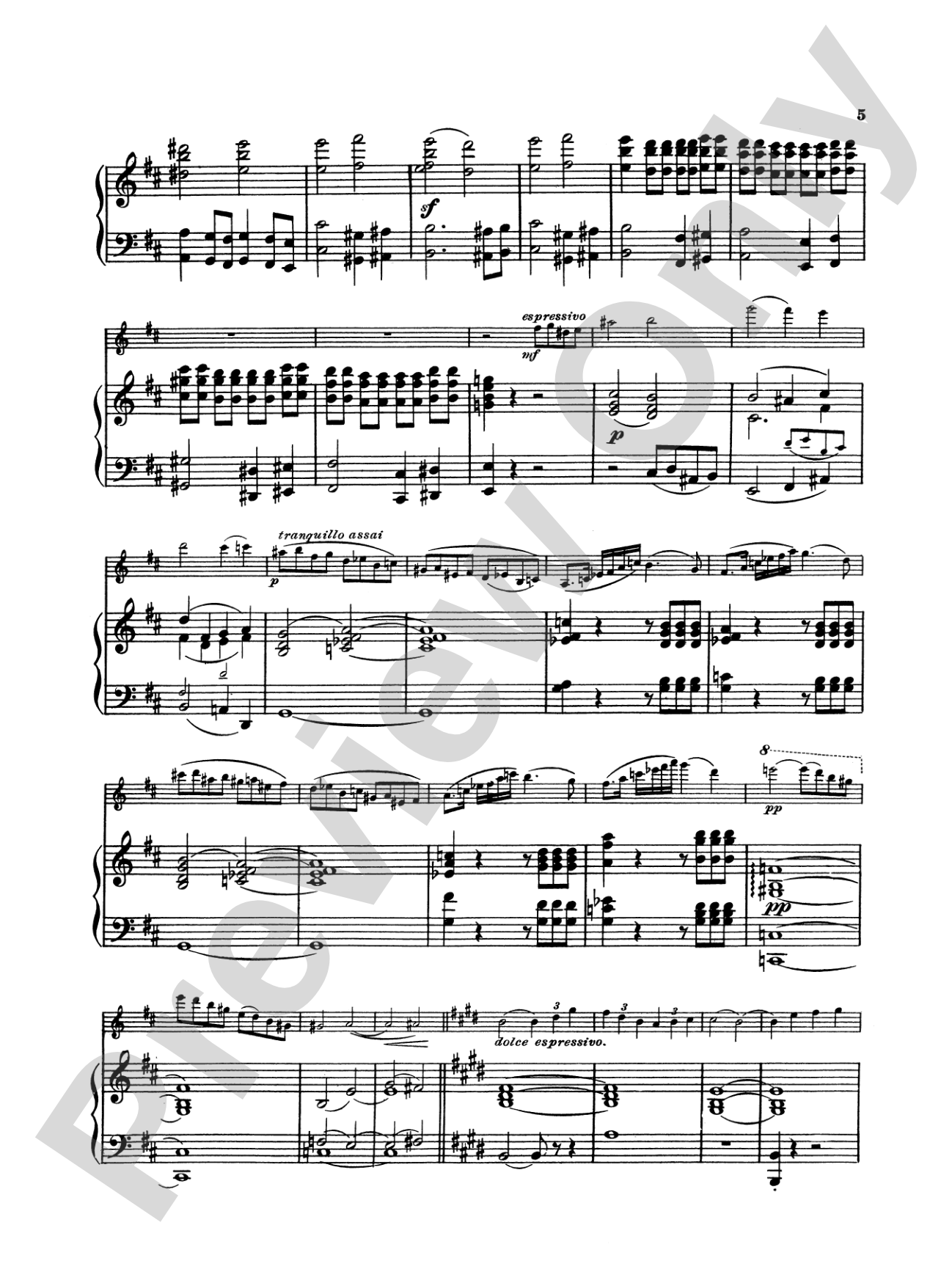
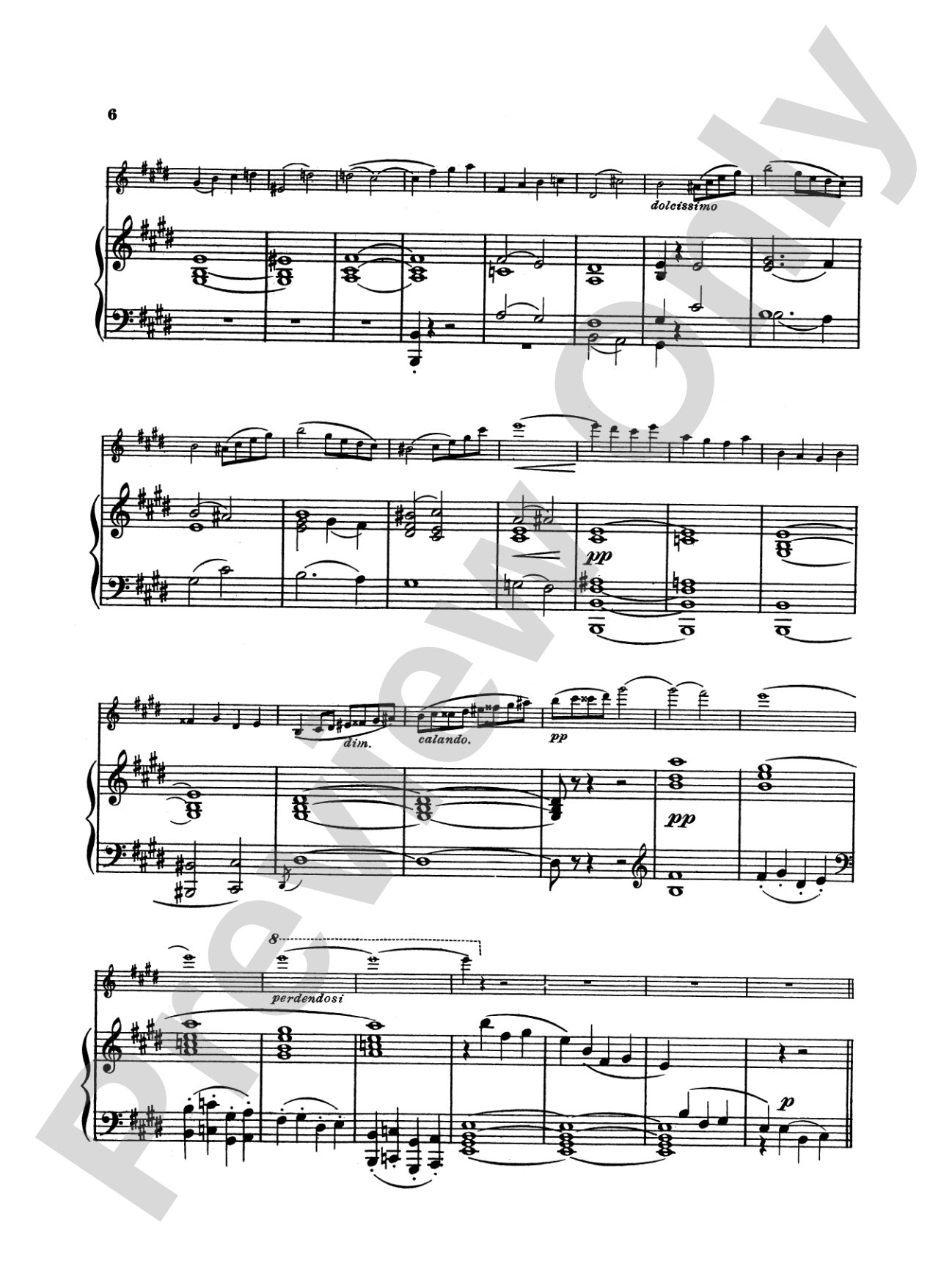
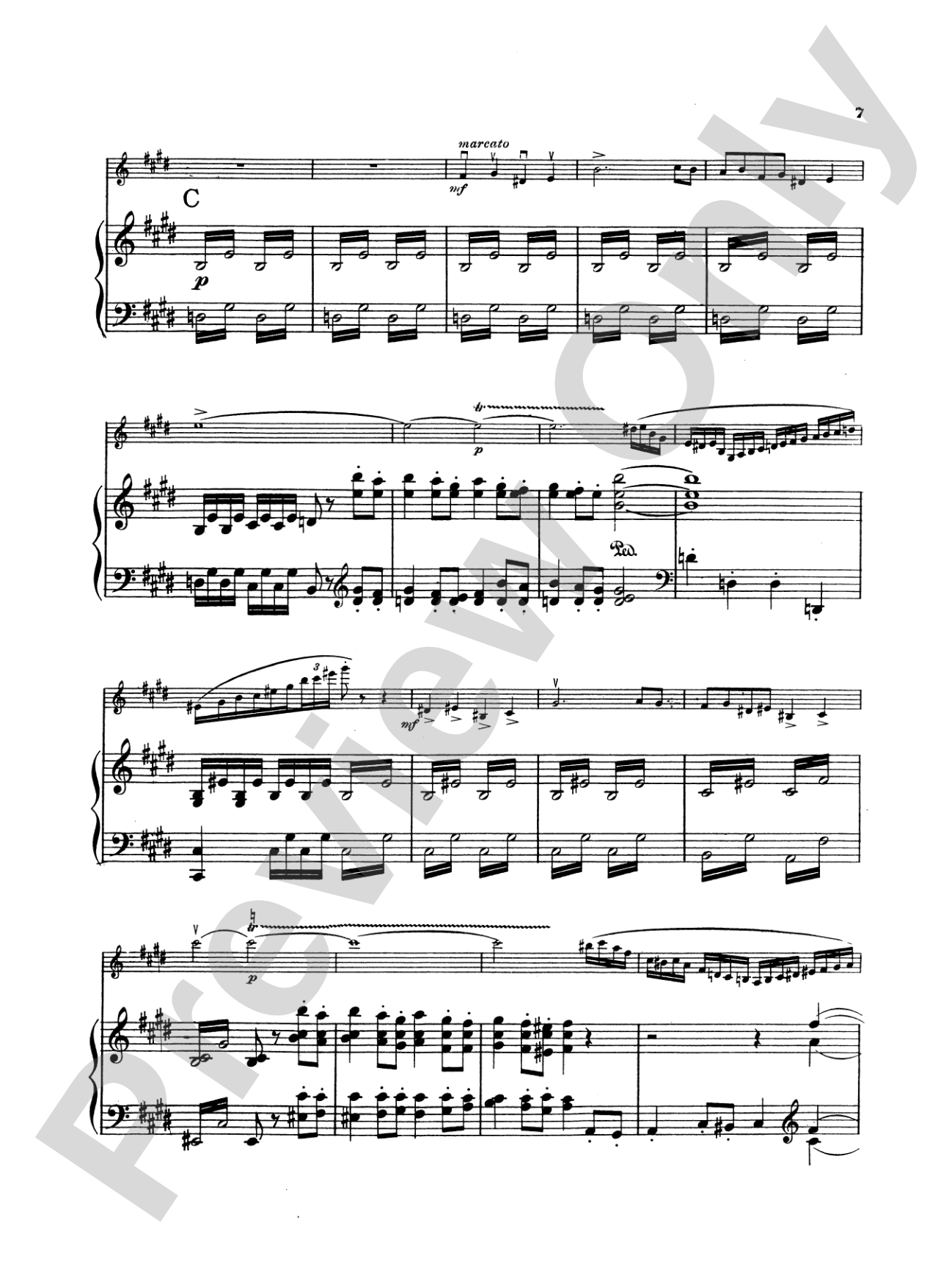
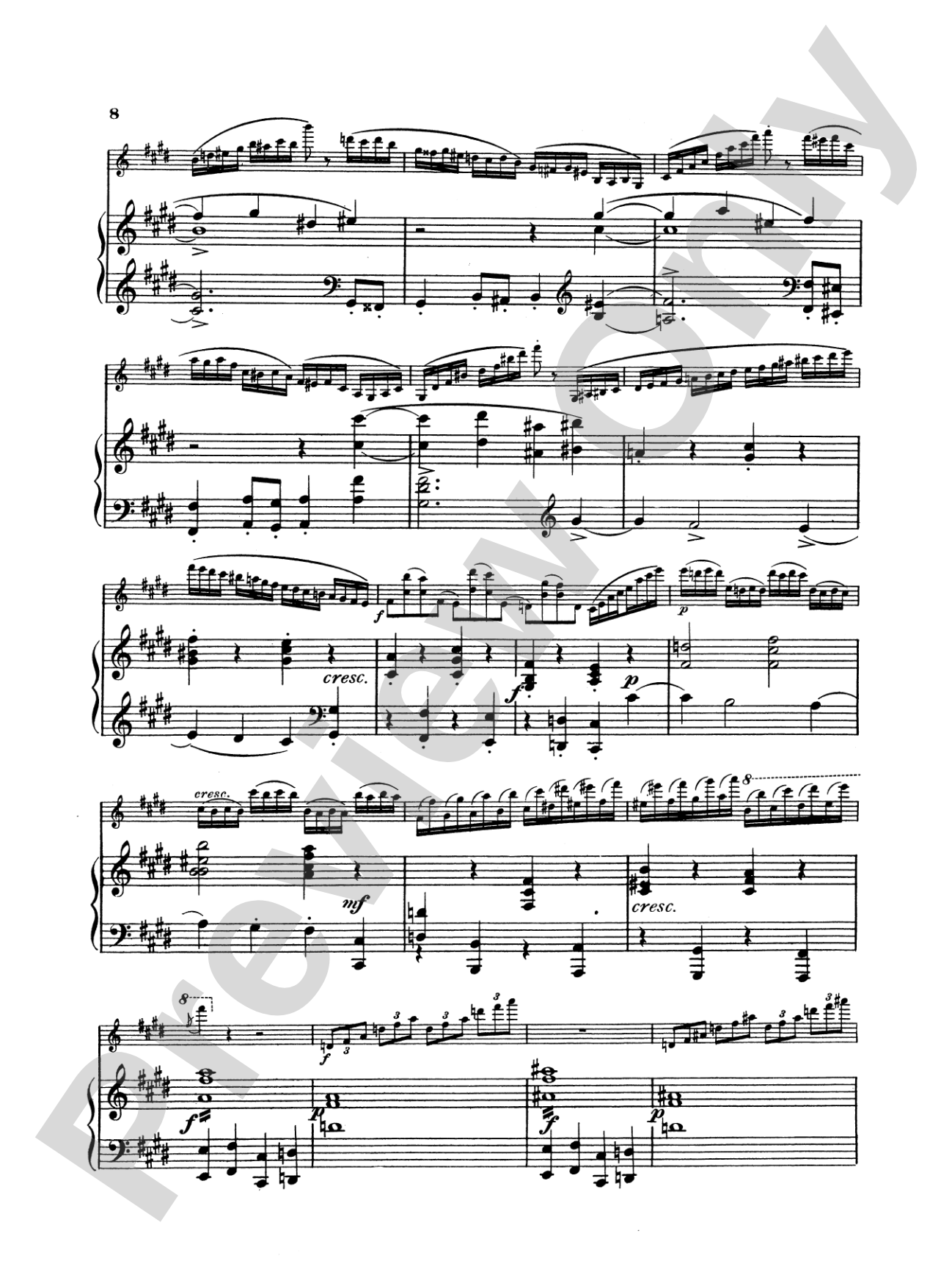
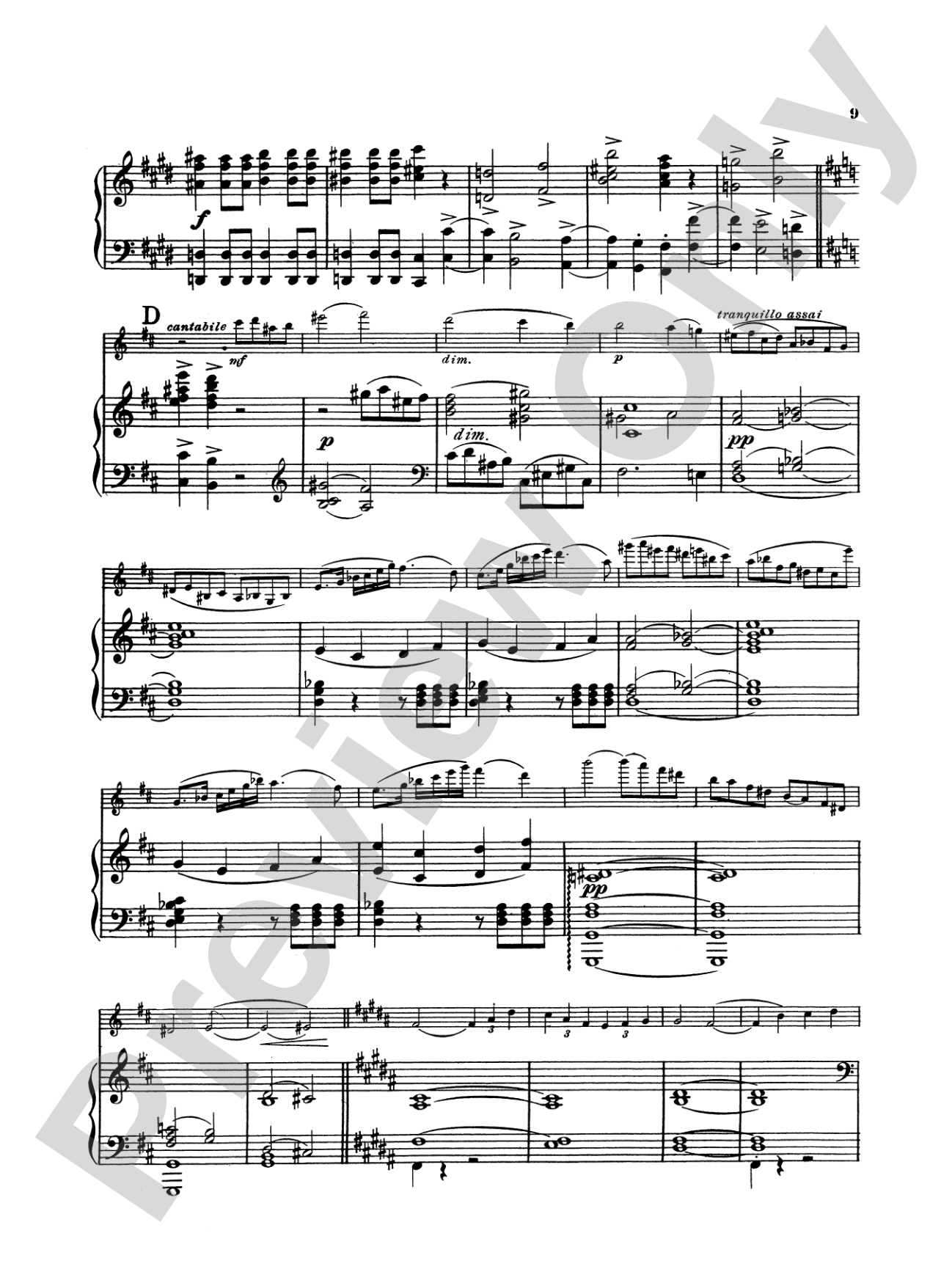
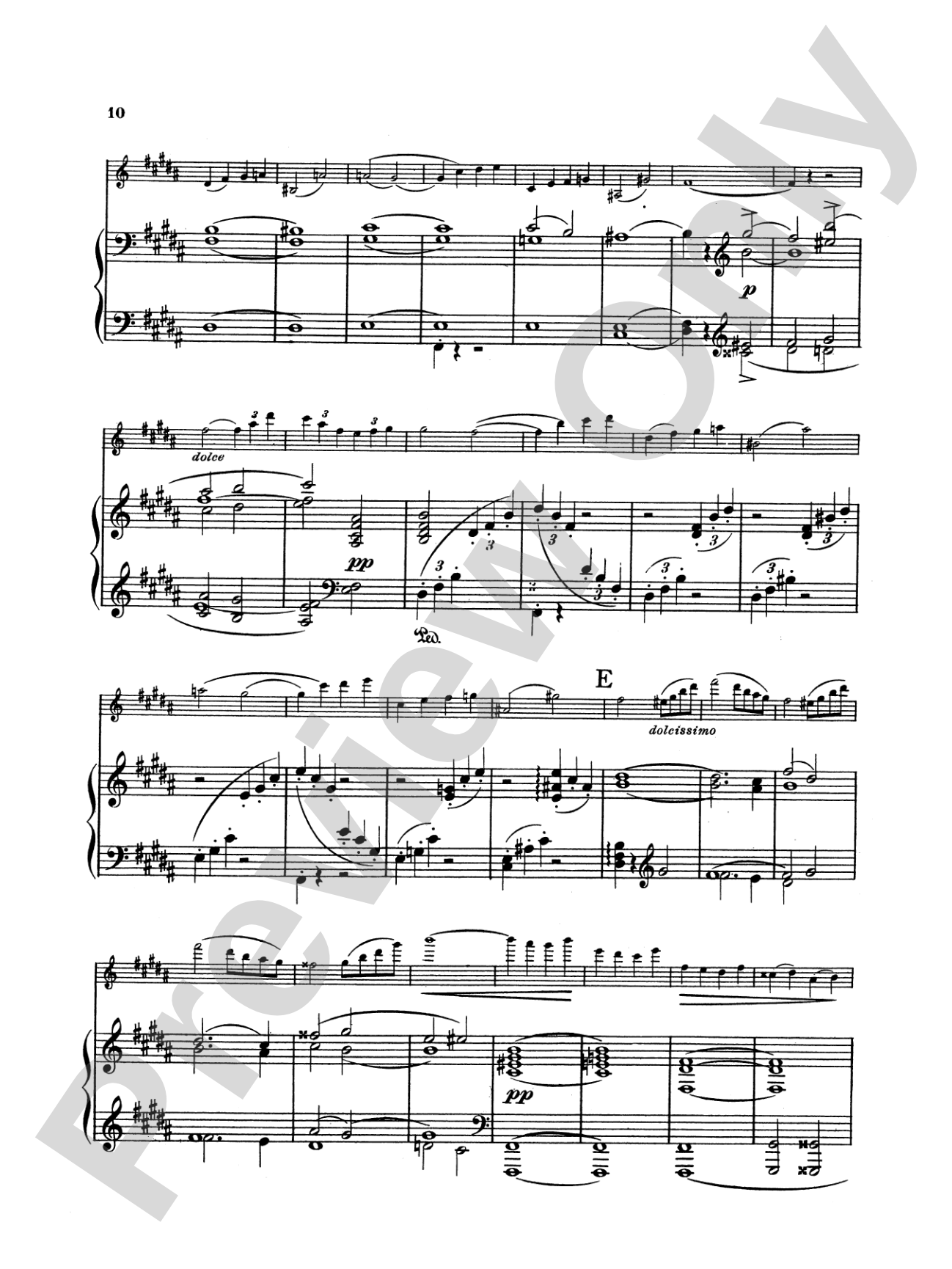
Saint-Saëns: Violin Concerto No. 3 in B Minor, Op. 61 Sheet Music Preview

Saint-Saëns: Violin Concerto No. 3 in B Minor, Op. 61

By Camille Saint-Saëns

Item: 00-PC-0009072

Digital Download
$6.95
Description
A Violin solo with Piano Accompaniment composed by Camille Saint-Saëns.

Saint-Saëns: Violin Concerto No. 3 in B Minor, Op. 61 isn't in MakeMusic Cloud just yet...but it could be. Let us know you'd like to see it, and you'll help shape what comes next. In the meantime, start a free trial and dive into thousands of interactive titles your students can play along with today.

Sample Audio
No sample audio found.
Sample Video
Additional Details
Series: Kalmus Edition
Publisher: Alfred Music
Page Count: 64
SKU: 00-PC-0009072

More about this title

About the Composer: Camille Saint-Saëns

Camille Saint-Saëns (1835-1921) was a French composer of extraordinary range who mastered every major genre from opera to symphonic works to chamber music. His technical facility was matched by his gift for melody; he composed with clarity and elegance whether writing a five-minute piano miniature or an hour-long opera. Saint-Saëns spent much of his career as organist, conductor, and tireless advocate for new music, and he remained compositionally active well into his eighties.

His three violin concertos showcase the instrument's lyrical and virtuosic possibilities in equal measure. The third concerto, written in 1880, ranks among the most performed works in the violin repertoire. It demands technical security and musical maturity from the soloist while offering audiences a work of genuine emotional depth and structural integrity.

Why we love this

This concerto sits at the heart of the Romantic violin canon and has shaped what audiences expect from the form. It rewards serious technical work with passages that sing, brilliant passages that dazzle, and a structure that feels inevitable rather than imposed. Programming it signals that your soloist has arrived at real interpretive and technical maturity.

What to expect

The concerto opens with Gallic elegance and charm, then builds toward genuine passion and virtuosity. The outer movements pulse with life and momentum, while the central section offers a moment of introspection and lyrical beauty. There is nothing dark or overly dramatic here; instead, the work balances brilliance with refinement in the way only a Romantic master could achieve.

Who it's for

Advanced high school soloists and conservatory students ready for a major concerto that requires both technical facility and interpretive sophistication. This work belongs in the hands of violinists who have mastered fast fingerwork, clean double stops, and the ability to sustain a singing tone at all registers.

How to get the most out of it

  • Shape the opening theme with unhurried phrasing; the melody will carry itself without rushing. Saint-Saëns wrote long lines that need space to breathe.
  • Attend carefully to the dynamic markings in the cadenza sections. The written dynamics guide you toward dramatic architecture rather than a flat display of technique.
  • Coordinate with your accompanist on tempo rubato, especially in the lyrical passages of the first movement. The piano writing often doubles the violin line, so ensemble clarity depends on shared intention.
  • Use natural vibrato to color the sustained upper notes in the second movement. Saint-Saëns leaves much of this choice to the soloist; generous vibrato suits the romantic character.

How to use it

This is a strong closer for a formal recital, whether in a solo competition, school concert, or chamber music festival. It also works well as the centerpiece of a program showcasing violin and piano repertoire spanning the nineteenth century. The 64-page score suggests a substantial solo that can hold an entire half of a concert.

Skills your students will build

  • Rapid passagework and finger dexterity across all registers
  • Double stop clarity and intonation
  • Sustained singing tone in the upper positions
  • Baroque and Classical phrase structure adapted within Romantic harmony
  • Coordinate with accompanist through shifts in tempo and rubato
  • Interpretation of cadenza sections without written metrical guidance

You May Also Like