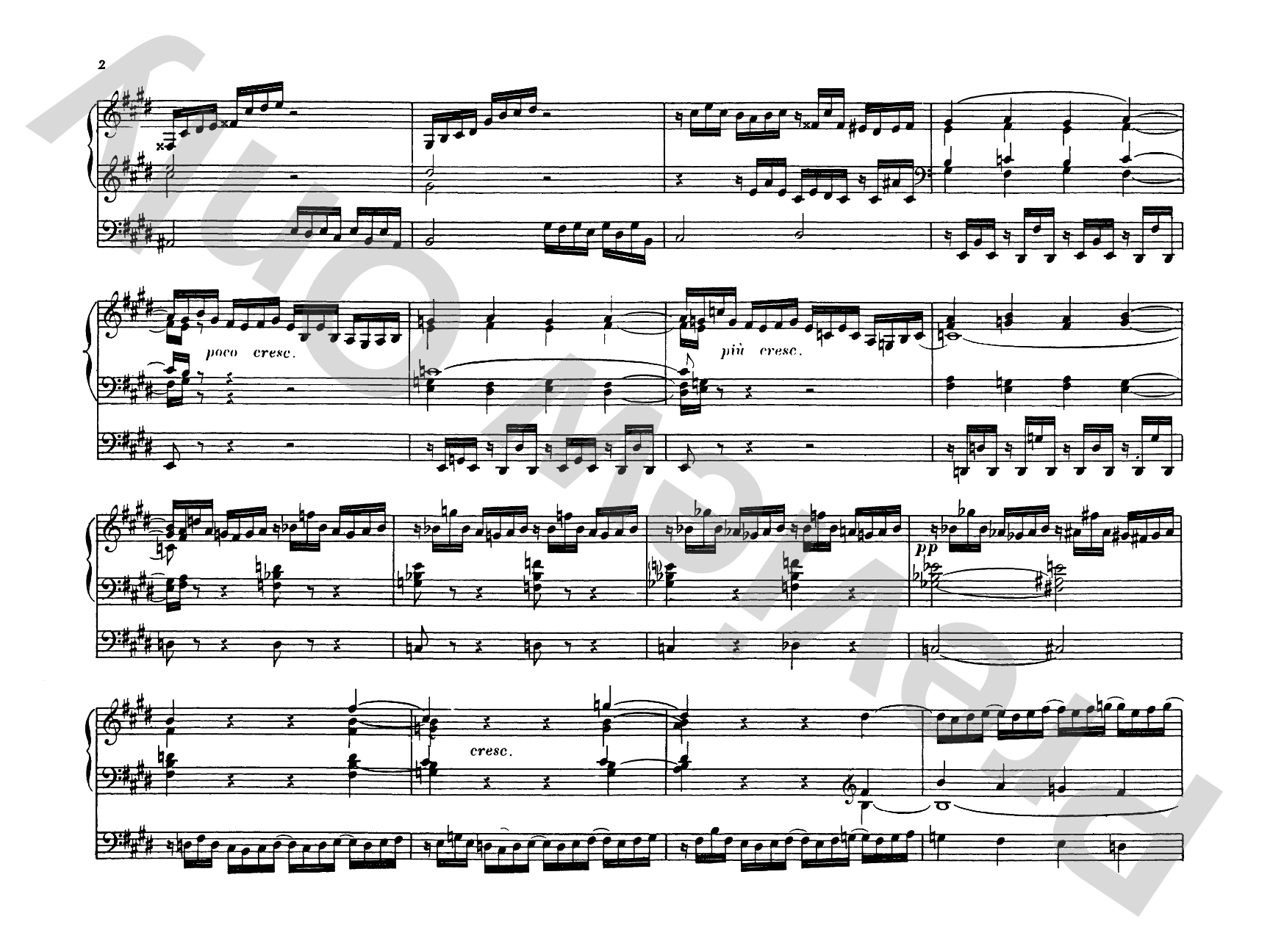
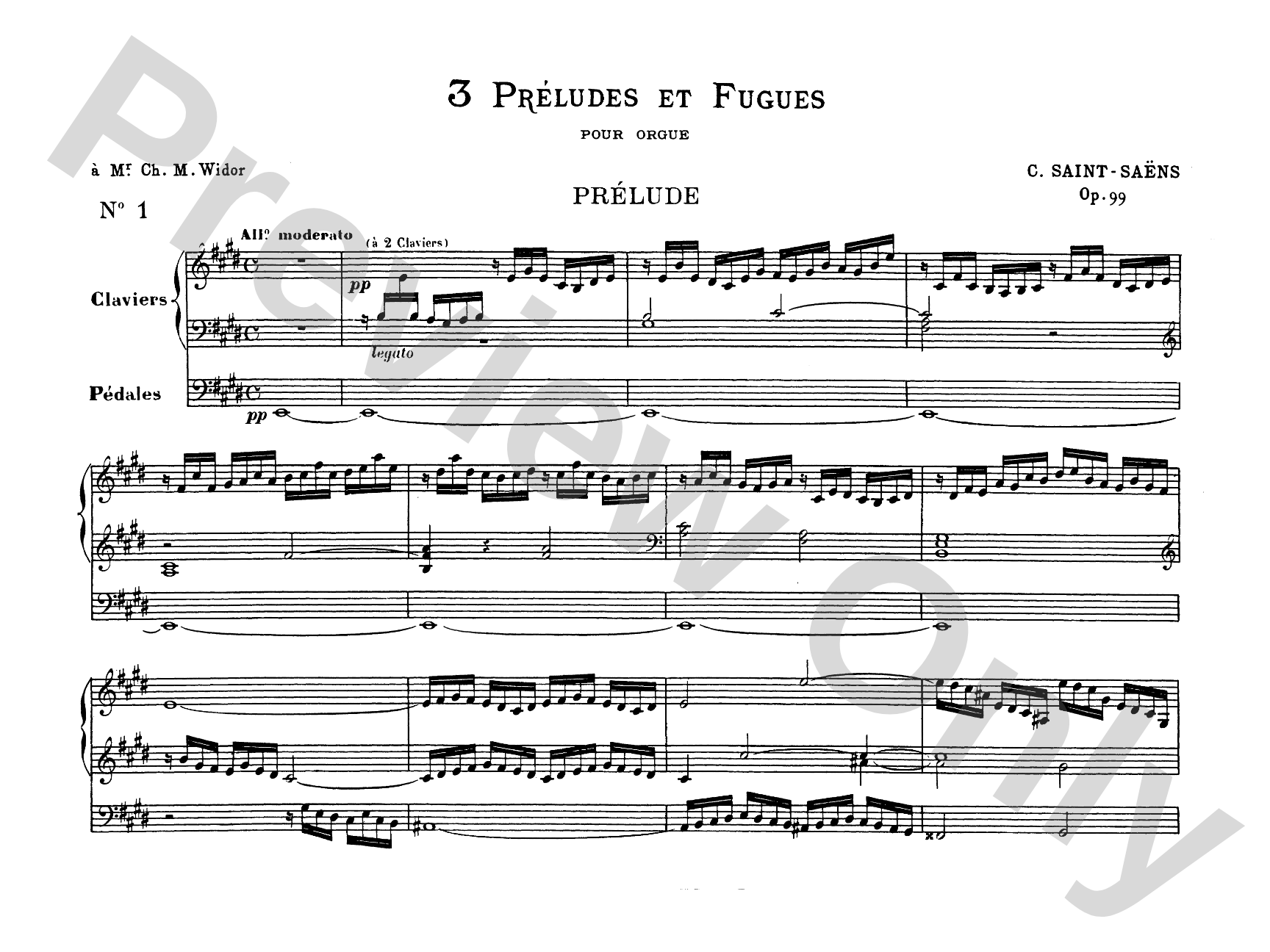
Saint-Saëns: Three Preludes and Fugues, Op. 99 Sheet Music Preview

Saint-Saëns: Three Preludes and Fugues, Op. 99

By Camille Saint-Saëns

Item: 00-PC-0009033

Digital Download
$3.99
Description
The comb binding creates a lay-flat book that is perfect for study and performance.

Don't just read it, hear it, play along with it, and watch your students grow with it. In MakeMusic Cloud, Saint-Saëns: Three Preludes and Fugues, Op. 99 comes alive with professional accompaniment, adjustable tempo, and built-in practice tools that turn solo practice into real progress.

Sample Audio
No sample audio found.
Sample Video
Additional Details
Series: Kalmus Edition
Publisher: Alfred Music
Page Count: 32
SKU: 00-PC-0009033

More about this title

About the Composer: Camille Saint-Saëns

Camille Saint-Saëns (1835-1921) was a French composer, organist, and pianist whose technical mastery and prolific output shaped the Romantic era. He held the position of organist at the Madeleine in Paris for nearly twenty years, where he developed a deep knowledge of the instrument and its repertoire. His organ works remain central to the literature, balancing the virtuosity he demanded of himself with profound liturgical and structural sophistication.

Saint-Saëns composed these Three Preludes and Fugues late in his life, drawing on decades of experience at the keyboard. They represent his mature style: architecture and clarity married to the expressive possibilities of the Romantic organ. These works have become standard fare in organ recitals and are studied by serious students seeking to understand both French organ tradition and the depth of Saint-Saëns's craft.

Why we love this

These three works offer organists a bridge between the fugal traditions of Bach and the coloristic possibilities of the Romantic-era instrument. Each prelude unfolds with Saint-Saëns's characteristic clarity and elegance before leading into a fugue of genuine intellectual substance, making them ideal for programs that need both showpiece appeal and musical rigor. The lay-flat binding supports serious study and performance preparation without fatigue.

What to expect

Each prelude arrives as a graceful architectural statement, establishing harmonic color and thematic material with Saint-Saëns's trademark elegance. The fugues that follow are intellectually engaging without becoming austere; they possess the contrapuntal rigor of earlier traditions but speak in the harmonic language of the nineteenth century. Together, the three pairs create a journey through formal mastery and Romantic expression on the organ.

Who it's for

Organists with solid intermediate to advanced technique will find these works essential study. They suit recital programming, liturgical contexts where substantial organ music is valued, and students preparing for competitions or degree-level performance. Church musicians and concert organists alike will return to these pieces throughout their careers.

How to get the most out of it

  • Balance the counterpoint in the fugal sections; resist the temptation to blur voices through excessive registration. The clarity Saint-Saëns requires depends on distinct part-writing.
  • Use the prelude material to establish the tonal palette and registration strategy for each work before the fugue begins. Think of each prelude as an introduction to the fugue that follows.
  • Attend carefully to the manual and pedal divisions. Saint-Saëns writes with specific knowledge of organ capabilities; his part assignments are purposeful, not arbitrary.
  • Allow the harmonic language of the Romantic era to breathe without dragging tempos. These works move forward purposefully despite their formal complexity.

How to use it

Program all three works as a substantial solo recital piece, or present individual prelude-and-fugue pairs in separate concerts to highlight their distinct characters. These works are equally at home in a liturgical setting where organ literature of substance is central to the service or in a secular recital where they anchor a program of French Romantic music.

Skills your students will build

  • Reading and executing Romantic-era fugal counterpoint with clarity
  • Manual and pedal coordination in complex part-writing
  • Registration choices that support structural clarity and harmonic color
  • Sustaining musical line across formal sections (prelude into fugue)
  • Tempo control and forward motion in works of architectural complexity

You May Also Like