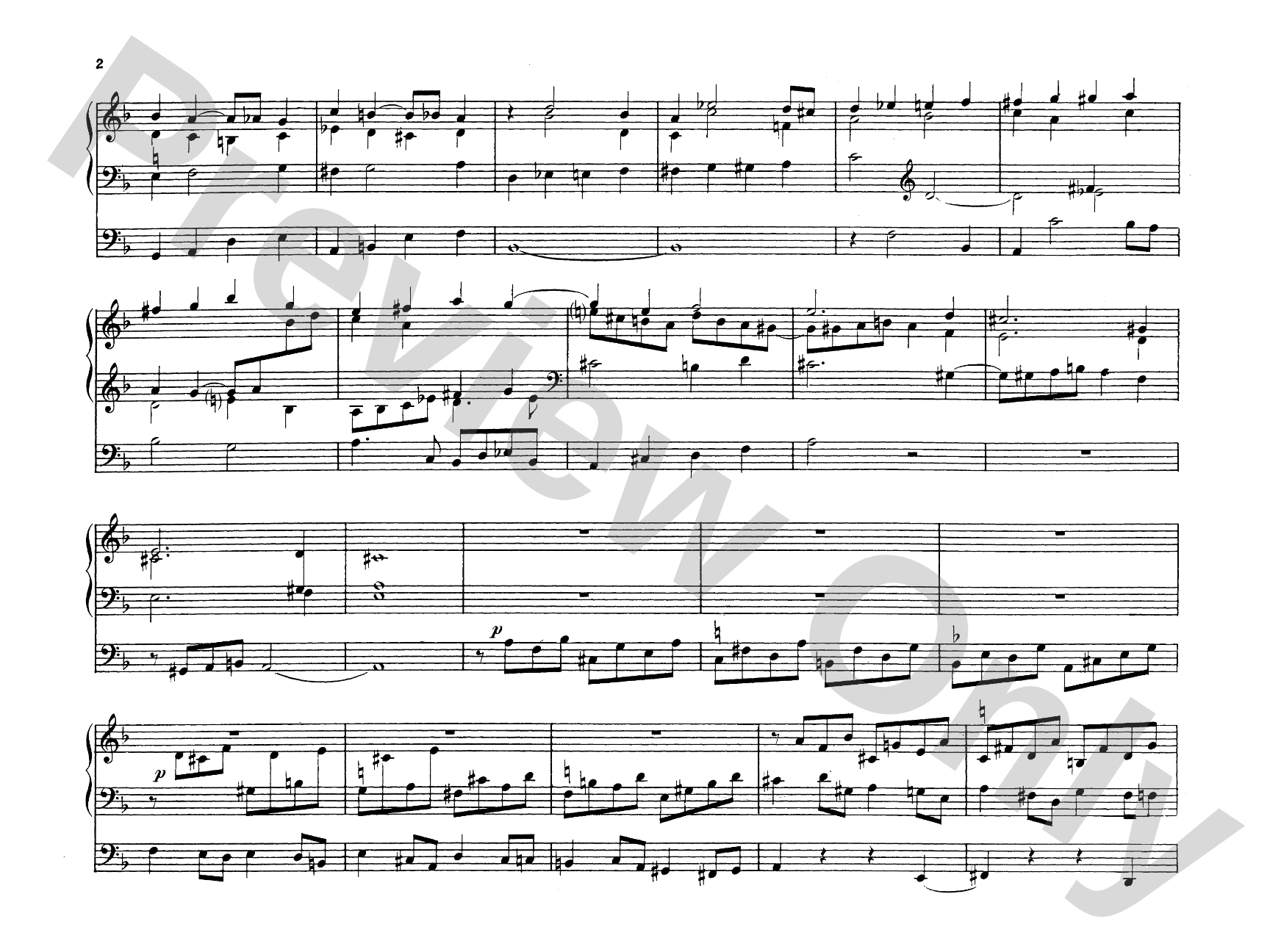
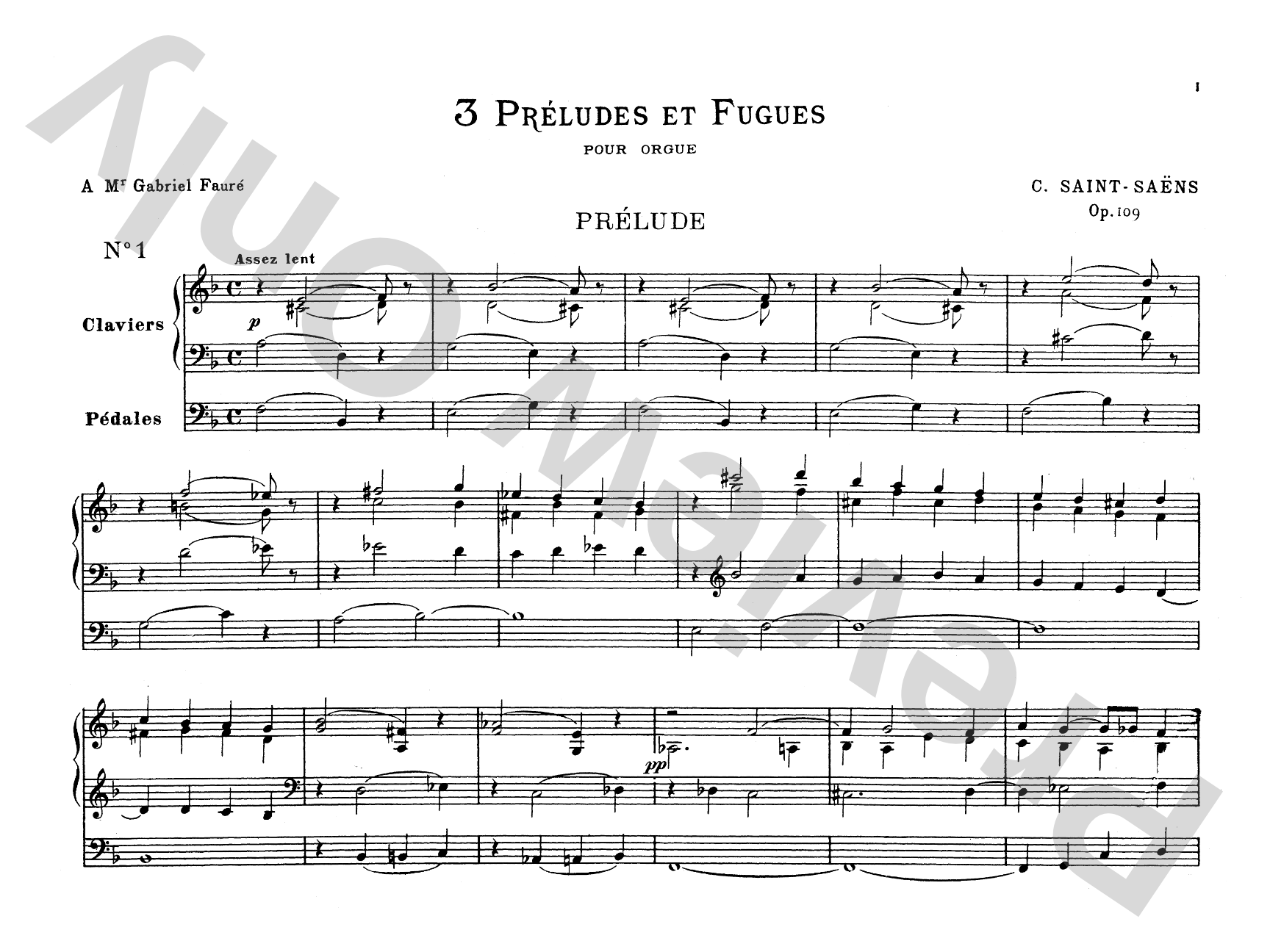
Saint-Saëns: Three Preludes and Fugues, Op. 109 Sheet Music Preview

Saint-Saëns: Three Preludes and Fugues, Op. 109

By Camille Saint-Saëns

Item: 00-PC-0009036

Digital Download
$2.99
Description

Don't just read it, hear it, play along with it, and watch your students grow with it. In MakeMusic Cloud, Saint-Saëns: Three Preludes and Fugues, Op. 109 comes alive with professional accompaniment, adjustable tempo, and built-in practice tools that turn solo practice into real progress.

Sample Audio
No sample audio found.
Sample Video
Additional Details
Series: Kalmus Edition
Publisher: Alfred Music
Page Count: 36
SKU: 00-PC-0009036

More about this title

About the Composer: Camille Saint-Saëns

Camille Saint-Saëns (1835-1921) was a French composer and virtuoso organist whose technical mastery and elegant musical language made him one of the most performed composers of the Romantic era. His organ works rank among the finest in the instrument's repertoire, combining the grandeur of French symphonic organ style with the structural rigor of Bach, whom he deeply admired. Saint-Saëns held the position of organist at the Madeleine in Paris for nearly twenty years, and his compositional output spans symphonies, concertos, operas, and chamber music that remain central to concert life today.

His three sets of Preludes and Fugues (Op. 99, Op. 109, and Op. 125) represent the apex of his keyboard writing, offering organists a bridge between the Baroque contrapuntal tradition and Romantic harmonic language. These works demand both technical fluency and musical sophistication from performers, making them essential repertoire for advanced students and professionals alike.

Why we love this

Saint-Saëns understood the organ at an intimate level, and these three works showcase textures and harmonic language that feel both compositionally substantial and genuinely idiomatic to the instrument. The collection balances architectural clarity with romantic warmth, giving advanced organists material that rewards repeated study and allows for real interpretive growth.

What to expect

Elegant, architectural, and intellectually engaging. Saint-Saëns crafts these pieces with the precision of a jeweler, balancing baroque logic with romantic harmony. Each prelude unfolds with lyrical grace before giving way to a fugue that demands both technical clarity and sustained musical expression.

Who it's for

Advanced organists seeking Romantic-era repertoire with genuine pedagogical and performance depth. This collection suits advanced students preparing for recitals, competitions, or professional portfolios, as well as church musicians looking to expand beyond liturgical literature into concert-caliber works.

How to get the most out of it

  • Balance the counterpoint between manual and pedal parts with careful attention to articulation; the fugal writing benefits from clarity in line definition rather than blurred sonorities.
  • Allow the harmonic language (particularly in the more chromatic passages) time to unfold without rushing; Saint-Saëns' progressions are elegant but need space to register.
  • Approach the registration as part of the compositional design; consult the original edition for Saint-Saëns' own indications and adapt based on your instrument's character and resources.
  • Use the preludes to establish tonal and registral context for each fugue; they function as both independent pieces and structural partners to what follows.

How to use it

Program one complete prelude-fugue pair as a recital centerpiece, or use the three works as an entire concert set to demonstrate command of contrasting tonal centers and interpretive approaches. These are equally at home in a mixed organ recital featuring composers across several centuries, where they anchor the program with their sophistication and substance.

Skills your students will build

  • Fugal writing and subject development across multiple manual and pedal combinations
  • Chromatic voice-leading and advanced harmonic language specific to the Romantic organ aesthetic
  • Registration planning and tonal shaping across large-scale forms
  • Contrapuntal independence and clarity while maintaining lyrical phrasing
  • Interpretation of French Romantic organ idiom and its technical demands

You May Also Like