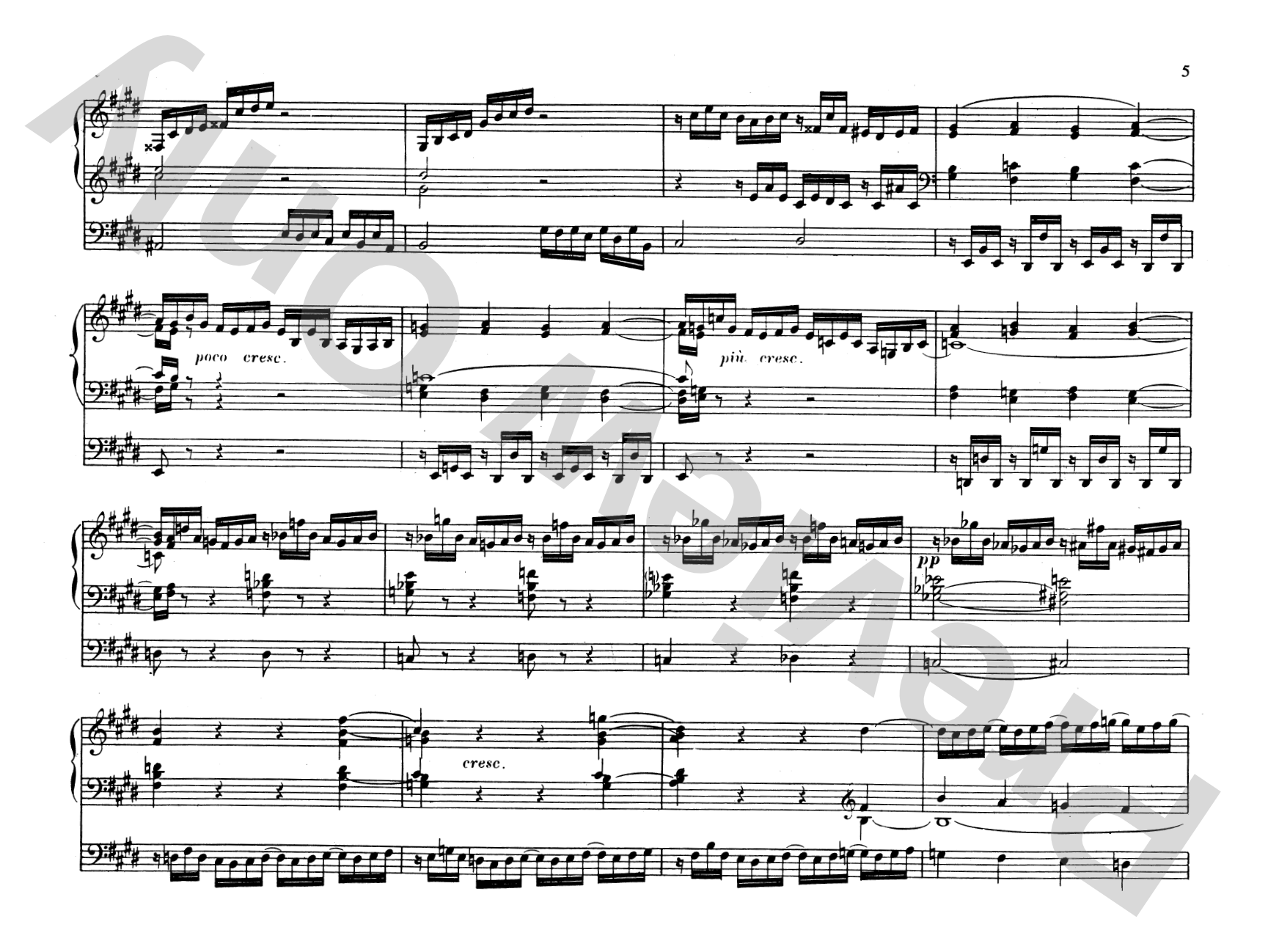
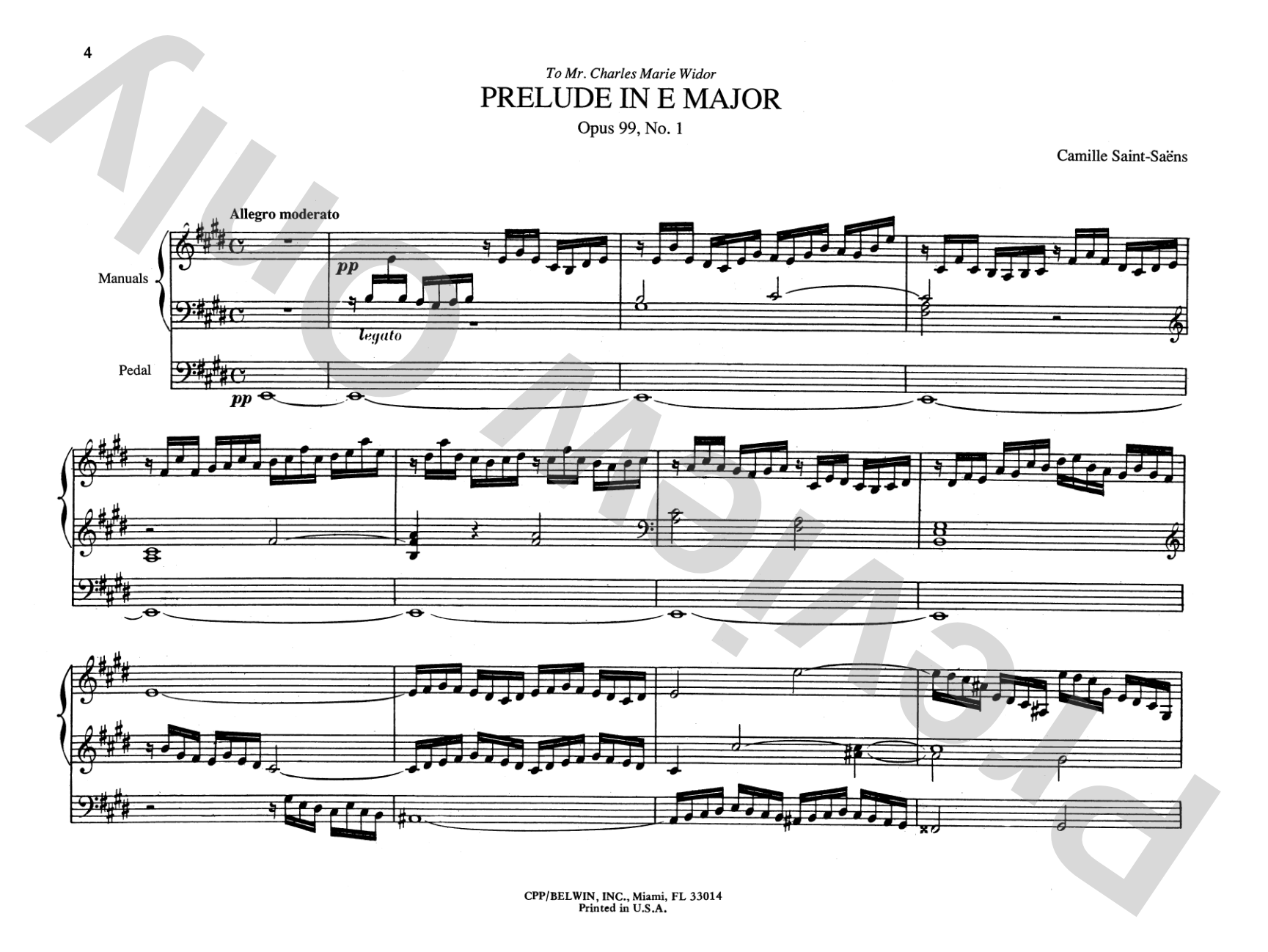
Saint-Saëns: Six Preludes and Fugues, Op. 99 and Op. 109 Sheet Music Preview

Saint-Saëns: Six Preludes and Fugues, Op. 99 and Op. 109

By Camille Saint-Saëns

Item: 00-PC-0014216

Digital Download
$0.99
Description
This edition offers cleanly printed pages in an oblong format for ease of reading on the organ console. A must for the studio and for recital. The comb binding creates a lay-flat book that is perfect for study and performance. Titles: Opus 99, No. 1 in E Major * Opus 99, No. 2 in B Major * Opus 99, No. 3 in E-flat Major * Opus 109, No. 1 in D Minor * Opus 109, No. 2 in G Major * Opus 109, No. 3 in C Major.

Don't just read it, hear it, play along with it, and watch your students grow with it. In MakeMusic Cloud, Saint-Saëns: Six Preludes and Fugues, Op. 99 and Op. 109 comes alive with professional accompaniment, adjustable tempo, and built-in practice tools that turn solo practice into real progress.

Sample Audio
No sample audio found.
Sample Video
Additional Details
Series: Kalmus Edition
Publisher: Alfred Music
Page Count: 64
SKU: 00-PC-0014216

More about this title

About the Composer: Camille Saint-Saëns

Camille Saint-Saëns (1835-1921) was a French Romantic composer of extraordinary technical facility and prolific output. His command of form, harmonic language, and orchestration made him one of the most performed composers of his era, and his keyboard works remain cornerstones of the organ and piano repertoire.

Saint-Saëns approached the organ with the same structural rigor he brought to his symphonies and concertos. His Preludes and Fugues demonstrate his mastery of counterpoint and his ability to blend the Baroque fugal tradition with Romantic harmonic idiom, making them essential studies for organists seeking to deepen both technical command and interpretive depth.

Why we love this

These six works span two opus numbers and offer serious organists a carefully curated journey through multiple keys and structural approaches. Each pairing of prelude and fugue presents distinct challenges: some demand lyrical, singing lines while others require crystalline articulation and rhythmic precision. The progression across major and minor tonalities gives recital programmers genuine flexibility, allowing for programming that feels architecturally complete rather than episodic.

What to expect

These preludes and fugues balance intellectual rigor with Romantic lyricism. The preludes range from introspective and songlike to declamatory and grand, while the fugues combine Baroque architectural clarity with 19th-century harmonic richness. Together, they create a sense of formal completion without sacrificing emotional resonance.

Who it's for

Advanced organists preparing for recitals or examination repertoire will find these works essential. Students working toward advanced performance degrees and experienced amateurs seeking substantial Romantic-era keyboard literature will benefit from the structural sophistication and musical depth on offer.

How to get the most out of it

  • Approach the fugal sections with transparency in voice-leading. Saint-Saëns's counterpoint is elegant rather than dense, and muddied registrations will obscure the thematic interplay between voices.
  • Shape the preludes as self-contained character pieces. Some demand dramatic, rhetorical gestures while others invite intimate, chamber-like intimacy. Avoid treating them as mere introductions.
  • Use the lay-flat binding to develop consistent page-turn strategies before performance. Memorizing transitions between opus numbers gives you freedom at the console.
  • Experiment with registration across different pieces. The variety in harmonic language and texture across these six works rewards exploration of your instrument's sonic palette.

How to use it

Program these works as a unified recital cycle, or select individual pairings to anchor a mixed program of organ literature. A prelude and fugue in a major key works beautifully as a centerpiece following lighter contemporary works, while the D Minor fugue can open a program with dramatic authority.

Skills your students will build

  • Fugal analysis and voice-leading clarity in Romantic idiom
  • Registration strategy across varied harmonic and textural demands
  • Pedal independence in both Baroque-derived and contemporary harmonic contexts
  • Interpretive balance between structural integrity and lyrical expression
  • Keyboard facility across multiple tonal areas and technical figures

You May Also Like