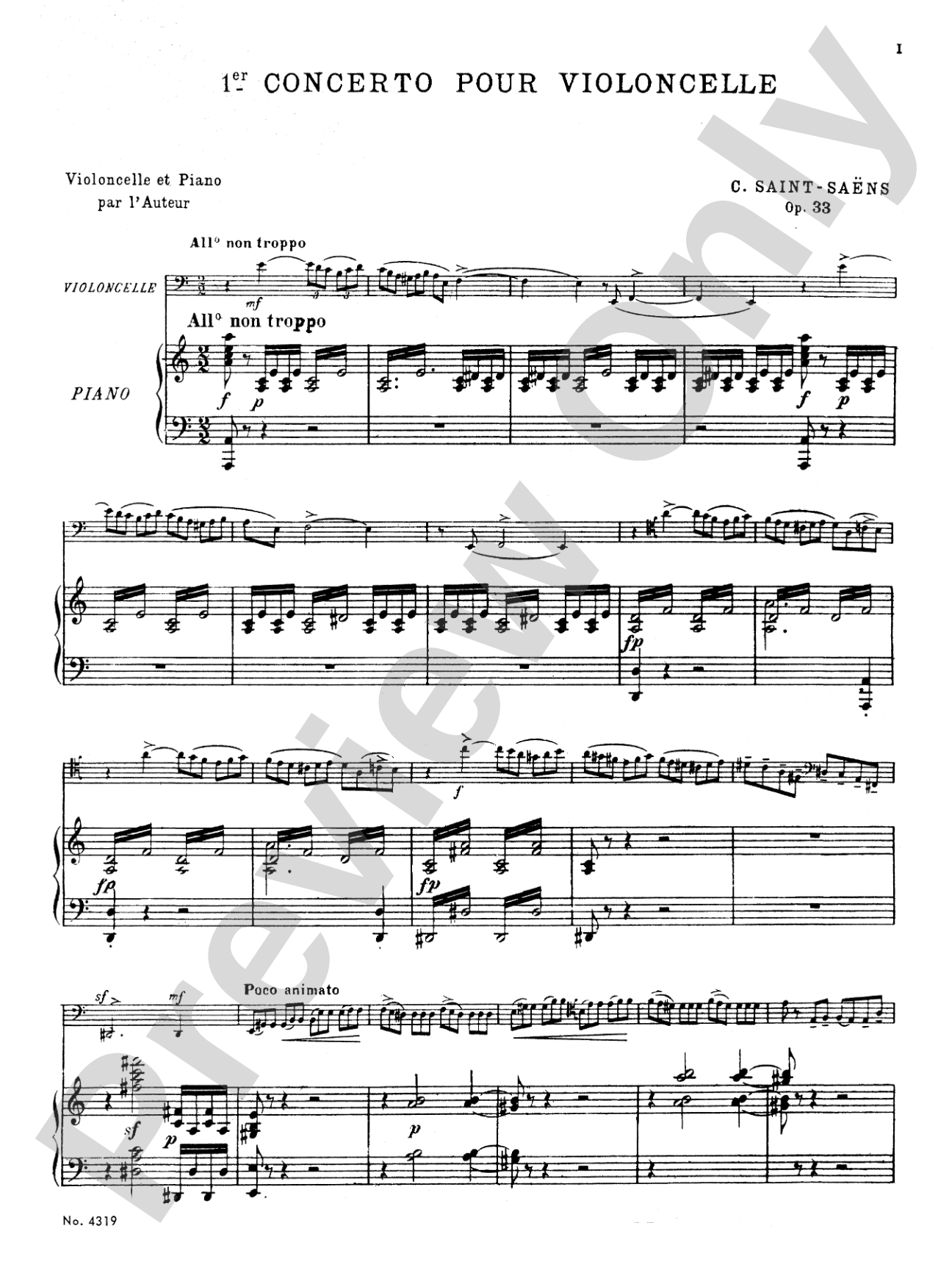
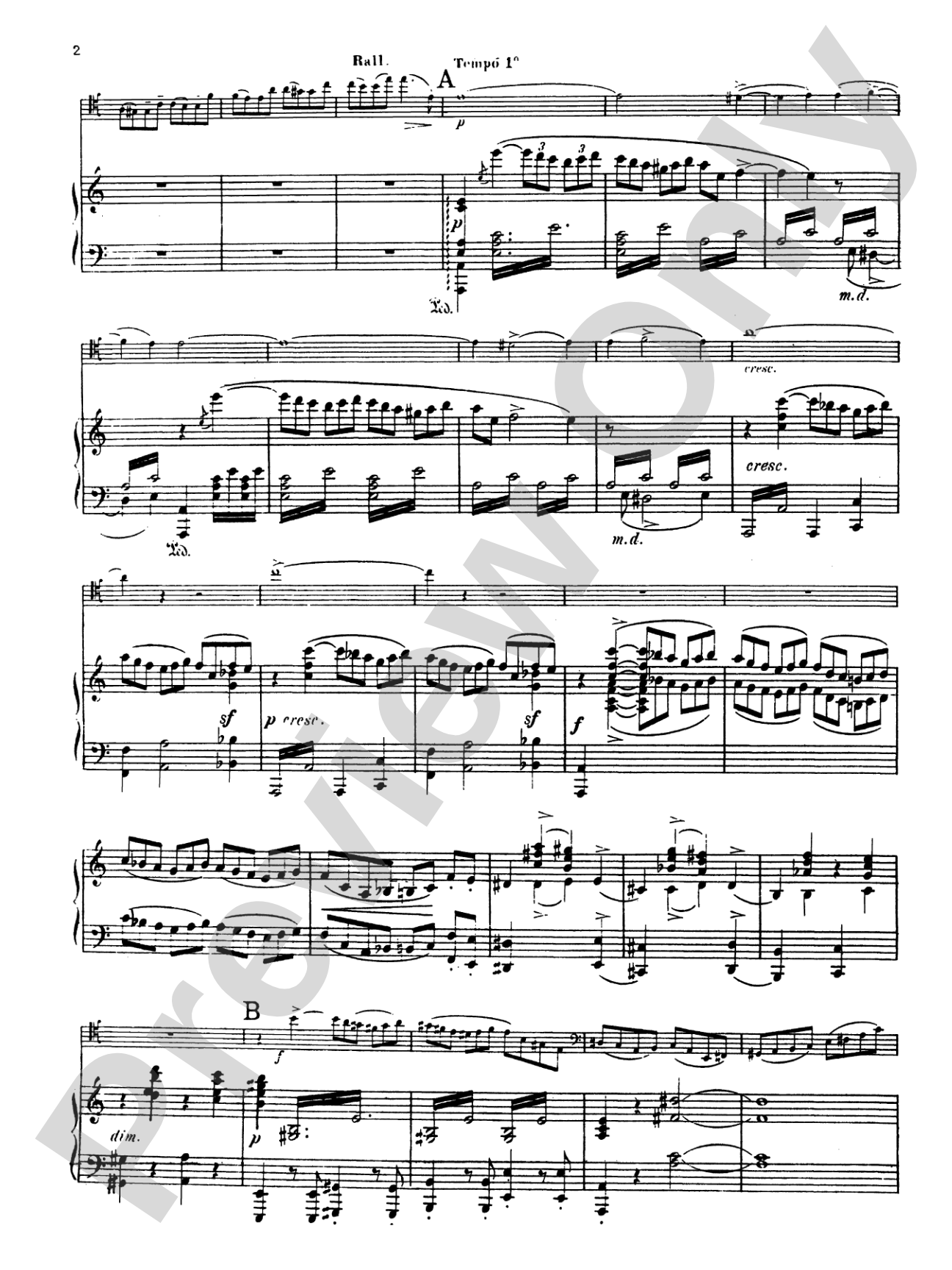
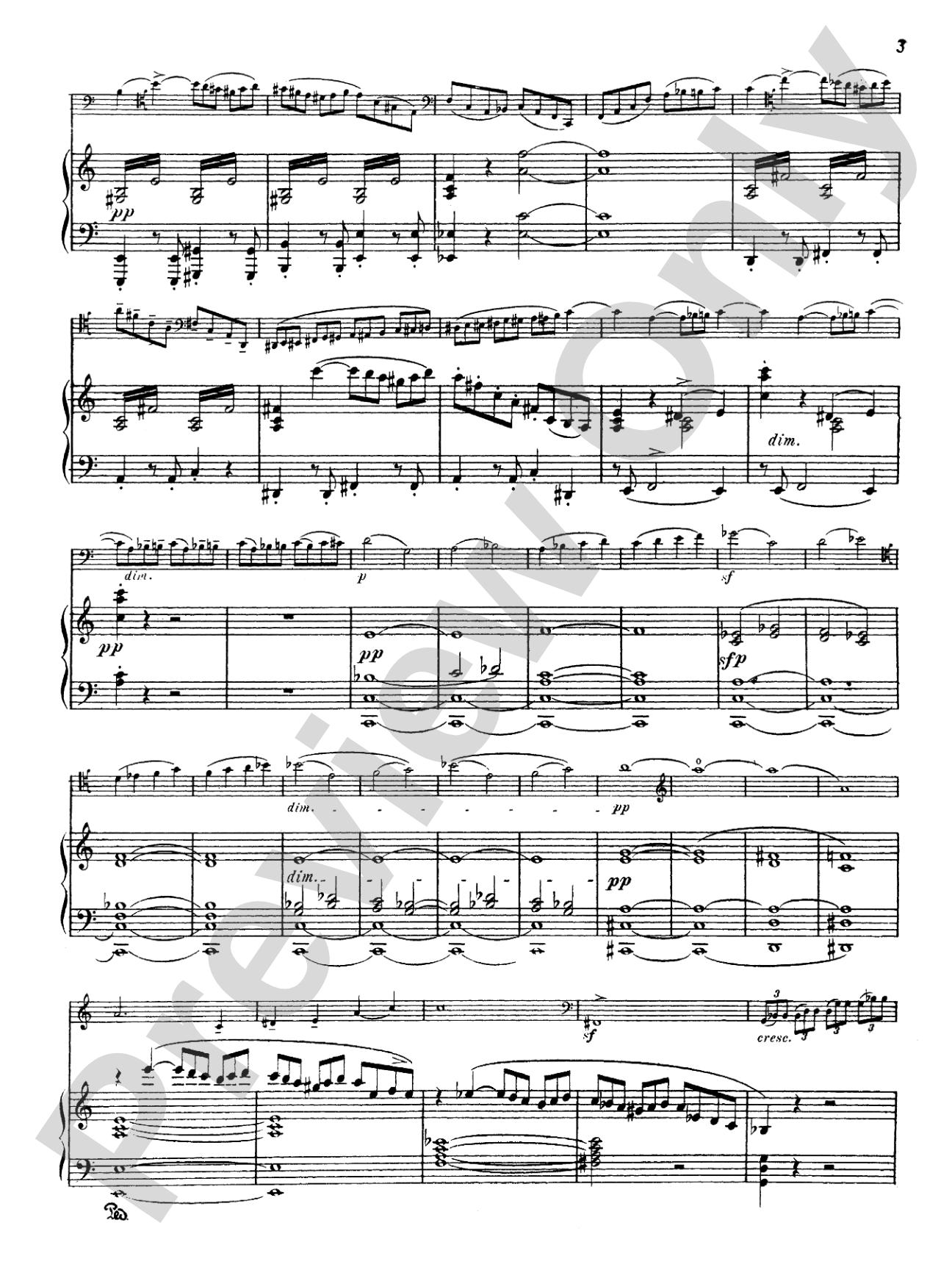
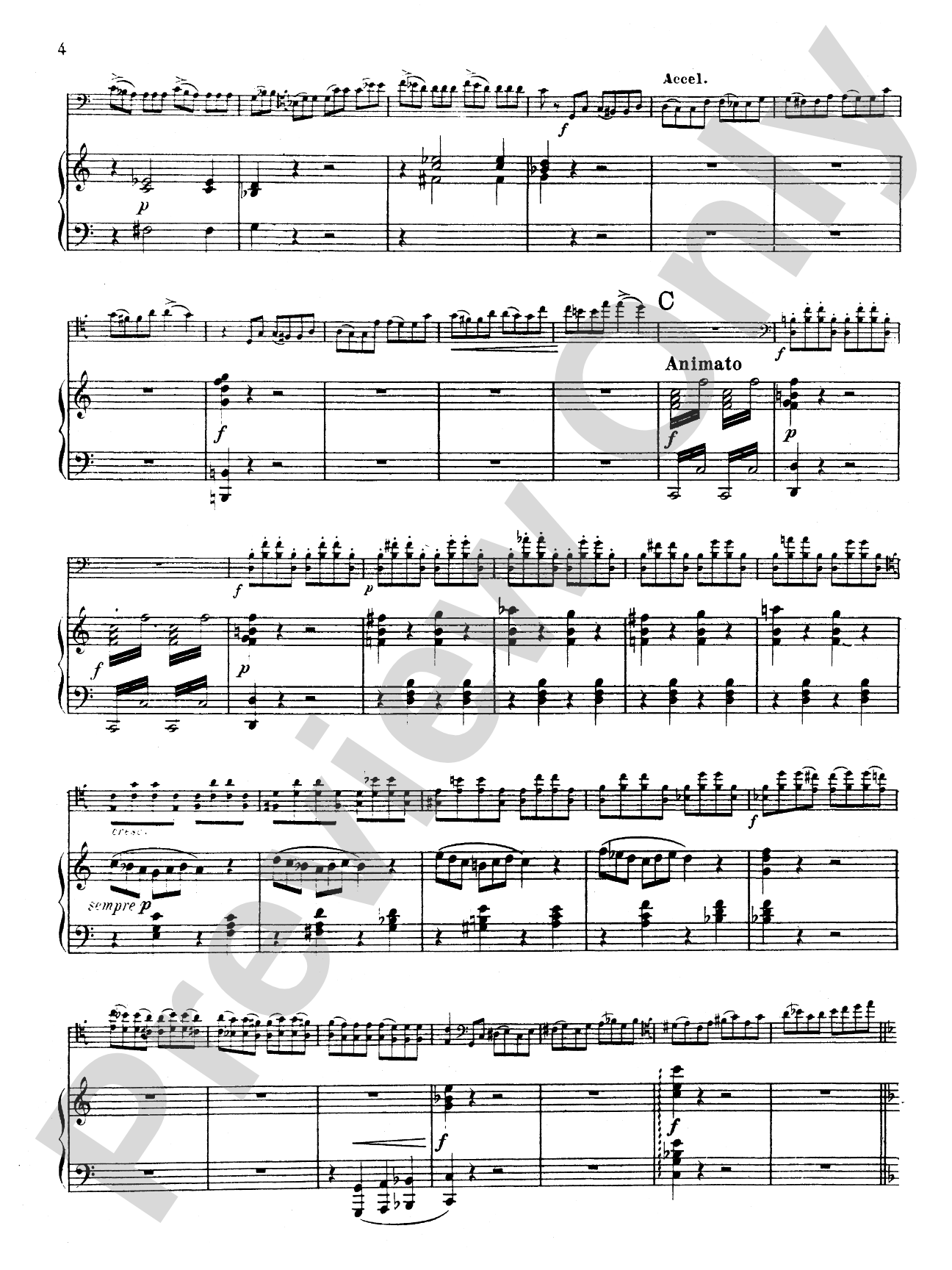
Saint-Saëns: Cello Concerto, Op. 33 (Transcribed) Sheet Music Preview

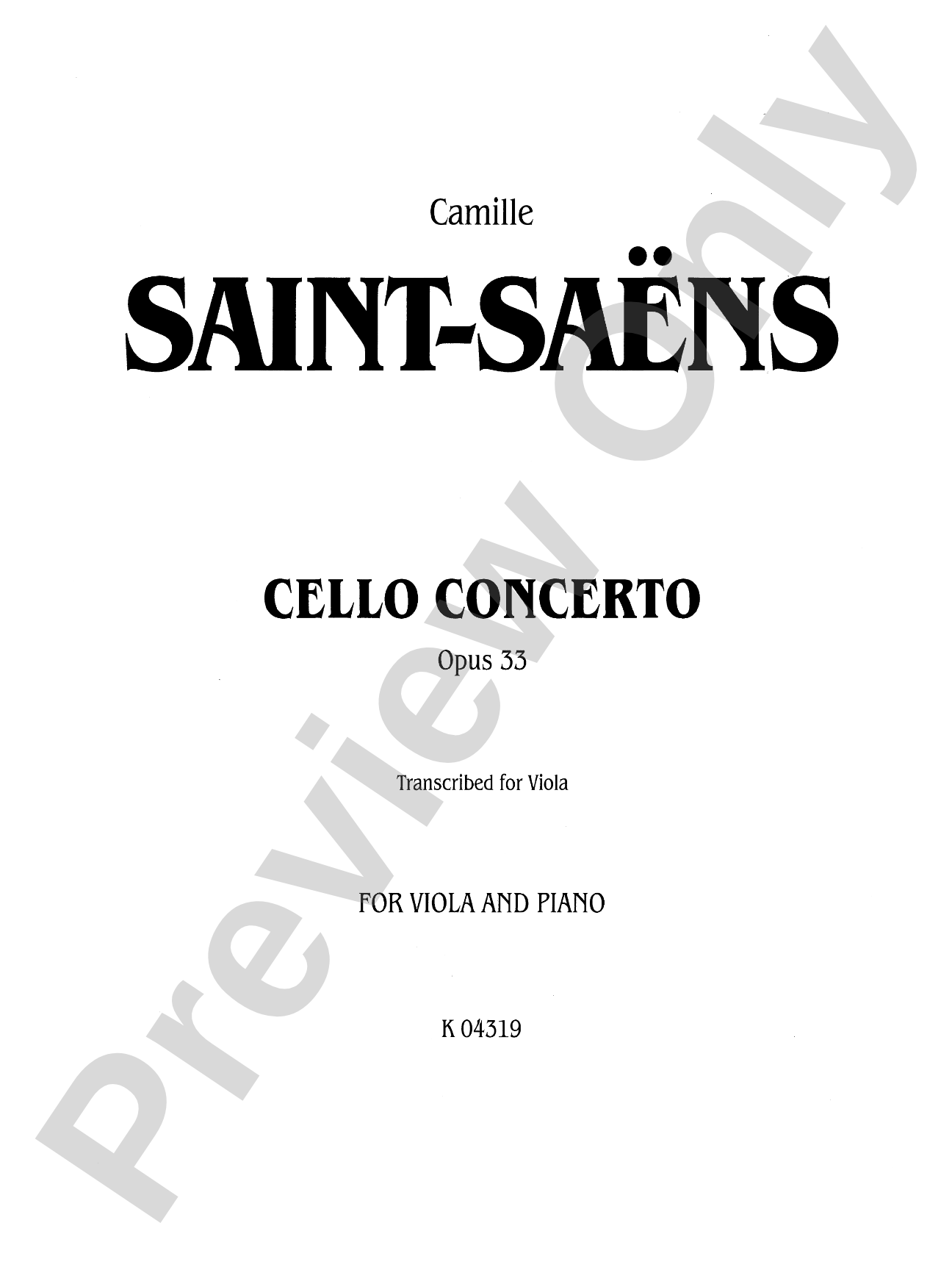
Saint-Saëns: Cello Concerto, Op. 33 (Transcribed)

By Camille Saint-Saëns / transcribed for the Viola

Item: 00-PC-0010220

Digital Download
$4.95
Description
A solo, for Viola with Piano Accompaniment, composed by Camille Saint-Saëns and transcribed for the Viola.

Don't just read it, hear it, play along with it, and watch your students grow with it. In MakeMusic Cloud, Saint-Saëns: Cello Concerto, Op. 33 (Transcribed) comes alive with professional accompaniment, adjustable tempo, and built-in practice tools that turn solo practice into real progress.

Sample Audio
No sample audio found.
Sample Video
Additional Details
Series: Kalmus Edition
Publisher: Alfred Music
Page Count: 40
SKU: 00-PC-0010220

More about this title

About the Composer: Camille Saint-Saëns

Camille Saint-Saëns (1835-1921) was a French composer of prodigious technical facility and refined musical taste. A virtuoso pianist and organist, he composed across every major genre and became one of the most performed composers of the late nineteenth century. His instrumental works combine Romantic lyricism with Classical clarity, and his mastery of orchestration set the standard for generations of string writing.

Saint-Saëns completed his Cello Concerto in A minor, Op. 33, in 1872. The work remains the cornerstone of the Romantic cello repertoire, beloved for its lyrical opening theme, virtuosic passage work, and the perfect balance Saint-Saëns achieved between soloist and accompaniment. Its enduring presence on recital and competition programs speaks to its musical substance and gratifying technical demands.

Why we love this

This transcription opens one of Romantic music's greatest concerti to violists without compromising a single note of Saint-Saëns' orchestration. The concerto's famous melancholic opening and soaring middle section sit naturally in viola range, and the transcription respects both the original voice-leading and the technical challenges that make this work valuable in a serious performer's development.

What to expect

The concerto unfolds with melancholic beauty, opening in a minor key that draws the listener inward before broadening into passionate, virtuosic territory. The work balances intimate, introspective moments with brilliant technical display, creating a sense of emotional depth paired with the satisfaction of executing elegant, idiomatic writing.

Who it's for

Advanced high school violists and college-level players preparing for competitions, recitals, or upper-level jury requirements. This work demands secure intonation, a mature vibrato, and the musicality to sustain long lyrical passages, making it ideal for serious students ready to tackle Romantic concerto repertoire.

How to get the most out of it

  • Shape the opening theme with long, singing lines; the viola's warm tone here should feel unhurried and emotionally present rather than technically rushed.
  • Attend closely to the dynamic contours in the passage work. Saint-Saëns marks shifts in color and intensity that guide phrasing through technically demanding sections.
  • Balance the articulation in rapid figuration so accompaniment remains transparent; the piano part carries harmonic and structural weight, and the viola line should float over it.
  • Build intensity through the middle section by incrementally increasing vibrato width and tone production rather than simply playing louder.

How to use it

Program this as a centerpiece on a solo recital or competition round, where its substantial length and narrative arc command full attention. Pair it with twentieth-century viola concertos or shorter Romantic miniatures to create programming contrast that highlights the concerto's architectural scope.

Skills your students will build

  • Sustaining long, cantabile lines with consistent vibrato and tone production
  • Navigating rapid passage work and scale figures across multiple string positions
  • Balancing viola tone against piano accompaniment in varying textures and dynamics
  • Interpreting Romantic phrasing conventions and harmonic architecture
  • Developing secure intonation under the demands of virtuosic figuration and extended range

You May Also Like