
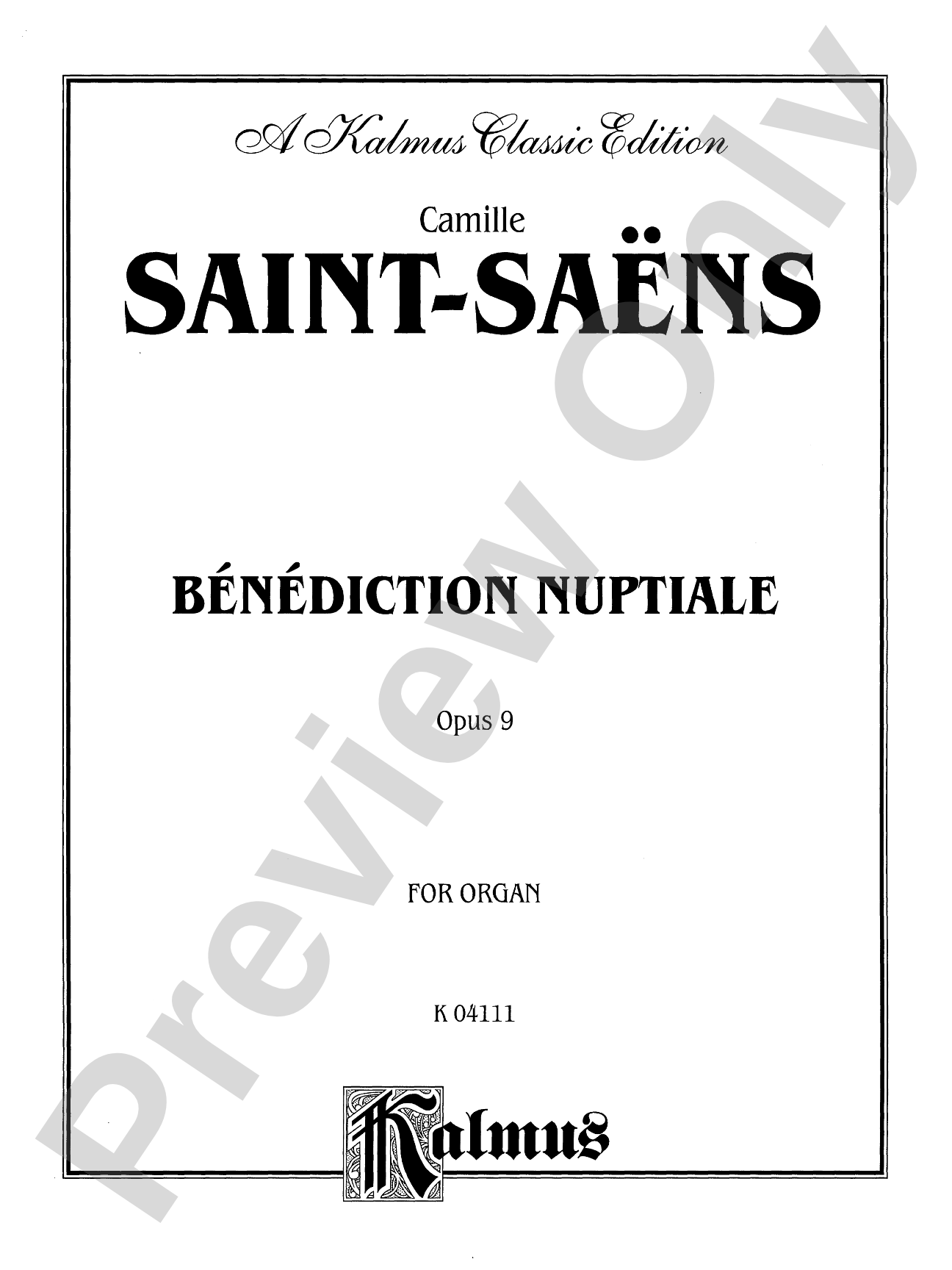

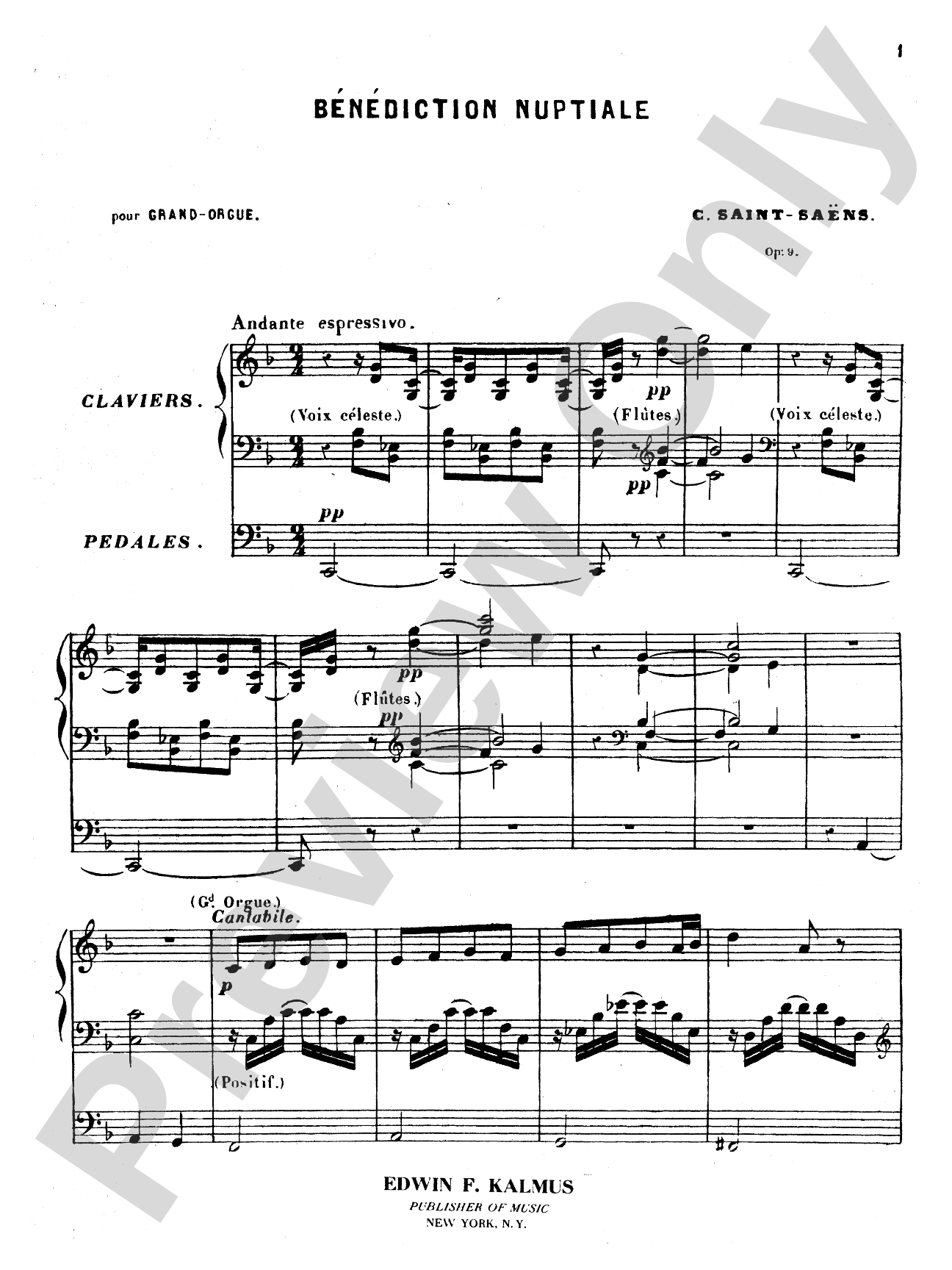
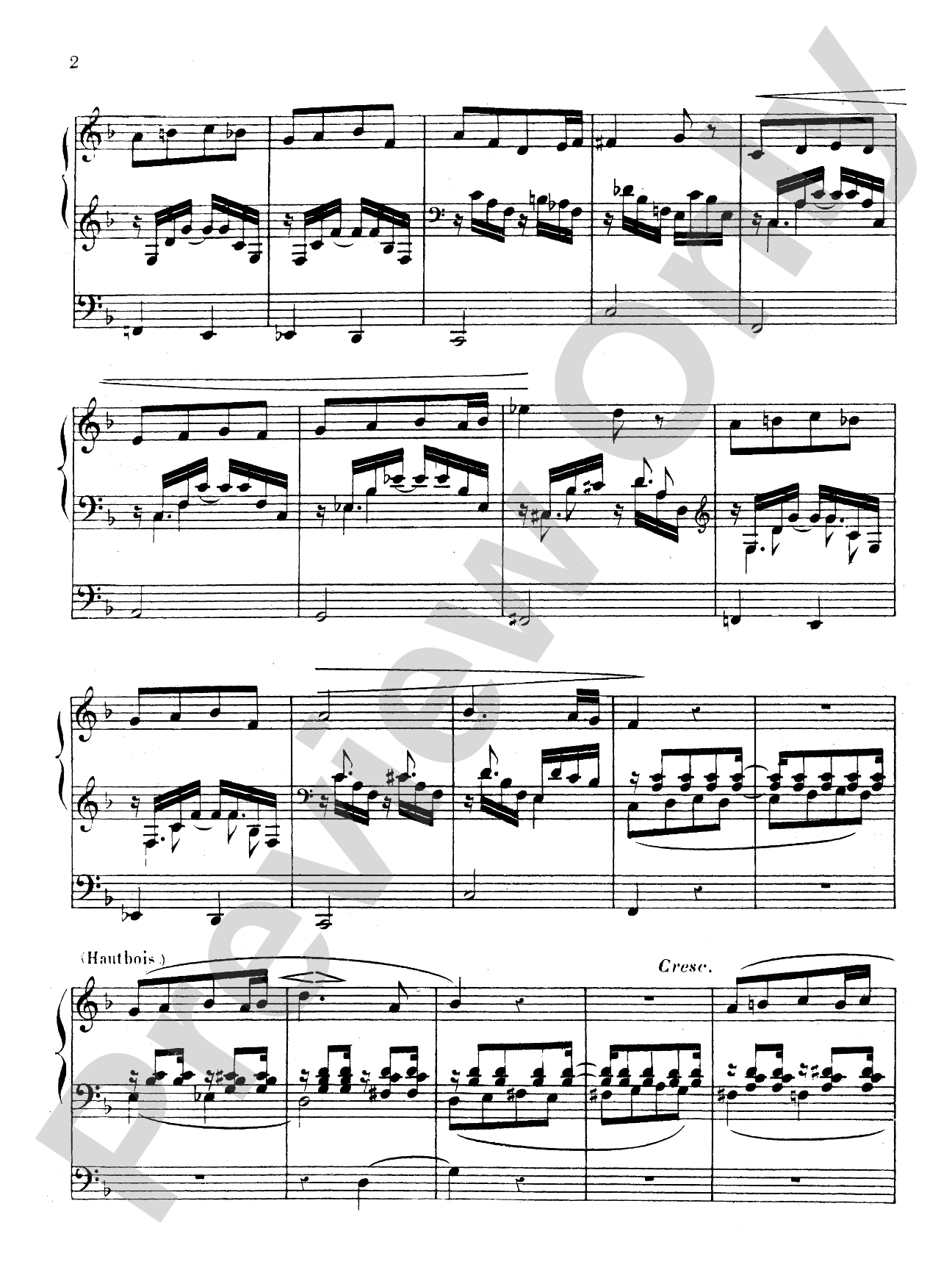
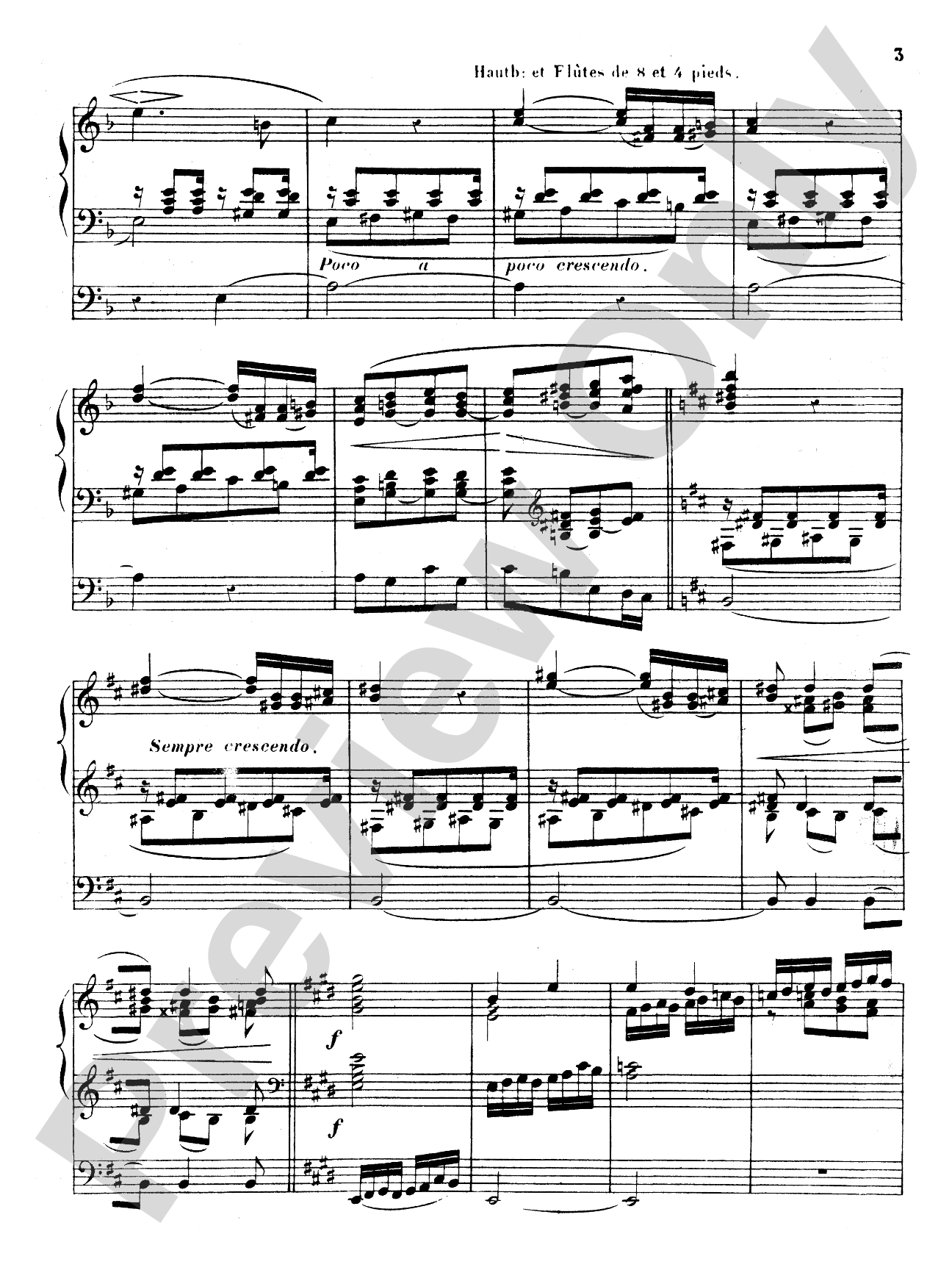
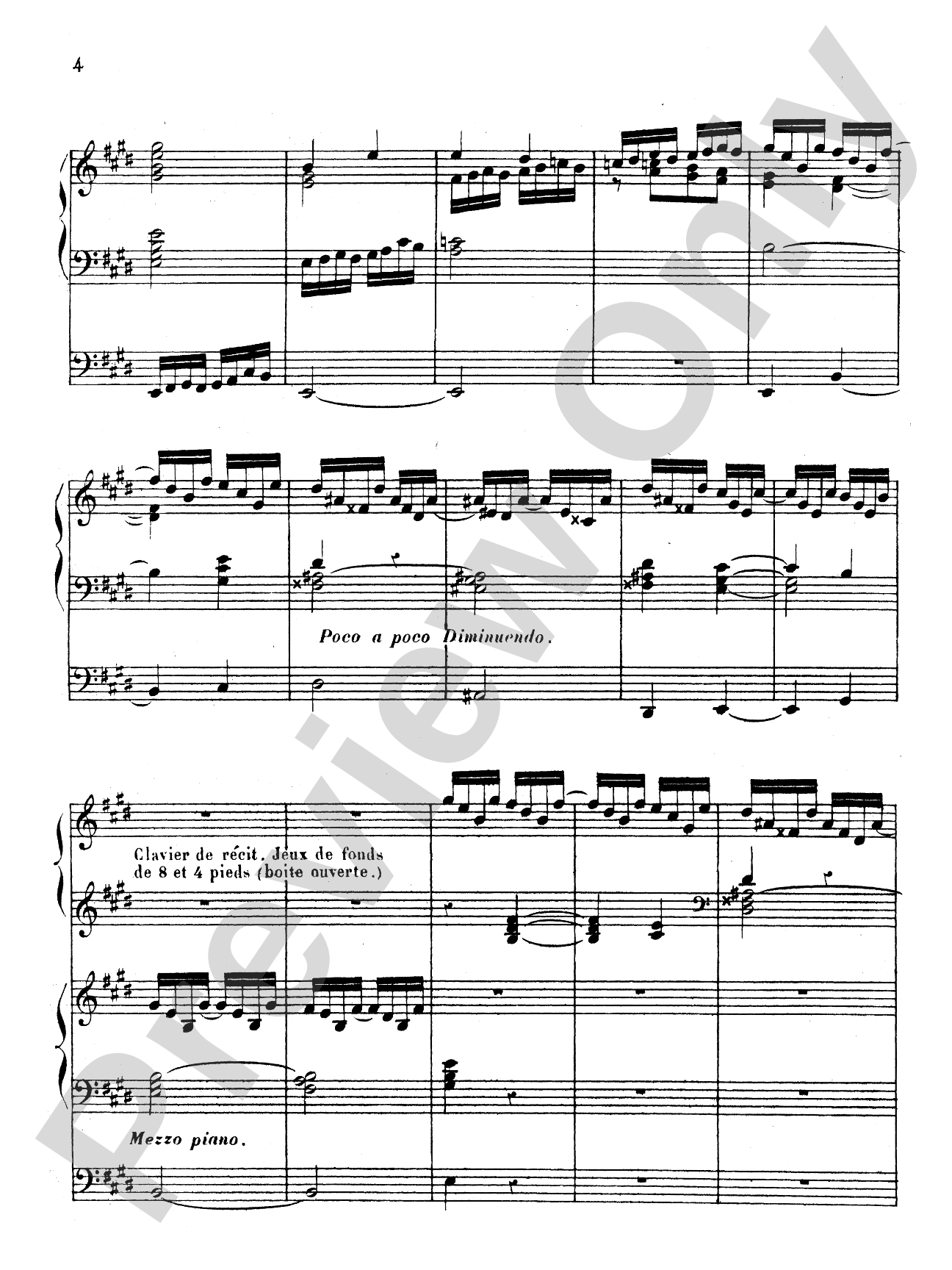
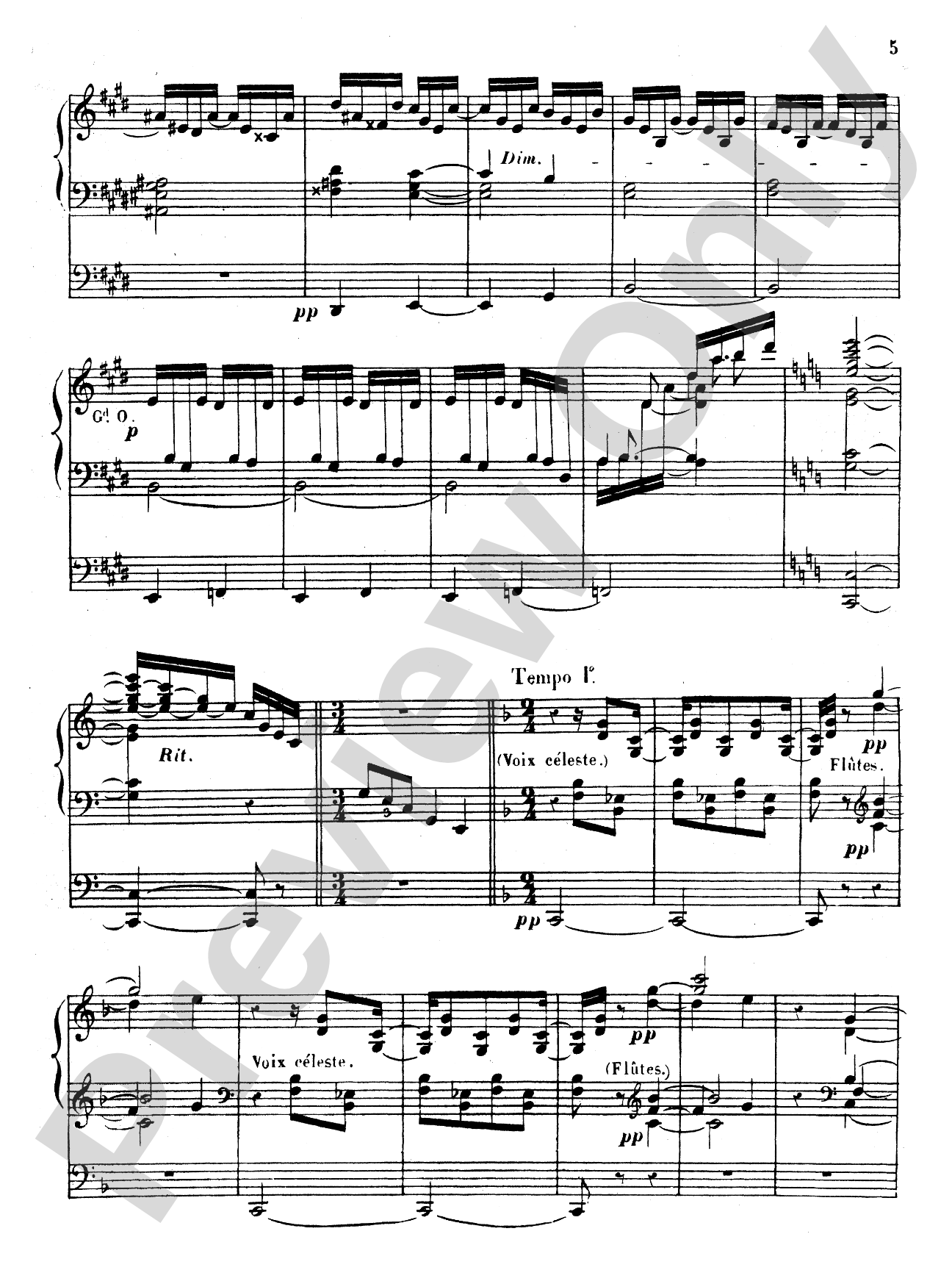
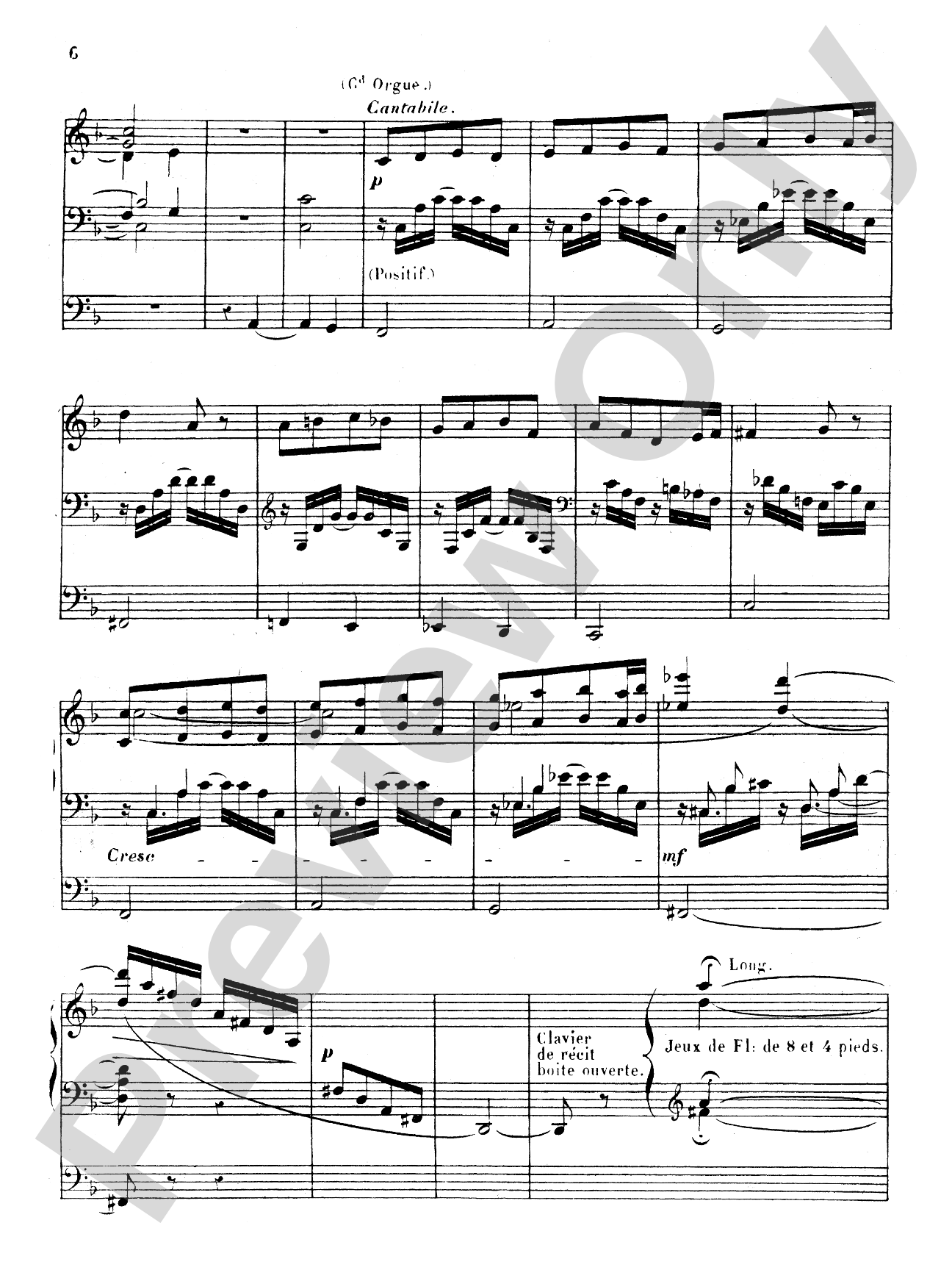
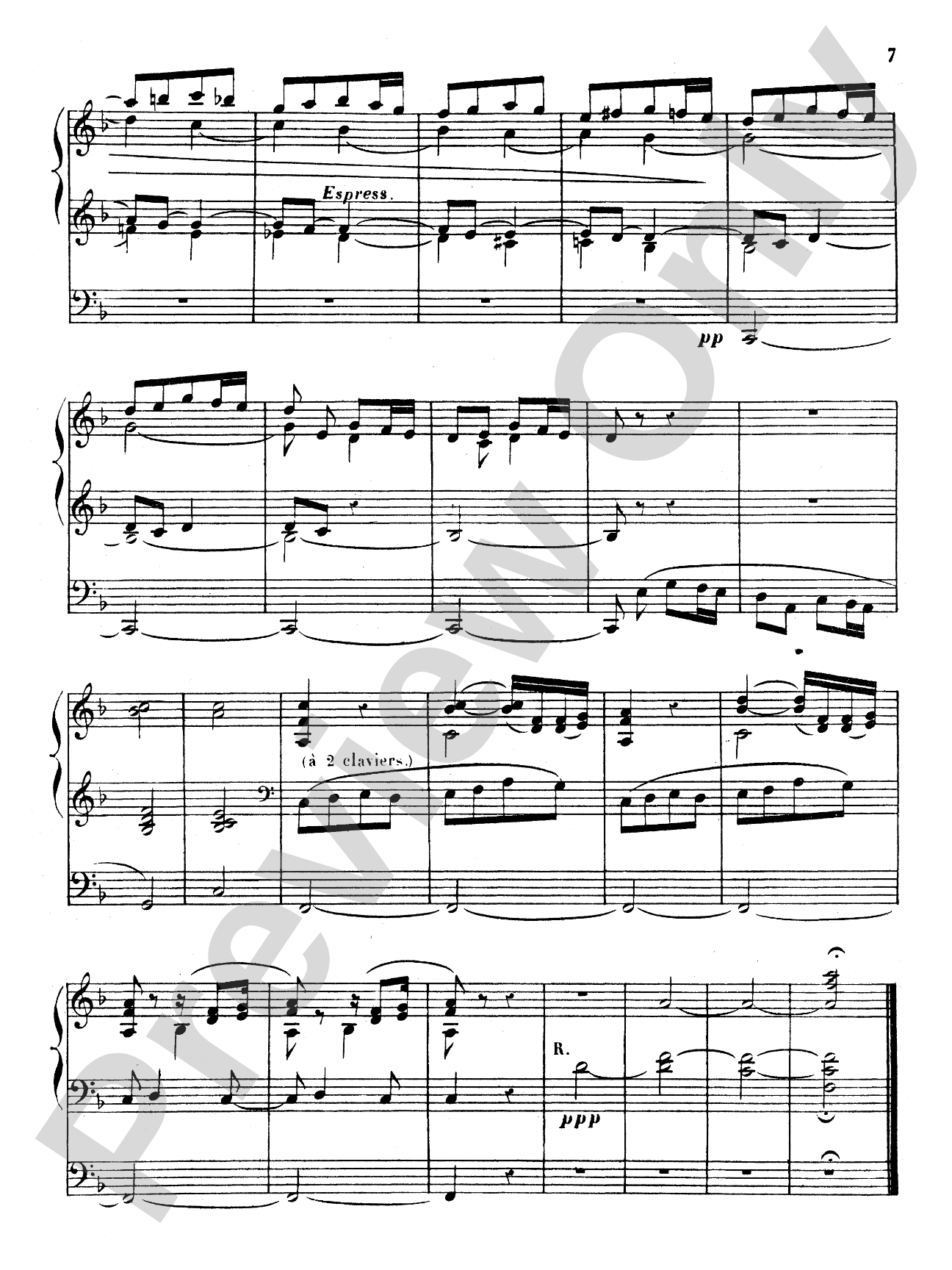




Saint-Saëns: Bénédiction Nuptiale, Op. 9
By Camille Saint-Saëns
Item: 00-PK-0003414

$5.99
Pickup currently not available
Buy Extra Parts (Digital PDF Download)
| Product | Price | Quantity |
|---|---|---|
| Saint-Saëns: Bénédiction Nuptiale, Op. 9 | $4.99 |
Parts Added to Cart!
Description


Don't just read it, hear it, play along with it, and watch your students grow with it. In MakeMusic Cloud, Saint-Saëns: Bénédiction Nuptiale, Op. 9 comes alive with professional accompaniment, adjustable tempo, and built-in practice tools that turn solo practice into real progress.
Open in the Player
Jump straight in and assign it today.
Start Your Free Trial
Open this title and explore the full library in minutes.
Sample Audio
No sample audio found.
Sample Video
No sample videos found.
Additional Details
Series:
Kalmus Edition
Publisher:
Alfred Music
Page Count:
12
SKU:
00-PK-0003414
More about this title
About the Composer: Camille Saint-Saëns
Camille Saint-Saëns (1835-1921) was a French composer, organist, and pianist whose technical mastery and prolific output shaped Romantic music across multiple genres. A child prodigy who studied at the Paris Conservatoire, Saint-Saëns held the position of organist at the Madeleine in Paris for nearly twenty years, a role that deepened his understanding of the instrument and its repertoire.
His compositional voice balanced Classical form with Romantic expression, and he wrote with equal fluency for orchestra, chamber ensembles, voice, and keyboard. Saint-Saëns earned international recognition during his lifetime and remained a champion of French musical culture throughout his career. His organ works, though fewer in number than his symphonies and concertos, reveal a composer thoroughly versed in the instrument's capabilities and the traditions of French organ music.
Why we love this
Saint-Saëns brings Romantic grandeur and structural clarity to wedding music, setting the Bénédiction apart from typical nuptial repertoire. The piece balances ceremonial dignity with genuine melodic beauty, offering organists a work that feels both substantial and genuinely moving in a liturgical context. Its place in the Kalmus Edition makes a significant Romantic-era organ work accessible at a reasonable price.
What to expect
The Bénédiction Nuptiale unfolds with ceremonial warmth, its melodic lines singing over flowing accompaniment in the manner of French Romantic organ writing. There is both intimacy and dignity here, a sense of occasion without sentimentality that makes the piece equally at home in a cathedral or a modest parish church.
Who it's for
This work suits organists with solid Romantic repertoire experience and secure pedal technique. It serves well for advanced students preparing for recitals or liturgical performances, and for church musicians looking to expand their wedding music offerings with a substantial, respectfully crafted piece.
How to get the most out of it
- Honor the sacred character by maintaining a steady, unhurried tempo; resist the urge to rush through scalar passages even when they lie comfortably under the fingers.
- Shape the principal melodic material with clear phrase direction, allowing longer lines to breathe rather than breaking them into small gestures.
- Balance the left hand accompaniment so that it supports rather than overshadows the right hand melody; use registration strategically to clarify texture.
- Attend to pedal independence in passages where the feet sustain harmonic foundation; practice hands separately from feet to ensure secure coordination.
How to use it
Program this as a recessional in a classical or Romantic-focused recital, or as an encore following lighter fare. In a liturgical context, it serves as a stately wedding processional or recessional, offering organists a French masterwork alternative to standard ceremonial music.
Skills your students will build
- Sustaining long melodic phrases across hand position changes
- Coordinating independent left-hand accompaniment patterns with right-hand melody
- Secure pedal technique for harmonic foundation and registration changes
- Interpreting Romantic-era French organ aesthetics and phrasing conventions
- Pedal independence in passages requiring sustained notes alongside manual texture