
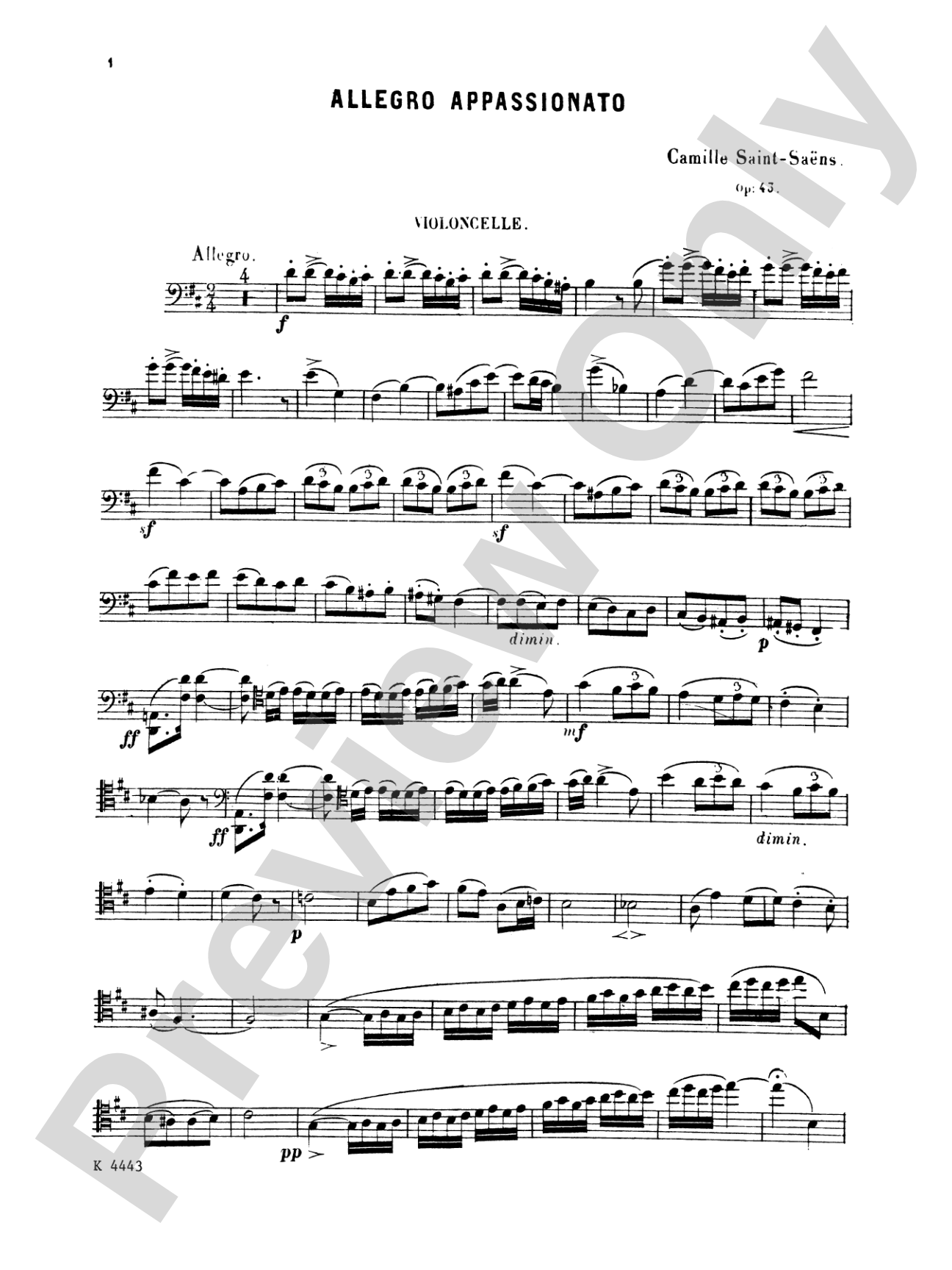
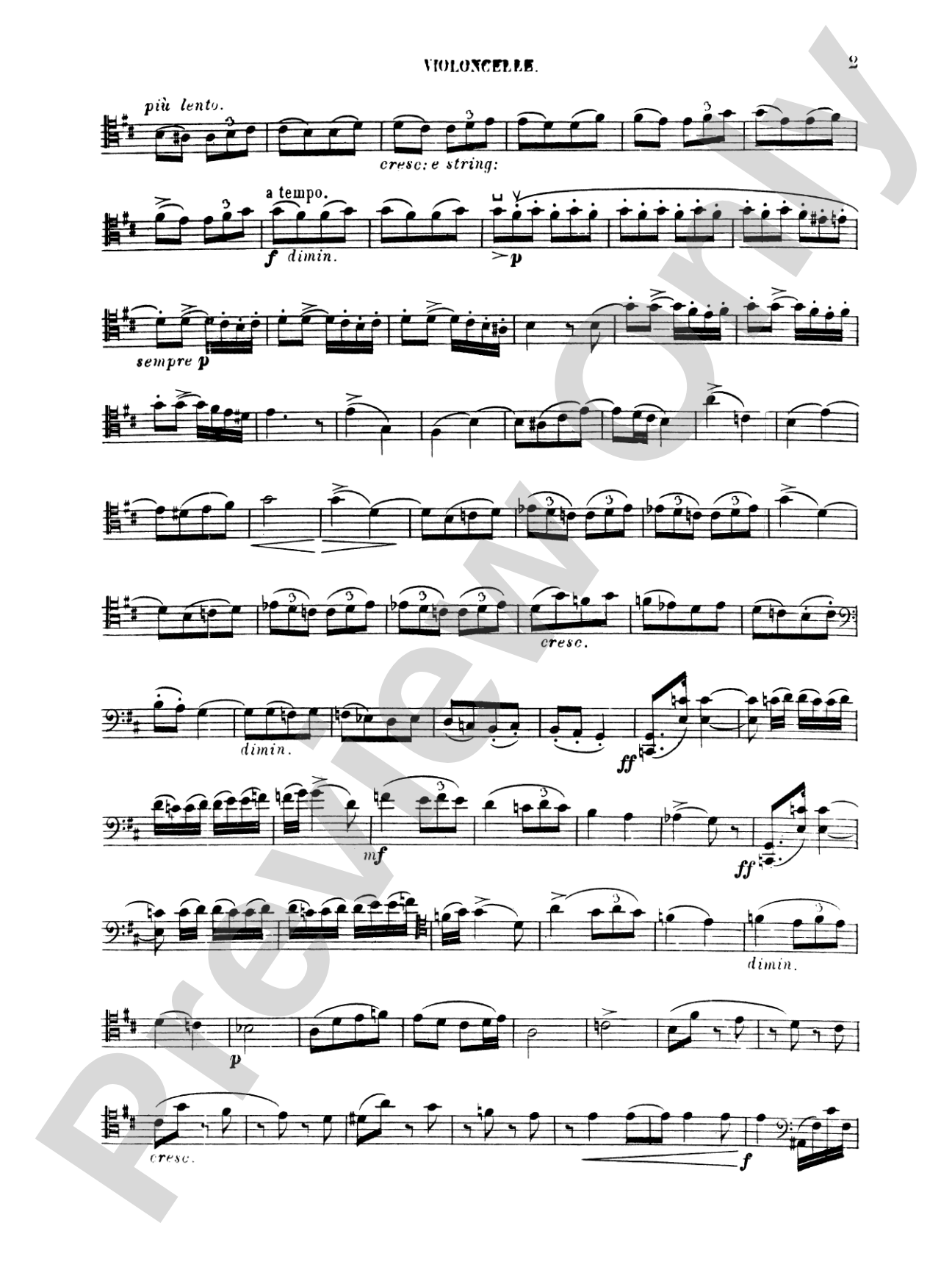
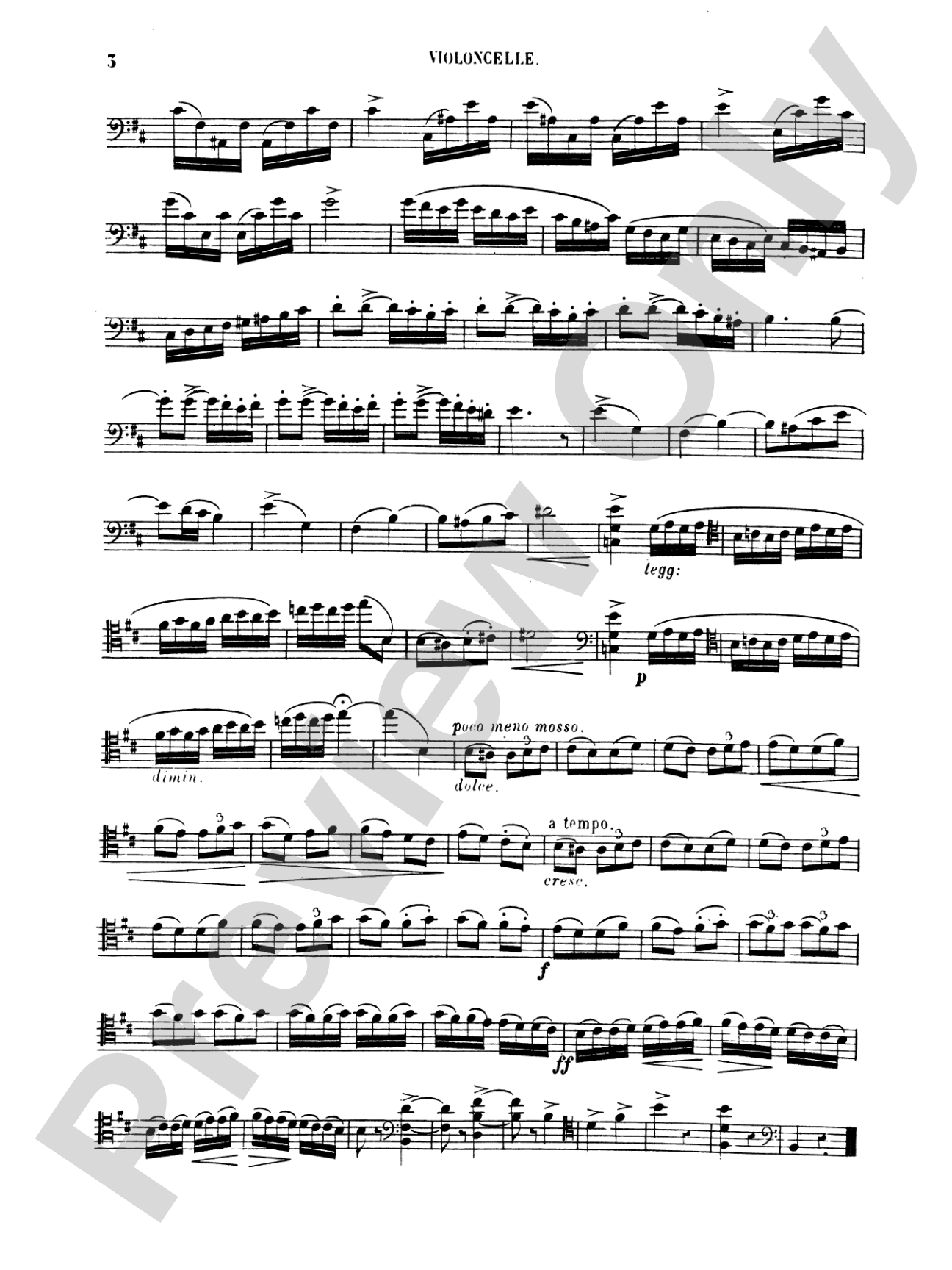


Saint-Saëns: Allegro Appassionato, Op. 43: Cello Book
By Camille Saint-Saëns
Item: 00-PK-0003514

$9.99
Pickup currently not available
Buy Extra Parts (Digital PDF Download)
| Product | Price | Quantity |
|---|---|---|
| Saint-Saëns: Allegro Appassionato, Op. 43 | $3.99 | |
| Saint-Saëns: Allegro Appassionato, Op. 43 | $3.99 |
Parts Added to Cart!
Related Items
Allegro Appassionato, Opus 43: Cello Book |
$9.99
|
View |
Description
A Cello solo with Piano Accompaniment composed by Camille Saint-Saëns.


Don't just read it, hear it, play along with it, and watch your students grow with it. In MakeMusic Cloud, Saint-Saëns: Allegro Appassionato, Op. 43: Cello Book comes alive with professional accompaniment, adjustable tempo, and built-in practice tools that turn solo practice into real progress.
Open in the Player
Jump straight in and assign it today.
Start Your Free Trial
Open this title and explore the full library in minutes.
Sample Audio
No sample audio found.
Sample Video
No sample videos found.
Additional Details
Series:
Kalmus Edition
Publisher:
Alfred Music
Page Count:
16
SKU:
00-PK-0003514
More about this title
About the Composer: Camille Saint-Saëns
Camille Saint-Saëns (1835-1921) was a French composer, organist, and pianist whose prolific output spanned nearly every musical genre. He wrote prolifically for strings, and his cello works remain central to the solo repertoire because of their lyrical invention and idiomatic writing for the instrument. Saint-Saëns had a gift for creating music that was both structurally sound and emotionally direct, making his works accessible to performers and audiences alike.
The Allegro Appassionato belongs to Saint-Saëns' mature period, when he had already established himself as France's leading composer. His understanding of cello technique was deep and practical, reflected in the way this piece sits naturally under the fingers while demanding genuine musicianship and expressive control from the performer.
Why we love this
This piece strikes an ideal balance between accessibility and sophistication. The technical demands are honest but not excessive, meaning advanced student cellists and community orchestra musicians can perform it with real musical reward after modest rehearsal time. It has a compact, satisfying arc that works beautifully on recital programs and competitions without wearing out an audience or demanding an unrealistic commitment from the soloist.
What to expect
The piece unfolds with urgent lyricism, its opening theme presented with passionate intensity before moving through moments of introspection and renewed vigor. There is a sense of intimate conversation between the cello and piano, marked by emotional directness rather than technical showmanship. The writing emphasizes the warmth and expressiveness of the cello's voice across multiple registers.
Who it's for
Advanced high school cellists and college-level players preparing recital repertoire, competition programs, or chamber music performances. Teachers seeking a Romantic-era standard that develops musicianship without requiring virtuosic technical display will find this an excellent choice for motivated students.
How to get the most out of it
- Shape the main theme with vocal phrasing in mind; Saint-Saëns conceived this melody as a singing line, so avoid breaking it into small technical segments.
- Balance your tone against the piano throughout. The accompaniment is carefully orchestrated, and your role is to sing above it, not to dominate it.
- Give yourself permission to breathe musically between phrases. Strategic pauses will make the architecture of the piece clearer to your listeners.
- Approach the faster passagework with clarity of articulation rather than raw speed. Saint-Saëns rewards clean execution over brilliance.
How to use it
This work fits naturally on a solo recital program as either a centerpiece or as part of a Romantic-era group with other French cello literature. It also pairs well in chamber music settings with other nineteenth-century works and has enough stature to stand as a competition or festival piece without seeming overwrought. Its moderate length (roughly 8-10 minutes) makes it practical for concert programming.
Skills your students will build
- Singing tone production across the full range of the cello
- Interpretive phrasing and structural awareness in nineteenth-century style
- Balance and ensemble listening with piano accompaniment
- Control of dynamics and vibrato for expressive communication
- Navigation of moderately complex rhythmic and harmonic language