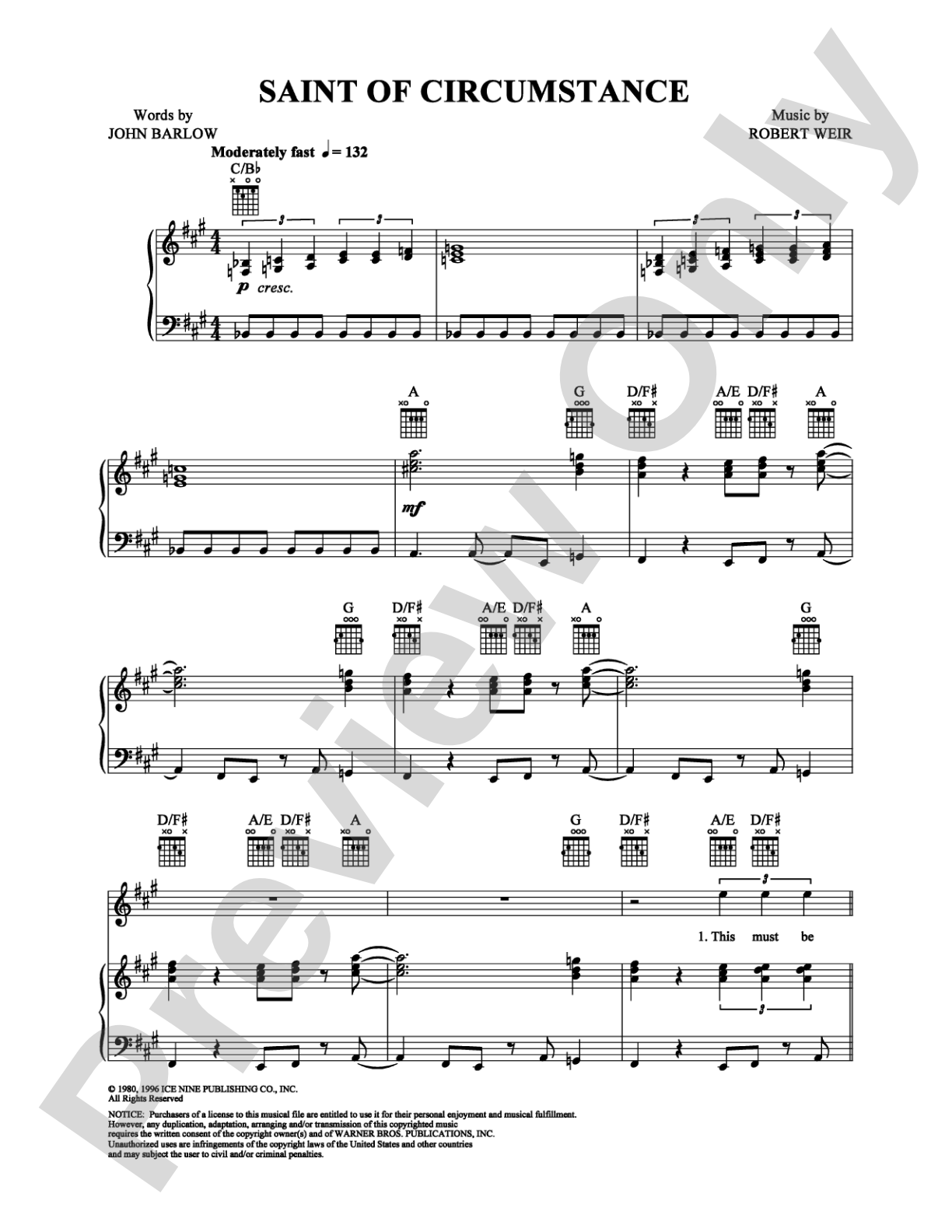
Saint of Circumstance: Piano/Vocal/Chords Digital Sheet Music

Saint of Circumstance: Piano/Vocal/Chords Digital Sheet Music

Grateful Dead, Bob Weir

Item: 00-PS-0002439

Digital Download
$2.95
Description

Saint of Circumstance: Piano/Vocal/Chords Digital Sheet Music isn't in MakeMusic Cloud just yet...but it could be. Let us know you'd like to see it, and you'll help shape what comes next. In the meantime, start a free trial and dive into thousands of interactive titles your students can play along with today.

Sample Audio
No sample audio found.
Sample Video
Additional Details
SKU: 00-PS-0002439

More about this title

About the Artist: Grateful Dead

The Grateful Dead shaped American music across five decades with improvisational rock that refused easy categorization. Formed in 1965, the band built a devoted following through relentless touring and a commitment to musical exploration that made each performance genuinely unpredictable. Their influence extends far beyond rock; educators recognize them as masters of ensemble interaction, harmonic sophistication, and the art of building tension and release across extended musical narratives.

In the classroom and rehearsal room, the Dead's catalog offers rich material for understanding how popular music can sustain harmonic complexity, modal interchange, and structural flexibility. Their songs reward close listening and arrangement study, revealing how strong melodic ideas can anchor even the most adventurous harmonic journeys.

Why we love this

Saint of Circumstance sits comfortably in the Dead's catalog of accessible yet sophisticated material, making it ideal for student pianists ready to explore rock repertoire with real harmonic depth. The song balances straightforward vocal melody with interesting chord progressions that teach voice leading and modal thinking without overwhelming early intermediate players. Programming this piece signals to your ensemble that serious musicianship happens in rock contexts too.

What to expect

Saint of Circumstance unfolds with a contemplative opening that gradually builds emotional weight through its verses. The song captures the Dead's gift for writing melodies that feel both inevitable and surprising, supported by chord progressions that suggest movement without rushing toward obvious resolution. Performing it requires patience and trust in the material's quiet power.

Who it's for

This arrangement serves pianists and vocalists at the early-to-intermediate level who are ready to move beyond simplified pop covers into material with genuine harmonic interest. It works equally well for a soloist preparing a recital piece or for collaborative musicians developing ensemble skills. Any student with curiosity about how rock songwriting can incorporate sophisticated chord movement will find real value here.

How to get the most out of it

  • Study the chord progression before focusing on melody; understanding the harmonic movement will deepen your interpretation of how the vocal line interacts with the changes.
  • Approach the piano part as conversational rather than accompanimentary. Listen for moments where the keyboard can breathe and answer the vocal phrase.
  • Lock into a steady groove from the first measure. The Dead's music lives in pocket and pocket requires confidence from the pianist to establish the foundation.
  • Experiment with dynamic contrast between verse and chorus sections to reveal the song's emotional arc without relying on tempo change.

How to use it

This works beautifully as part of a recital exploring songwriting across genres, paired alongside art song or musical theater material at a similar harmonic level. Consider programming it alongside other rock or folk-influenced pieces to demonstrate breadth in contemporary repertoire. It's also an excellent choice for a student showcase where you want to highlight musicianship in non-classical contexts.

Skills your students will build

  • Reading chord charts and realizing figured bass from lead sheet notation
  • Voice leading in jazz-influenced harmonies (modal interchange and secondary dominants)
  • Balancing melody and accompaniment in left hand while singing
  • Developing consistent groove and pocket in rock contexts
  • Interpreting artistic expression within a structured song form

You May Also Like