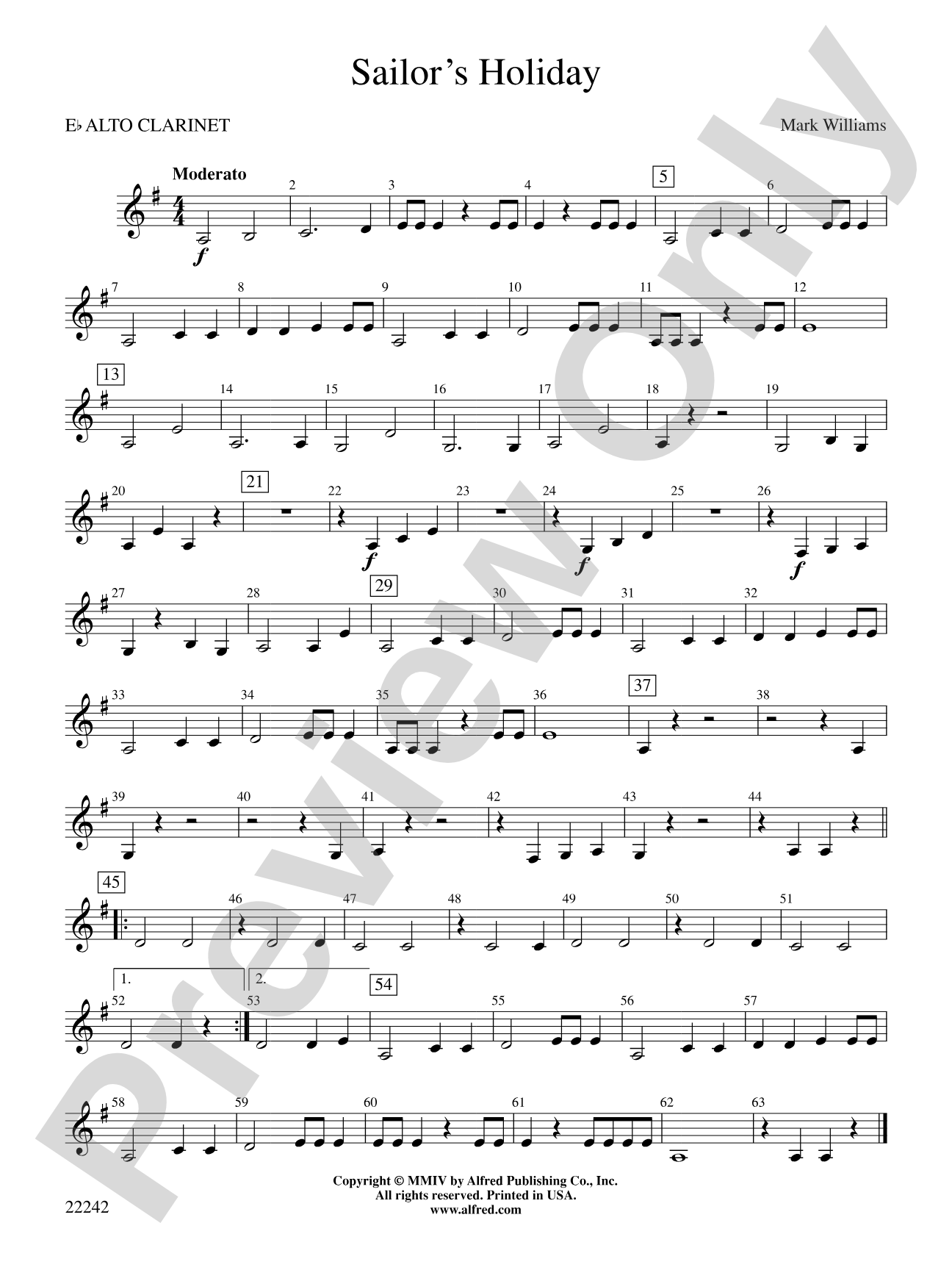
Sailor's Holiday: E-flat Alto Clarinet Sheet Music Preview

Sailor's Holiday: E-flat Alto Clarinet

By Mark Williams

Grade: 1 (Very Easy)

Item: 00-PC-0000496_AC1

Digital Download
$3.00
Description
This very easy rock-flavored piece combines original material with the well-known sea chantey "The Drunken Sailor", producing what is destined to become a favorite of young bands everywhere. Correlated with Accent on Achievement, Book 1, page 15, this work is loaded with instrumental and harmonic contrast, and will show your beginning band off at its best. Very highly recommended. This title is available in MakeMusic Cloud.

Don't just read it, hear it, play along with it, and watch your students grow with it. In MakeMusic Cloud, Sailor's Holiday: E-flat Alto Clarinet comes alive with professional accompaniment, adjustable tempo, and built-in practice tools that turn solo practice into real progress.

Sample Audio
0:00
0:00
Sample Video
Additional Details
Series: Accent on Achievement
Publisher: Alfred Music
Page Count: 124
SKU: 00-PC-0000496_AC1

More about this title

About the Composer: Mark Williams

Mark Williams

Mark Williams composed over 200 works for school bands, orchestras, and choirs, establishing himself as a vital voice in music education literature. He co-authored the Accent on Achievement Band Method and spent his career in Washington state, where he specialized in elementary band instruction and held degrees from Eastern Washington University. As a clinician and guest conductor, Williams traveled extensively across North America and Australia, and he earned recognition through the Western International Band Clinic's Gralia Competition and multiple ASCAP Special Awards.

Beyond composing, Williams was an accomplished bassoon player and arranger who served with the 560th Air Force Band. He conducted and directed the Spokane British Brass Band, bringing the same commitment to musical excellence in performance that defined his compositional output.

Why we love this

Williams understands exactly what young bands need: accessible material that sounds genuinely musical, not watered down. The fusion of original writing with the instantly recognizable "Drunken Sailor" melody gives students an immediate sense of success, and the instrumental and harmonic variety keeps the ensemble engaged throughout the rehearsal and performance.

What to expect

Energetic and playful, with the unmistakable swagger of a sea chantey filtered through a modern rock sensibility. The piece swings between rollicking fun and surprising harmonic twists, giving the band moments to show off their growing musicianship while keeping the audience smiling.

Who it's for

Young bands in their first year or two of playing together will find this piece rewarding without feeling patronized. The Grade 1 difficulty sits perfectly at Accent on Achievement Book 1 level, making it an ideal concert vehicle for bands ready to sound polished without technical struggle.

How to get the most out of it

  • Lean into the rock character by locking the rhythm section (bass drum, snare, and low reeds) early in rehearsal; this foundation lets the upper voices sit confidently in the groove.
  • Balance the famous melody against the original material underneath it so neither overwhelms the other; this teaches the band to hear multiple layers at once.
  • Let the band experience how harmonic contrast reshapes familiar material; point out moments where Williams reharmonizes the traditional tune, helping musicians understand that arrangement is a creative choice.

How to use it

This works beautifully as a closing opener on a concert, energizing an audience before deeper repertoire, or as a finale that sends listeners home happy. The rock idiom and instantly likeable melody make it an excellent choice for family concerts, pep band festivals, or any program where you want to celebrate how far your young ensemble has come.

Skills your students will build

  • Rhythmic precision in rock-influenced grooves
  • Balance between melody and accompaniment lines
  • Listening for harmonic color and reharmonization
  • Ensemble cohesion across contrasting sections
  • Musical confidence when playing recognizable material

You May Also Like