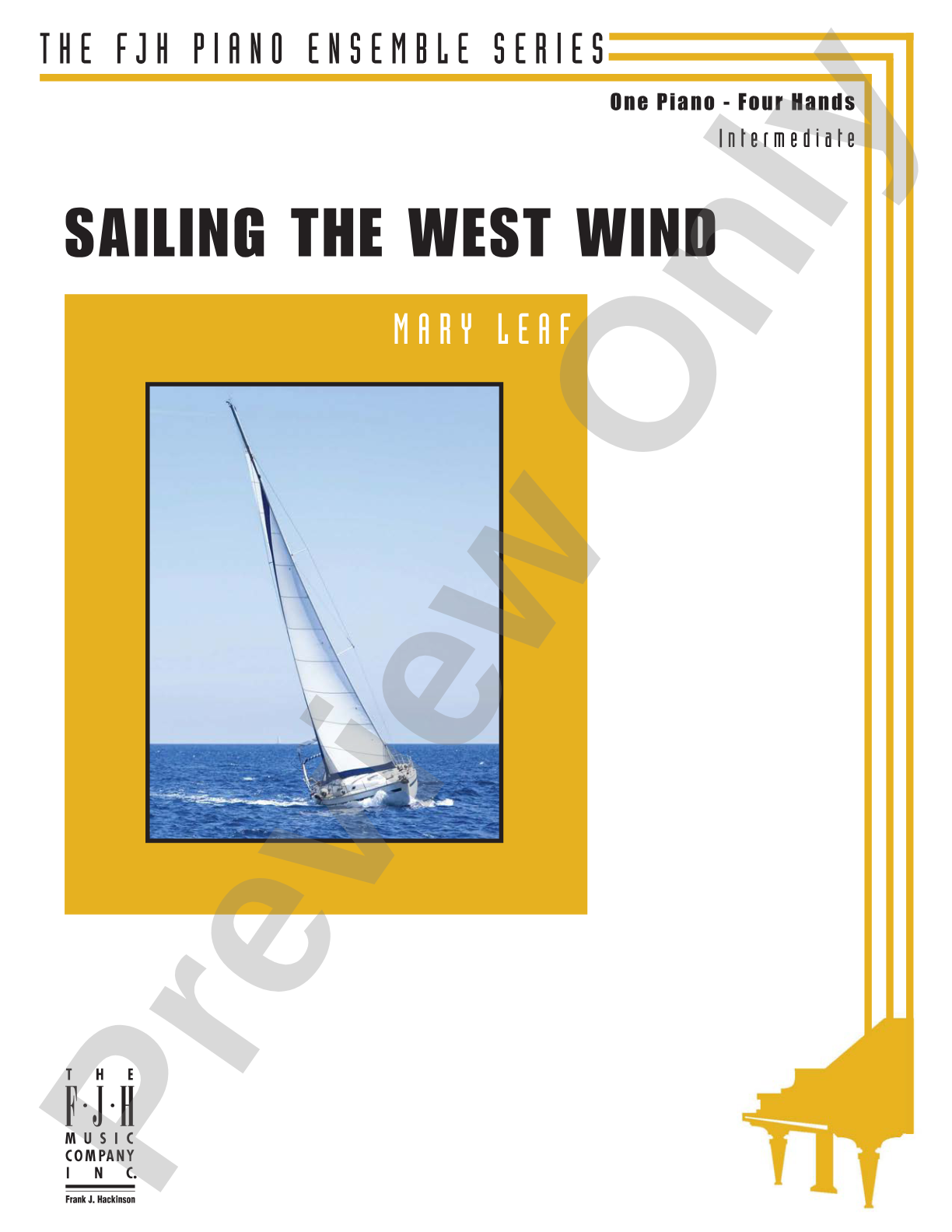
Sailing The West Wind Sheet Music Preview

Sailing The West Wind: Piano

By Mary Leaf

Item: 98-DE1109

Digital Download
$3.95
Description
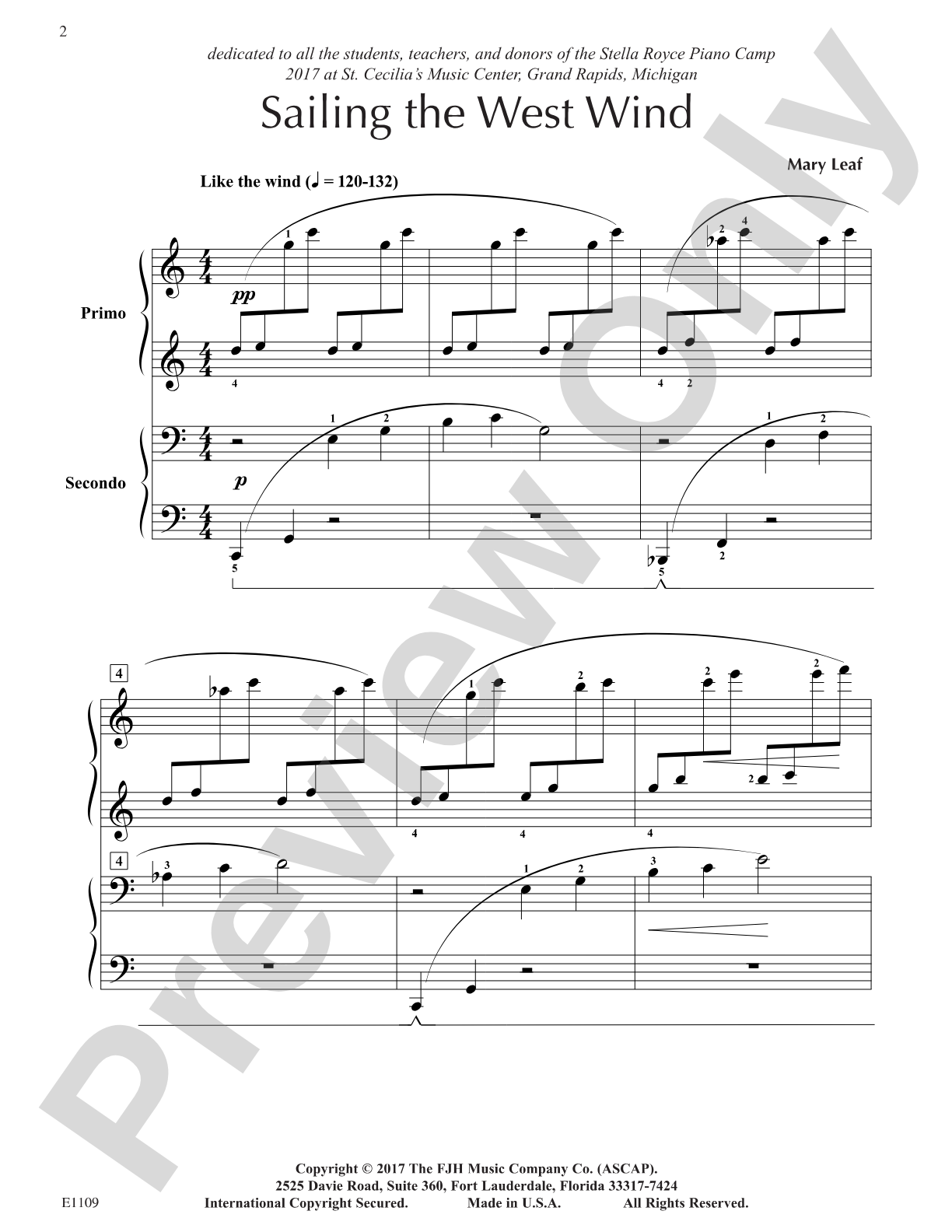
Each part plays steady, flowing eighth notes while the other part plays quarter notes in this Impressionistic piece in C major. The perpetual eighth-note movement evokes the image of smooth sailing on a windy day. The ensemble is very easy.

Sailing The West Wind: Piano isn't in MakeMusic Cloud just yet...but it could be. Let us know you'd like to see it, and you'll help shape what comes next. In the meantime, start a free trial and dive into thousands of interactive titles your students can play along with today.

Sample Audio
No sample audio found.
Sample Video
Additional Details
Series: The FJH Piano Ensemble Series
Publisher: The FJH Music Company, Inc.
SKU: 98-DE1109

More about this title

Why we love this

The writing here demonstrates real compositional skill: Leaf creates textural interest by splitting the perpetual motion between hands rather than doubling it, which keeps both players engaged and gives intermediate students meaningful material. The Impressionistic language feels fresh in the duet repertoire at this level, where many pieces stick to Classical or folk idioms.

What to expect

Water in motion. The relentless eighth notes lap and flow beneath sustained harmonic colors, creating the sense of steady forward momentum without urgency. There's a meditative quality here, almost hypnotic, like watching waves from a boat or the rhythmic side-to-side rock of sailing.

Who it's for

Intermediate pianists ready to move beyond elementary duets but not yet equipped for the technical demands of Romantic repertoire. This works well for students who thrive in ensemble settings and need accessible material that still asks them to listen, balance, and think musically.

How to get the most out of it

  • Resist the urge to breathe or pause at barlines. The steady eighth notes are the piece's engine; keep them transparent and unhurried so they become almost imperceptible to the listener.
  • Balance the voices with intention. Whichever player has the quarter notes should sit slightly forward, but the eighth notes must remain audible as the harmonic anchor.
  • Explore the color of the middle and lower registers. C major can sound trite if played too bright; darker voicing choices will enhance the water imagery and complexity of the harmony.

How to use it

Pair this with other short, character-driven pieces in a student recital or informal concert. Its impressionistic sound and gentle mood make it an excellent bridge between a Classical miniature and something more modern; use it to introduce young pianists to color and texture as compositional tools rather than just notes on a page.

Skills your students will build

  • Maintaining independent rhythmic voices (steady eighths against quarter notes) without rushing or drifting
  • Voice balance and listening across two equal instruments
  • Interpreting harmonic color in C major beyond major-key brightness
  • Sustaining consistent tempo and pulse through repetitive figuration

You May Also Like