Sahara Adventure: 1st B-flat Clarinet Sheet Music Preview

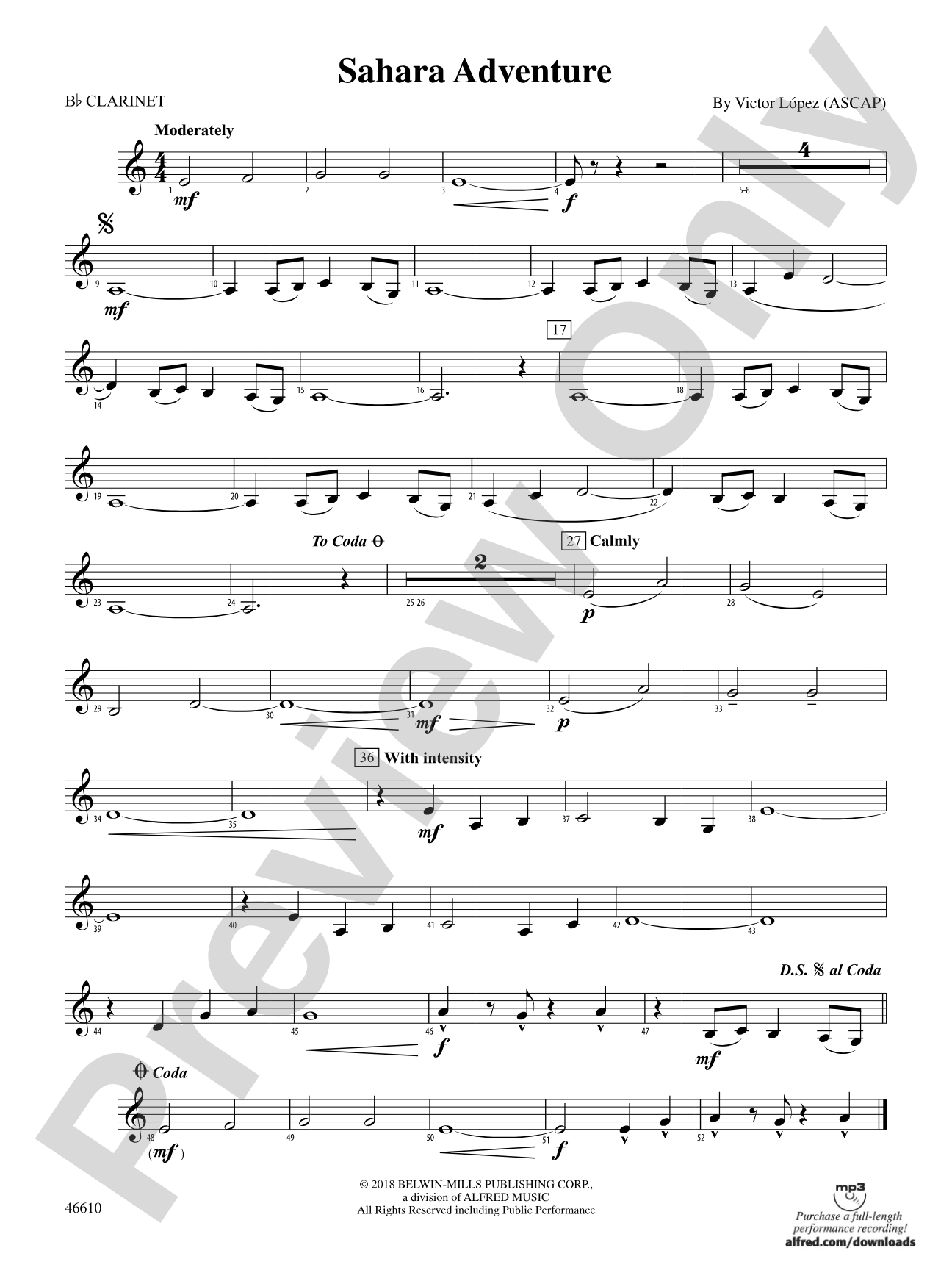
Sahara Adventure: 1st B-flat Clarinet

By Victor López

Grade: 1.5 (Very Easy to Easy)

Item: 00-PC-0018044_C1

Digital Download
$3.00
Description
Enjoy the rich sand of the desert as it moves across the Sahara, sing to the wind, and inspire our creativity. This energetic and adventurous composition is a perfect musical exploration of another culture. Teaching opportunities include quartal harmonies, varied accents, and an exotic repetitive percussion contribution. A hot new piece reminiscent of one of the world's hottest deserts. (2:00)

Don't just read it, hear it, play along with it, and watch your students grow with it. In MakeMusic Cloud, Sahara Adventure: 1st B-flat Clarinet comes alive with professional accompaniment, adjustable tempo, and built-in practice tools that turn solo practice into real progress.

Sample Audio
0:00
0:00
Sample Video
Additional Details
Series: Belwin Beginning Band
Publisher: Alfred Music
Page Count: 142
SKU: 00-PC-0018044_C1

More about this title

About the Composer: Victor López

Victor López is a prolific composer and arranger whose catalog spans concert band, wind ensemble, and orchestral literature. His writing is known for clear orchestration, pedagogical intentionality, and strong appeal to developing ensembles. López has become a standard voice in beginning and intermediate band repertoire, with particular strength in multicultural and programmatic works that engage student musicians through vivid imagery and musical storytelling.

Why we love this

López captures the visual and textural qualities of the Sahara without resorting to cliché or oversimplification. The exotic percussion writing and quartal harmonies feel genuinely integrated into the musical fabric rather than tacked on for novelty, giving your students real compositional concepts to explore while they're having fun with the program.

What to expect

A journey across open desert landscape painted in warm, shimmering tones. The piece moves with steady purpose, driven by rhythmic motion and exotic percussion colors that evoke wind and distance. There's an underlying sense of adventure and discovery, with moments of lyrical breathing alongside energetic forward momentum.

Who it's for

Beginning and early-intermediate concert bands looking for programming that balances accessibility with genuine musical substance. This piece works equally well for bands developing their sight-reading skills and those seeking concert or festival material that introduces cultural awareness through instrumental sound.

How to get the most out of it

  • Balance the exotic repetitive percussion so it colors the harmony without overwhelming the melodic voices. Students often want to play these parts louder than written; mark cutoffs clearly and rehearse the woodwinds and low brass over the percussion layer.
  • Attend closely to the accent markings throughout. They're not arbitrary; they create the rhythmic motion and wind-swept quality of the piece. Isolate sections with accents and have students feel how the accents drive the line forward.
  • Maintain consistent articulation across your clarinet and saxophone sections when they carry the primary melody. A slight separation will help the quartal harmonies register clearly in the listener's ear.
  • Let the percussion section own their contribution. These students are learning how rhythm, timbre, and repetition can carry thematic weight. Rehearse them separately and bring them in only when their part is secure.

How to use it

Program this early in a concert to establish energy and engagement, or use it as a bridge between more traditional repertoire and contemporary works. It's equally effective for festival play-throughs where accessibility and memorability matter. The two-minute duration makes it ideal for a concert alongside a longer, more demanding piece.

Skills your students will build

  • Quartal harmony recognition and intonation
  • Varied accent patterns and their effect on phrasing
  • Ensemble balance between melodic and percussive layers
  • Reading and performing multicultural musical styles
  • Rhythmic precision in repetitive percussion parts

You May Also Like