




Sad Jacques: String Orchestra Conductor Score & Parts
Arr. Loreta Fin
Grade: 1-1.5
Item: 76-PK-0000001
$45.00
Pickup currently not available
Buy Extra Parts (Digital PDF Download)
| Product | Price | Quantity |
|---|---|---|
| Sad Jacques: Score | $7.00 | |
| Sad Jacques: 1st Violin | $5.99 | |
| Sad Jacques: 2nd Violin | $5.99 | |
| Sad Jacques: 3rd Violin (Viola [TC]) | $5.99 | |
| Sad Jacques: Viola | $5.99 | |
| Sad Jacques: Cello | $5.99 | |
| Sad Jacques: String Bass | $5.99 | |
| Sad Jacques: Piano Accompaniment | $5.99 |
Parts Added to Cart!
Description
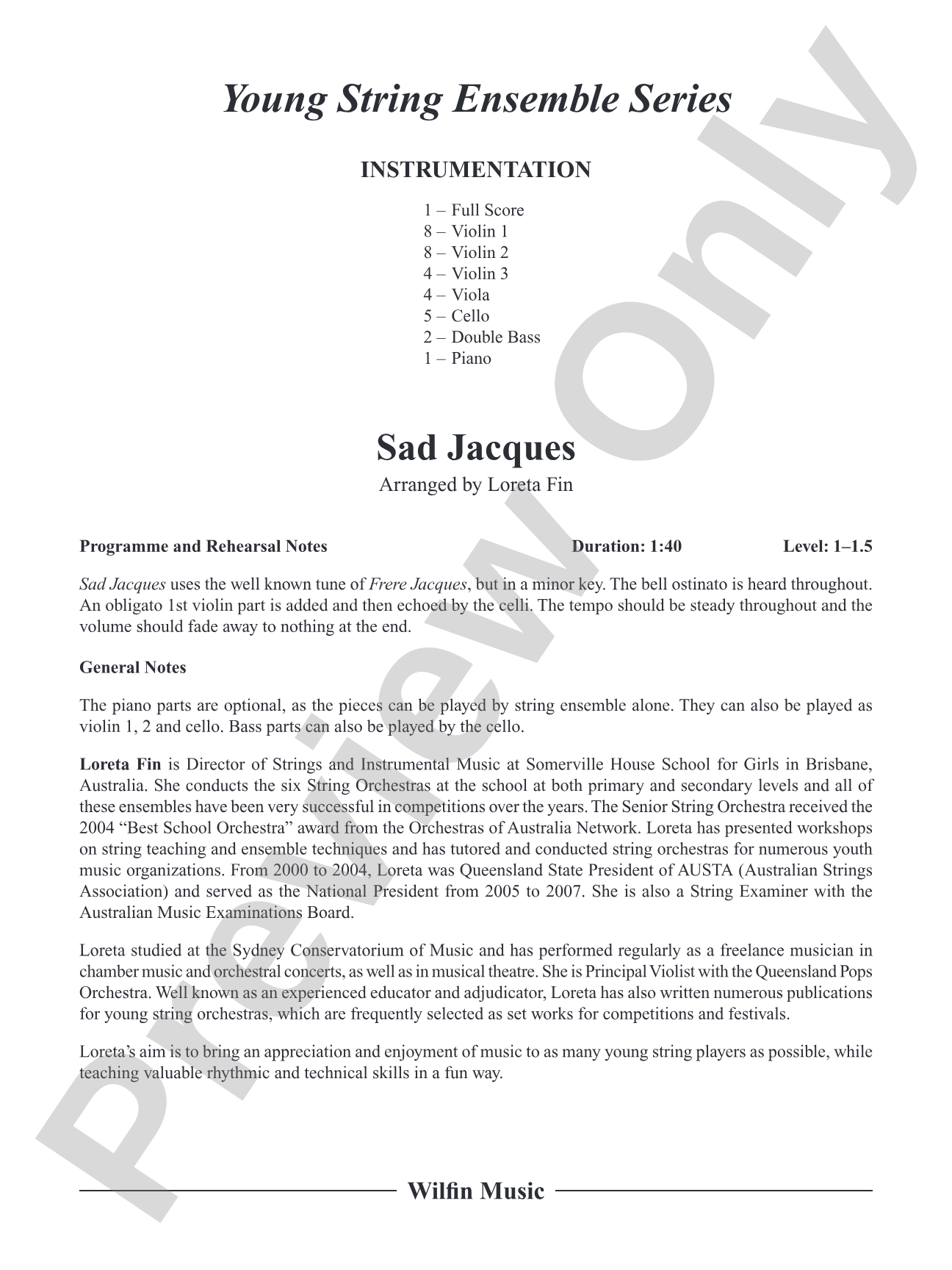
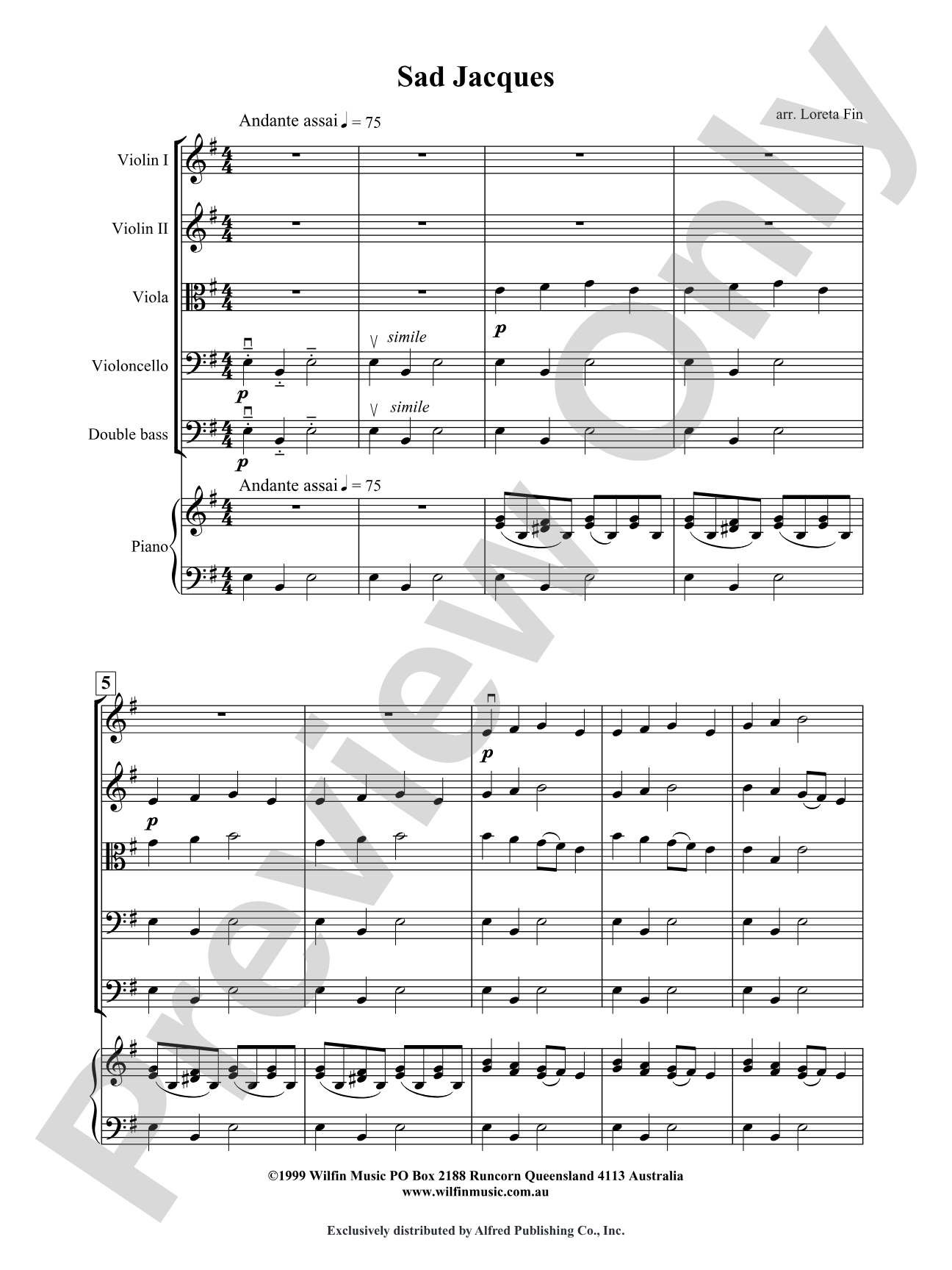
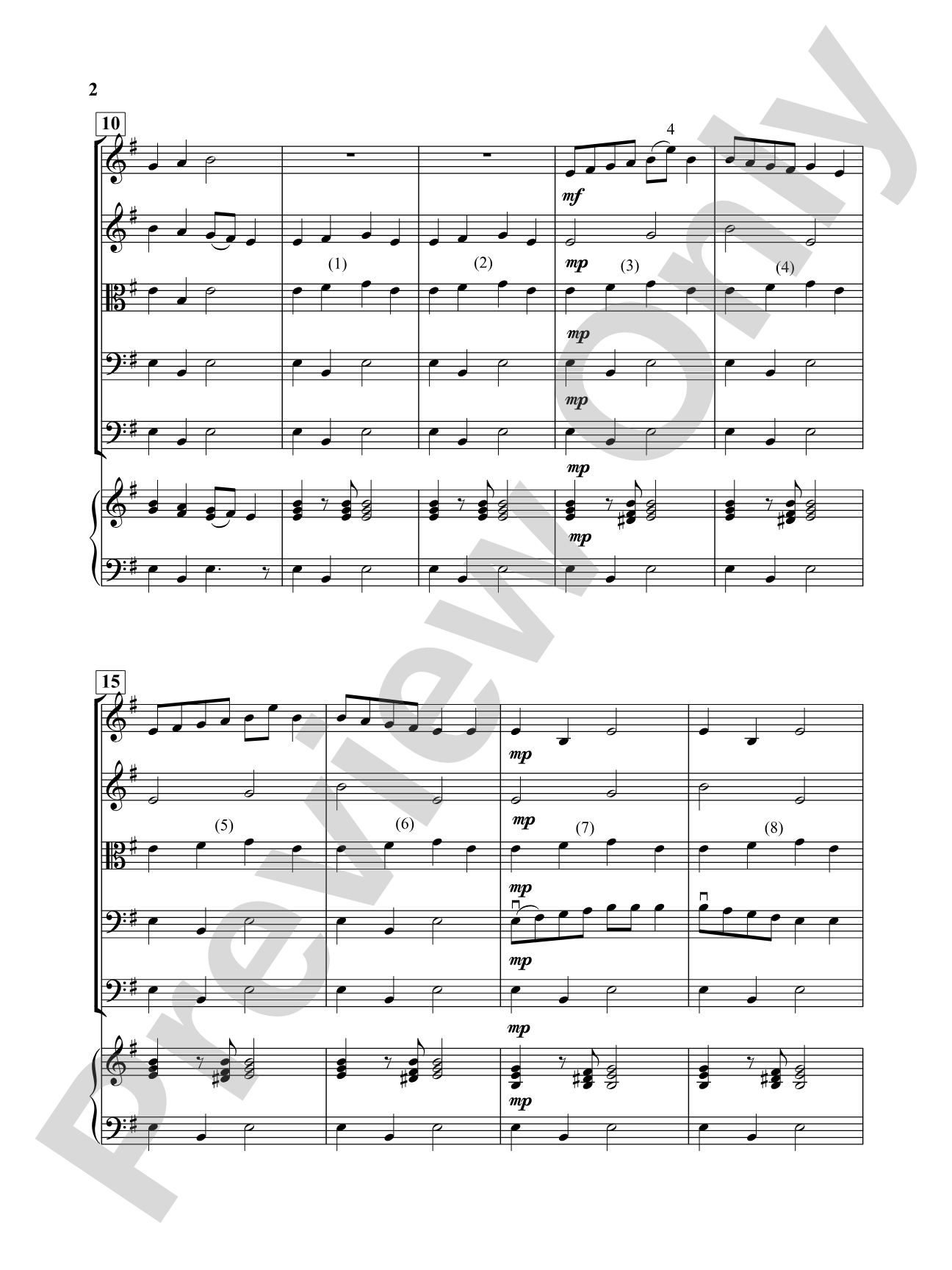
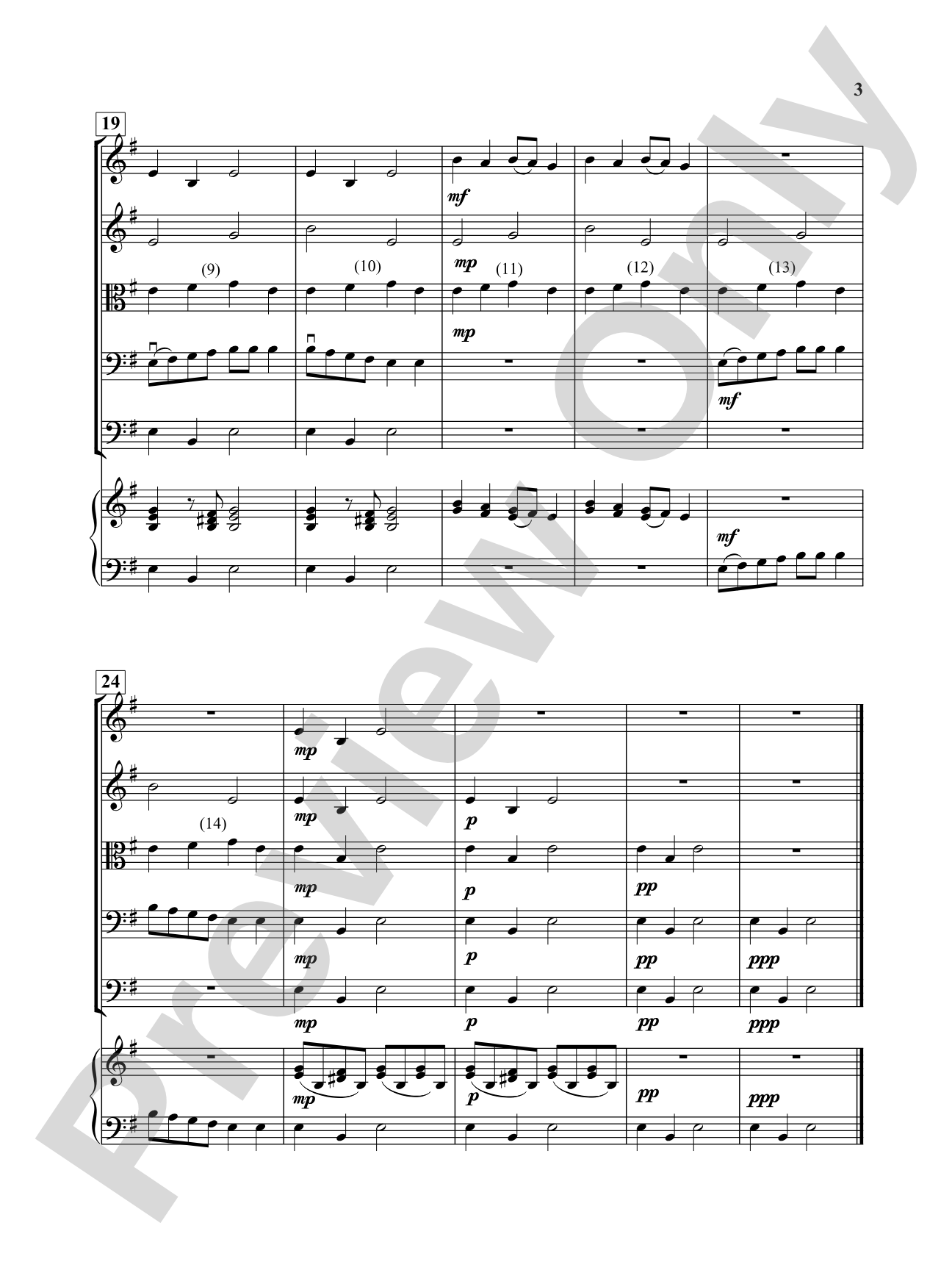
The traditional French folk song in a minor key. Great program music and with audience appeal. The piece will challenge the students listening skills.


Sad Jacques: String Orchestra Conductor Score & Parts isn't in MakeMusic Cloud just yet...but it could be. Let us know you'd like to see it, and you'll help shape what comes next. In the meantime, start a free trial and dive into thousands of interactive titles your students can play along with today.
Request This Title
Tell us you want it.
Start Your Free Trial
Explore everything that's ready to play right now.
Sample Audio
No sample audio found.
Sample Video
No sample videos found.
Additional Details
Series:
Wilfin String Orchestra: Young String Ensemble Series
Publisher:
Wilfin Music
Page Count:
64
SKU:
76-PK-0000001
More about this title
About the Arranger: Loreta Fin

Loreta Fin is a Sydney-trained violinist and violist with deep roots in Australia's string education landscape. She spent over 25 years as Principal Viola player with the Queensland Pops Orchestra while directing the string program at Somerville House School in Brisbane since 1993. Her work as an adjudicator, conference presenter, and examiner with the Australian Music Examinations Board has shaped string pedagogy across multiple continents.
Fin has composed more than 100 works for string orchestra, published internationally by Alfred Music. Her contributions to the Australian Strings Association earned her a Queensland State Award in 2009, and in 2017 she released her Beginner String Ensemble Series. She regularly conducts national honours ensembles and received the National Award for Services to Music and String Teaching in Australia, reflecting a career devoted to building strong young string players from the ground up.
Why we love this
Loreta Fin writes for young orchestras with remarkable clarity and musical purpose. This arrangement takes a beloved folk melody and shapes it to develop listening discipline, challenging students to track harmonic and textural shifts while maintaining ensemble balance. The minor key and accessible grade level make it a genuine crowd-pleaser that never feels simplistic.
What to expect
A gentle, introspective journey in a minor key. The arrangement respects the melancholy of the traditional tune while revealing the harmonic movement beneath it, inviting students to hear how accompaniment and melody create emotional depth together. There is restraint and beauty in the simplicity.
Who it's for
Grade 1 and early Grade 1.5 string orchestras looking for repertoire that builds listening skills without sacrificing musical satisfaction. The minor key and folk song context appeal to general audiences, making this an ideal choice for school concerts or family performances where you want young players challenged but engaged.
How to get the most out of it
- Balance the melody line across first and second violins; young players often force the tune when they should let it sing naturally. Focus on tone production over volume.
- Establish a steady, unhurried tempo in the opening phrases. The minor key calls for thoughtful phrasing, not dragging. A metronome in rehearsal prevents the piece from sagging.
- Listen across parts during tutti sections. Ask the cello and bass sections to anchor the harmonic progression while violas and second violins listen upward. This ensemble awareness is the real challenge for Grade 1 players.
- Mark dynamic changes clearly in parts and rehearse them deliberately. Young orchestras benefit from exaggerating crescendi and diminuendi in early run-throughs to internalize the arc.
How to use it
Program this early in a concert to establish an attentive, quiet atmosphere before moving into brighter repertoire. It works well paired with a contrasting major-key folk arrangement or a lyrical piece in a different style, demonstrating how key choice and orchestration shape musical character. The modest instrumentation and 64 pages of material suggest it could anchor a short all-folk program or serve as a palette-cleanser between larger works.
Skills your students will build
- Listening to harmonic progression across multiple voice parts
- Maintaining consistent tempo and tone in lyrical passages
- Dynamic control and phrasing in a minor key context
- Ensemble balance between melody and accompaniment
- Responding to conductor cues for textural clarity