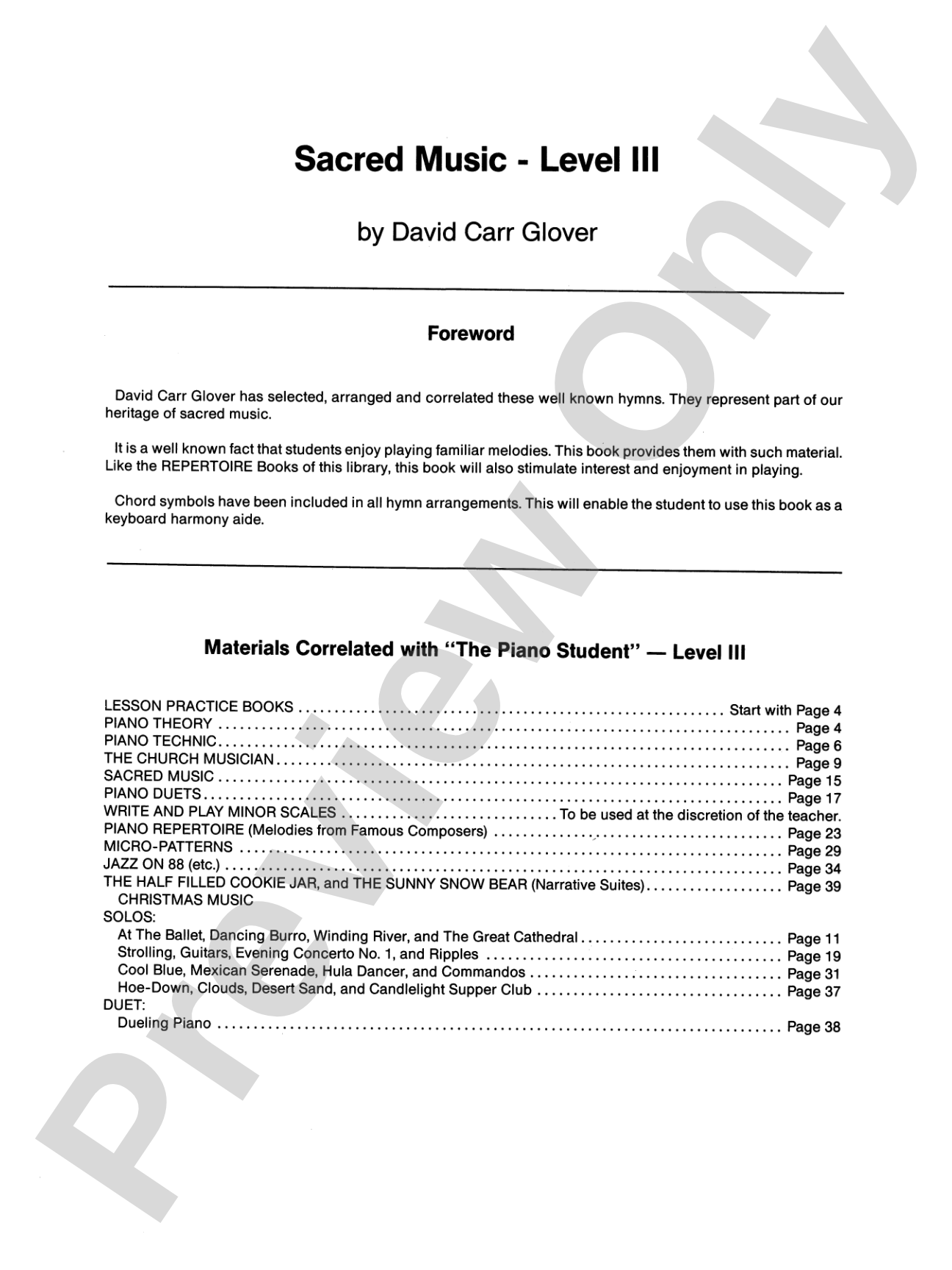
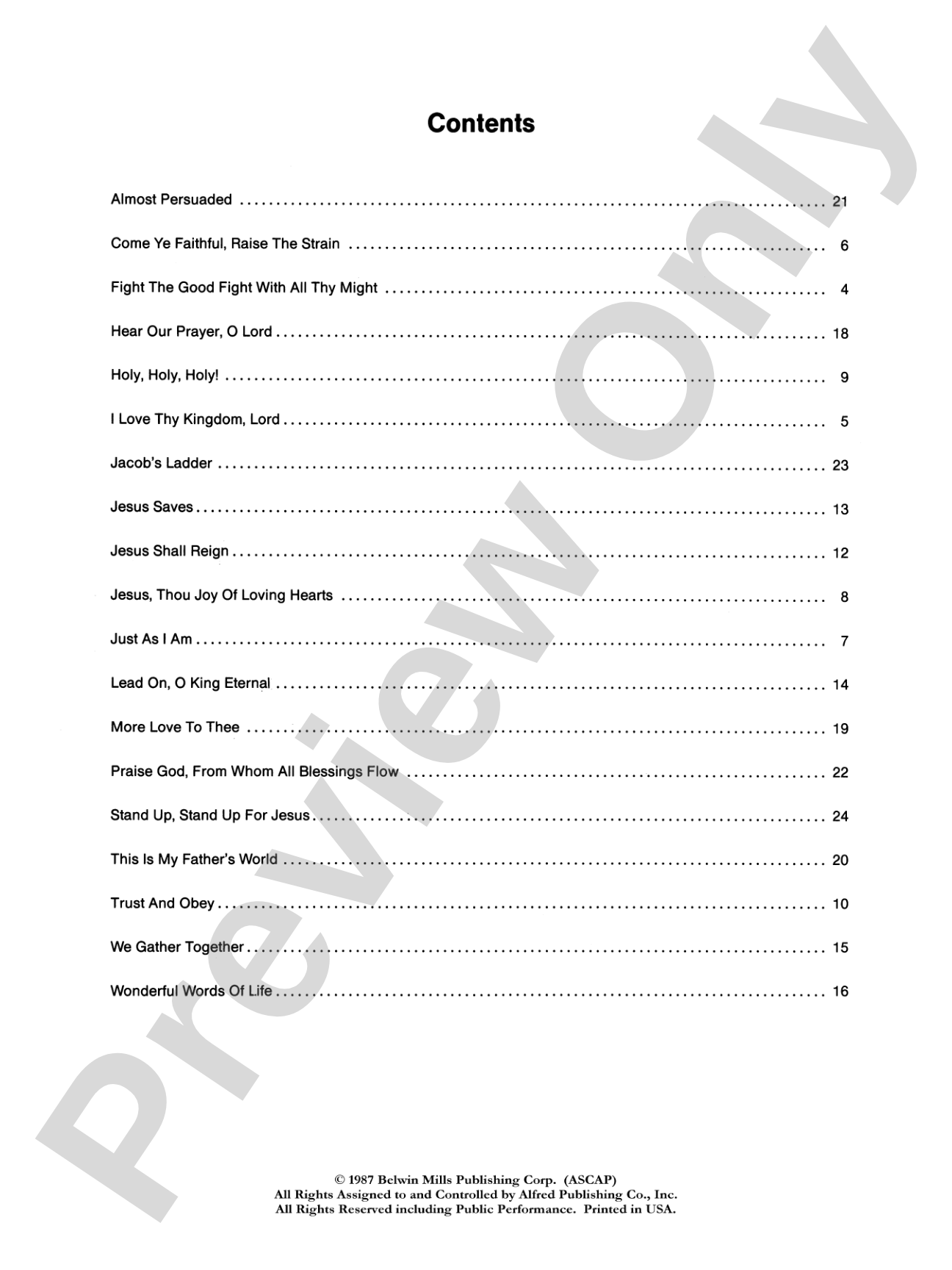
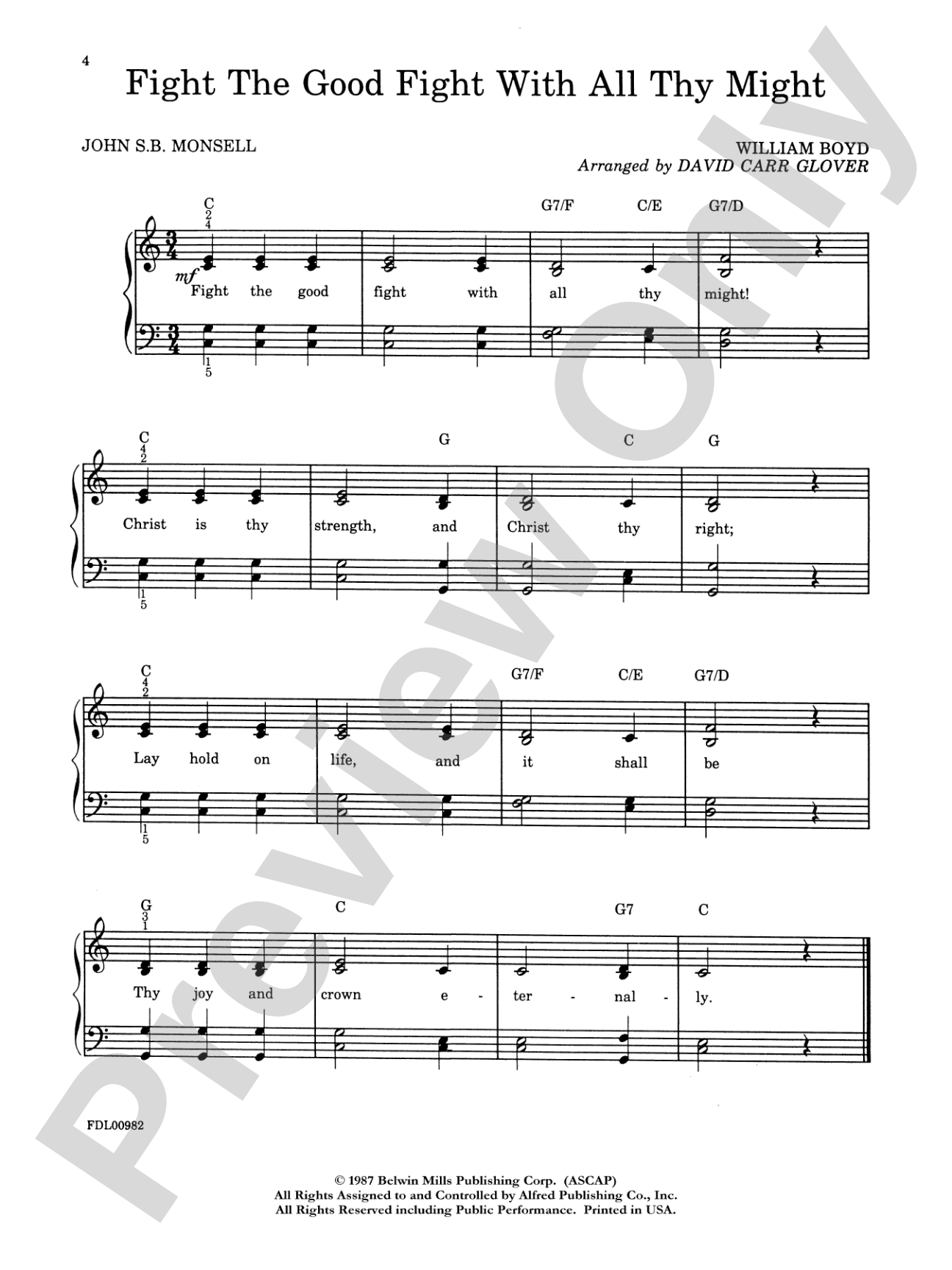
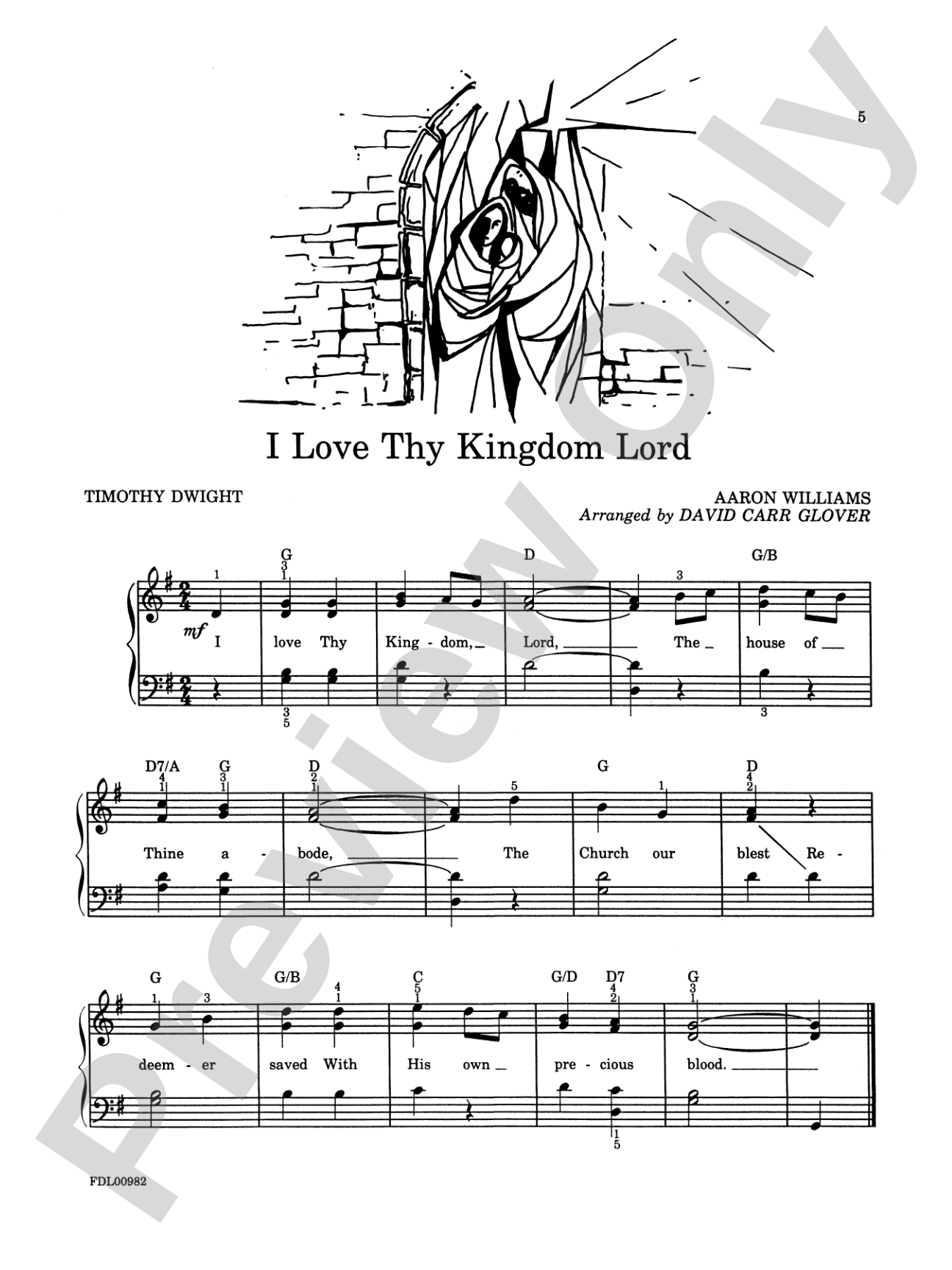
David Carr Glover has selected, arranged, and correlated these well-known hymns. They represent part of our heritage of sacred music. Students enjoy playing familiar melodies, and this book provides them with such material. Like the REPERTOIRE Books of this library, this book will also stimulate interest and enjoyment in playing. Chord symbols have been included in all hymn arrangements. This will enable the student to use this book as a keyboard harmony aide.
Discover MakeMusic Cloud: thousands of interactive titles your students can play along with today.
David Carr Glover was a prolific composer and pedagogue whose systematic piano method and supplementary libraries shaped American music education throughout the twentieth century. His approach emphasized building musicianship through accessible yet musically meaningful repertoire, making him a trusted voice in classrooms and studios nationwide.
Why we love this
Glover's ear for what students actually want to play shows in these arrangements. Familiar hymn melodies remove the barrier of learning new material while the chord symbols transform each piece into a harmonic study, turning practice into something that builds both technique and theoretical understanding without feeling like a separate lesson.
What to expect
Playing these arrangements brings a sense of continuity with a living tradition. There's comfort in familiar melodies paired with the quiet satisfaction of discovering how harmony shapes the music beneath the tune.
Who it's for
Students at the early intermediate level who benefit from repertoire that feels rewarding and musical while they're still building technical fluency. Teachers seeking supplementary material that bridges performance and music theory in a single, cohesive collection.
How to get the most out of it
Explore the chord symbols as a harmonic framework before polishing the melody line; this contextual knowledge makes phrasing more intentional.
Maintain the singing quality of these melodies even at moderate tempos; hymn arrangements work best when students hear the inherent lyricism rather than rushing through familiar material.
Use the chord symbols to experiment with light left-hand voicings or accompaniment patterns beyond what's written, encouraging creative interpretation within each arrangement.
How to use it
These pieces work beautifully as recital material for students seeking shorter, complete musical statements without the technical demands of longer classical forms. They also fit naturally into any curriculum where harmonic literacy is a learning goal, offering real context for chord study.
Skills your students will build
Reading and interpreting chord symbols
Singing quality in melody lines across the staff
Understanding harmonic function within familiar musical structures
Left-hand coordination and texture variety
Recognition of phrase shapes and cadential moments in hymn writing
You May Also Like
Scan to Complete Your Purchase
Use your phone's camera to scan the code below
You'll log in on your phone and the order will be added to your account