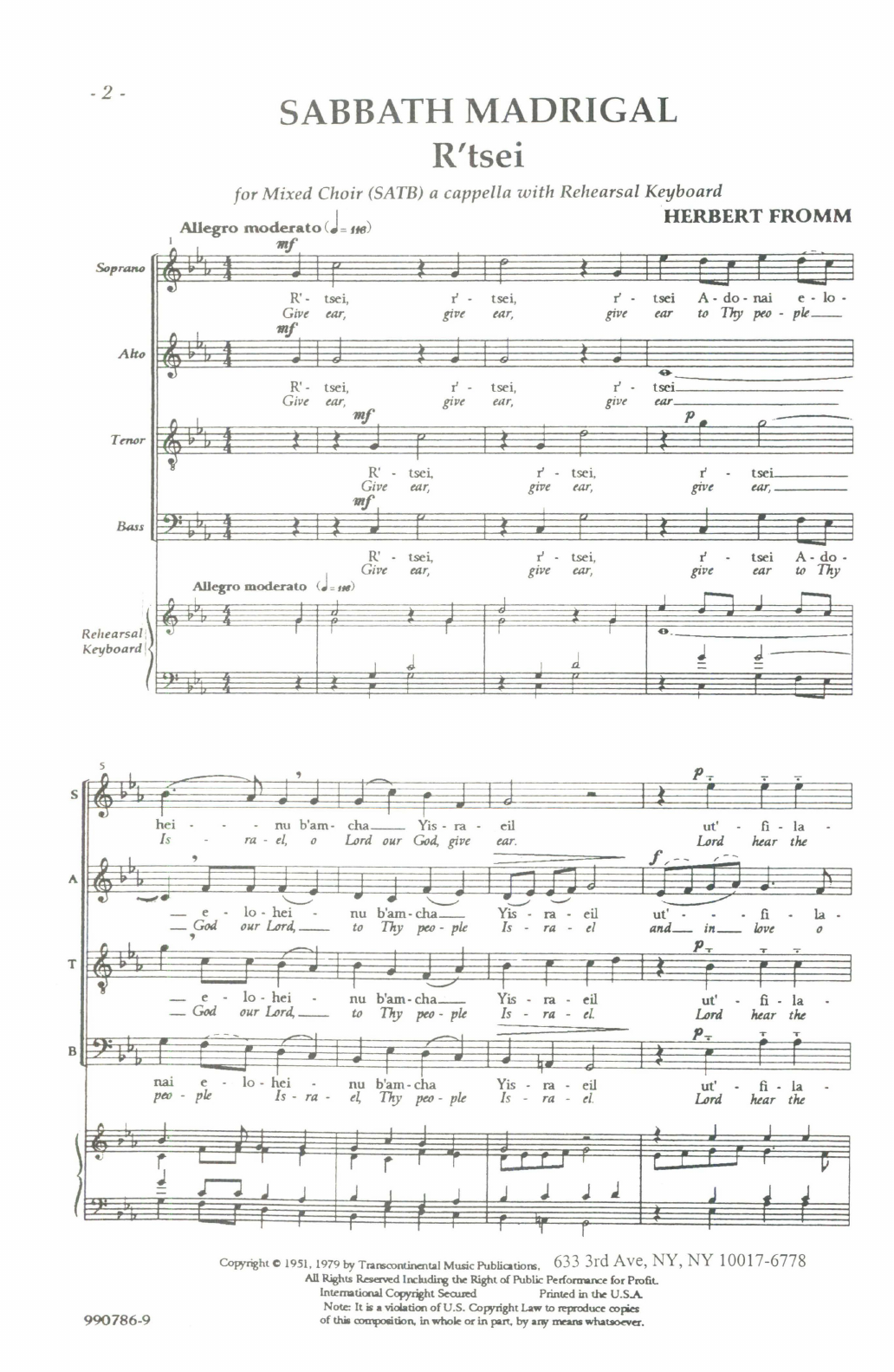
Sabbath Madrigal (R'tsei) Sheet Music Preview

Sabbath Madrigal (R'tsei): SATB Choral Octavo

By Herbert Fromm

Item: 35-DS01115320

Digital Download
$2.99
Description

Sabbath Madrigal (R'tsei): SATB Choral Octavo isn't in MakeMusic Cloud just yet...but it could be. Let us know you'd like to see it, and you'll help shape what comes next. In the meantime, start a free trial and dive into thousands of interactive titles your students can play along with today.

Sample Audio
No sample audio found.
Sample Video
Additional Details
Publisher: Hal Leonard
Page Count: 9
SKU: 35-DS01115320

More about this title

About the Composer: Herbert Fromm

Herbert Fromm (1906-1995) was an American composer and organist who built a career bridging liturgical music and concert repertoire. His choral writing reflects deep knowledge of voice leading and harmonic language rooted in both Jewish and Christian traditions, making his works valuable for choirs seeking repertoire with structural sophistication and spiritual depth.

Why we love this

Fromm crafted this setting of the Hebrew blessing with the kind of harmonic subtlety that rewards careful listening and rehearsal investment. The piece sits at that ideal intersection where sacred text finds elegant musical expression without requiring an enormous ensemble or excessive rehearsal time.

What to expect

The music unfolds with quiet reverence, its harmonic language suggesting both liturgical tradition and modern sensibility. There's an intimate quality to the a cappella texture that invites singers and listeners into the contemplative space of the blessing itself.

Who it's for

This octavo works well for volunteer and community choirs comfortable with some harmonic complexity and small ensemble groups in high schools or colleges. The piece appeals to directors building a diverse repertoire that includes both secular and sacred works without requiring soloists.

How to get the most out of it

  • Balance the text clarity across all four voices; the blessing deserves articulation that lets listeners follow the Hebrew words even if they're unfamiliar with the language.
  • Shape each phrase with slight dynamic contours rather than maintaining a static volume throughout; this prevents the a cappella texture from becoming static.
  • Pay attention to vowel consistency in unison or near-unison passages, especially where voices move together on important text.

How to use it

Consider this for a concert celebrating multicultural or interfaith themes, or place it alongside other settings of blessings and prayers. Its nine pages make it substantial enough to anchor a section while remaining accessible for programming between larger choral works.

Skills your students will build

  • Singing Hebrew pronunciation and text declamation
  • A cappella balance and blend without instrumental support
  • Harmonic listening and voice independence within sustained chords
  • Interpretive phrasing in sacred music settings

You May Also Like