
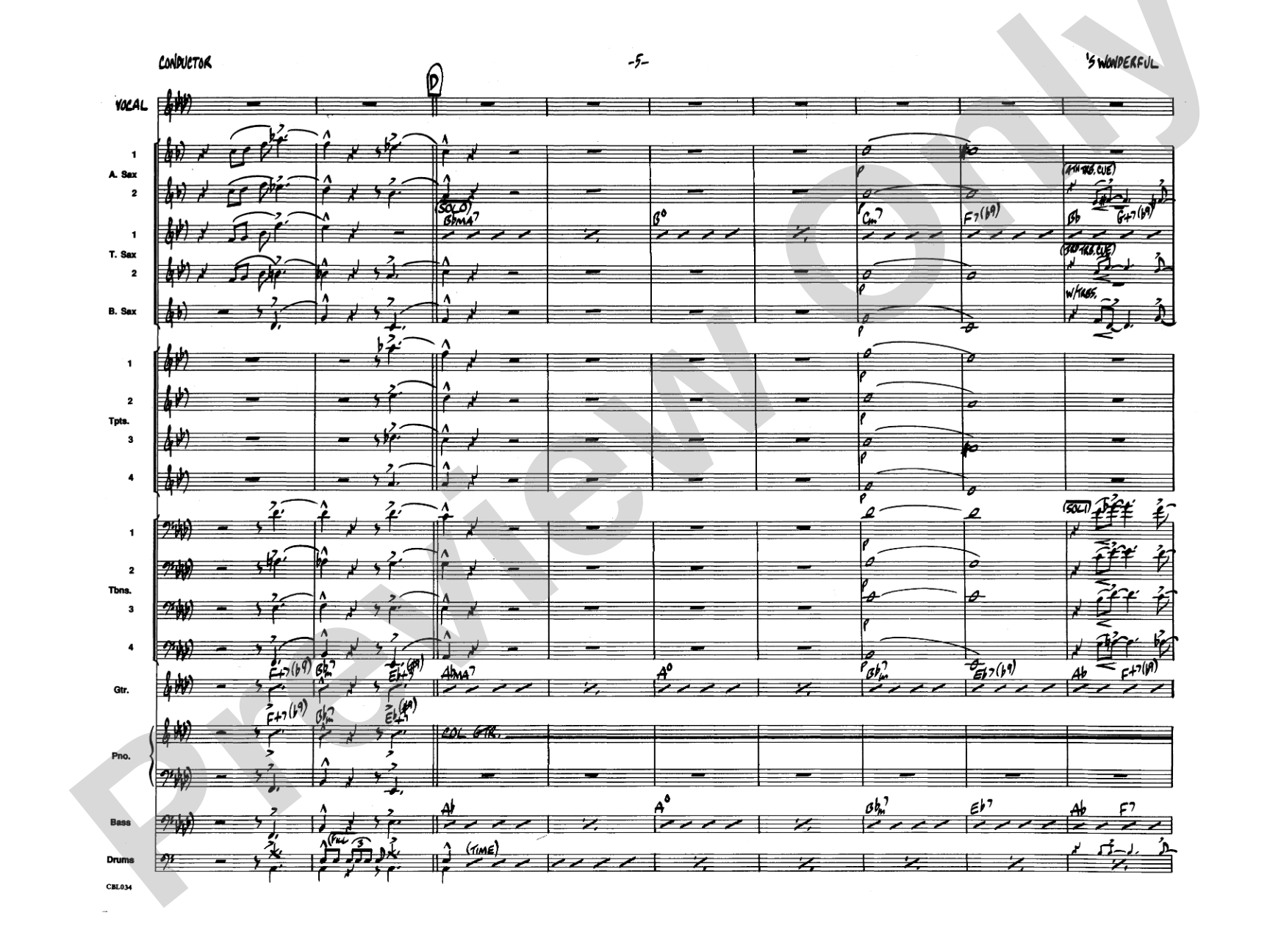
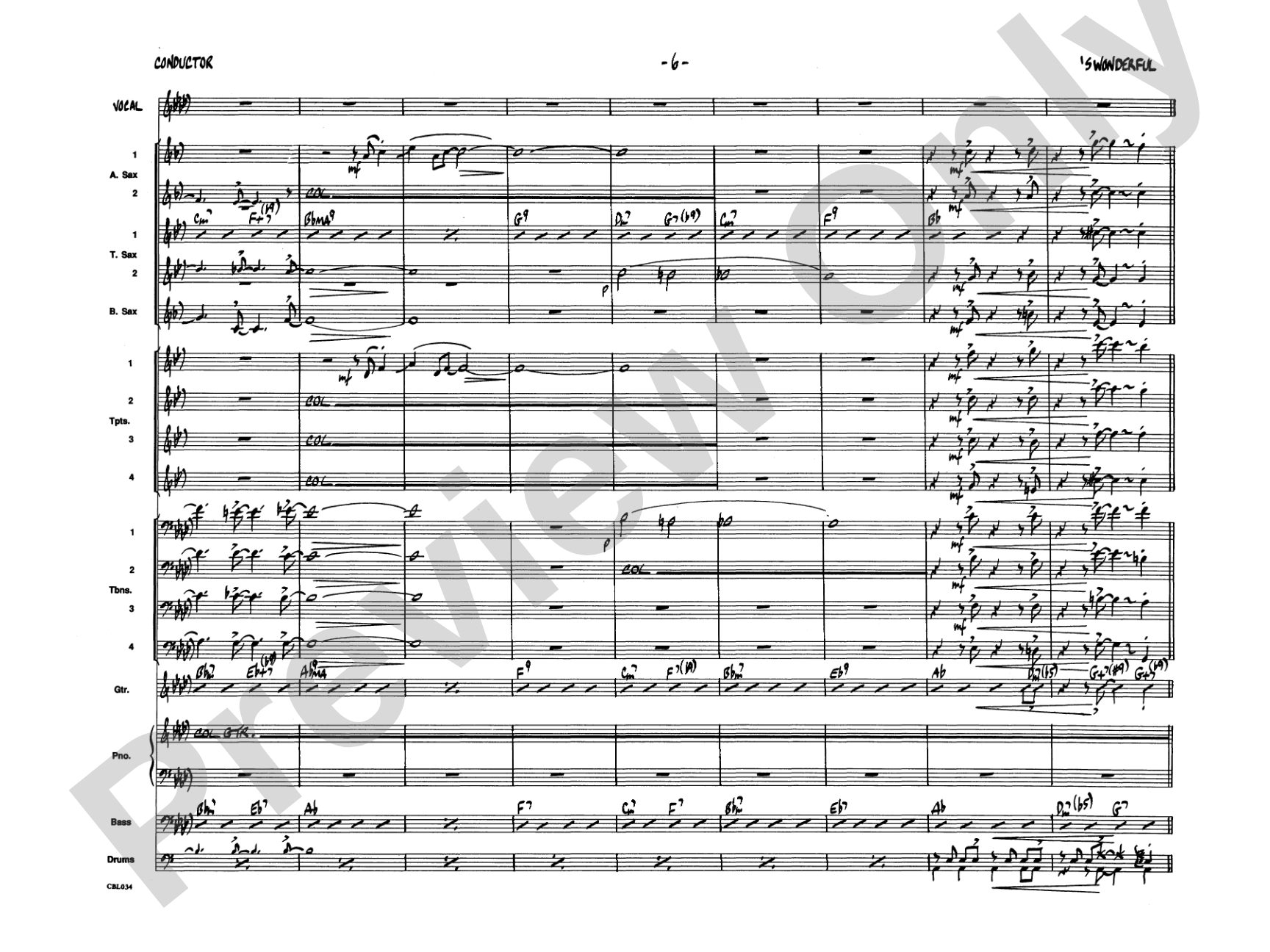
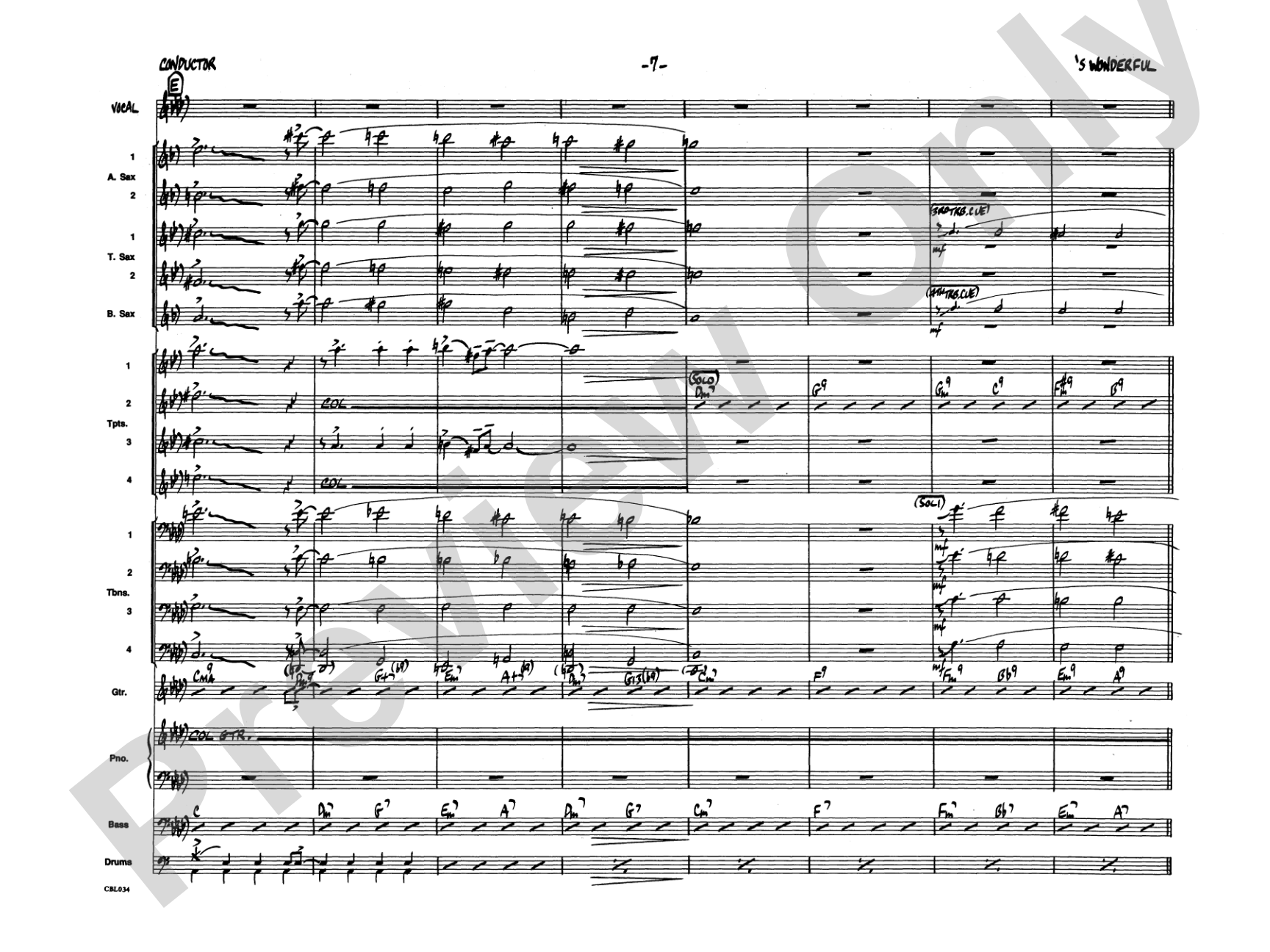
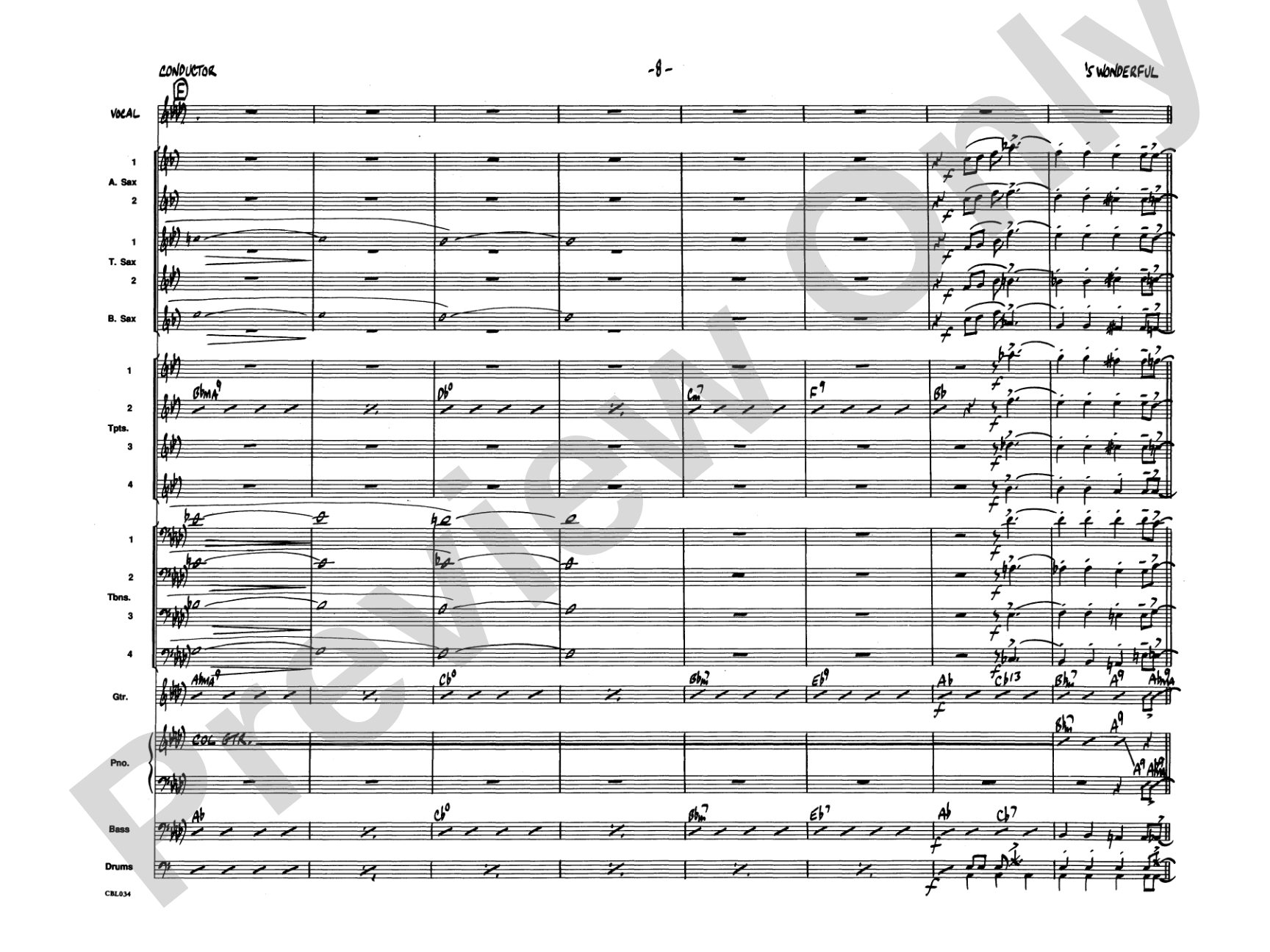
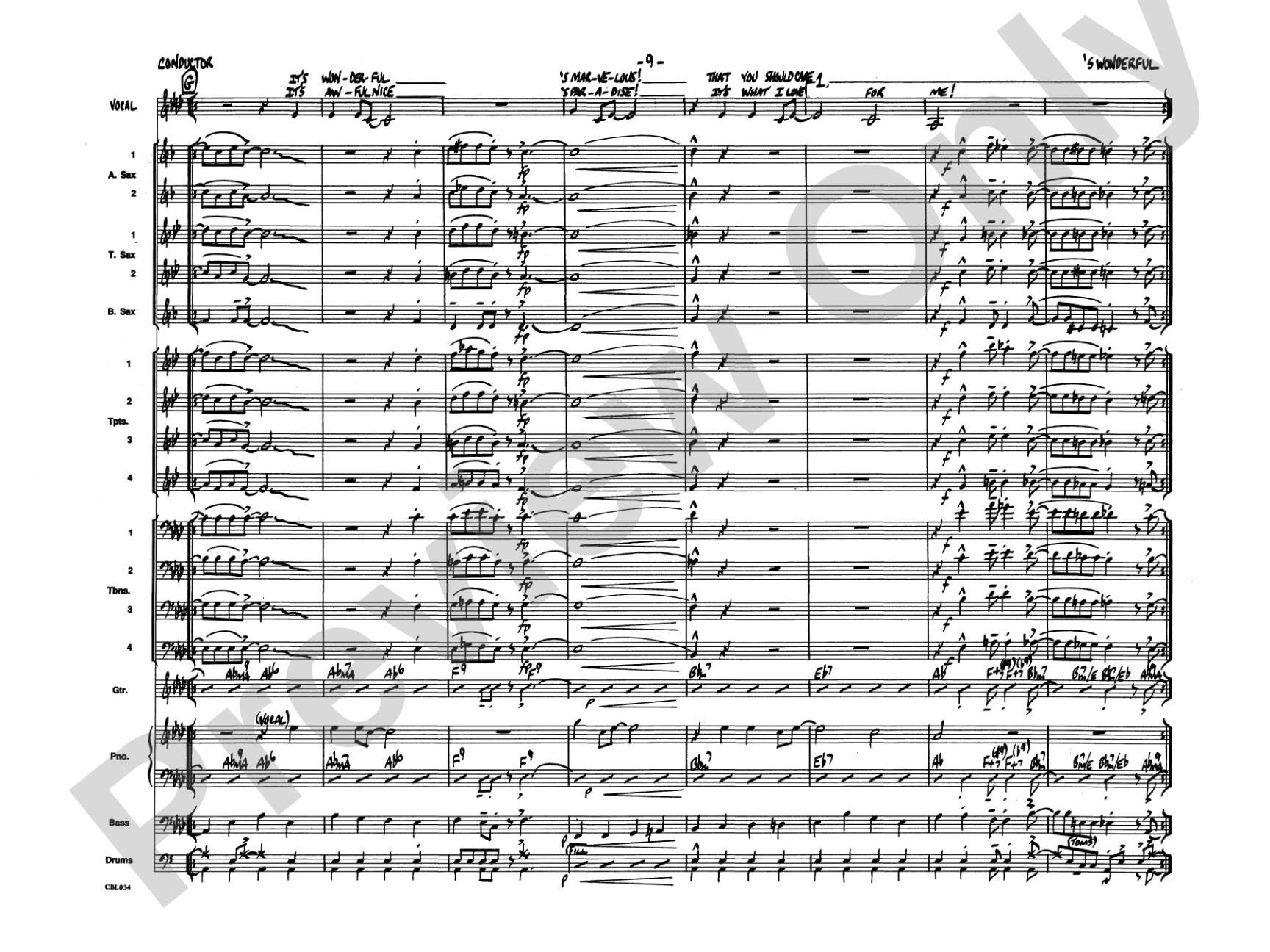
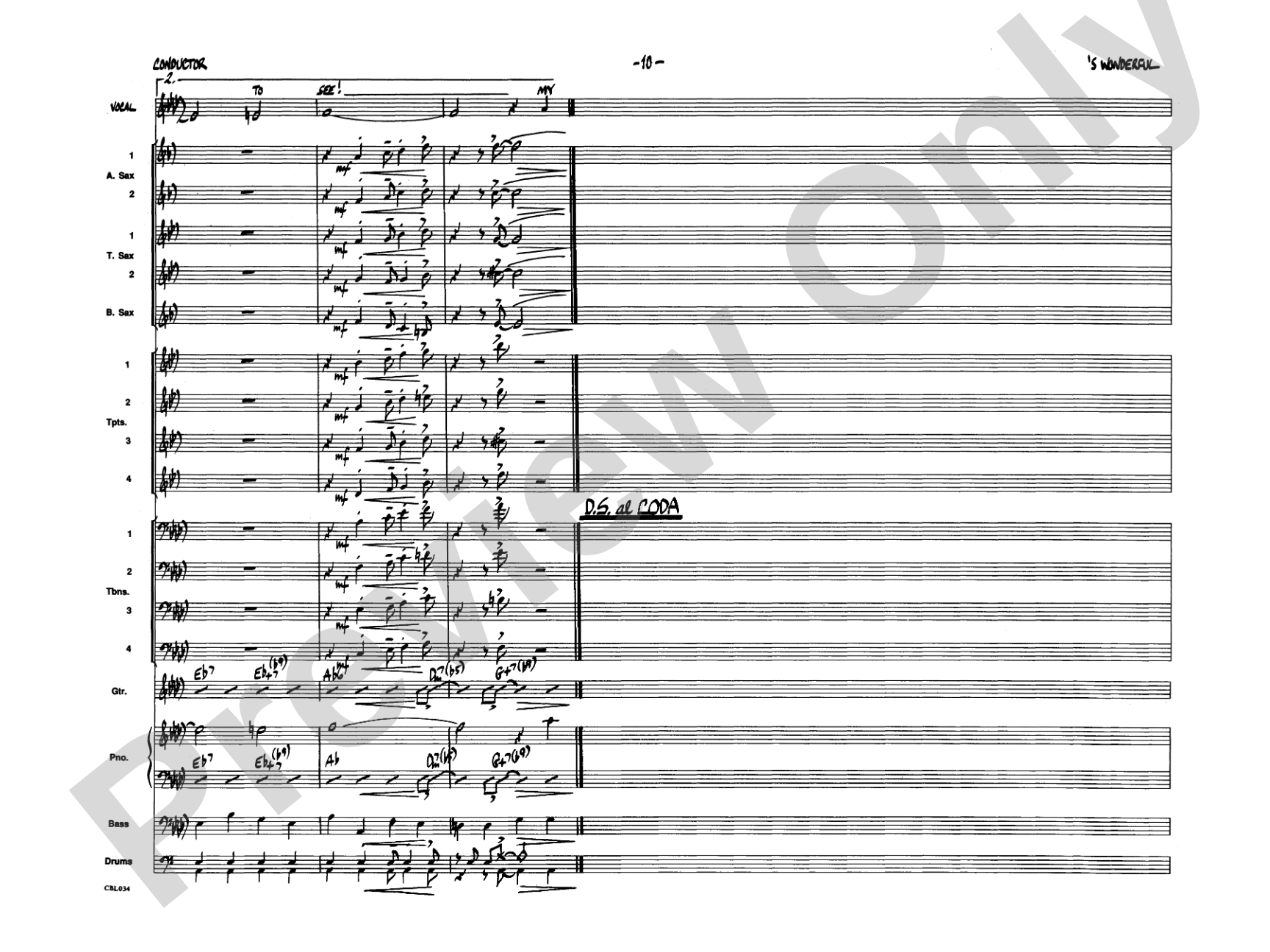
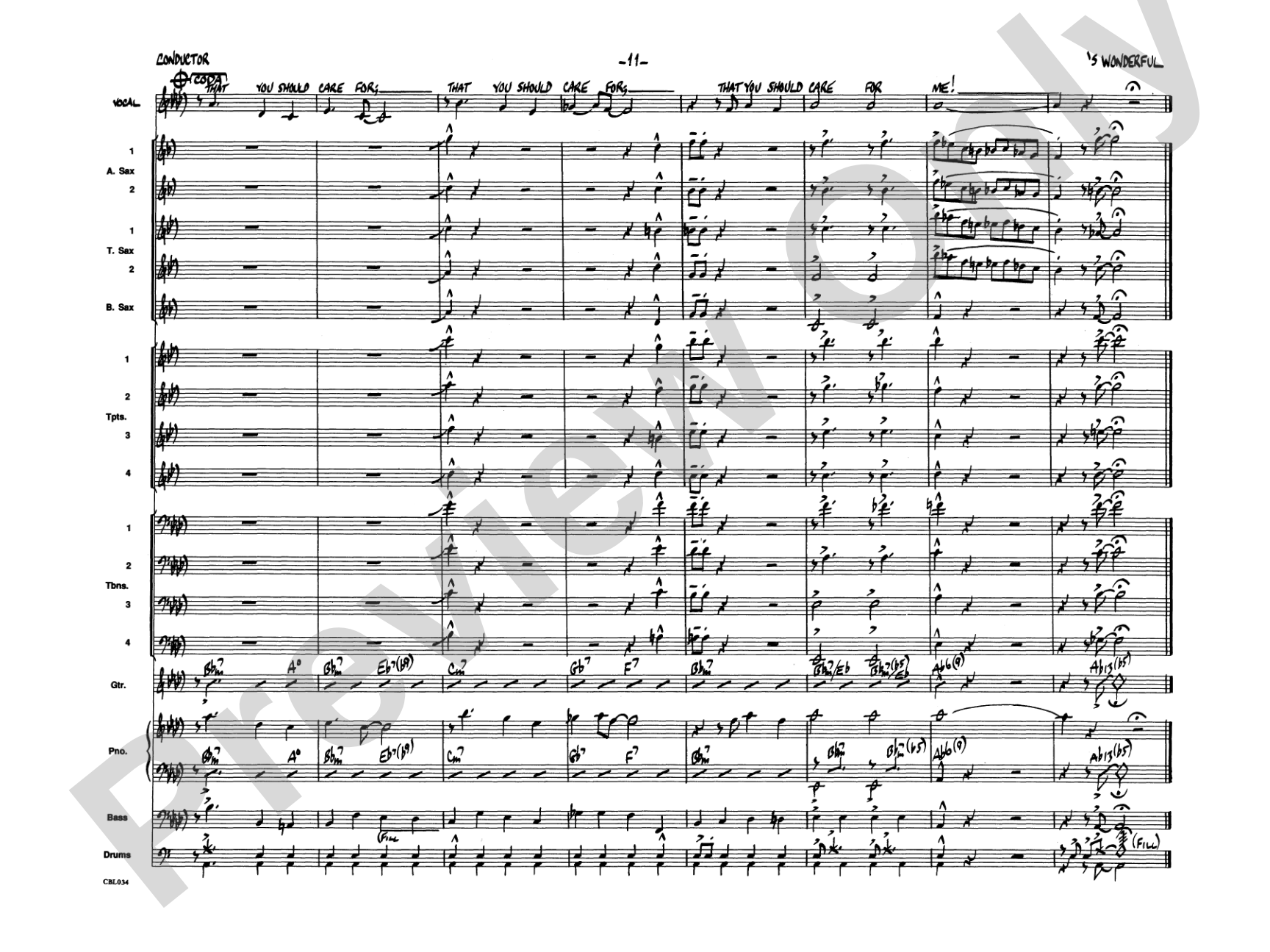


'S Wonderful: Vocal Solo with Jazz Ensemble Conductor Score & Parts
Vocal Feature - Key of A-Flat
By George Gershwin / arr. Dave Wolpe
Grade: 4 (Medium Advanced / Difficult)
Item: 00-PK-0002668

$54.00
One moment…
Related Items
'S Wonderful: Vocal Solo with Jazz Ensemble Conductor Score & Parts |
$62.00
|
View | |
'S Wonderful: Vocal Solo with Jazz Ensemble Conductor Score & Parts |
$62.00
|
View | |
'S Wonderful: Vocal Solo with Jazz Ensemble Conductor Score |
$11.00
|
View | |
'S Wonderful: Vocal Solo with Jazz Ensemble Conductor Score & Parts |
$54.00
|
View | |
'S Wonderful: Vocal Solo with Jazz Ensemble Conductor Score |
$9.00
|
View |
Description
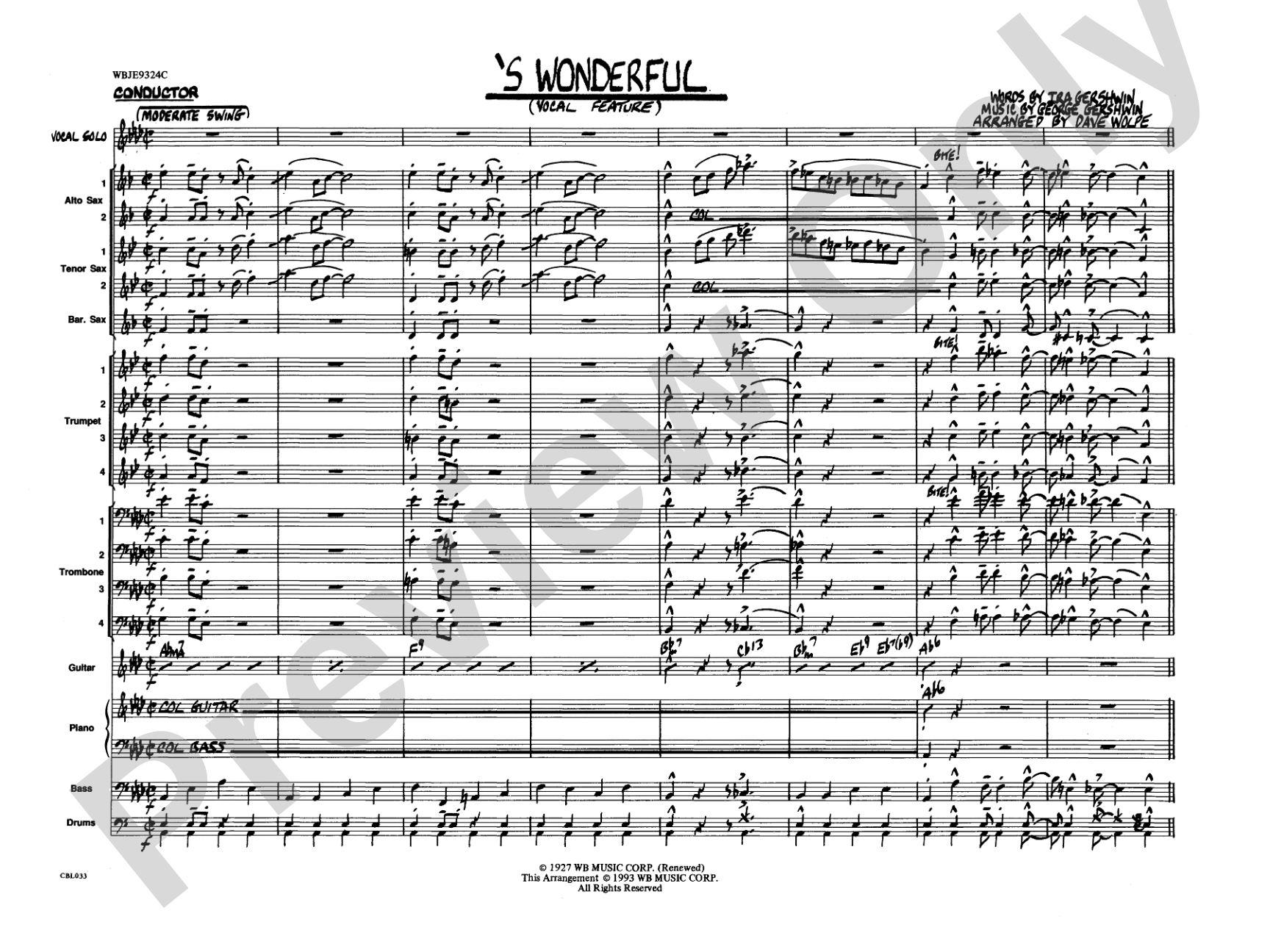
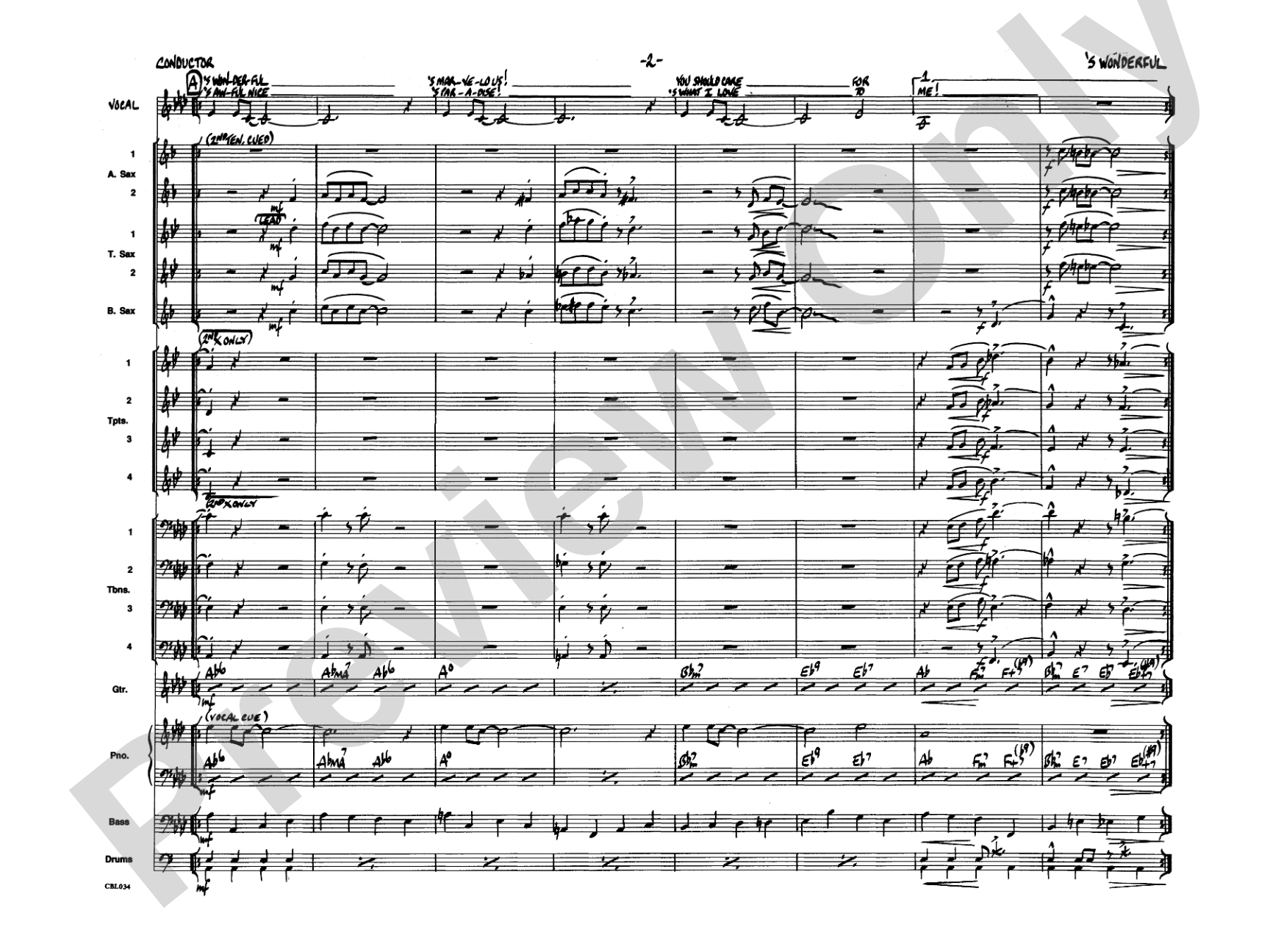
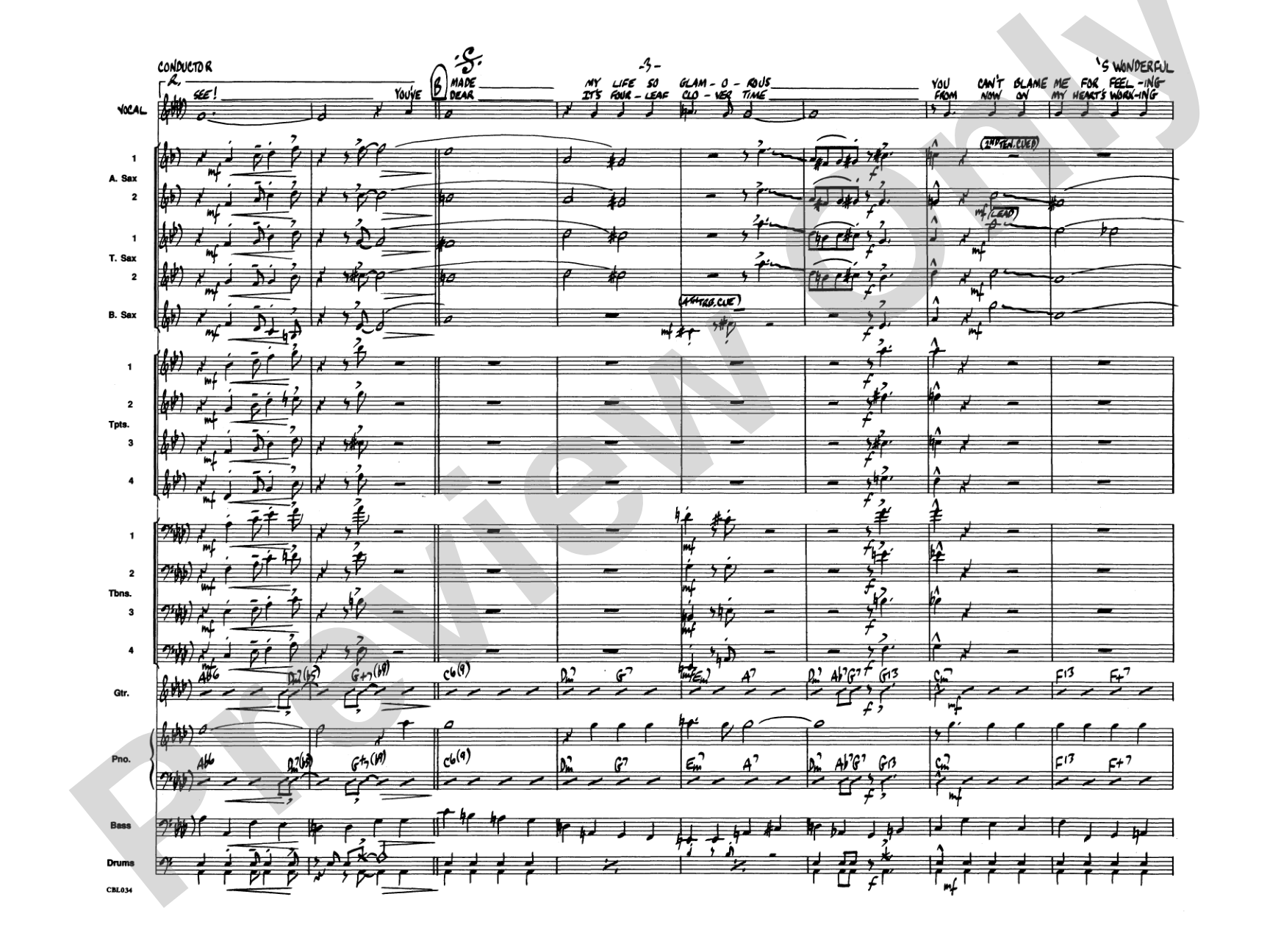
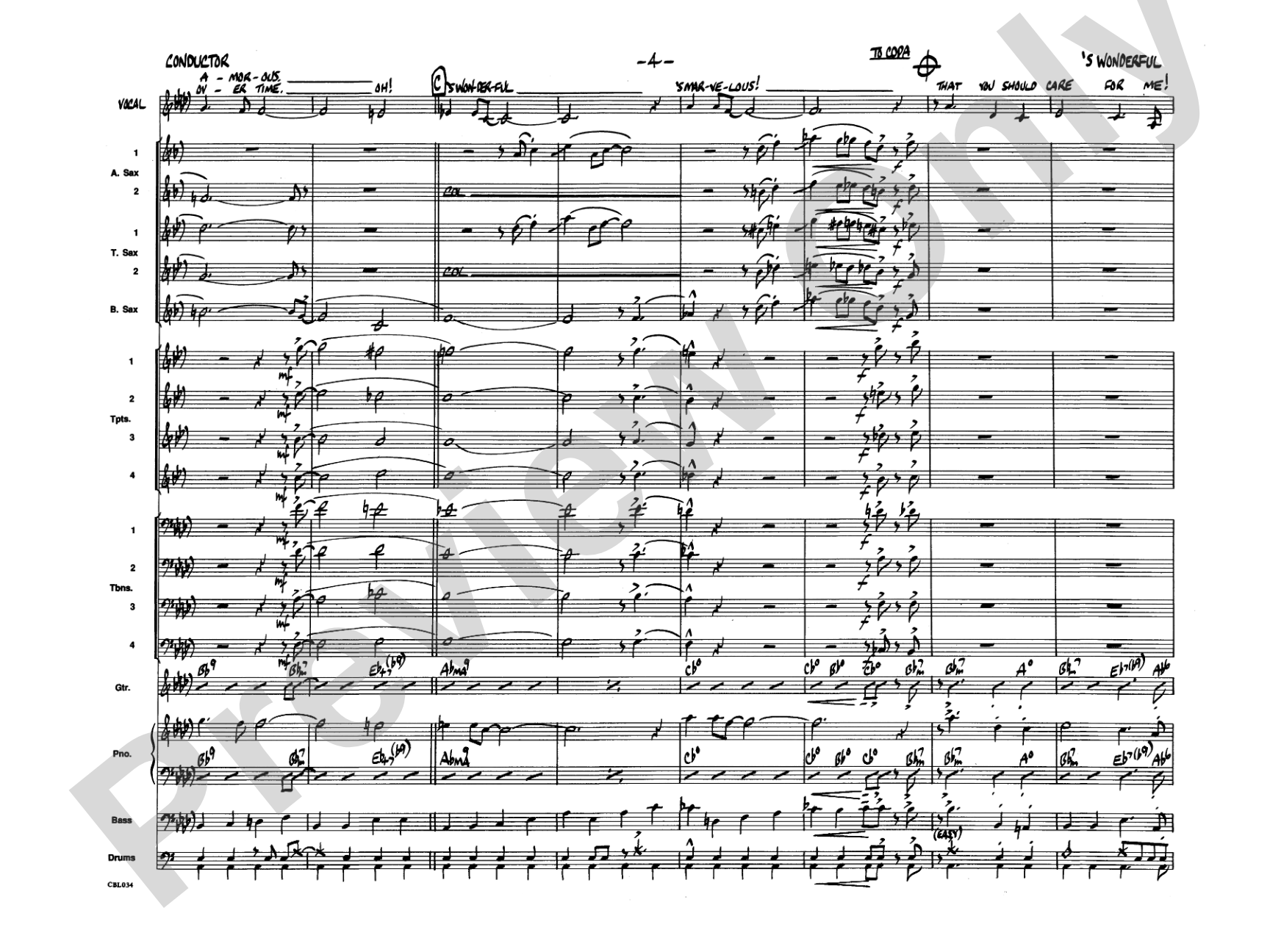
This one truly is wonderful! The band moves along at a nice tempo giving the vocalist plenty of support throughout. Tenor sax and trumpet both solo after the first chorus and then bring the vocalist back to answer the band shouts---it's wonderful! Typical Wolpe magic! Key of Ab.


Don't just read it, hear it, play along with it, and watch your students grow with it. In MakeMusic Cloud, 'S Wonderful: Vocal Solo with Jazz Ensemble Conductor Score & Parts comes alive with professional accompaniment, adjustable tempo, and built-in practice tools that turn solo practice into real progress.
Open in the Player
Jump straight in and assign it today.
Start Your Free Trial
Open this title and explore the full library in minutes.
Sample Audio
No sample audio found.
Sample Video
No sample videos found.
Additional Details
Series:
Jazz Vocal Series
Publisher:
Alfred Music
Page Count:
92
SKU:
00-PK-0002668
More about this title
About the Composer: George Gershwin
George Gershwin (1898-1937) bridged classical and popular music in ways few composers have managed. His output spanned concert works, musical theater, and jazz-inflected standards that remain central to American music education and performance. Gershwin's gift for memorable melody combined with sophisticated harmonic language made him essential to 20th-century music literacy, and his work continues to teach musicians about accessible complexity and the power of vernacular forms.
Why we love this
Dave Wolpe's arrangement unlocks what makes this standard so enduring: a strong melody that sits beautifully on the voice, intelligent ensemble writing that listens rather than overwhelms, and built-in opportunities for soloists (tenor sax and trumpet) to shine while the vocalist anchors the performance. The shout-and-answer sections between ensemble and soloist create genuine dialogue, making this feel less like a singer plus background and more like a real conversation among musicians.
What to expect
Sophisticated and swinging. The Gershwin melody is instantly singable and charming, but Wolpe's arrangement layers in harmonic colors and ensemble textures that prevent it from ever feeling simple or sentimental. There's real joy in the interplay between soloist and ensemble, and the A flat key gives the whole piece a warm, grounded feeling.
Who it's for
Jazz ensemble directors who want to add a strong vocal feature without sacrificing musical substance or making demands on the ensemble's technique. This works for singers with solid jazz phrasing instincts and confidence in front of a full band, typically experienced high school or college vocalists.
How to get the most out of it
- Establish the Ab key clearly in ensemble rehearsals before bringing the vocalist in. The band's harmonic foundation needs to be secure so the vocalist can relax and phrase naturally over a stable bed.
- Balance the vocal line prominently but not isolated. The vocalist is a section member, not a soloist in a spotlight. The band should provide color and energy without drowning out the lyric.
- Shape the sax and trumpet solos distinctly. These aren't just breaks between vocal choruses; they're conversations with the vocalist and the band. Each soloist should have a clear character and approach.
- Lock the ensemble's rhythm section (bass and drums especially) so the tempos and groove remain steady. A vocalist needs to trust the pocket completely, particularly when the band brings them back in for the shout-and-answer sections.
How to use it
This sits naturally in a concert that mixes standards with more contemporary jazz repertoire. It's formal enough to anchor a set as a feature number, and the 92 pages of material give you flexibility with tempos and arrangements of the ensuing solos. Consider pairing it with instrumental features at similar difficulty so the concert balances soloist with section work.
Skills your students will build
- Balancing vocal phrasing with ensemble rhythm section
- Trading solos and dialogue between sections (sax, trumpet, and vocalist)
- Maintaining consistent swing feel and groove across tempo and harmonic changes
- Reading jazz ensemble voicings and responding to chord changes
- Ensemble listening and responsiveness to a featured soloist