
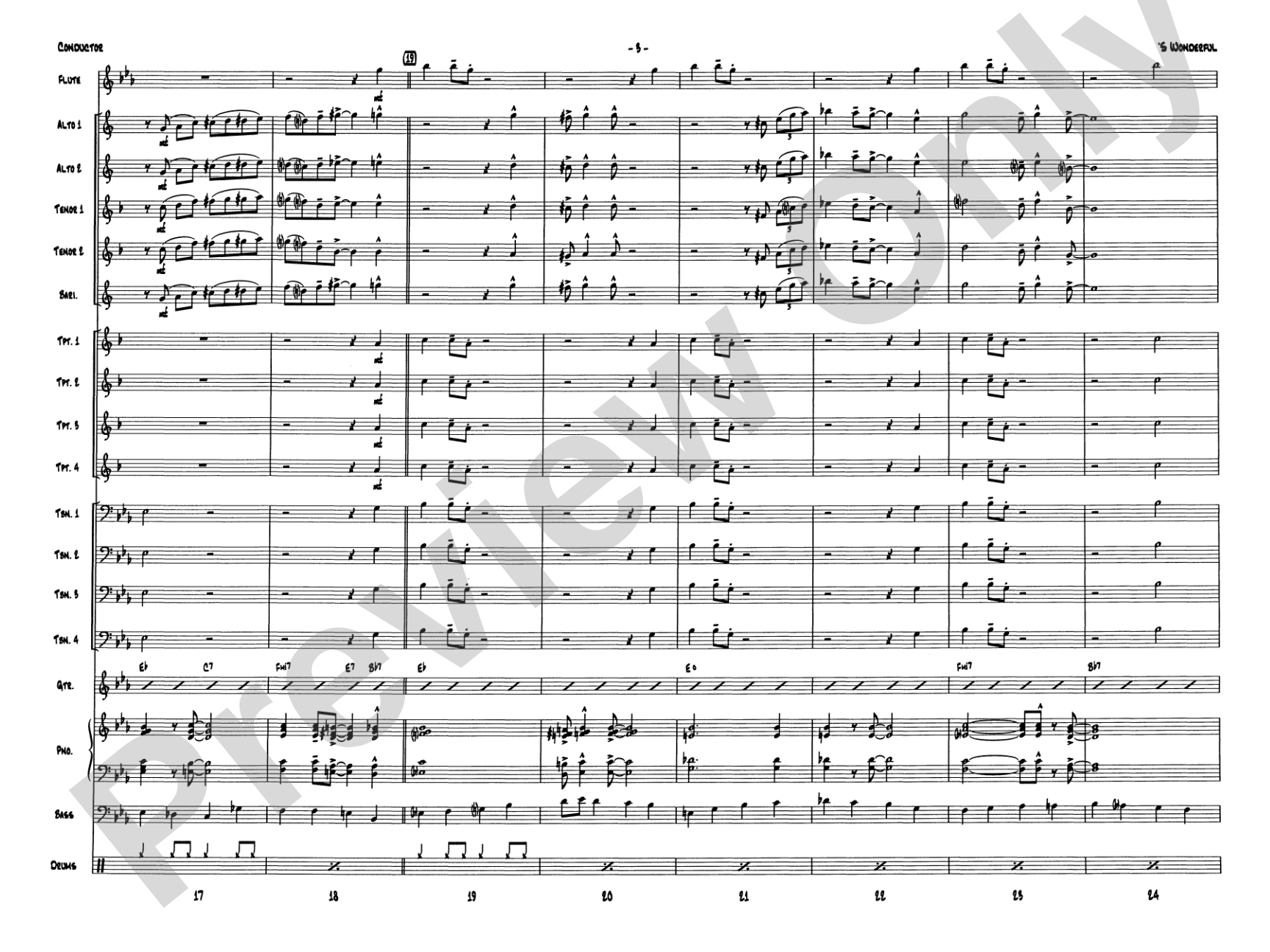
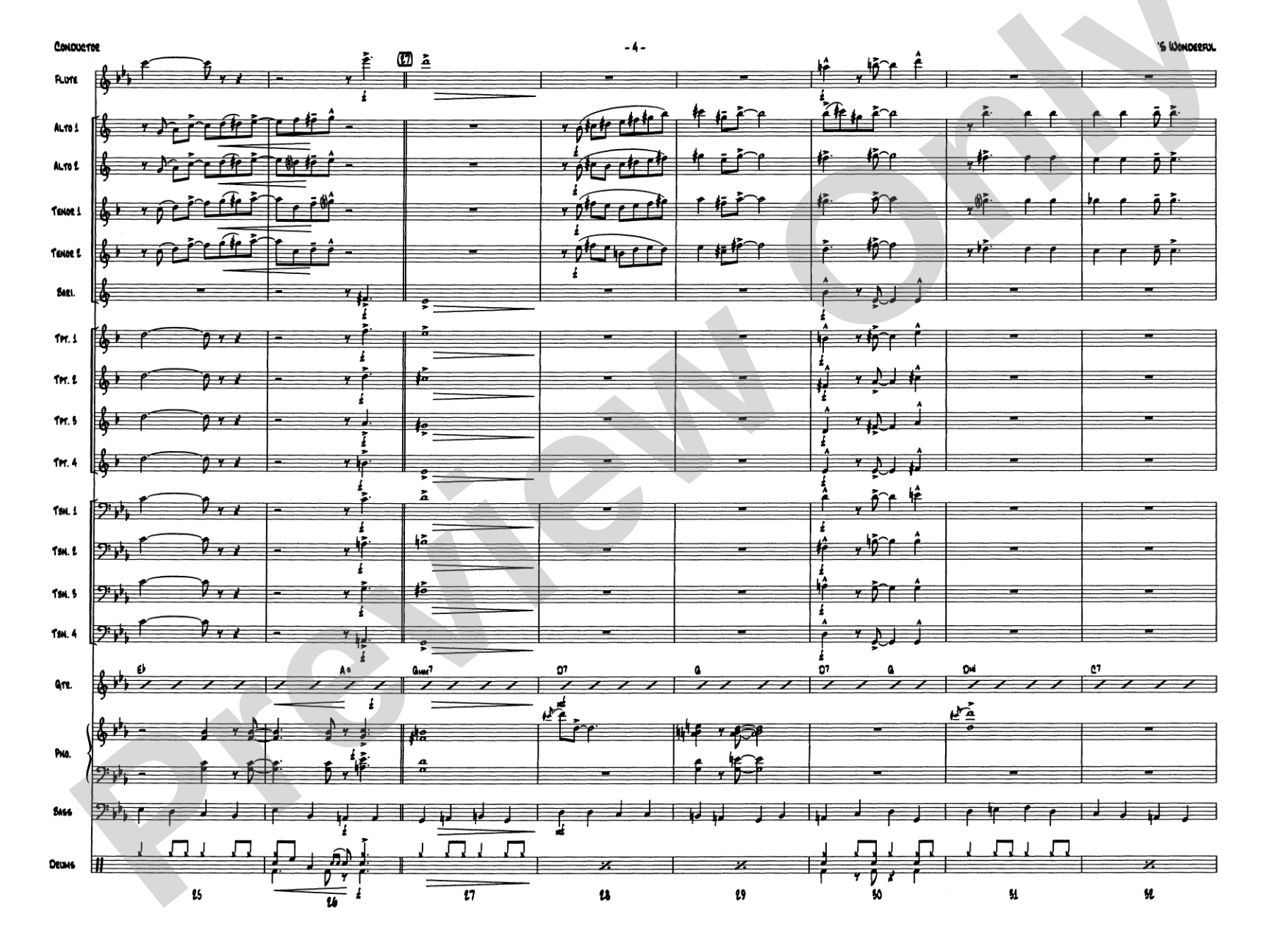
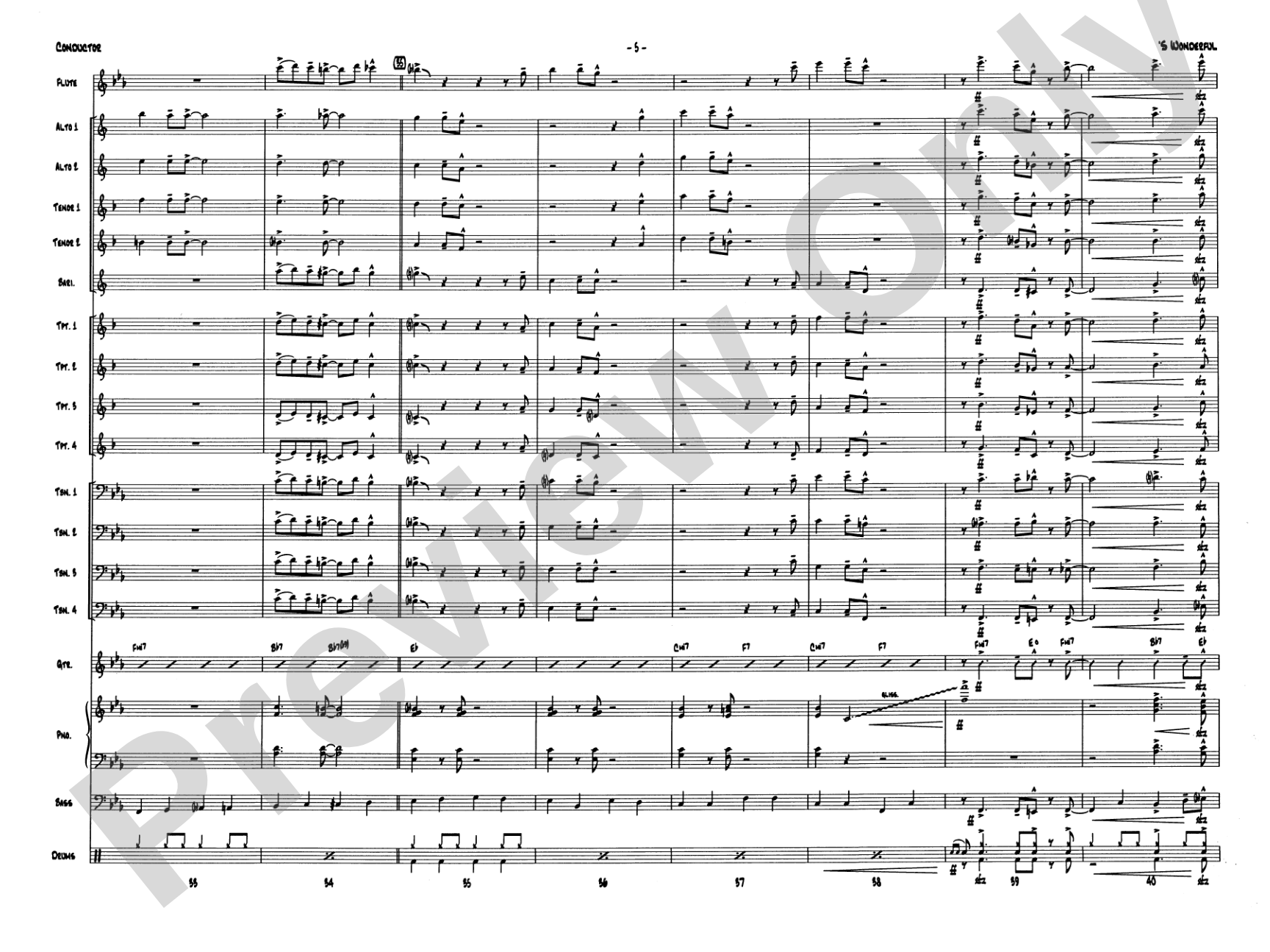
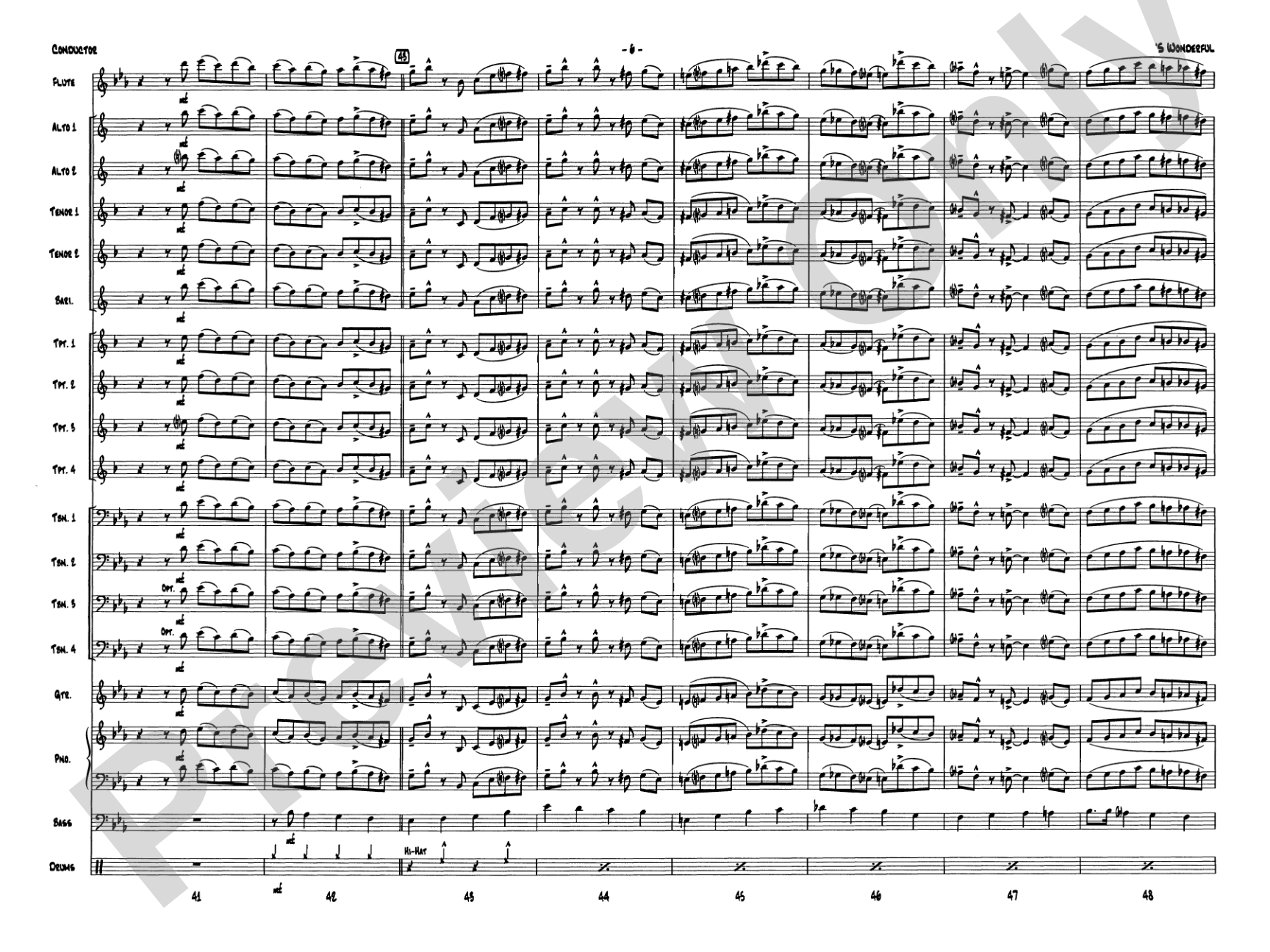
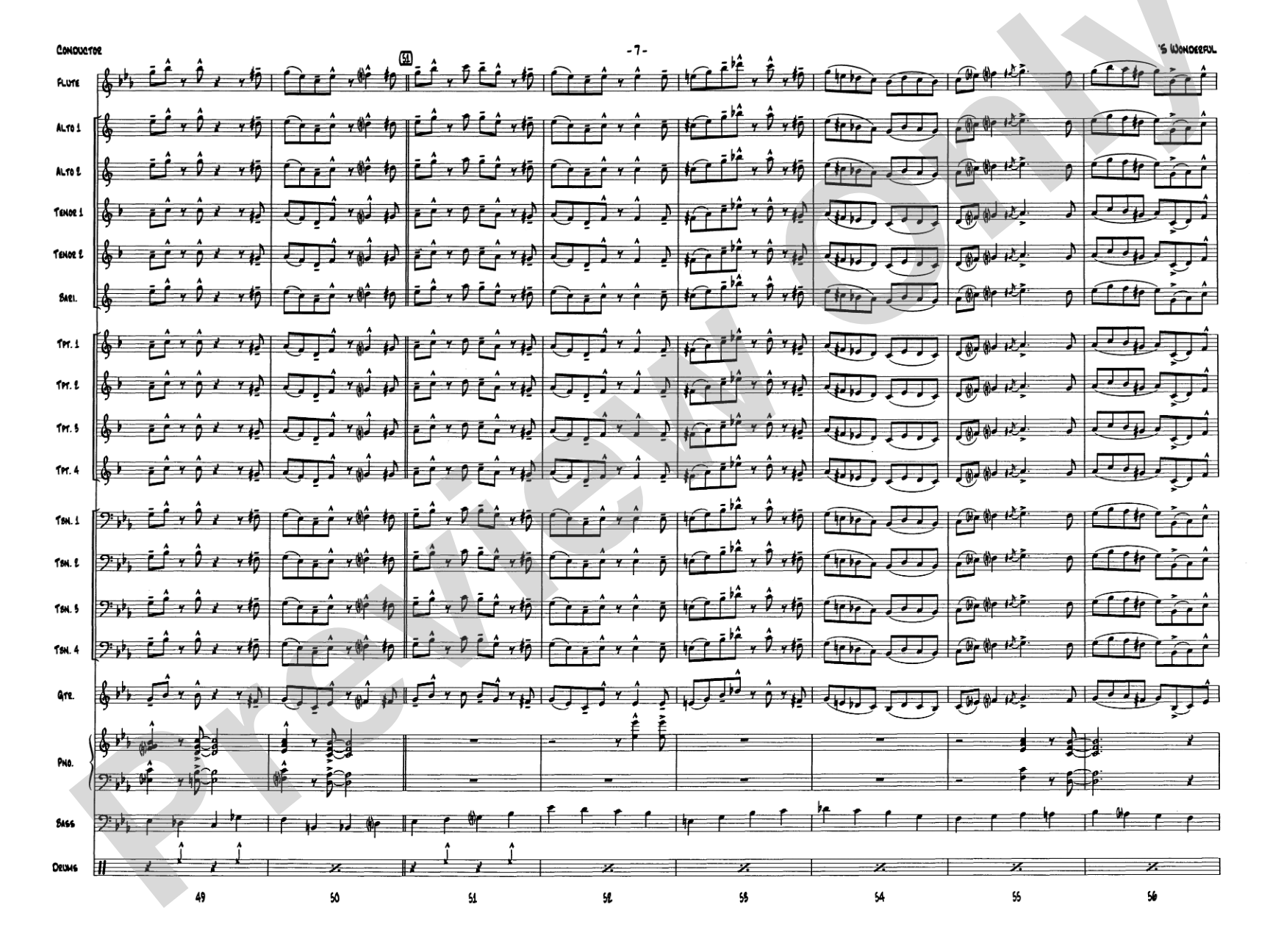
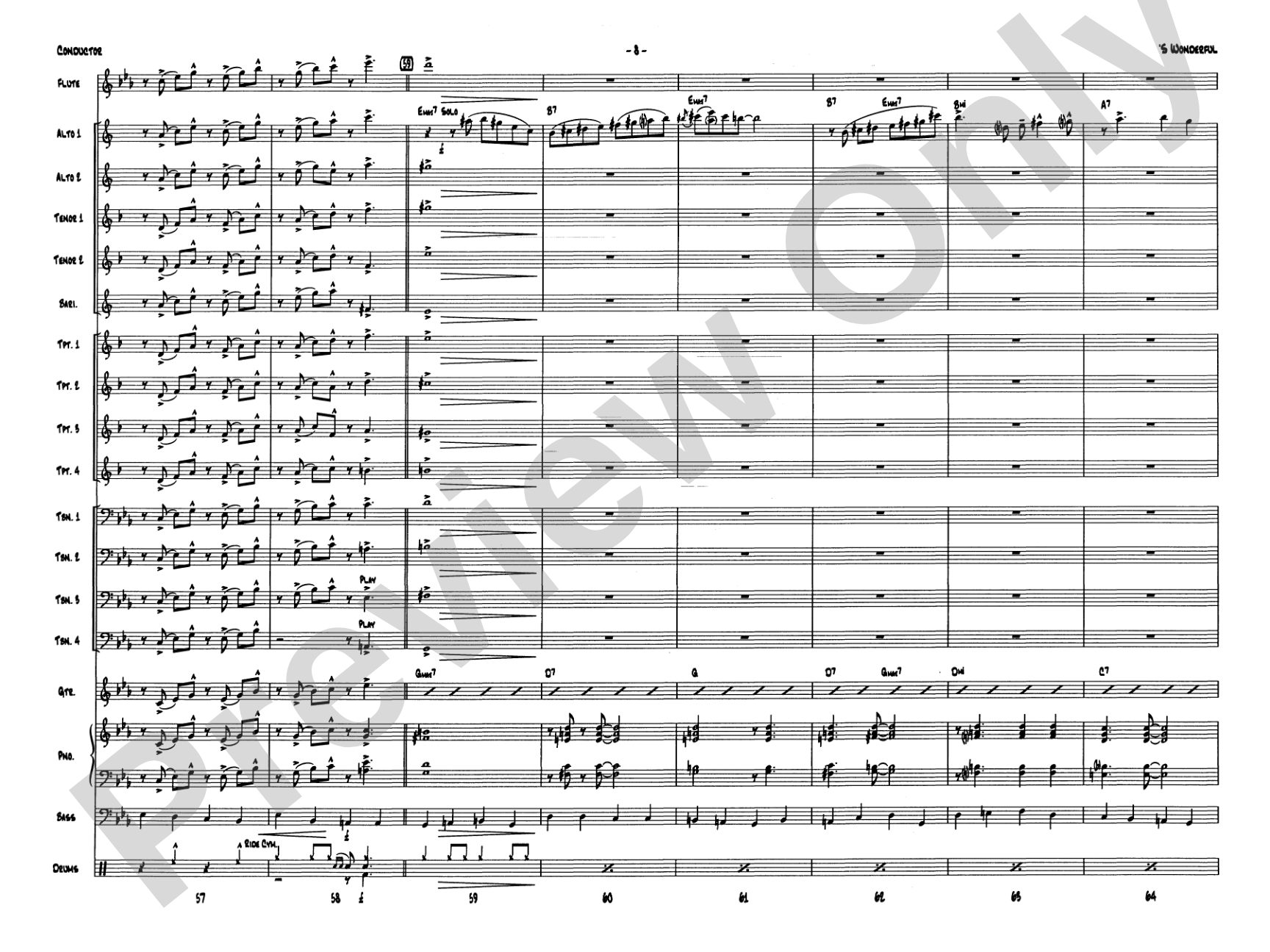
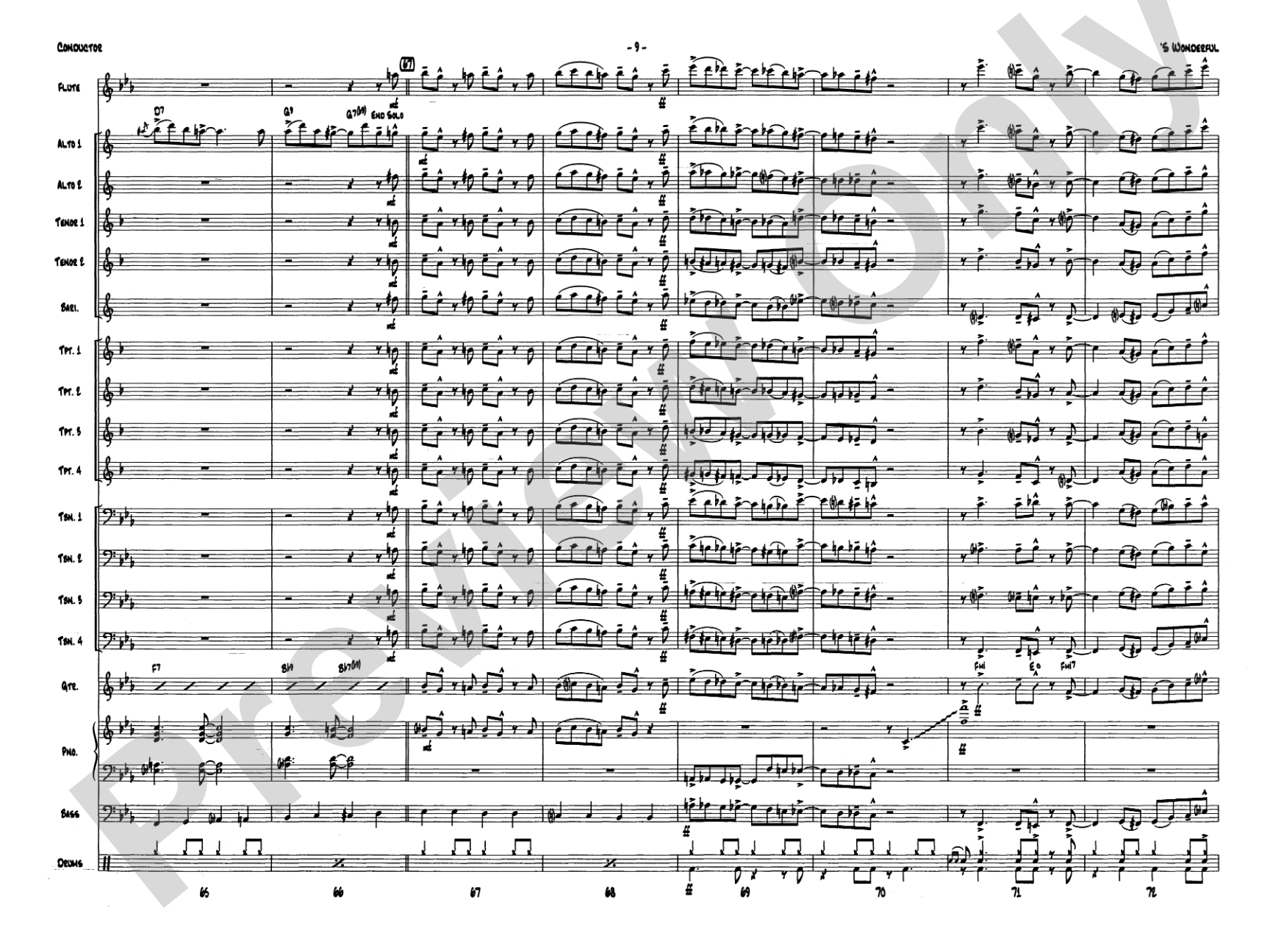
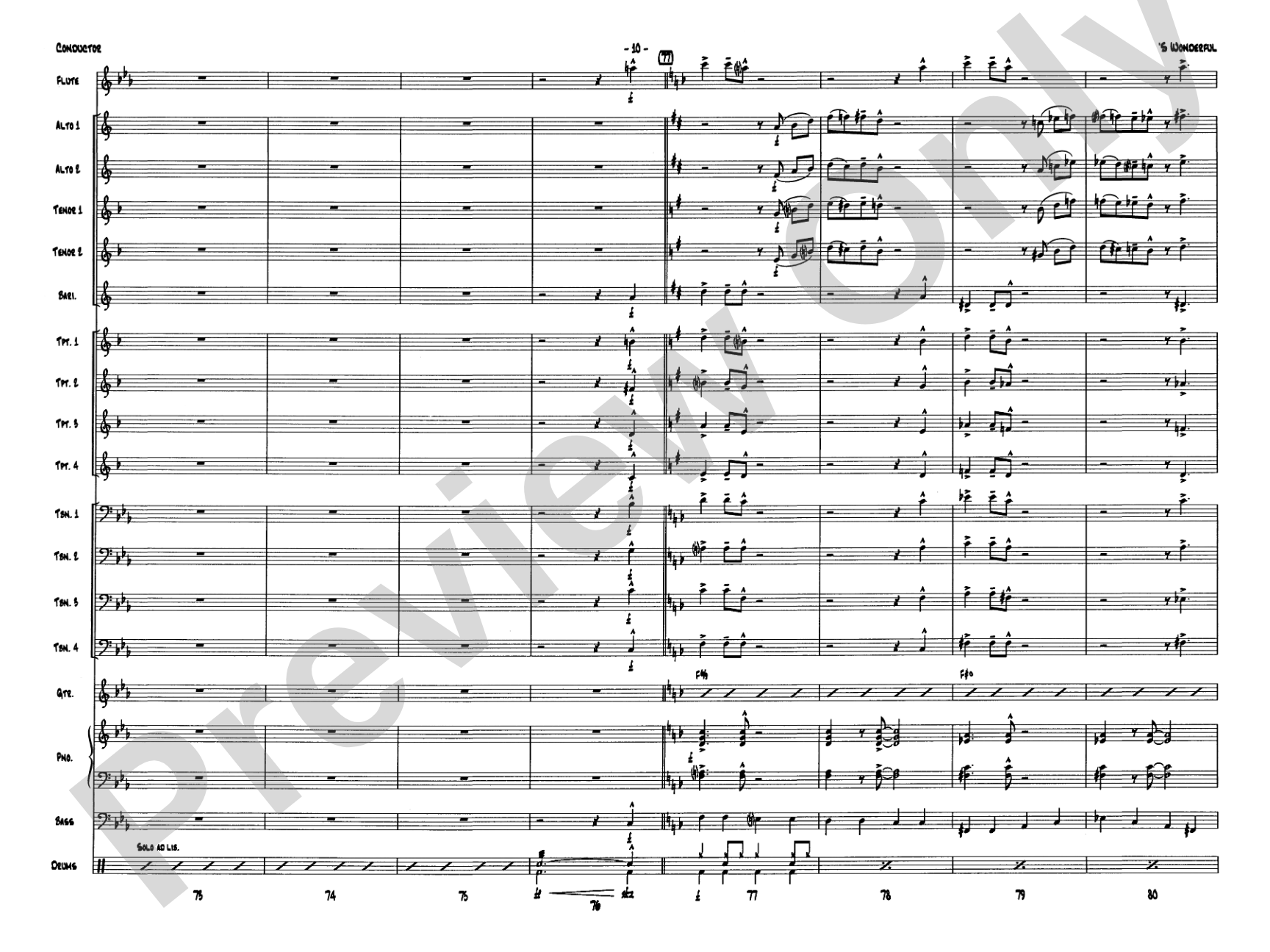
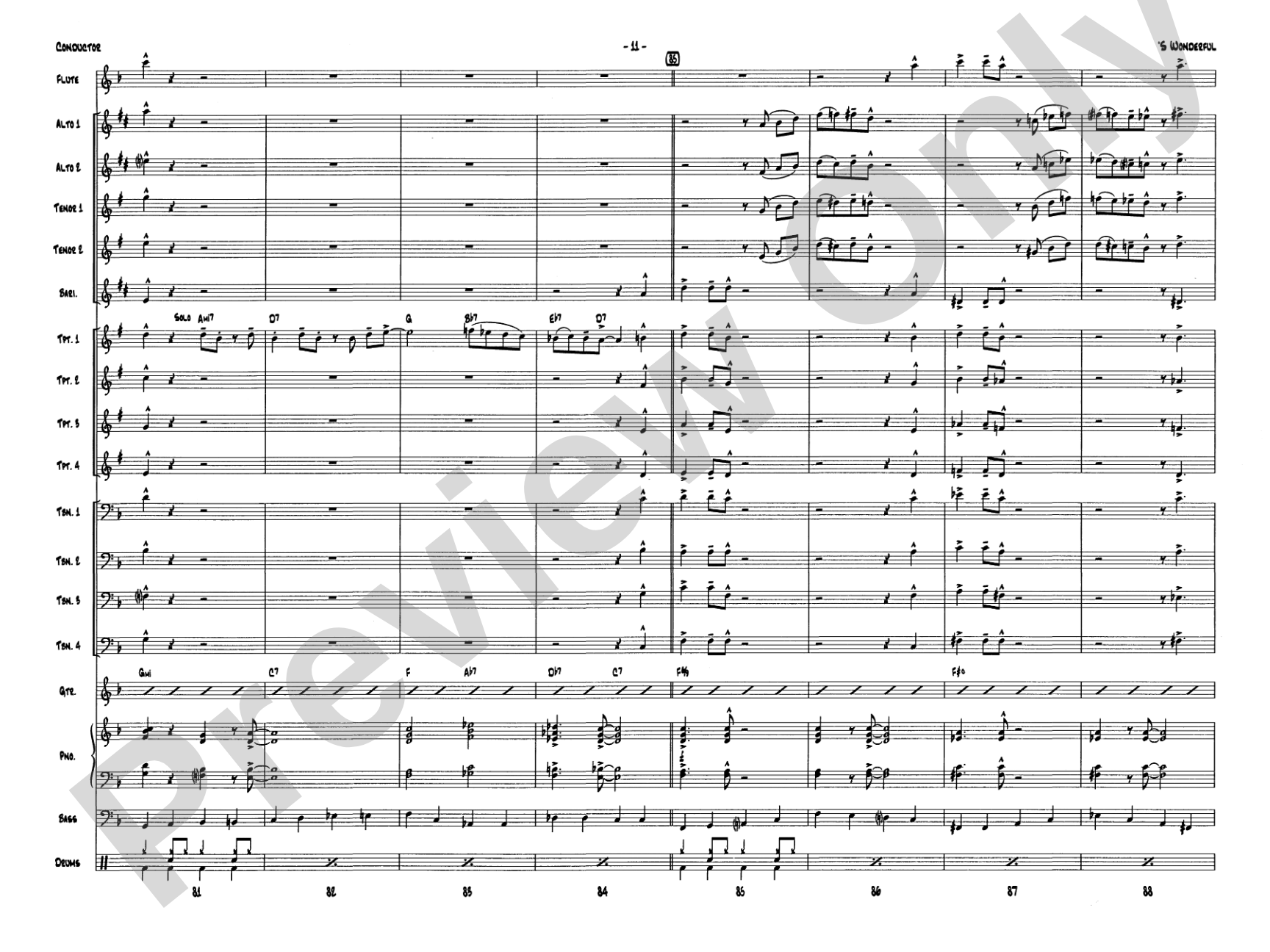
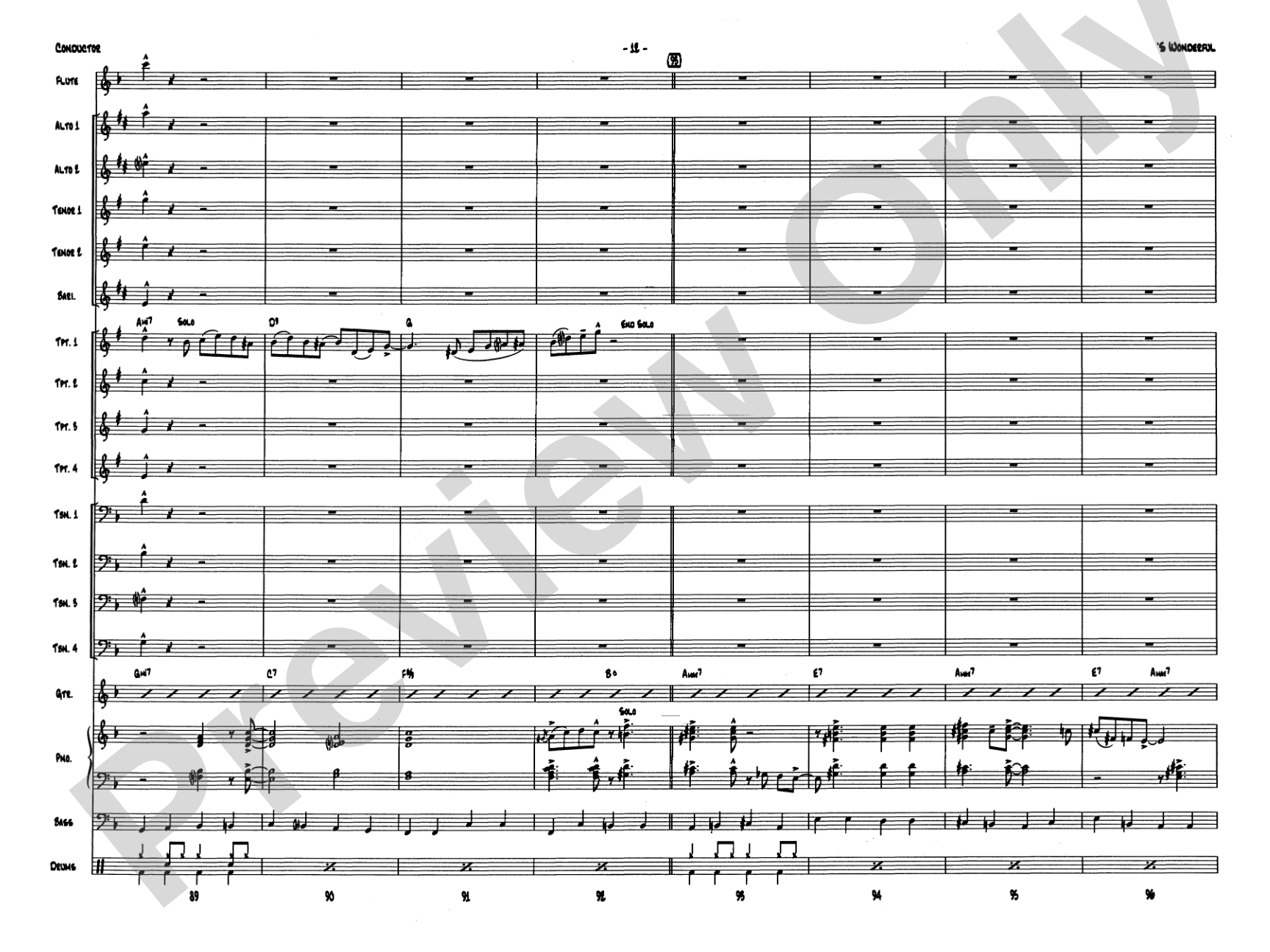
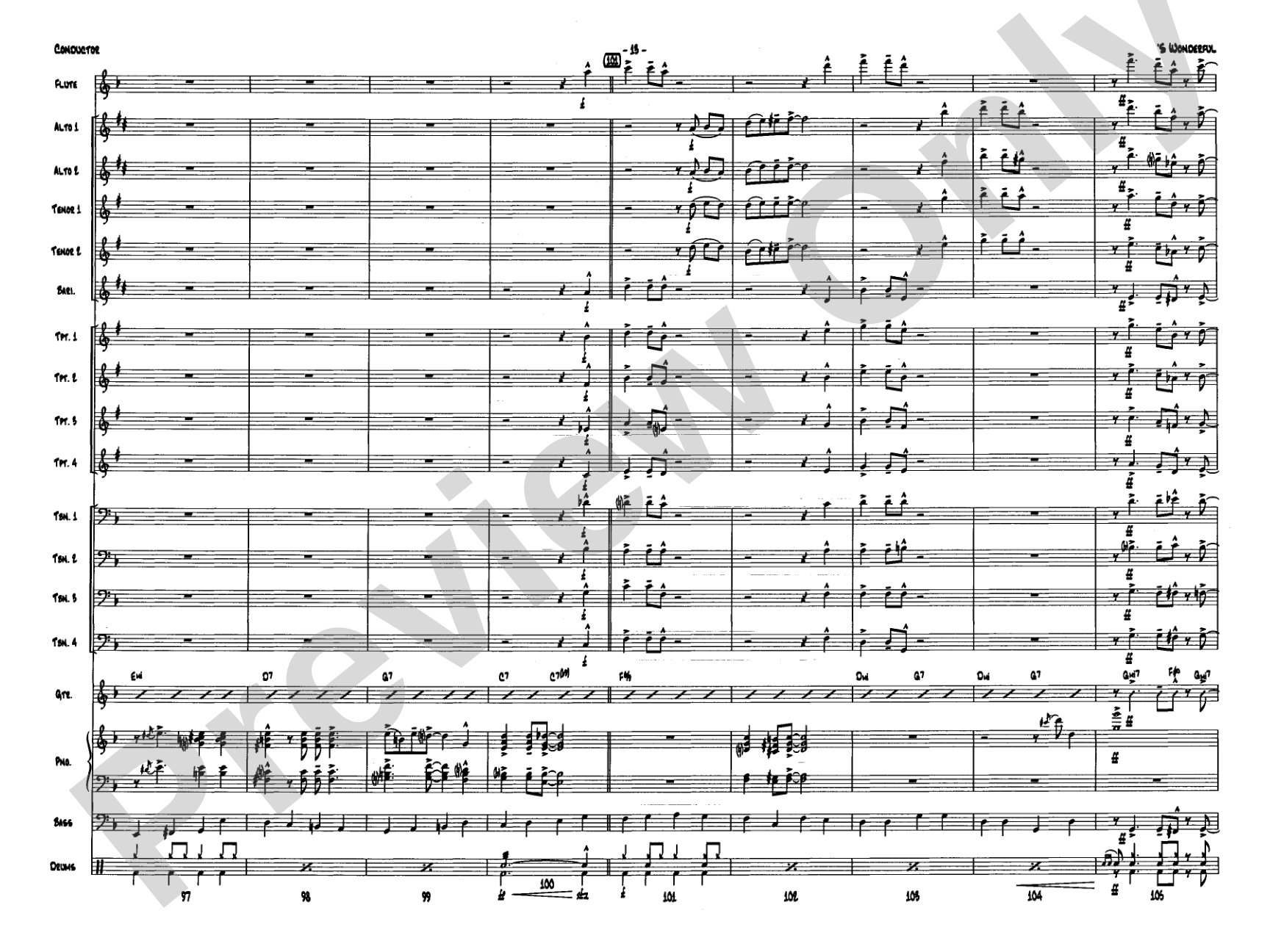
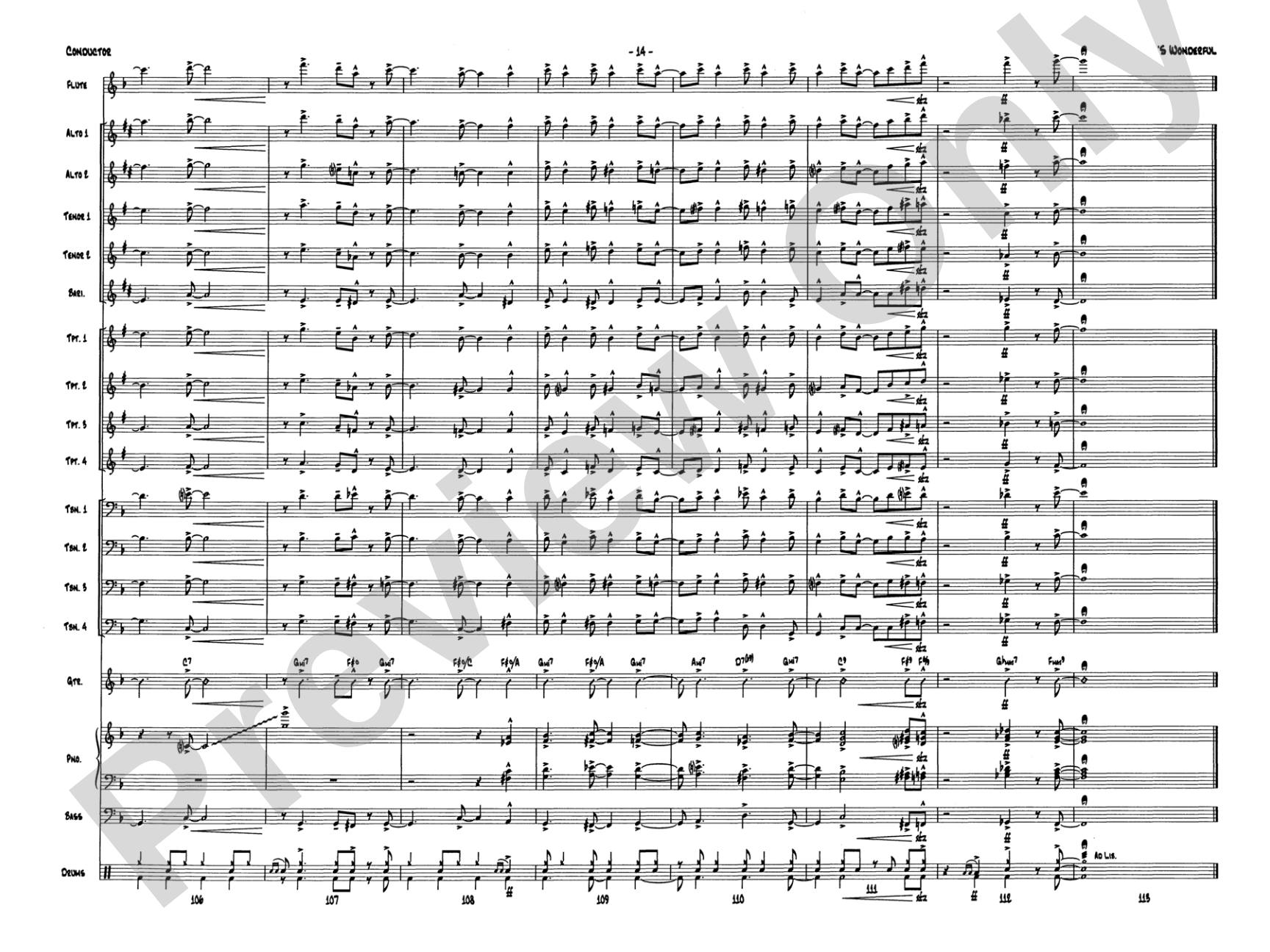

'S Wonderful: Jazz Ensemble Conductor Score & Parts
Music and lyrics by George Gershwin and Ira Gershwin / arr. Ralph Ford
Grade: 2 (Medium Easy)
Item: 00-PK-0002507

$48.00
One moment…
Description
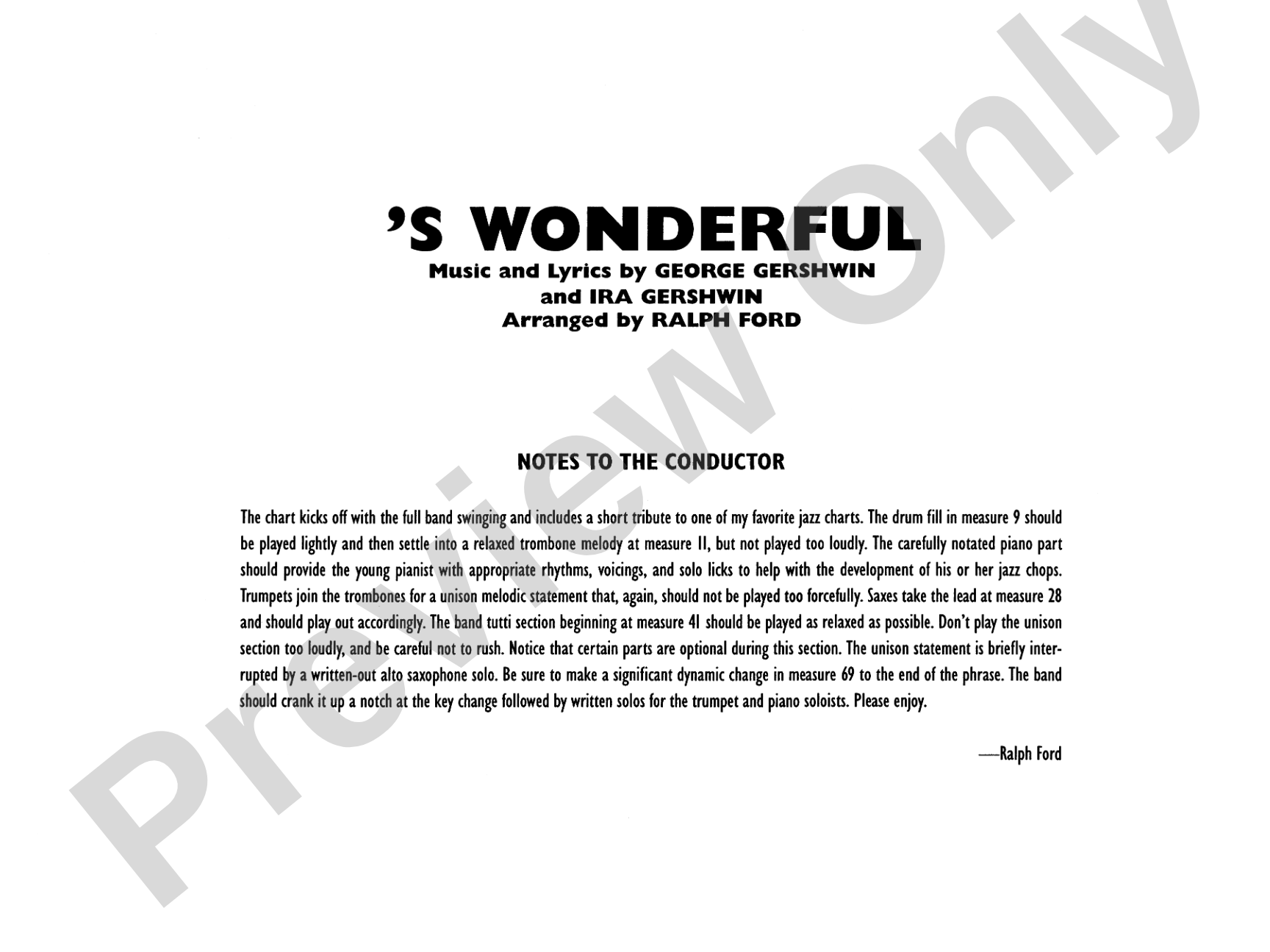
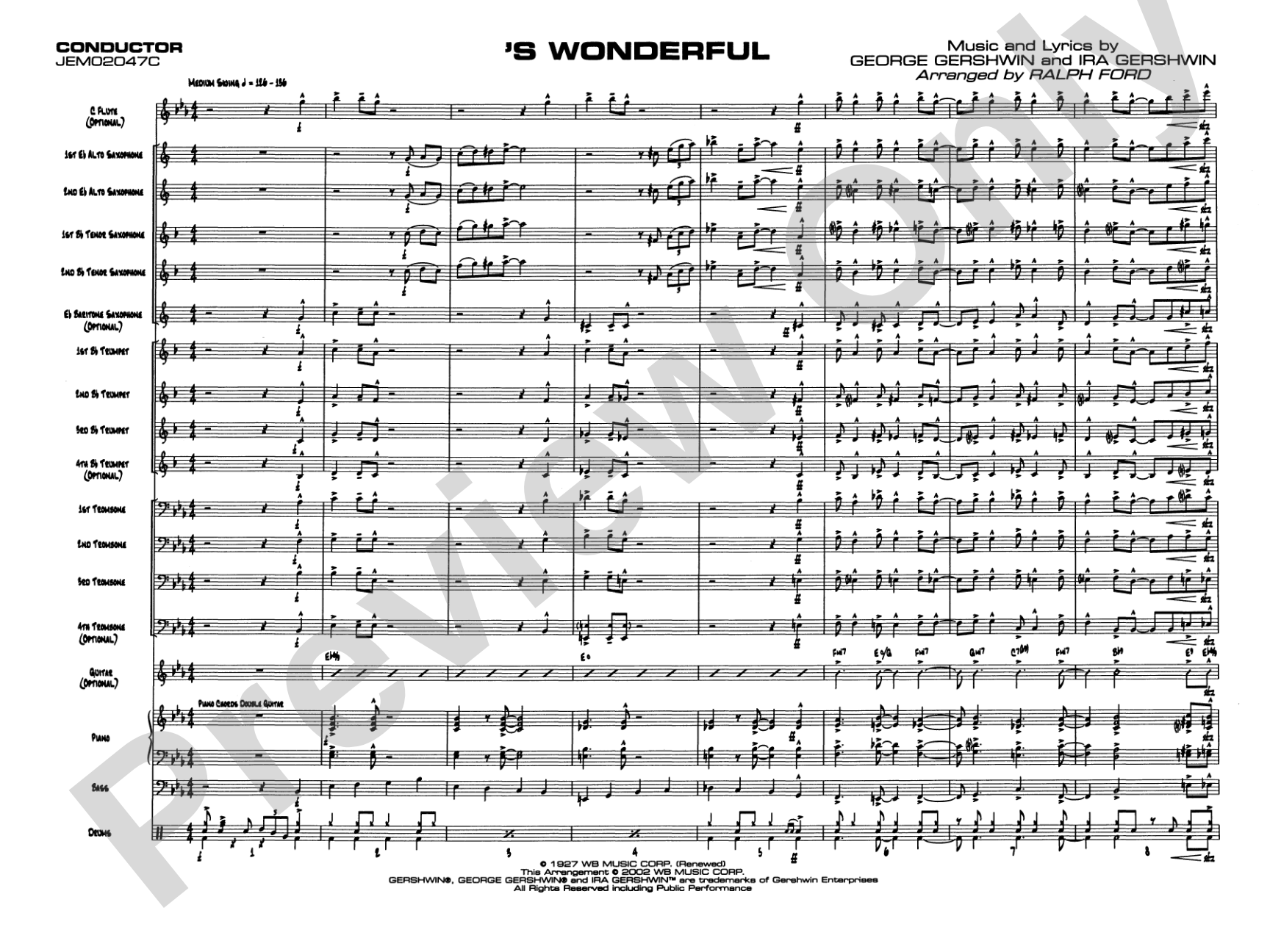
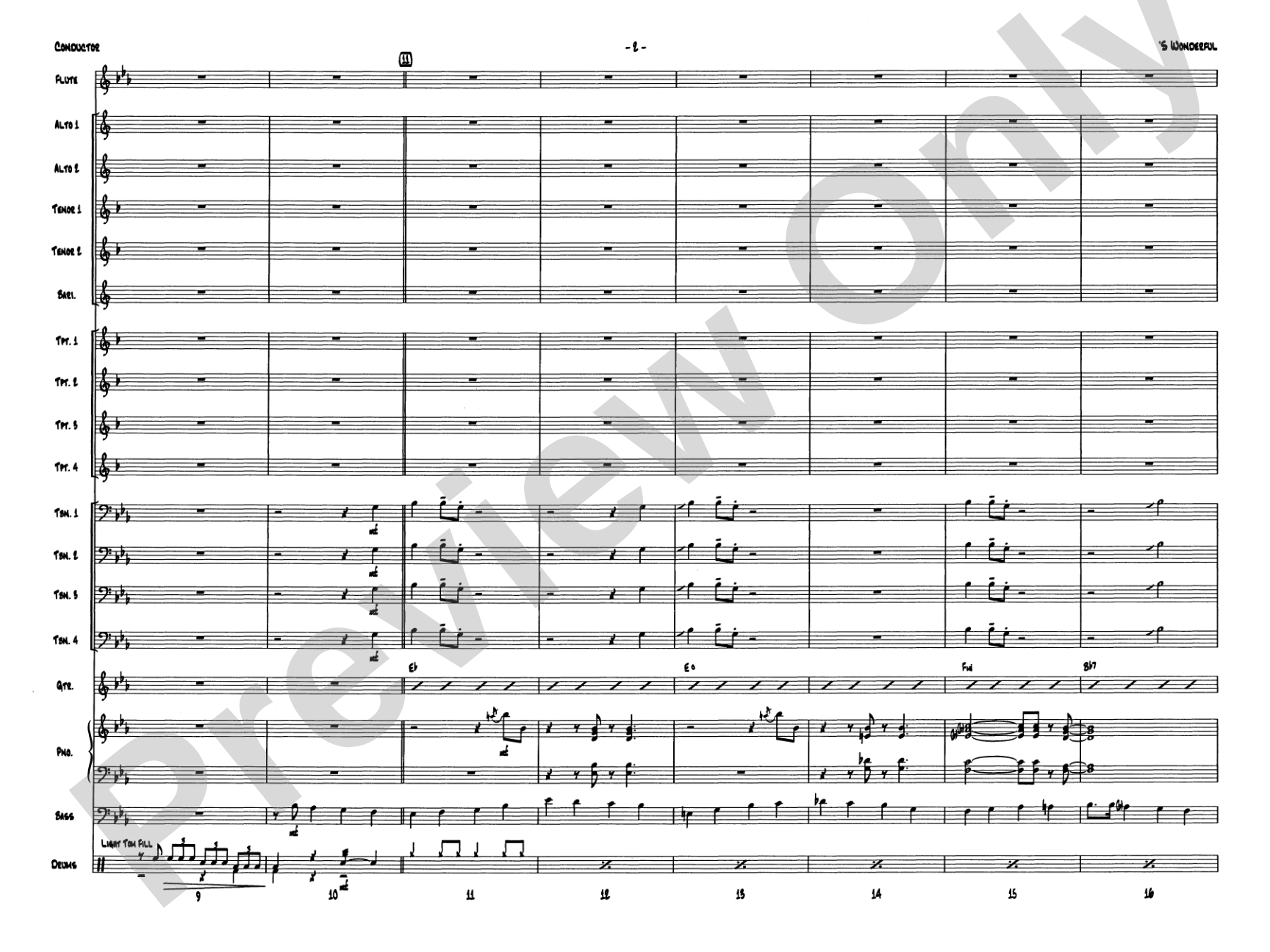
Start your band off swinging with this Gershwin standard arranged by Ralph Ford. The trombones start things off, add the brass section, then add a sax soli. Hold on, there's more; into a tutti for the ensemble followed by written or ad-lib alto sax, trumpet and piano solos. Can you identify the clever quote? The shout chorus brings it all home. Superb writing throughout. (3:26)


Don't just read it, hear it, play along with it, and watch your students grow with it. In MakeMusic Cloud, 'S Wonderful: Jazz Ensemble Conductor Score & Parts comes alive with professional accompaniment, adjustable tempo, and built-in practice tools that turn solo practice into real progress.
Open in the Player
Jump straight in and assign it today.
Start Your Free Trial
Open this title and explore the full library in minutes.
Sample Audio
1
Audio File
--:--
0:00
0:00
Sample Video
No sample videos found.
Additional Details
Series:
Young Jazz Ensemble
Publisher:
Alfred Music
Page Count:
90
SKU:
00-PK-0002507
More about this title
About the Composer: George Gershwin
George Gershwin (1898-1937) bridged classical and popular music in ways that still shape how we think about American composition. His rhythmic innovation, harmonic sophistication, and gift for melody made him essential to both concert halls and Broadway stages. For music educators, Gershwin's work demonstrates that serious compositional craft and genuine popular appeal are not opposites; his pieces reward deep study while remaining immediately engaging for students and audiences alike.
Why we love this
Ralph Ford's arrangement captures the swagger and melodic elegance of a Gershwin standard while remaining playable for developing ensembles. The section-by-section layering (trombones opening, brass entering, saxes joining) gives every player moments to shine and makes ensemble balance teachable. The built-in solo sections and that clever quoted phrase keep rehearsals full of discovery.
What to expect
Effervescent and playful, with the kind of melodic confidence that makes a room want to move. The layered texture builds from intimate (solo trombone) to collective (full ensemble shout), so it feels conversational at first then irresistible by the end.
Who it's for
Jazz ensembles at the Grade 2 level with basic section balance and simple improvisation experience. Players need comfortable swing feel and willingness to solo, but Ford's arrangement doesn't demand advanced harmonic reading or extreme range demands.
How to get the most out of it
- Let the opening trombone solo breathe with relaxed swing; this sets the groove before the brass enters, so precision matters less than phrasing and time feel.
- Balance the sax soli carefully against the shout chorus sections; the written harmonies are dense enough that clarity requires each section to listen outward.
- Shape the transition into tutti sections by gradually lifting dynamics through the solo passages rather than jumping suddenly to the ensemble statement.
- Encourage soloists to commit fully to their ad-lib passages; the chart gives space for individual voice, and confident playing from alto, trumpet, and piano energizes the ensemble around them.
How to use it
This works beautifully as an opener on a concert where you want to set an upbeat, swinging tone immediately. Pair it with other jazz standards or a contrasting classical piece to show range, or use it mid-program to refresh energy after a slower work. Its compact runtime (3:26) makes it ideal for youth jazz festivals or shorter concert sets.
Skills your students will build
- Swing feel and jazz articulation
- Listening for ensemble balance in layered textures
- Solo phrasing and basic improvisation over changes
- Following arrangement cues and section entries