
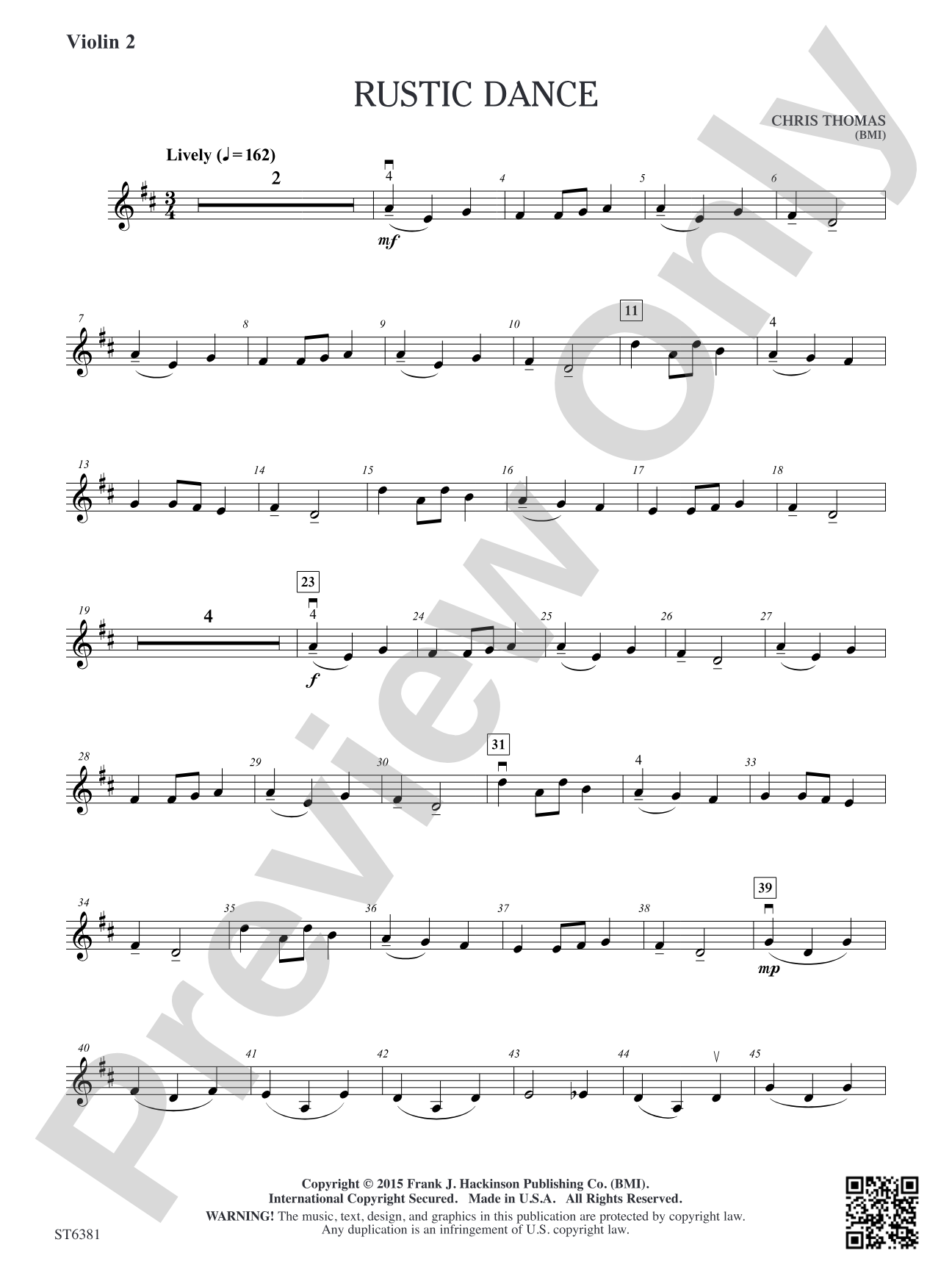

Rustic Dance: Violin 2
By Chris Thomas
Grade: 2.5
Item: 98-PC-DST6381_VN2
$7.00
Pickup currently not available
Description
Experience the lively spirit of this celebratory work that features an upbeat, infectious melody. Every section gets to shine when the melody is passed around the orchestra while students experience a range of articulations, easy double-stops, and energetic rhythms. Other features include hooked bowings, easy low 1 and 2 fingerings, and independent counterpoint. A lively addition to any concert program!


Rustic Dance: Violin 2 isn't in MakeMusic Cloud just yet...but it could be. Let us know you'd like to see it, and you'll help shape what comes next. In the meantime, start a free trial and dive into thousands of interactive titles your students can play along with today.
Request This Title
Tell us you want it.
Start Your Free Trial
Explore everything that's ready to play right now.
Sample Audio
1
Audio File
--:--
0:00
0:00
Sample Video
No sample videos found.
Additional Details
Series:
FJH Developing Strings
Publisher:
The FJH Music Company, Inc.
SKU:
98-PC-DST6381_VN2
More about this title
About the Composer: Chris Thomas

Chris Thomas brings the compositional craftsmanship of a screen composer into the concert hall. His work spans film, television, theme parks, and orchestral music; he has received the Hollywood Music in Media Award, twice placed second in the American Prize in Composition, and earned the Gold Medal at the Park City Film Music Festival. His concert works have been performed at Carnegie Hall, the Sydney Opera House, and the Hollywood Bowl, while his film scores have appeared in Emmy-nominated productions and in Academy Award-shortlisted features.
Beyond traditional concert venues, Thomas has composed for major studios including Sony, ABC, FOX, CBS, and HBO as well as theme parks across North America and Europe. His Symphony No. 1 (the Malheur Symphony) was the subject of his 2019 TED Talk, reflecting his commitment to creating music that resonates with both professional and student ensembles. Learn more at www.christhomasmusic.com.
Why we love this
Thomas writes string parts that feel alive at this level. The melody passes through all sections so every student gets a moment to own the tune, building confidence and investment. The articulation and bowing variety keeps the texture from sounding thin, and the independent counterpoint teaches real orchestral texture without overcomplicating the technical demands.
What to expect
Rustic Dance captures the infectious energy of a community celebration. Bright, infectious melodies dance across the orchestra with a rhythmic drive that keeps the ensemble engaged from start to finish. The character is straightforward and joyful, with enough rhythmic snap and textural variety to hold student interest without demanding virtuosity.
Who it's for
This score and parts set works for middle school and early high school string orchestras ready to explore articulation and texture at a manageable technical level. Directors seeking a concert piece that builds sectional pride and reinforces ensemble listening will find it especially rewarding.
How to get the most out of it
- Shape the phrasing as the melody moves between sections; treat each instrumental entrance as a new conversation rather than simply trading parts. Let the energy breathe slightly before each new section picks up the tune.
- Balance the double-stops in viola and cello against the melody so they add harmonic color without muddying the main line. These are accessible voicings that should sit naturally under the fingers.
- Lock the hooked bowings with your rhythm section; these articulations define the dance character, so crisps attacks and rhythmic precision across the sections will make the work sparkle.
- Use dynamic contrast to highlight the independent counterpoint passages. When inner voices are moving against the melody, a slight emphasis on the accompanying line helps students hear their role in the larger texture.
How to use it
Program this as an opening number or second piece on a concert where you want to establish ensemble spirit and audience connection early. Its approachable character and celebratory mood make it an ideal companion to more demanding repertoire later in the set, or pair it with other multicultural works to build a thematic concert segment.
Skills your students will build
- Passing melodic material between sections while maintaining consistent phrasing
- Double-stops with clean intonation and articulation control
- Hooked bowings and varied articulation patterns (detached and slurred)
- Reading and executing independent counterpoint in lower voices
- Rhythmic precision and ensemble coordination in energetic tempos