Russian Folk Dance: E-flat Baritone Saxophone Sheet Music Preview

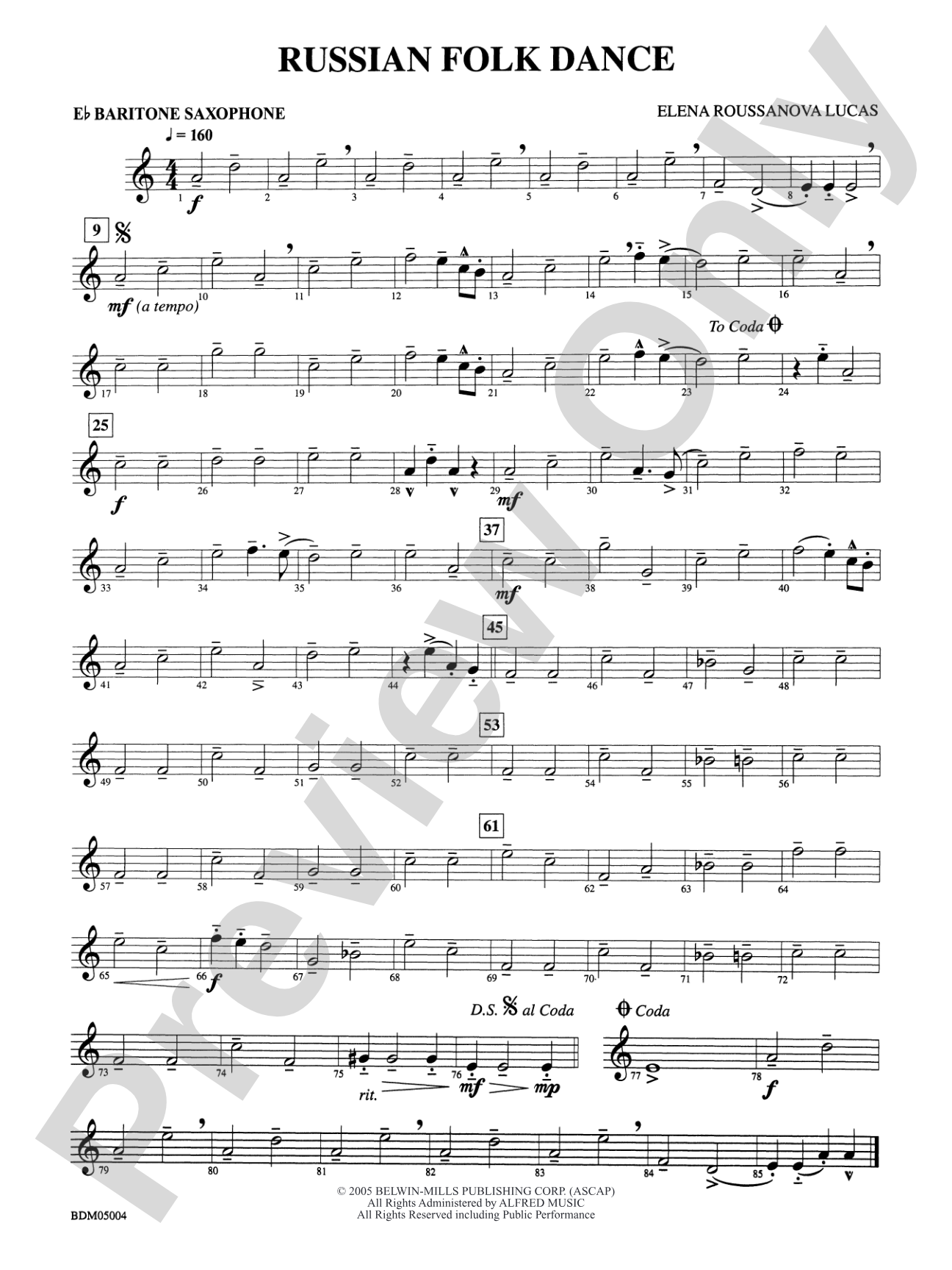
Russian Folk Dance: E-flat Baritone Saxophone

By Elena Roussanova Lucas

Grade: 1.5 (Very Easy to Easy)

Item: 00-PC-0017767_BTX

Digital Download
$3.00
Description
With traditional musical flavor, Russian Folk Dance will provide cross-cultural energy to any program. The middle section of the composition contains stylistically unique opportunities for everyone to have a chance at the melody through brief countermelodies. A most musical choice! (2:33)

Don't just read it, hear it, play along with it, and watch your students grow with it. In MakeMusic Cloud, Russian Folk Dance: E-flat Baritone Saxophone comes alive with professional accompaniment, adjustable tempo, and built-in practice tools that turn solo practice into real progress.

Sample Audio
0:00
0:00
Sample Video
Additional Details
Series: Belwin Beginning Band
Publisher: Alfred Music
Page Count: 212
SKU: 00-PC-0017767_BTX

More about this title

About the Composer: Elena Roussanova Lucas

Elena Roussanova Lucas

Elena Roussanova Lucas trained at Moscow's most prestigious institutions, beginning piano studies at age three and advancing through the Central Music School's child prodigy program. She completed advanced degrees at the Tchaikovsky Conservatoire, earning the Red Diploma in composition, music history, theory, and instrumentation while studying under renowned Russian composers Tihon Khrennikov and Tatiana Choodova.

As a composer and pianist, Lucas has maintained an active presence across three continents. Her works have been performed by major Russian orchestras including the Tchaikovsky State Orchestra of Moscow and the Radio and TV Orchestra of Moscow, as well as by international ensembles like the Dallas Brass and the Russian National Orchestra Brass Quintet. She is a member of the United Russian Composers Union and has taught composition at the Tchaikovsky Conservatoire. Today she teaches at Boston University.

Why we love this

Russian Folk Dance cuts through the typical Grade 1.5 repertoire by offering genuine compositional sophistication without technical overreach. The middle section's network of brief countermelodies gives every section player a moment of prominence, creating real musical engagement rather than passive accompaniment parts. This is the kind of piece that makes beginning band rehearsals feel like actual musicmaking.

What to expect

A snapshot of Russian folk tradition rendered in vivid color and clean orchestration. The opening presents the folk melody with straightforward charm, then the middle section weaves it through the band with interlocking countermelodies that feel both contemporary in their approach and authentically rooted in Russian musical style.

Who it's for

Beginning concert bands looking for repertoire with cultural substance and genuine ensemble opportunity. Grade 1.5 players find accessible technical demands alongside rewarding musical roles; every section gets a chance at the melody.

How to get the most out of it

  • Balance the traditional Russian melodic idiom across the ensemble so the folk character remains clear even when countermelodies enter in the middle section. Avoid letting thicker textures muddy the authentic flavor.
  • Let the brief melodic moments in each part breathe individually. Younger players often need permission to take ownership of their countermelodies without doubting they're "important enough."
  • Use the 2:33 recorded timing as a reference for momentum through the form. The piece needs to move forward without rushing; let the traditional character guide your tempo choices rather than the metronome alone.

How to use it

Program this alongside other multicultural selections to build a concert theme around world music traditions. Its festival-appropriate length (2:33) and Grade 1.5 accessibility make it ideal for early-season pops concerts or community performances where cross-cultural repertoire strengthens audience connection.

Skills your students will build

  • Reading and sustaining countermelodies within a larger harmonic texture
  • Balancing individual part identity with ensemble blend
  • Interpreting non-Anglo-American folk idioms through instrumental color
  • Maintaining ensemble cohesion through sectional melodic trading

You May Also Like