Russian Fantasy: Viola Sheet Music Preview

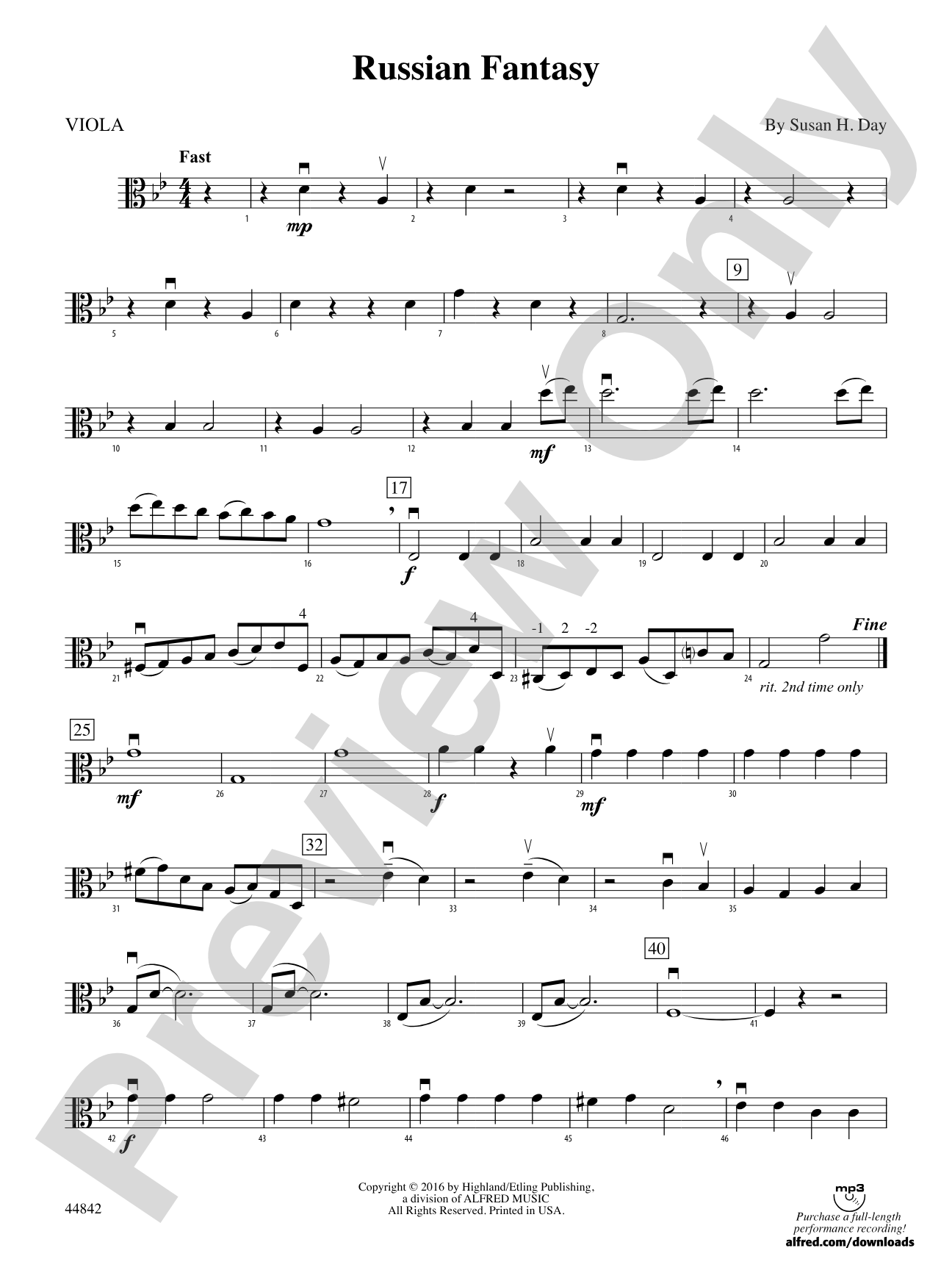
Russian Fantasy: Viola

By Susan H. Day

Grade: 3

Item: 00-PC-0017359_VA1

Digital Download
$5.99
Description
This lively piece by Susan Day, written in G minor and D minor, reinforces many skills, such as executing slurs at a fast tempo and playing flats and accidentals in tune, to achieve the characteristic flavor of Russian music. Interesting parts for all, with lovely melodies and captivating harmonies throughout, Russian Fantasy will be a welcome addition to any concert setting! (3:30)

Don't just read it, hear it, play along with it, and watch your students grow with it. In MakeMusic Cloud, Russian Fantasy: Viola comes alive with professional accompaniment, adjustable tempo, and built-in practice tools that turn solo practice into real progress.

Sample Audio
0:00
0:00
Sample Video
Additional Details
Series: Highland/Etling String Orchestra
Publisher: Alfred Music
Page Count: 124
SKU: 00-PC-0017359_VA1

More about this title

Why we love this

Susan Day writes with real understanding of what young orchestras can do musically at this level. Russian Fantasy delivers character and engagement without sacrificing intonation work or technical growth, making it a piece that serves both the concert program and the ensemble's development.

What to expect

Russian Fantasy captures the soul of Russian music through melodies that soar and harmonies that shimmer. The fast tempos and characteristic rhythmic figures create momentum and excitement, while the modal color of the keys gives the piece an authenticity that keeps it from sounding generic.

Who it's for

String orchestras at the Grade 3 level who want a concert piece with real personality and cultural substance. This works equally well for groups seeking something engaging for festival play or for students ready to tackle intonation challenges that demand precision.

How to get the most out of it

  • Shape the slurs at tempo by thinking through the phrase direction rather than mechanically lifting at the end of each slur. Young players often rush these moments.
  • Mark all accidentals in the parts before the first rehearsal and call them out by measure number. The flats require constant listening, especially in the D minor sections.
  • Balance the melody between first and second violins when they trade lines. Many directors miss this detail, but it transforms the piece from serviceable to polished.
  • Record a rehearsal to check intonation in the harmonic passages. Ears improve fastest when players hear exactly where they sit in the chord.

How to use it

Program this piece in the first half of a concert where it can anchor a multicultural or world music set. At 3 minutes 30 seconds, it gives younger ensembles a substantial solo vehicle while building audience connection through recognizable Russian character.

Skills your students will build

  • Executing slurs at fast tempos with consistent bow control
  • Reading and playing flats and accidentals in tune, particularly in modal contexts
  • Recognizing and performing characteristic Russian melodic and harmonic idioms
  • Balancing melody and accompaniment across divisi parts
  • Listening for intonation within complex harmonic progressions

You May Also Like