Russian Easter Overture: Double Bass Sheet Music Preview

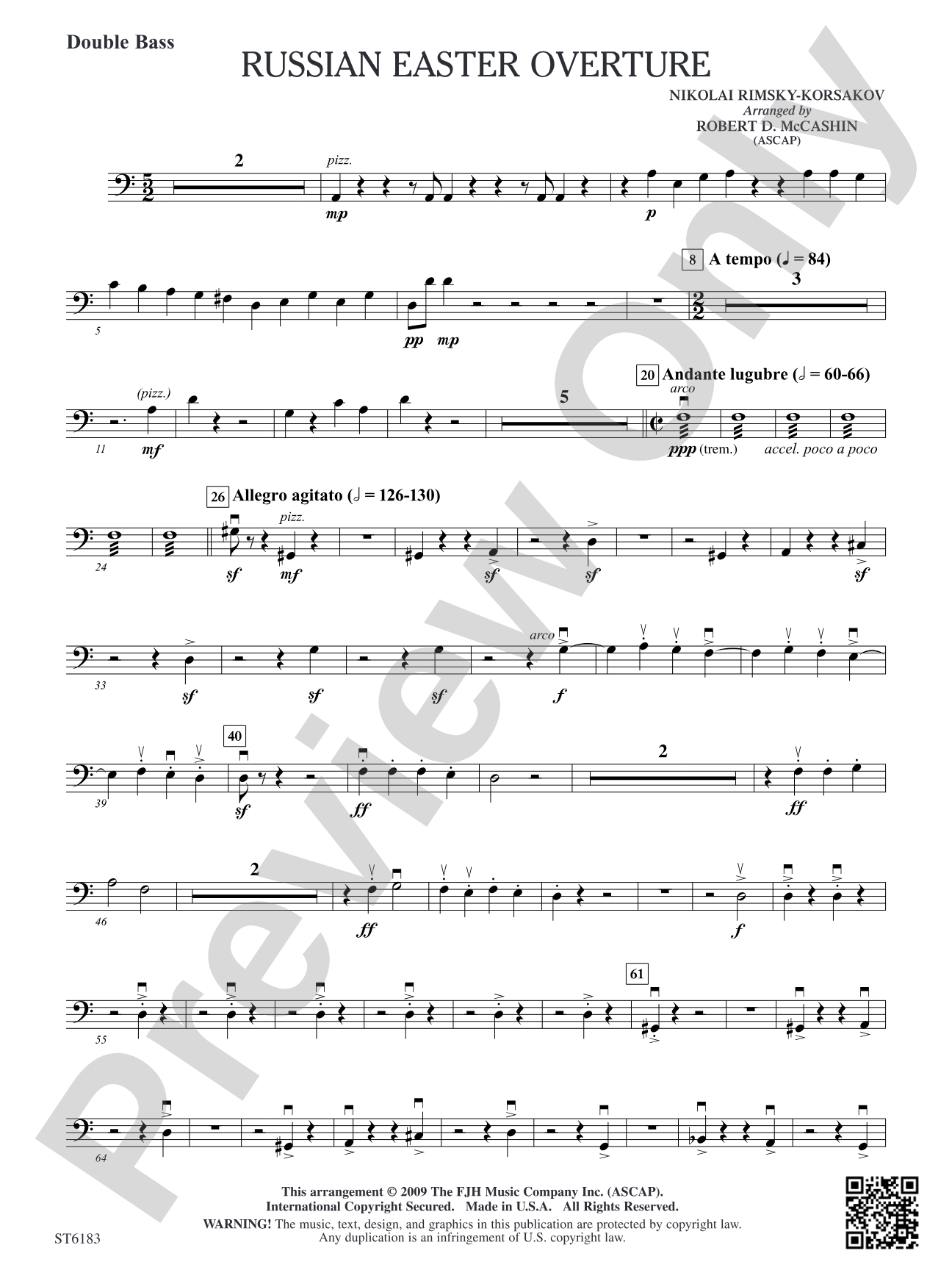
Russian Easter Overture: Double Bass

By Nikolai Rimsky-Korsakov / arr. Robert D. McCashin

Grade: 5

Item: 98-PC-DST6183_SB

Digital Download
$7.00
Description
This dynamic arrangement fully captures the mood and spirit embodied in Rimsky-Korsakov's original opus. Shortened to be more accessible, the piece includes solos for violin and viola before moving into the Allegro section. Expanded orchestration makes this ideal for large ensembles and festivals. A symphonic masterwork!

Russian Easter Overture: Double Bass isn't in MakeMusic Cloud just yet...but it could be. Let us know you'd like to see it, and you'll help shape what comes next. In the meantime, start a free trial and dive into thousands of interactive titles your students can play along with today.

Sample Audio
0:00
0:00
Sample Video
Additional Details
Series: FJH String Orchestra
Publisher: The FJH Music Company, Inc.
SKU: 98-PC-DST6183_SB

More about this title

About the Composer: Nikolai Rimsky-Korsakov

Nikolai Rimsky-Korsakov (1844-1908) was a Russian composer and orchestrator whose mastery of instrumental color shaped the sound of late 19th-century music. His gift for vivid orchestration and nationalist themes made him essential to Russian musical identity, and his influence extended far beyond his own works into the teaching studio and concert hall.

Beyond his legacy as a composer, Rimsky-Korsakov was a devoted pedagogue who taught at the St. Petersburg Conservatory and mentored the next generation of Russian musicians. His commitment to craft and his technical innovations in harmony and orchestration remain touchstones for music educators who value both artistry and structural clarity.

Why we love this

McCashin's arrangement strips away the orchestral bloat and focuses on the piece's emotional core: those gorgeous violin and viola solos that give student players genuine musical moments to shine. The shortened length and expanded string writing make this work for young orchestras without sacrificing the grandeur that makes the Russian Easter Overture so compelling in the first place.

What to expect

The opening breathes with Russian Orthodox solemnity and introspection; those violin and viola solos carry an almost hymn-like quality. The Allegro section erupts with festive energy and folk-tinged orchestral color, creating a piece that moves from contemplation to celebration with genuine dramatic weight.

Who it's for

String orchestras at the Grade 5 level seeking substantial repertoire with solo opportunities and symphonic scope. The arrangement works equally well for festival appearances and concert programming where you need a work that sounds mature and ambitious without requiring a century of rehearsal time.

How to get the most out of it

  • Shape the opening violin and viola solos with long lines and warm tone quality; these passages set the character for everything that follows, so encourage singers' phrasing even from string players.
  • Balance the Allegro's rising excitement against ensemble clarity; the expanded orchestration can quickly muddy if sections aren't precise about attacks and releases.
  • Use the conductor's score to map dynamic peaks and rhythmic landmarks before rehearsal; Grade 5 players benefit from a clear visual roadmap of the structural journey.
  • Bring out the narrative quality of the transitions between the lyrical introduction and the energetic conclusion; this piece tells a story, and the orchestra should feel themselves moving through it.

How to use it

This works as a centerpiece on a spring or end-of-year concert where you want to showcase both the lyricism and technical growth of your ensemble. Pair it with lighter contemporary works to highlight the cultural depth Rimsky-Korsakov brings, or program it alongside other nationalist repertoire to build a thematic concert.

Skills your students will build

  • Playing sustained melodic lines with expressive control and consistent vibrato
  • Balancing solo passages against ensemble accompaniment
  • Navigating dramatic dynamic shifts and tempo transitions
  • Understanding Russian nationalist musical language and orchestral color
  • Executing rhythmic precision in a complex, layered ensemble texture

You May Also Like