
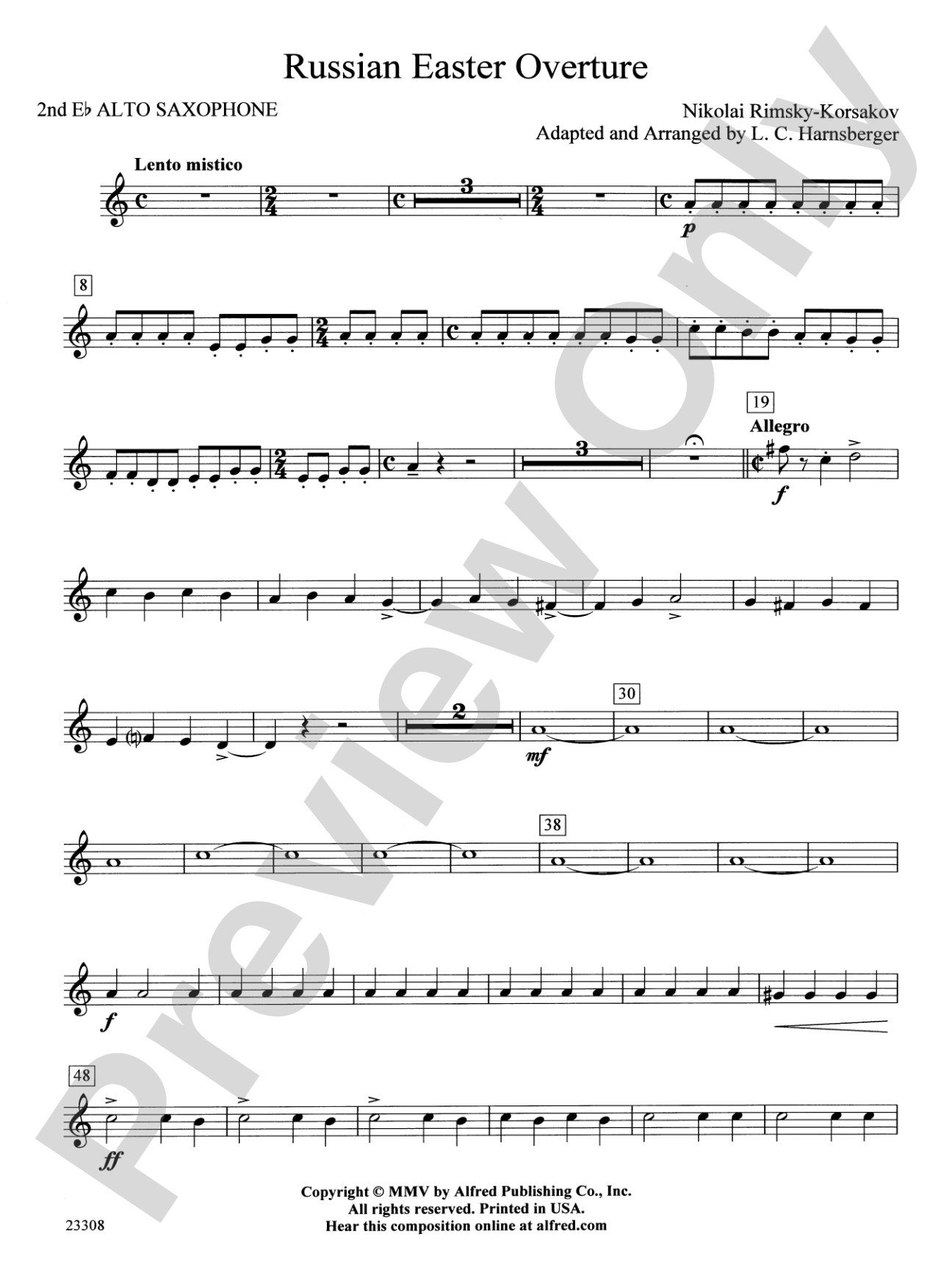

Russian Easter Overture: 2nd E-flat Alto Saxophone
By Nicolai Rimsky-Korsakov / arr. L. C. Harnsberger
Item: 00-PC-0000658_AX2
$5.99
Pickup currently not available
Description
A mysterious introduction begins this exciting concert favorite expertly adapted for young band. After a short solo clarinet passage, the music takes off in cut time. Exciting brass chords and woodwind runs give way to a tender contrasting section. Brass fanfares bring the rousing conclusion that features a chorale and a blazing finish. This adaptation is a real audience pleaser and will work well as an opener or closer.


Don't just read it, hear it, play along with it, and watch your students grow with it. In MakeMusic Cloud, Russian Easter Overture: 2nd E-flat Alto Saxophone comes alive with professional accompaniment, adjustable tempo, and built-in practice tools that turn solo practice into real progress.
Open in the Player
Jump straight in and assign it today.
Start Your Free Trial
Open this title and explore the full library in minutes.
Sample Audio
1
Audio File
--:--
0:00
0:00
Sample Video
No sample videos found.
Additional Details
Series:
Young Symphonic
Publisher:
Alfred Music
Page Count:
268
SKU:
00-PC-0000658_AX2
More about this title
About the Composer: Nicolai Rimsky-Korsakov
Nicolai Rimsky-Korsakov (1844–1908) was a Russian composer and orchestrator whose gift for brilliant instrumental color shaped the sound of late Romantic music. Originally trained as a naval officer, he became one of the most prolific composers of his era, writing operas, symphonies, and orchestral works that showcased his mastery of harmony and orchestration. His influence extended far beyond concert halls; his teaching at the St. Petersburg Conservatory produced generations of Russian composers, and his principles of orchestration remain essential study for conductors and arrangers today.
The Russian Easter Overture stands as one of Rimsky-Korsakov's most enduring works, blending Russian Orthodox liturgical themes with the structural confidence of a fully realized concert piece. Its combination of mystery, drama, and jubilation makes it a natural bridge between the concert hall and the educational setting, especially in adaptations that preserve the composer's essential orchestral character while remaining accessible to young ensembles.
Why we love this
Harnsberger's arrangement captures the piece's orchestral sweep and emotional arc without losing the essential drama that makes the original so gripping. Your young musicians will experience a genuine masterwork with transparent orchestration that rewards both section players and soloists. The pacing from mysterious opening through energetic cut-time section to brass-driven climax gives conductors real interpretive choices and audiences a concert-closing moment they'll remember.
What to expect
Mystery unfolds in whispered darkness before a clarinet's voice cuts through, drawing you forward into propulsive rhythmic excitement. The music swells with brass fanfares and flickering woodwind passages, then pulls back into a moment of genuine tenderness, only to ignite again in a jubilant finish that feels both earned and exhilarating.
Who it's for
This arrangement serves intermediate to early advanced concert bands seeking a piece that delivers sophisticated musical experience without excessive technical demands. It's ideal for ensembles with competent woodwind and brass sections and a conductor who wants to teach phrasing, balance, and structural listening.
How to get the most out of it
- Shape the clarinet solo with care; it's the hinge between mystery and momentum, so allow it breathing room before the cut-time section begins.
- Balance the woodwind runs against brass chords during the fast section by thinking about clarity over volume. These lines need to sparkle without drowning out harmonic support.
- Conduct the tender contrasting section with a broader gesture to let the tempo and character shift truly register with both players and listeners.
- Secure the chorale in the closing section with a unified approach to articulation and intonation; it's the emotional payoff after all the excitement.
How to use it
Program this as a concert opener to establish sophistication and energy, or hold it for the final spot to leave audiences on an emotional high. It pairs well with contrasting contemporary works and shorter novelty pieces, and its spring and Easter connections make it a natural choice for seasonal programming.
Skills your students will build
- Balance between soloists and ensemble support
- Conducting and executing tempo changes (cut time transition)
- Phrasing and character shifts (mysterious to energetic to tender to rousing)
- Sectional blend and tuning during sustained harmonies
- Reading concert band instrumentation and part independence
- Dynamic control across a broad emotional range