
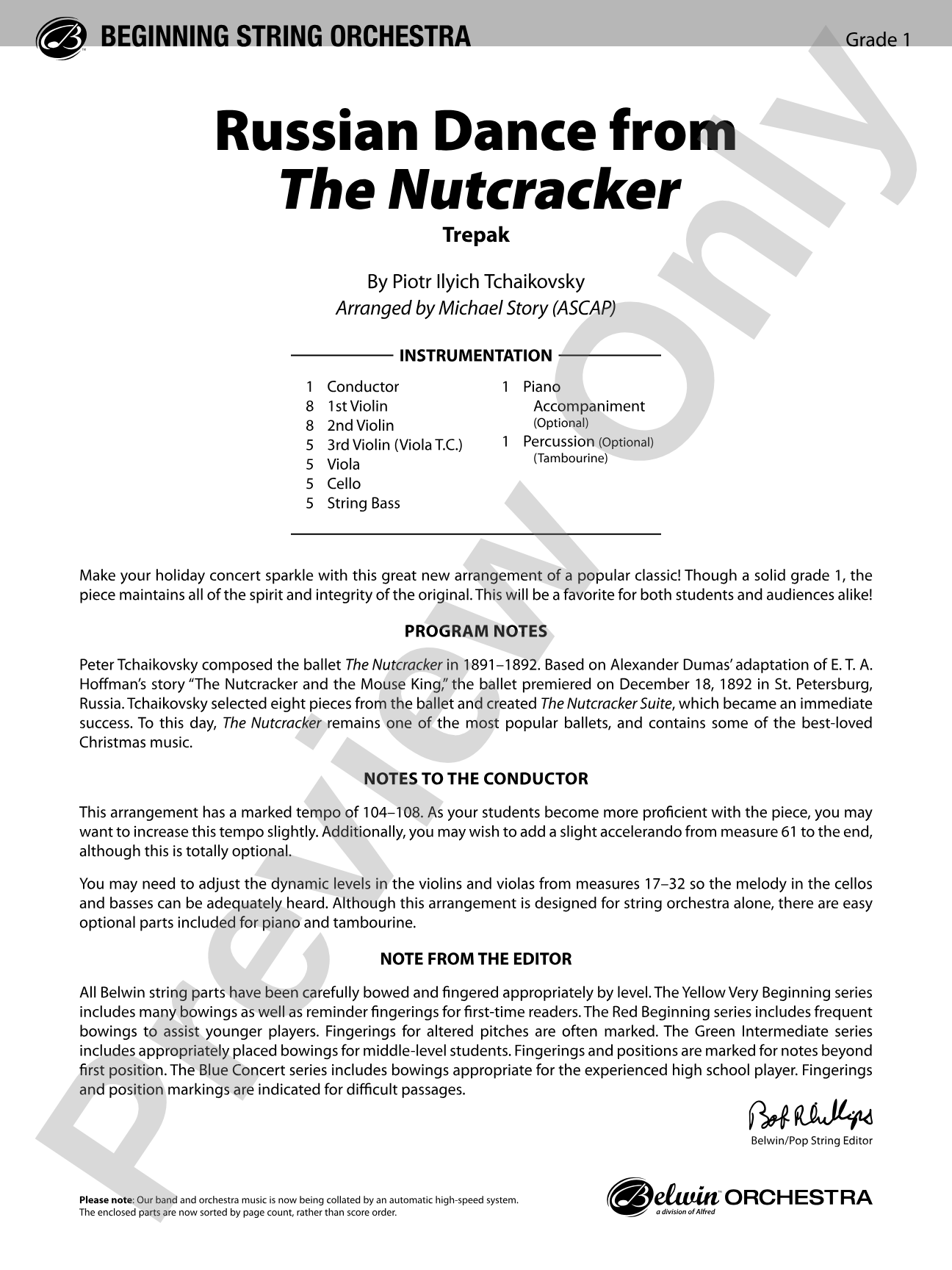
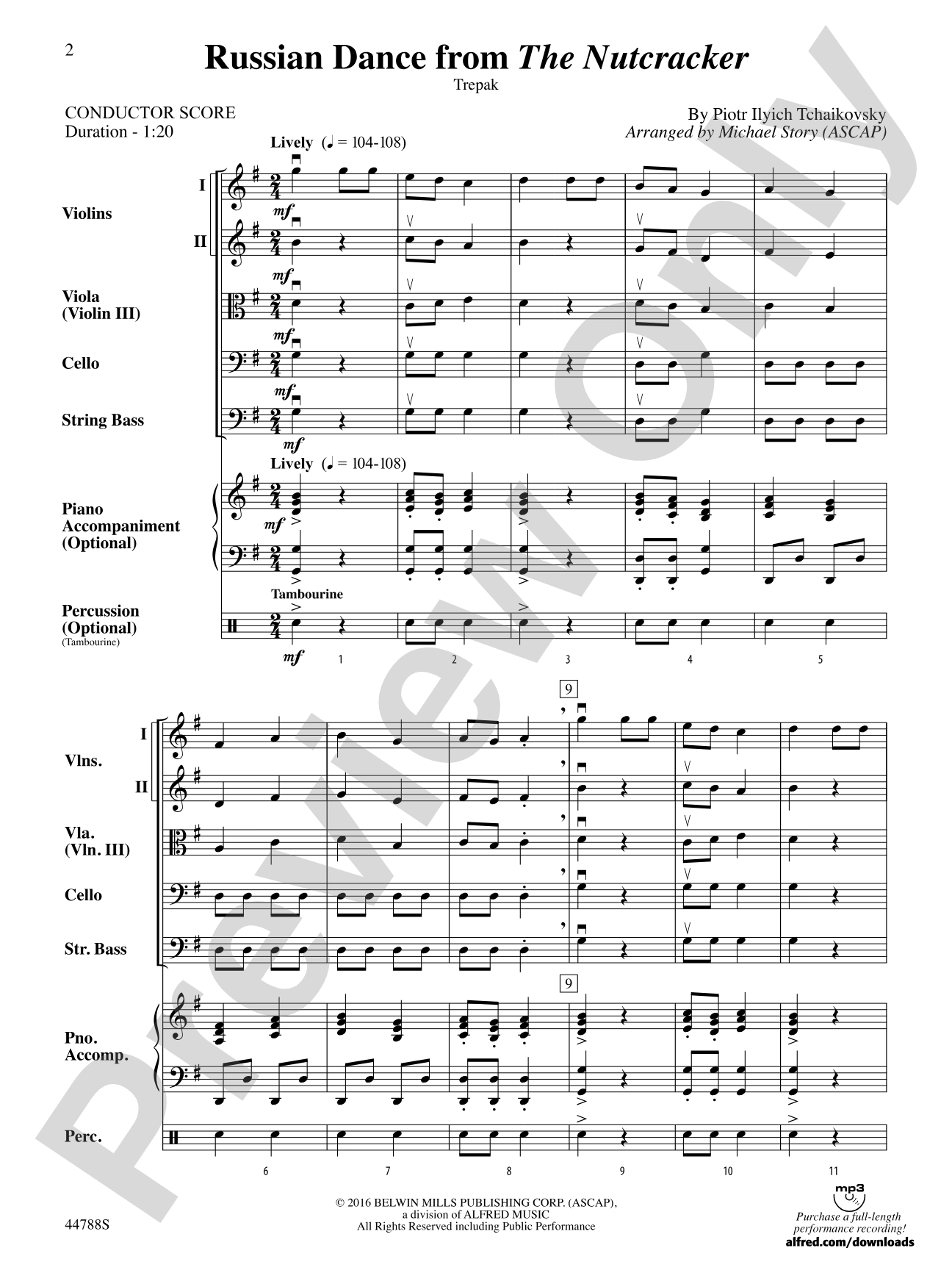
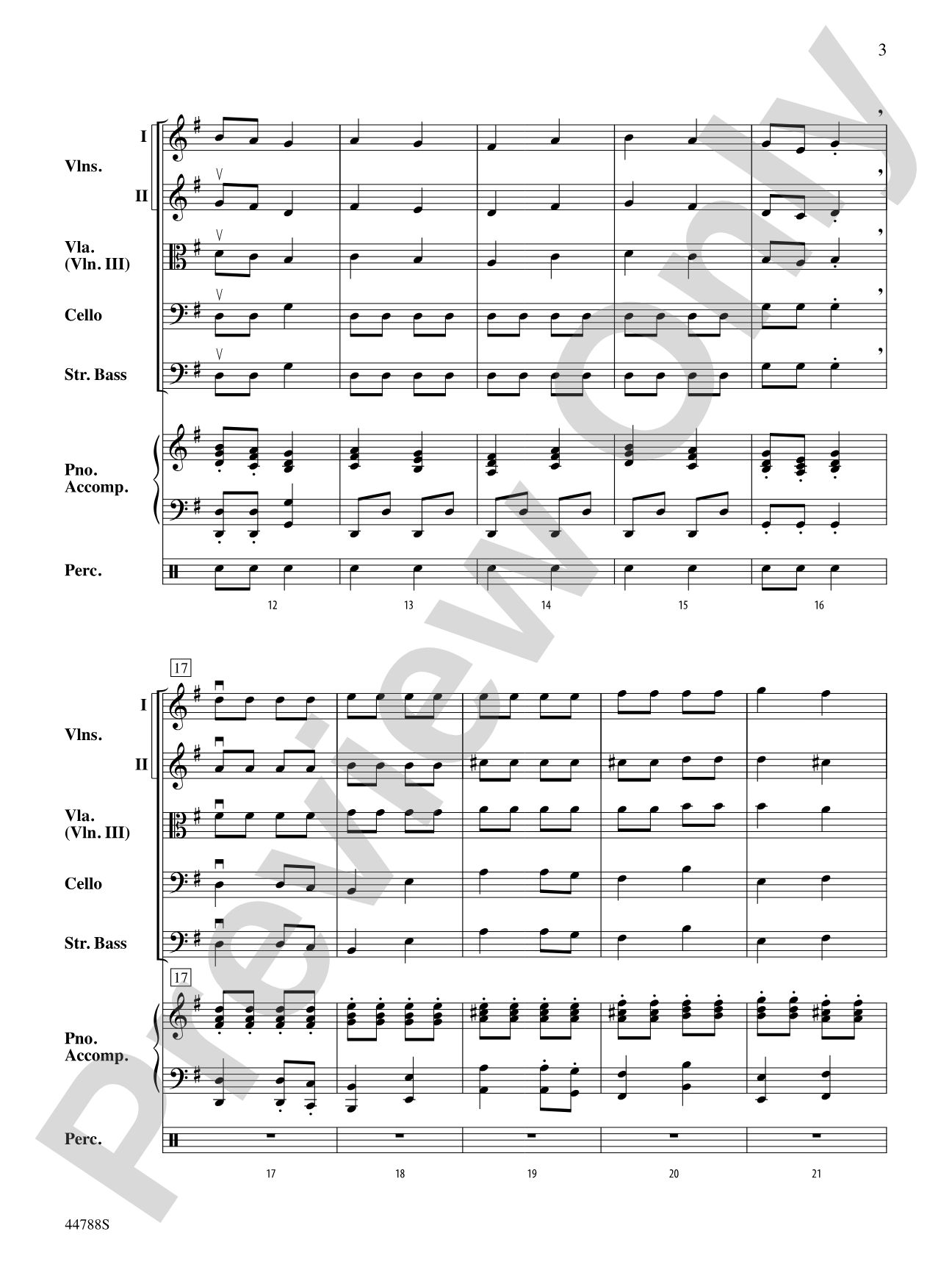
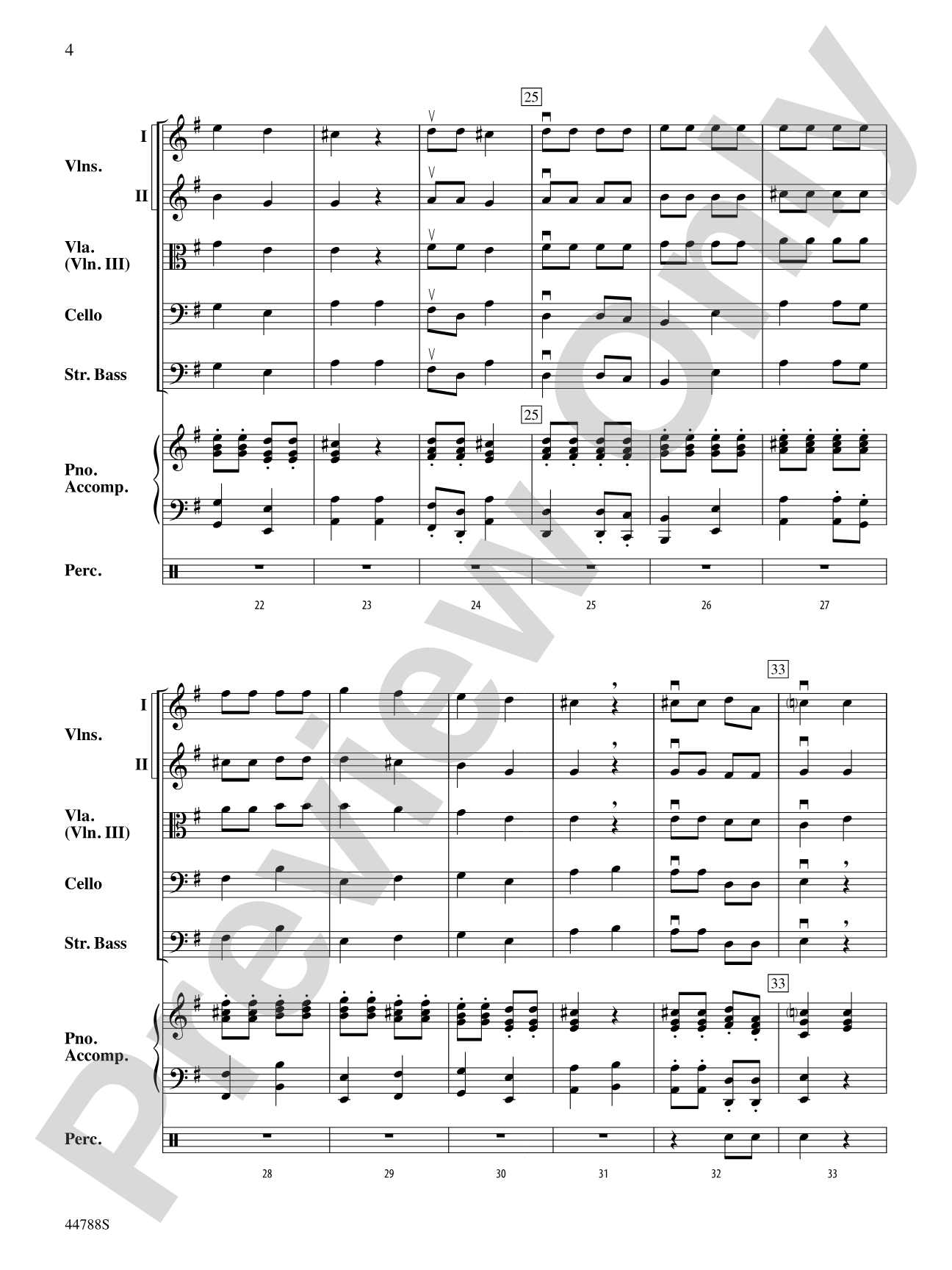
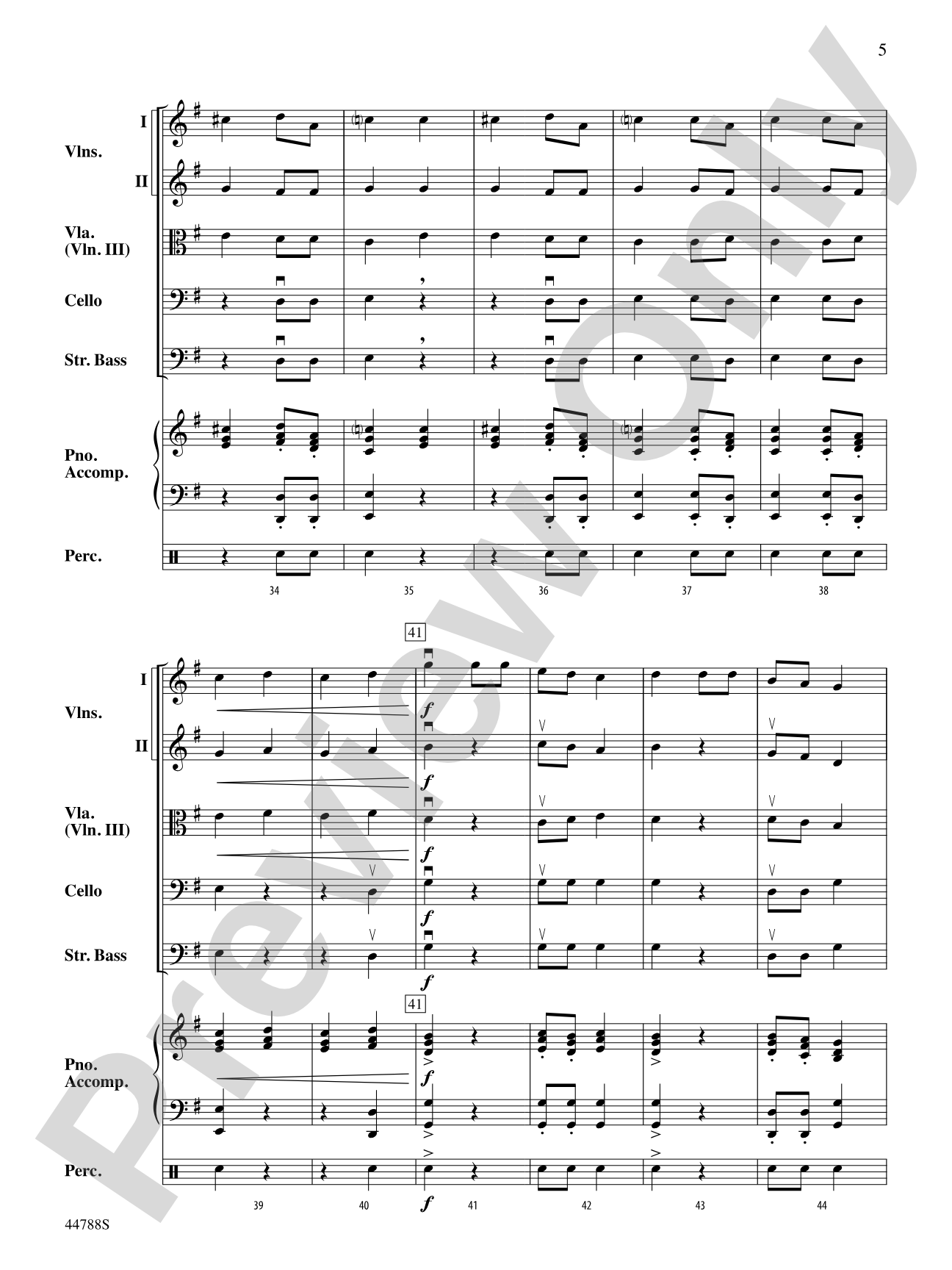
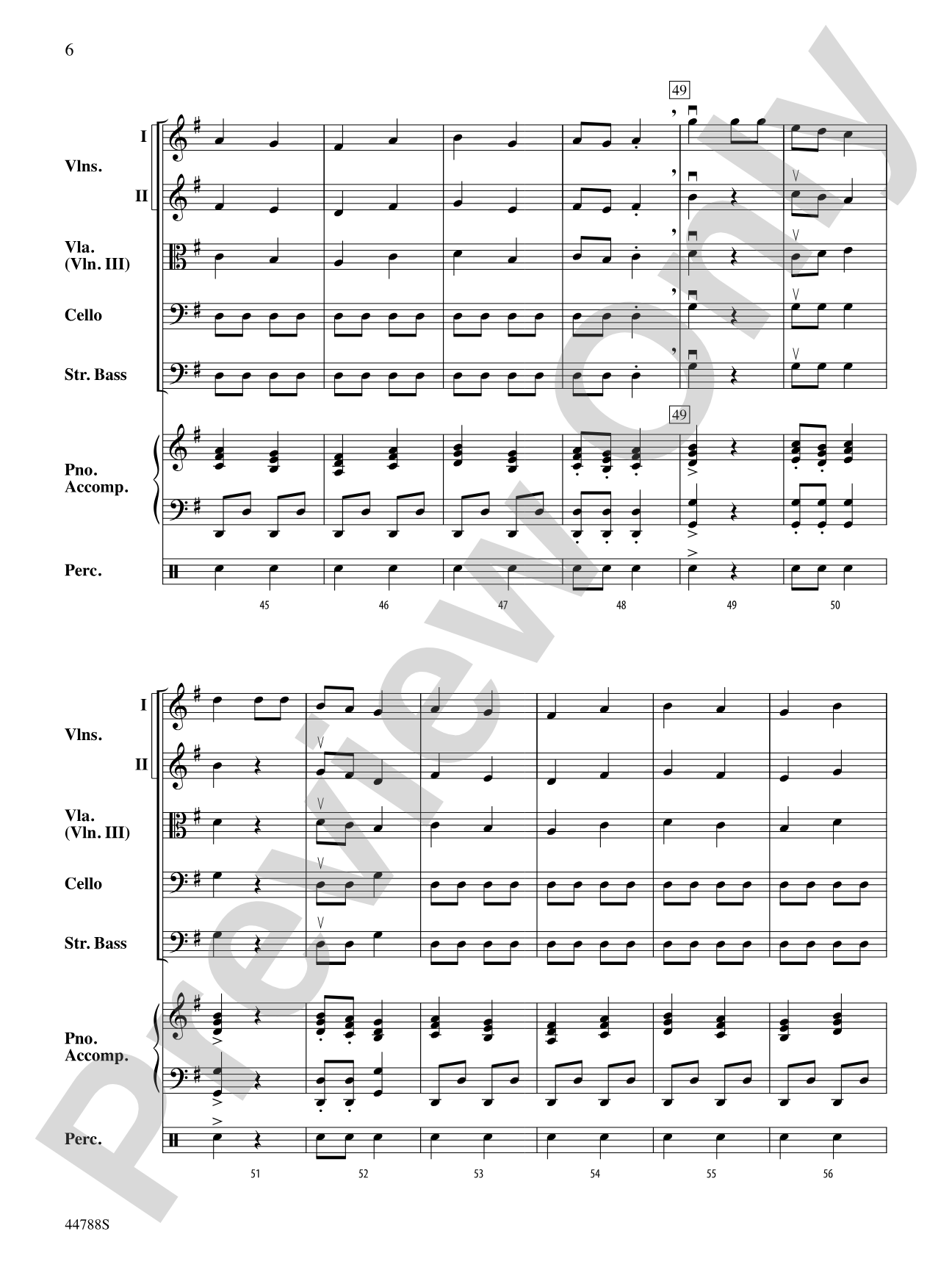
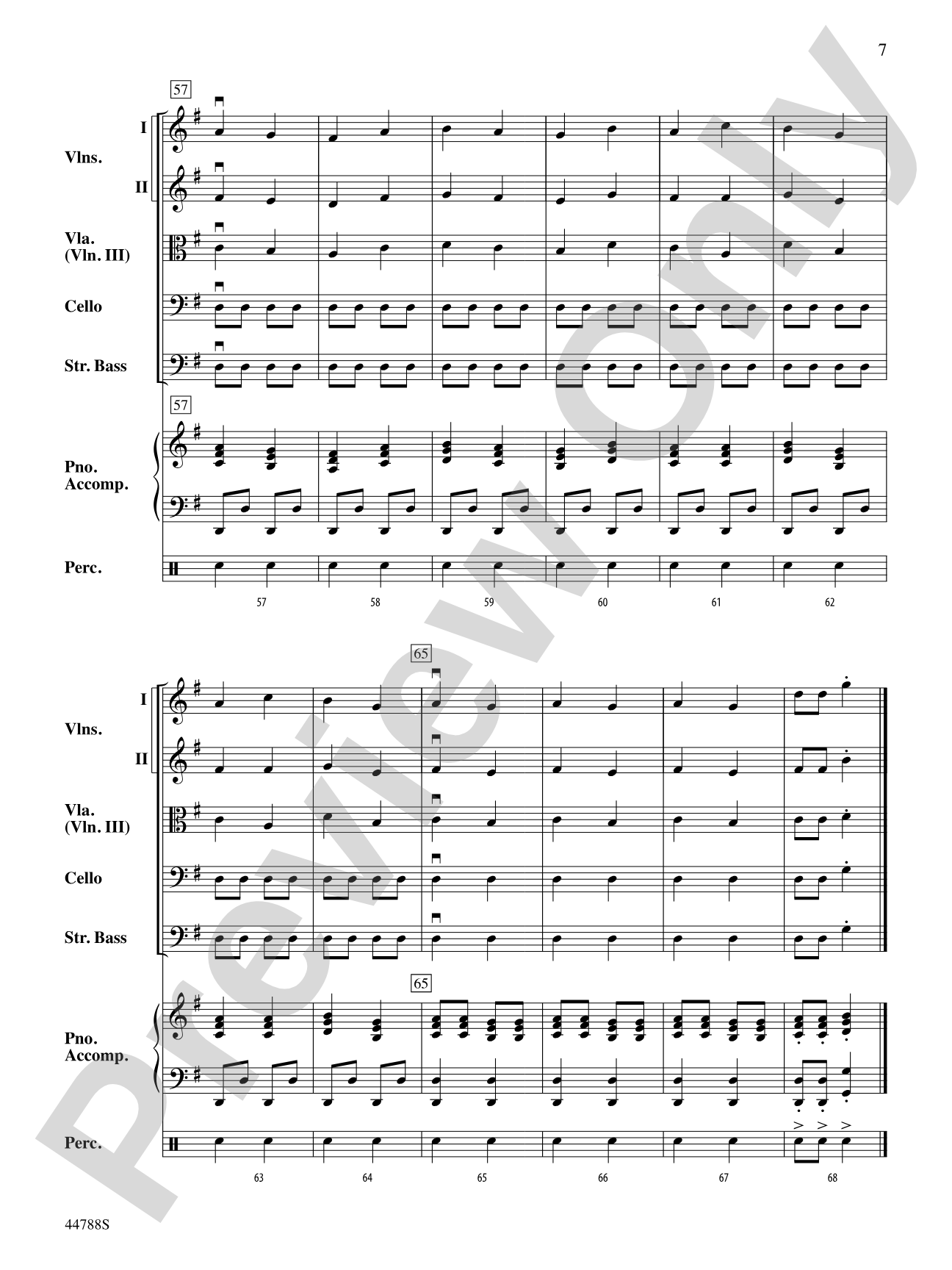

Russian Dance from The Nutcracker: String Orchestra Conductor Score & Parts
Trepak
By Piotr Ilyich Tchaikovsky [Peter Ilyich Tchaikovsky] / arr. Michael Story
Grade: 1
Item: 00-PK-0007061

$50.00
Pickup currently not available
Buy Extra Parts (Digital PDF Download)
Parts Added to Cart!
Description
Make your holiday concert sparkle with this great arrangement by Michael Story of Tchaikovsky's popular classic from The Nutcracker! Though a solid grade 1, this setting of "Russian Dance" (or "Trepak") maintains all of the spirit and integrity of the original. This will be a favorite for both students and audiences! (1:20)


Don't just read it, hear it, play along with it, and watch your students grow with it. In MakeMusic Cloud, Russian Dance from The Nutcracker: String Orchestra Conductor Score & Parts comes alive with professional accompaniment, adjustable tempo, and built-in practice tools that turn solo practice into real progress.
Open in the Player
Jump straight in and assign it today.
Start Your Free Trial
Open this title and explore the full library in minutes.
Sample Audio
1
Audio File
--:--
0:00
0:00
Sample Video
Additional Details
Series:
Belwin Beginning String Orchestra
Publisher:
Alfred Music
Page Count:
78
SKU:
00-PK-0007061
More about this title
About the Composer: Piotr Ilyich Tchaikovsky
Tchaikovsky stands as one of the most performed composers in the concert hall, and for good reason: he understood how to write memorable melodies that sit naturally under the fingers while maintaining genuine artistic depth. His ballet scores, particularly The Nutcracker, have become touchstones of the holiday season worldwide, reaching audiences far beyond the concert hall through film, television, and classroom performances.
Why we love this
Michael Story's arrangement captures the raw energy and folk character of the original without drowning young players in technical complexity. The orchestration gives every section something vital to do, so your students feel like they're playing a real piece, not a simplified sketch. It's exactly the kind of holiday repertoire that gets audiences on their feet while keeping rehearsal time manageable.
What to expect
Vigorous and celebratory, with the unmistakable flavor of Russian folk dance. The piece crackles with energy from the opening, building momentum through rhythmic figures and strategic dynamic shifts. There's a joyful, almost raucous quality that makes young musicians feel like they're playing something important and fun simultaneously.
Who it's for
String orchestras at the beginner level who want substantive holiday repertoire without compromising rehearsal time or musical integrity. Directors building a winter concert that needs crowd-pleasing programming alongside genuine pedagogy will find this indispensable.
How to get the most out of it
- Keep the rhythmic drive propulsive from the first measure. This dance needs momentum; pulling back on the tempo saps its character and makes it drag.
- Balance the melody across your first violins without letting them dominate the texture. The arrangement benefits from a unified sound where accompaniment figures stay audible.
- Shape the dynamic swells organically rather than mechanically. Younger players often treat crescendos as straight lines; work on tapering back slightly to create musical phrasing within the louder passages.
- Bring out any pizzicato rhythmic figures in the lower strings. These touches add sparkle and authenticity to the folk character of the dance.
How to use it
Position this as a concert closer or second-to-last piece where you want to leave audiences energized and smiling. It pairs naturally with other Nutcracker selections or lighter baroque arrangements, creating a cohesive holiday set. The one-minute-twenty-second duration makes it ideal for filling a program slot without overshadowing longer works.
Skills your students will build
- Maintaining steady rhythmic drive in bright tempos
- Balancing melodic clarity with accompaniment figures
- Playing pizzicato with rhythmic precision
- Reading and executing dynamic shaping across phrase structures
- Ensemble coordination in a folk-style arrangement with characteristic syncopations