
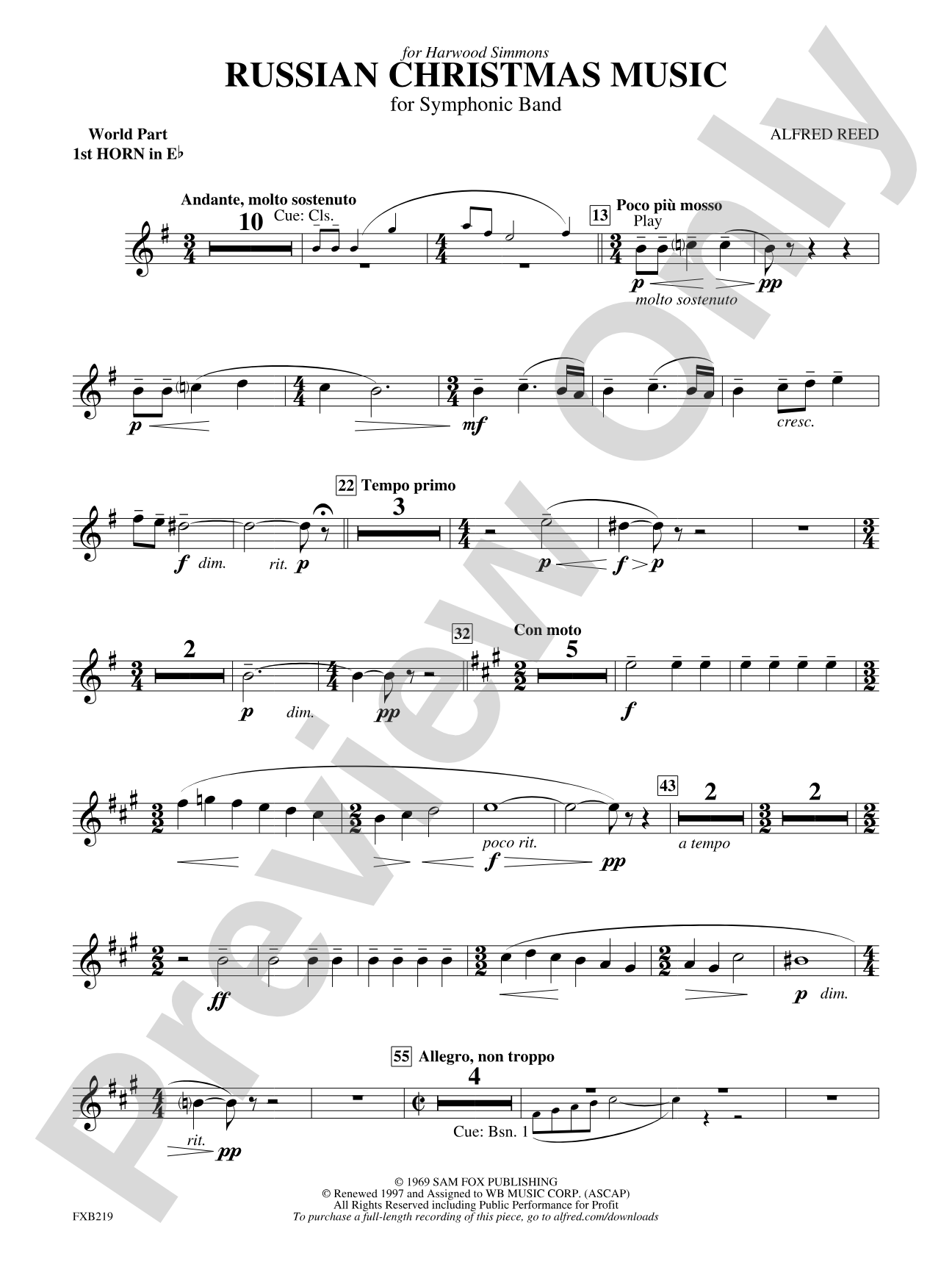
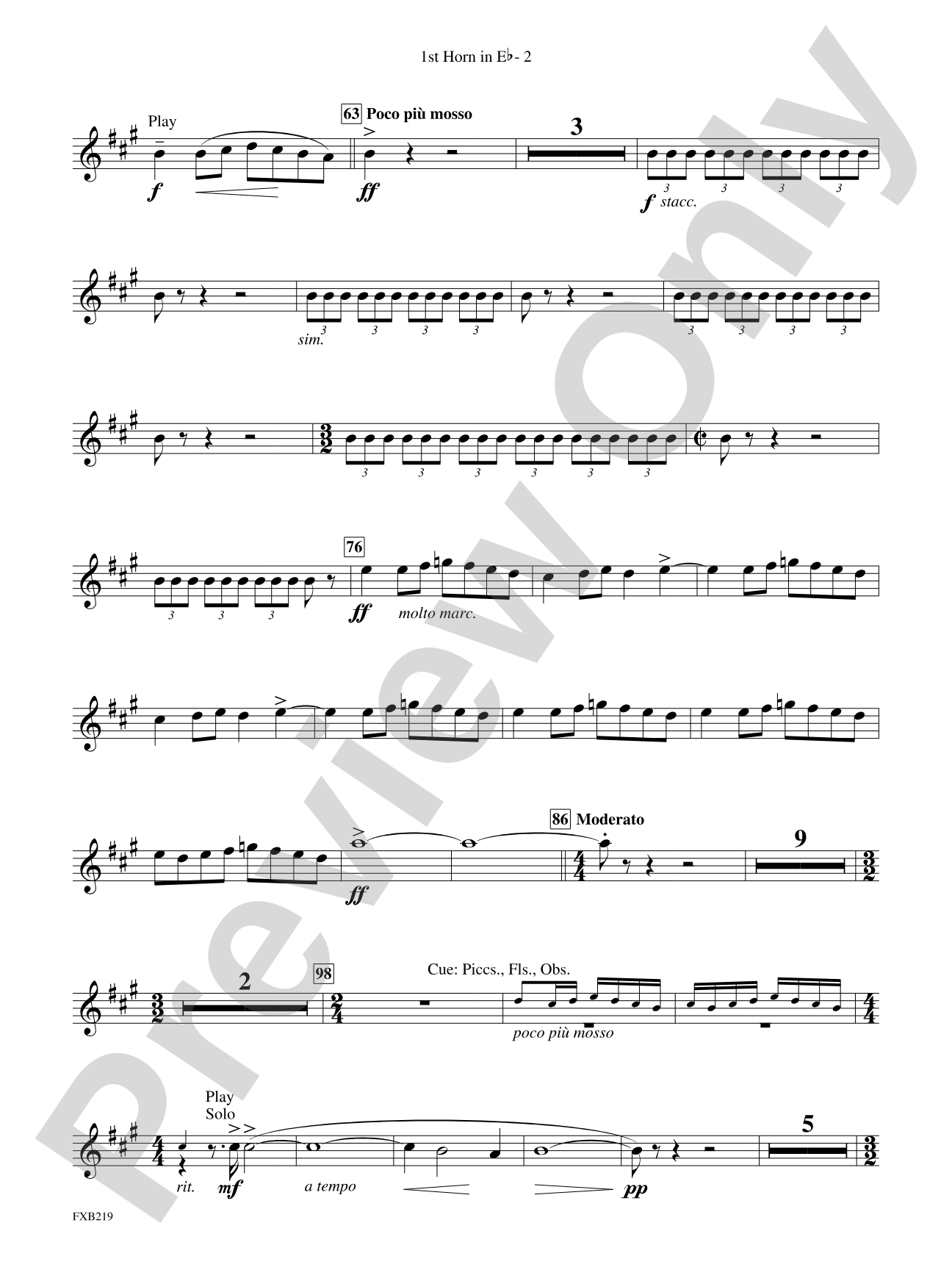
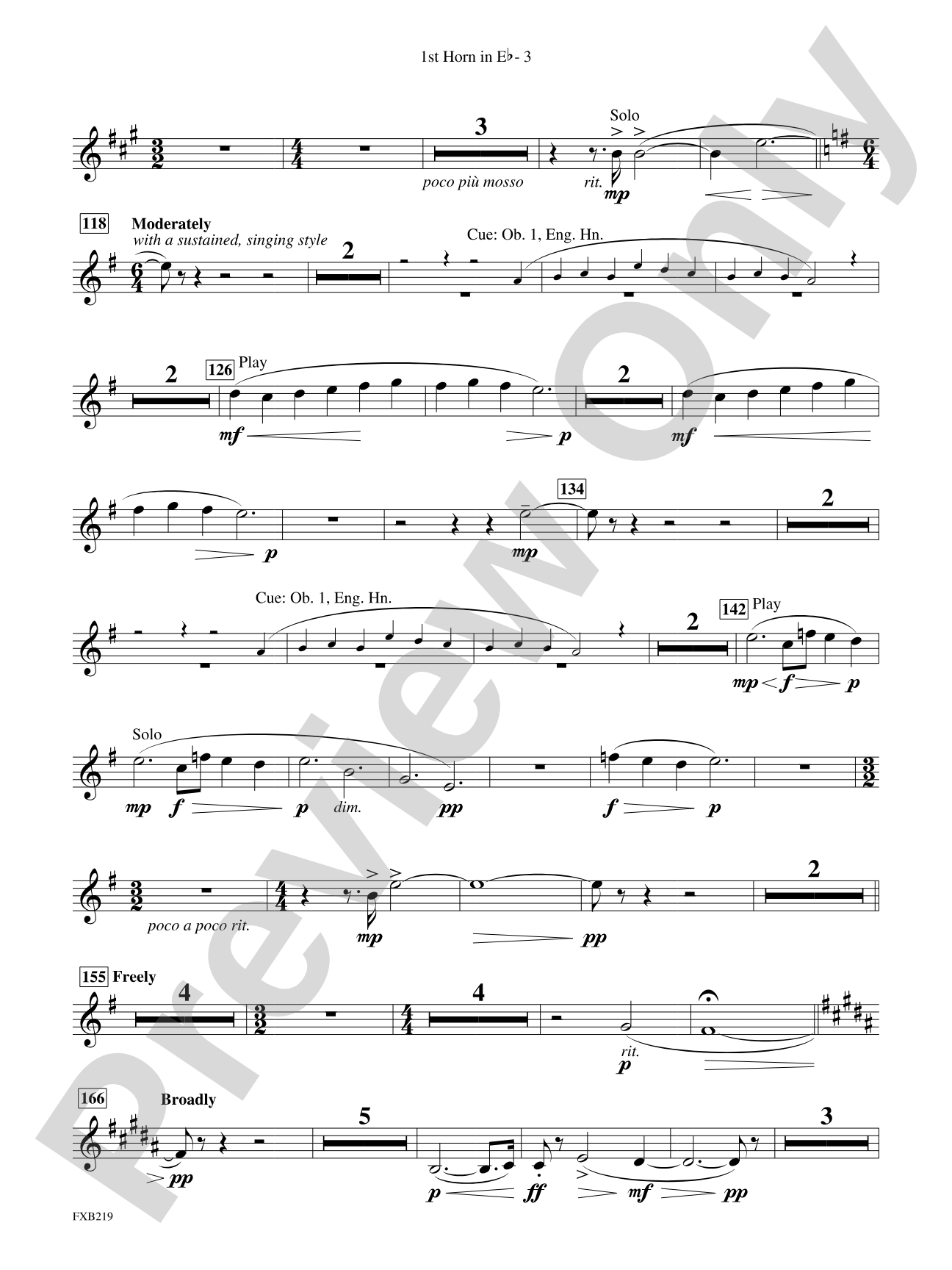
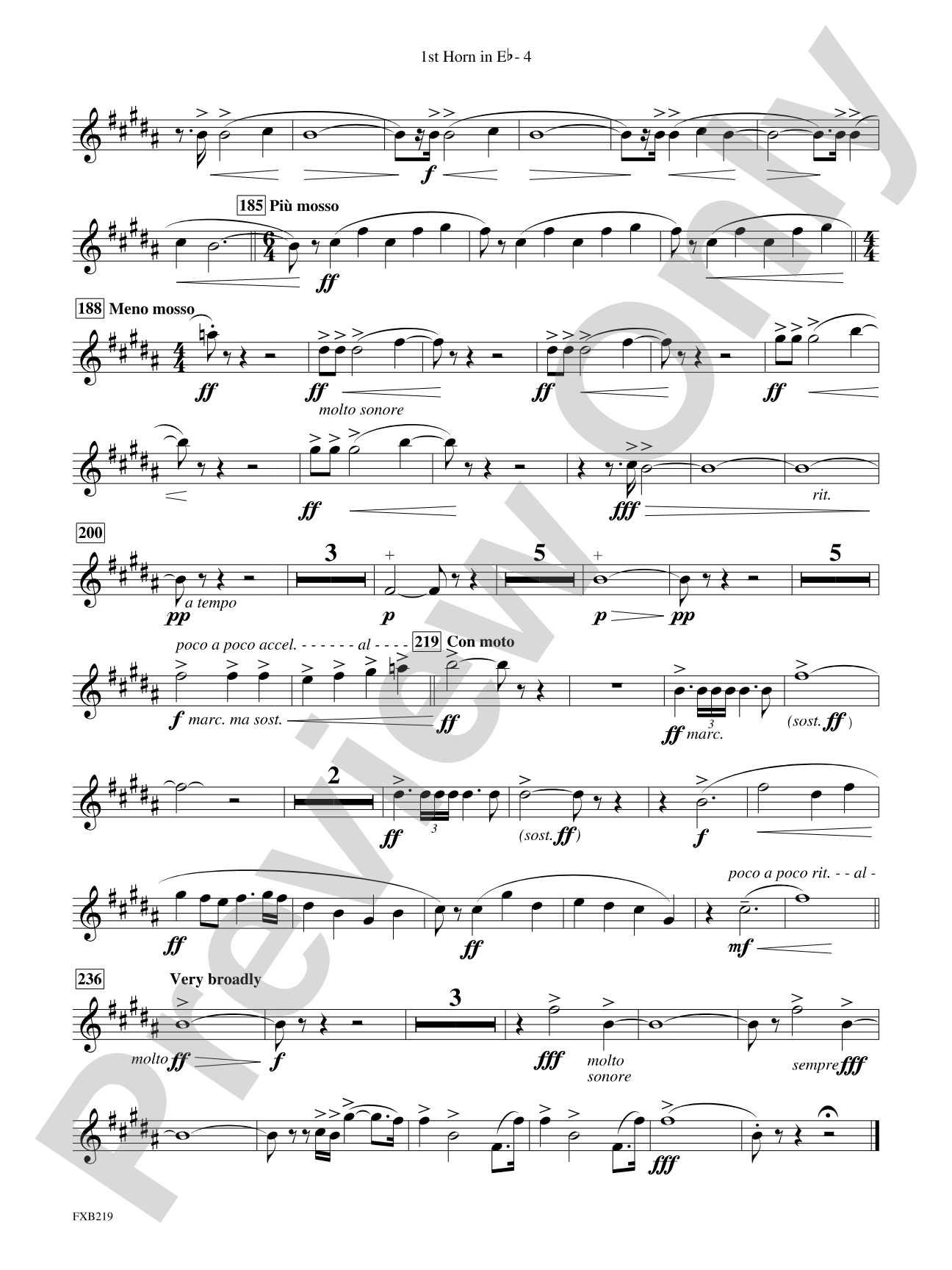

Russian Christmas Music: (wp) 1st Horn in E-flat
By Alfred Reed
Grade: 5 (Advanced)
Item: 00-PC-0002379_wpEH1
$3.00
Pickup currently not available
Description
The theme carefully explored by Alfred Reed in this repertoire standard is "Carol of the Little Russian Children" which is an ancient Russian Christmas carol. You can hear four distinct sections originally called "Children's Carol," "Antiphonal Chant," "Village Song" and "Cathedral Chorus" all joined in this continuous contemporary setting. The almost overwhelming sound picture with varied tone colors and brilliant brass choir sounds is a classic in every sense. "Russian Christmas Music" by Alfred Reed is a worthy addition to the Belwin Classic Band series. This recording compliments of the United States Air Force Band, Col. Lowell Graham, conductor.


Don't just read it, hear it, play along with it, and watch your students grow with it. In MakeMusic Cloud, Russian Christmas Music: (wp) 1st Horn in E-flat comes alive with professional accompaniment, adjustable tempo, and built-in practice tools that turn solo practice into real progress.
Open in the Player
Jump straight in and assign it today.
Start Your Free Trial
Open this title and explore the full library in minutes.
Sample Audio
1
Audio File
--:--
0:00
0:00
Sample Video
Additional Details
Series:
Belwin Classic Band
Publisher:
Alfred Music
Page Count:
296
SKU:
00-PC-0002379_wpEH1
More about this title
About the Composer: Alfred Reed
Alfred Reed (1921, 2005) was a prolific composer and arranger whose output shaped the modern concert band repertoire. His command of orchestration and gift for accessible yet musically substantial writing made him a trusted voice in music education, with works performed by high school and university bands across the country.
Why we love this
Reed's treatment of the Russian carol material creates a natural arc across four contrasting sections without feeling episodic. The writing sits perfectly for Grade 5 ensembles, demanding real maturity in phrasing and tone control while remaining accessible enough that students stay invested rather than overwhelmed.
What to expect
The piece builds from intimate devotion in the carol opening to processional grandeur by the Cathedral Chorus. Reed's orchestration moves through warm, almost austere passages into moments of brilliant brass fanfare, creating a sense of gathering, as if a small private celebration expands into a communal celebration.
Who it's for
Advanced Grade 5 concert bands seeking a substantial holiday work with real musical architecture. Programs looking for repertoire that sounds substantial without requiring soloists or unusual instrumentation will find this particularly valuable.
How to get the most out of it
- Balance the antiphonal sections carefully; the dialogue between choir groups dissolves if one side overpowers the other. Mark dynamic boundaries clearly in rehearsal and rotate seating so students hear the conversation they're part of.
- The transition into the Cathedral Chorus needs weight without rushing. Bring the tempo down fractionally and let the brass settle into a unified, resonant pitch before the final full statement.
- Shape each section's internal phrasing as a complete thought. The Village Song especially benefits from breathing room; don't let accompaniment figures push the melody forward.
- Use the Air Force Band recording as a reference for the overall color palette, but expect your own ensemble's timbre to naturally differ. Focus instead on how they manage the dynamic journey across all four movements.
How to use it
Program this as a centerpiece for a winter concert rather than a filler work; it justifies a full rehearsal cycle and repays the investment. Pair it with shorter seasonal pieces or lighter concert band fare to let the Reed speak without exhausting your audience or your students.
Skills your students will build
- Sustaining legato lines across phrase boundaries without thinning tone
- Balance and blend in antiphonal writing across separated choir groups
- Dynamic control from intimate chamber-like textures to full ensemble fortissimo
- Maintaining structural clarity in a multi-section form without abrupt transitions
- Responding to expressive conducting in a work where tempo and phrasing carry meaning