

Russian Alleluia: SATB, a cappella Choral Octavo
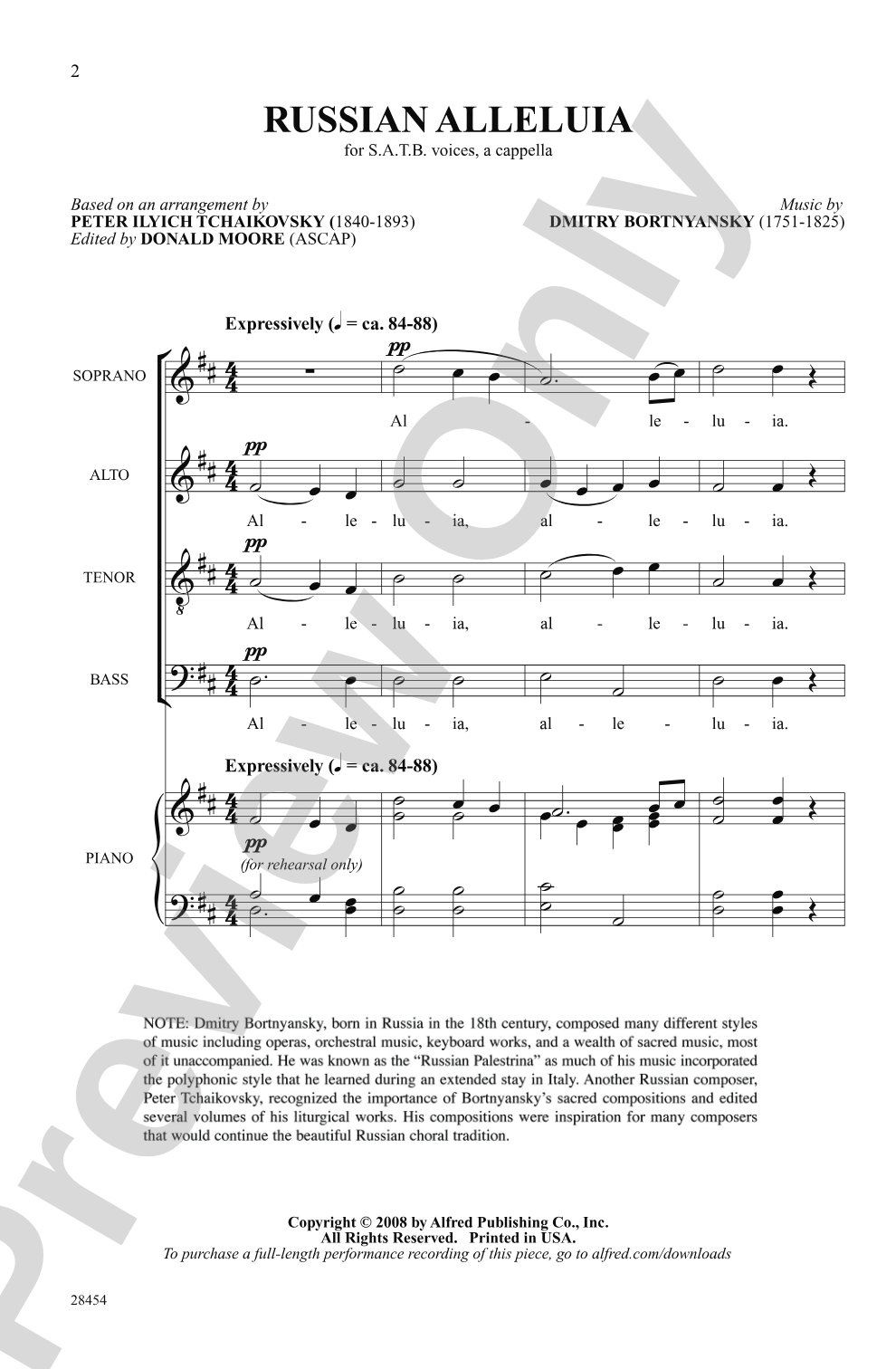
Music by Dimitry Bortnyansky, based on an arrangement by Peter Ilyich Tchaikovsky / ed. Donald Moore
Item: 00-PO-0000441
$1.75
Minimum order quantity: 20 copies
Pickup currently not available
Related Items
Russian Alleluia: SATB, a cappella Choral Octavo |
$1.75
|
View |
Description
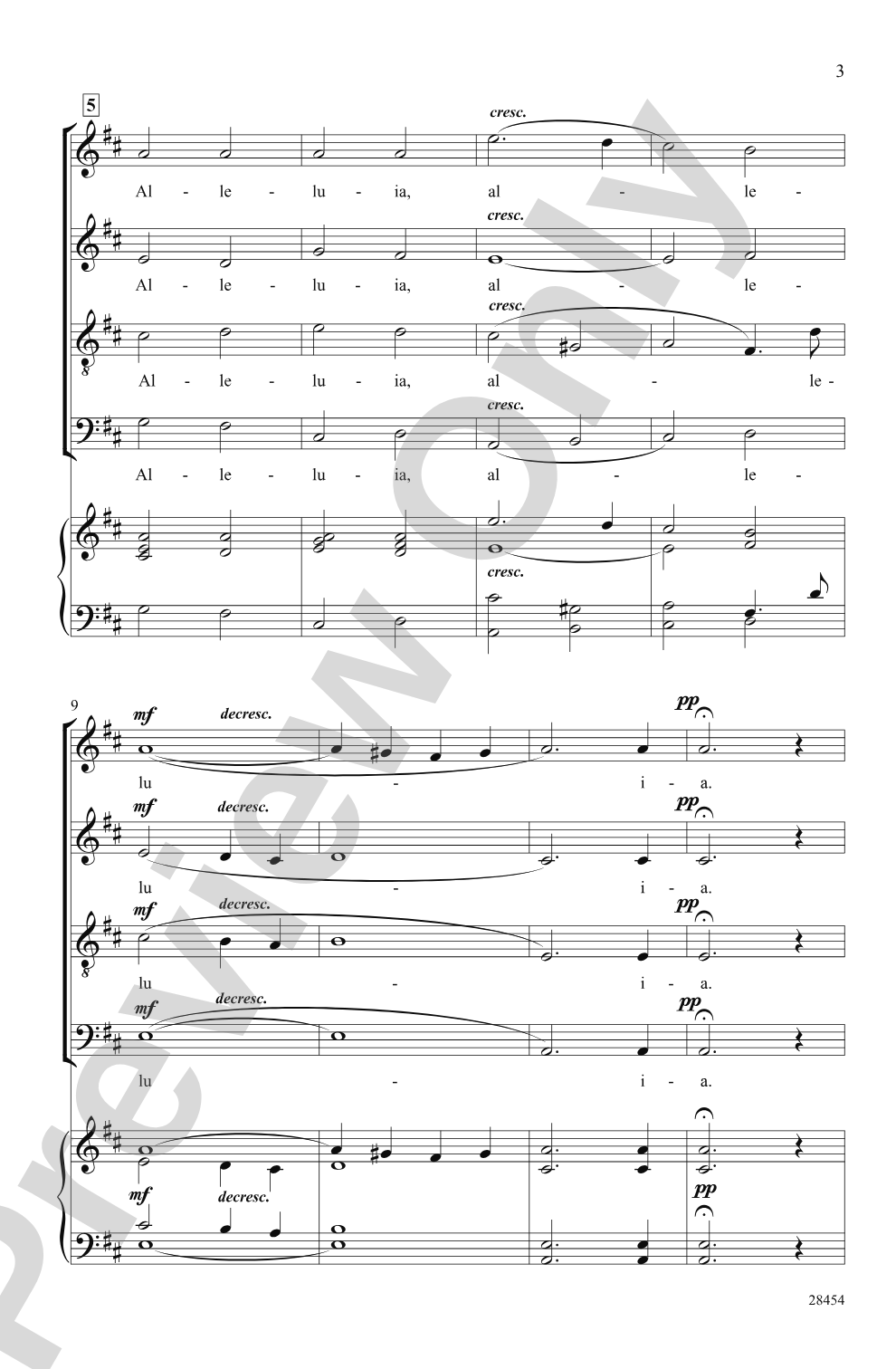
This a cappella edition is based on Tchaikovsky's arrangement of a song composed by 18th century Russian composer, Dmitry Bortnyansky. Bortnyansky's polyphonic style (developed during an extended stay in Italy) is evident throughout, as are the uniquely Russian harmonic progressions. A great masterwork sound and a solid study of cultural influences on composition.


Russian Alleluia: SATB, a cappella Choral Octavo isn't in MakeMusic Cloud just yet...but it could be. Let us know you'd like to see it, and you'll help shape what comes next. In the meantime, start a free trial and dive into thousands of interactive titles your students can play along with today.
Request This Title
Tell us you want it.
Start Your Free Trial
Explore everything that's ready to play right now.
Sample Audio
1
Audio File
--:--
0:00
0:00
Sample Video
No sample videos found.
Additional Details
Series:
Alfred Choral Designs
Publisher:
Alfred Music
Page Count:
8
SKU:
00-PO-0000441
More about this title
About the Composer: Dimitry Bortnyansky
Dimitry Bortnyansky (1751-1825) was the dominant figure in Russian sacred music during the late 18th and early 19th centuries. After training in Italy, where he absorbed the polyphonic techniques of the European masters, he returned to Russia and became the director of the imperial court chapel, a position he held for decades. His sacred works established a distinctly Russian musical voice by blending Italian counterpoint with harmonic language rooted in Orthodox chant tradition.
Bortnyansky's influence on Russian composition extended far beyond his lifetime. Composers who followed, including Tchaikovsky himself, looked to his music as a model for integrating Western European forms with Russian spiritual and cultural identity. His output of sacred choral works remains central to the choral repertoire, particularly in settings that demand both technical sophistication and emotional depth.
Why we love this
This arrangement gives your singers access to one of Russia's most enduring sacred melodies without requiring a large ensemble or instrumental accompaniment. Tchaikovsky's touch elevates the polyphonic texture while preserving Bortnyansky's harmonic character, creating a piece that sounds substantial and mature from rehearsal one. It's the kind of repertoire that builds your choir's interpretive confidence while delivering genuine musical artistry.
What to expect
The music radiates reverence without sentimentality. Bortnyansky's polyphonic architecture creates harmonic richness that feels both intimate and expansive, while the Russian harmonic language lends an unfamiliar, slightly mysterious quality that draws listeners in. This is sacred music that asks for contemplation from both performers and audience.
Who it's for
This octavo suits intermediate to advanced choirs with secure sightreading skills and a foundation in intonation. Directors preparing singers for honor choirs, competition, or a concert program focused on sacred masterworks will find this piece both musically rewarding and pedagogically sound.
How to get the most out of it
- Balance the inner voices carefully during polyphonic passages. The Tenor and Alto lines carry essential harmonic and melodic material, so resist the instinct to feature only Soprano and Bass.
- Shape the piece through dynamic restraint rather than volume. A cappella singing demands control; let articulation and vowel color create musical momentum instead.
- Approach the harmonic progressions with harmonic awareness. Singers who understand how each chord functions will blend more successfully and maintain better intonation across sustained passages.
- Allow space for breath within phrases rather than breathing at obvious punctuation marks. Russian harmonic progressions often demand breathing in unexpected places to preserve voice-leading integrity.
How to use it
Position this as the centerpiece of a concert devoted to Russian sacred traditions, or program it alongside other masterwork arrangements to showcase your choir's technical maturity. Its eight-page length makes it substantial enough to stand alone as a featured work, yet brief enough to pair thoughtfully with additional repertoire in a varied concert format.
Skills your students will build
- Reading and sustaining four independent polyphonic lines
- Intonation in extended harmonic progressions and voice-leading contexts
- Interpretation of unfamiliar harmonic language rooted in Russian choral tradition
- A cappella blend and balance without instrumental support