Ruslan And Ludmilla Sheet Music Preview

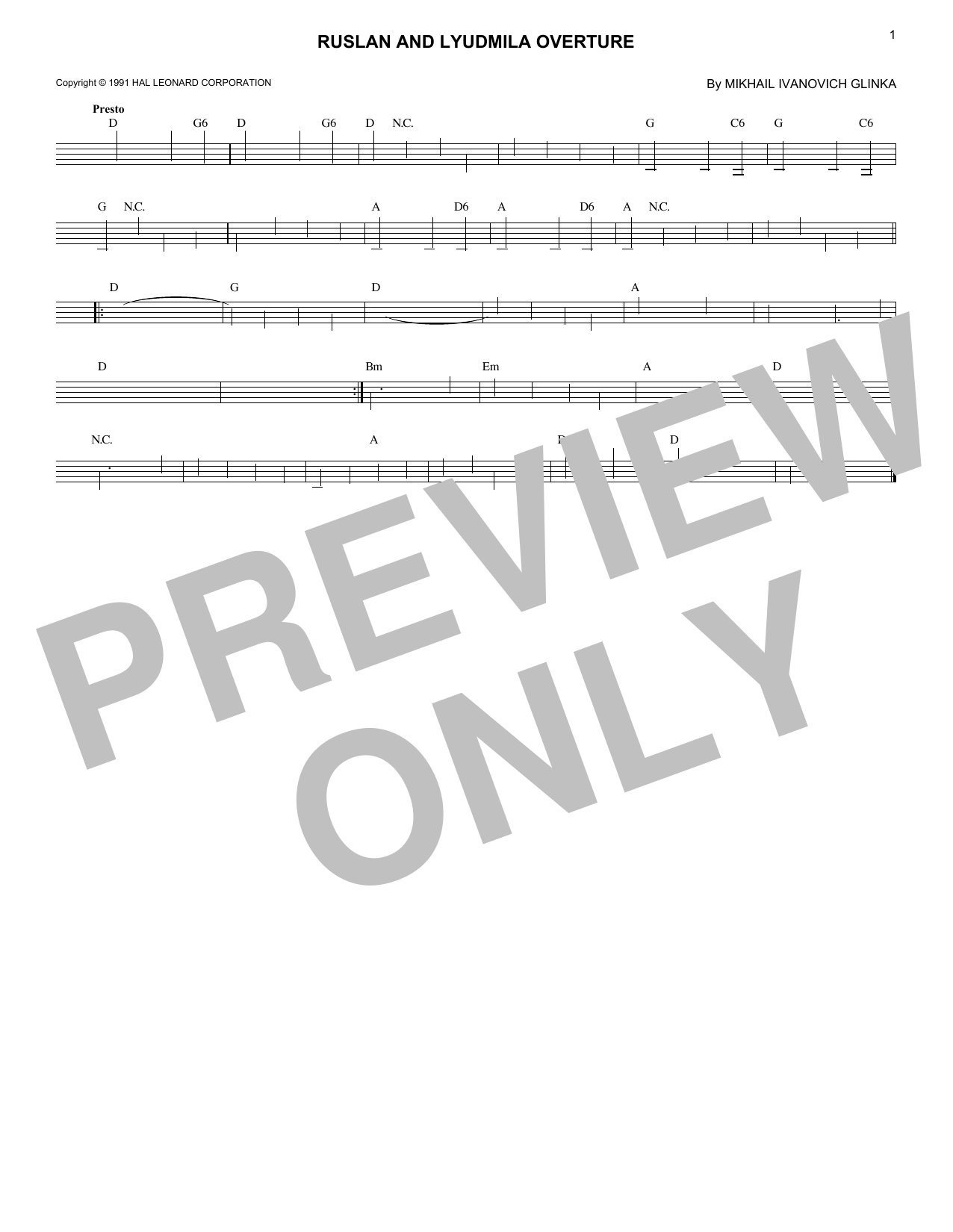
Ruslan And Ludmilla: Lead Sheet / Fake Book

Item: 35-DS00456690

Digital Download
$3.99
Description

Ruslan And Ludmilla: Lead Sheet / Fake Book isn't in MakeMusic Cloud just yet...but it could be. Let us know you'd like to see it, and you'll help shape what comes next. In the meantime, start a free trial and dive into thousands of interactive titles your students can play along with today.

Sample Audio
No sample audio found.
Sample Video
Additional Details
Publisher: Hal Leonard
Page Count: 1
SKU: 35-DS00456690

More about this title

About the Creator: Mikhail Glinka

Mikhail Glinka (1804-1857) stands as the foundational figure of Russian classical music, the composer who first synthesized European musical forms with distinctly Russian melodic and harmonic language. His opera Ruslan and Ludmilla, premiered in 1842, became a touchstone for generations of Russian composers who followed, demonstrating how folk idioms and exotic orientalism could coexist within sophisticated musical architecture.

Why we love this

This lead sheet captures one of the most recognizable melodies in the operatic repertoire in a stripped-down, immediately usable format. For accompanists and keyboardists, the single-page layout makes it accessible for quick learning and improvisation, while the iconic theme itself brings instant credibility to any classroom performance or ensemble opener.

What to expect

A sweeping, exotic journey that combines Russian directness with Eastern mystery. The melody unfolds with romantic grandeur, conjuring images of magical forests and heroic quests, yet remains approachable enough for intimate settings.

Who it's for

Pianists and keyboardists seeking a compact reference for a repertoire staple, voice teachers looking for a performance-ready version of this famous theme, and jazz or contemporary musicians interested in reharmonizing or reimagining a classical melody.

How to get the most out of it

  • Lean into the Oriental coloration of the melody; Glinka's harmony suggests exotic tuning and chromaticism, so let those coloristic moments breathe rather than rushing through them
  • Use dynamic shaping to reflect the narrative arc of the theme; the opening statement can be bold and assured, with subsequent phrases inviting more introspection
  • When accompanying vocalists or soloists, anchor the left hand with clear harmonic definition while leaving room for the melody to sit forward without crowding

How to use it

Open a classical music unit or concert with this instantly recognizable theme, allowing students to experience how a single melody can anchor an entire operatic narrative. It also pairs well as a palette cleanser between heavier contemporary pieces or as the centerpiece of a"Russian masters" recital segment.

Skills your students will build

  • Interpreting lead sheet notation and harmonic symbols
  • Balancing melody and accompaniment on a single staff
  • Understanding operatic melody and its performance demands
  • Creating expressive accompaniment from minimal harmonic information

You May Also Like