
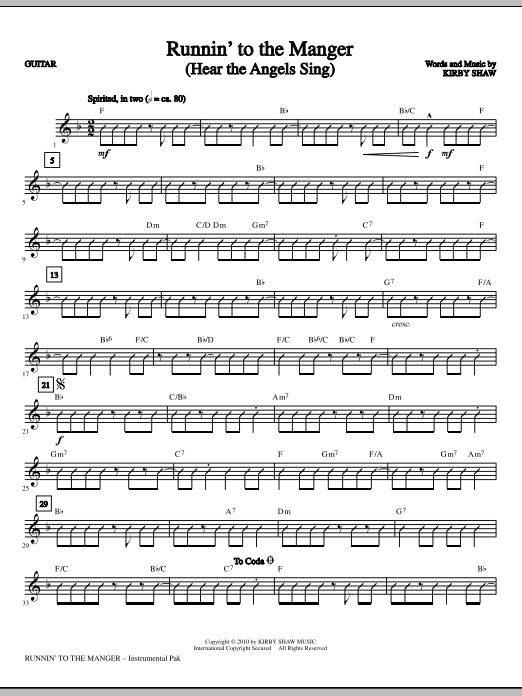

Runnin' To The Manger (Hear The Angels Sing): Choral Instrumental Pak
By Kirby Shaw
Item: 35-PK00161525
$20.00
Pickup currently not available
Buy Extra Parts (Digital PDF Download)
Parts Added to Cart!
Description
Hurry on down to Bethlehem to hear the angels sing! Gospel tinged rhythms and very singable melodies and harmonies give this original spiritual tremendous appeal. Duration: ca. 2:20.


Runnin' To The Manger (Hear The Angels Sing): Choral Instrumental Pak isn't in MakeMusic Cloud just yet...but it could be. Let us know you'd like to see it, and you'll help shape what comes next. In the meantime, start a free trial and dive into thousands of interactive titles your students can play along with today.
Request This Title
Tell us you want it.
Start Your Free Trial
Explore everything that's ready to play right now.
Sample Audio
No sample audio found.
Sample Video
No sample videos found.
Additional Details
Publisher:
Hal Leonard
SKU:
35-PK00161525
More about this title
About the Composer: Kirby Shaw

Kirby Shaw's influence spans five decades and six continents. A DMA graduate in choral conducting from the University of Washington with degrees in music education and choral composition from San Jose State, Shaw has conducted masterclasses in 45 states and internationally across Canada, Australia, Europe, and beyond. His teaching style pairs encyclopedic musical knowledge with infectious humor that transforms every rehearsal into a learning experience.
Shaw's compositional legacy includes over 2,500 arrangements and original works, with his music performed and recorded countless times worldwide. He founded and directed acclaimed vocal jazz ensembles at College of the Siskiyous, Colorado State University, and the University of Missouri at Kansas City. His collaborative history includes intensive study with Bobby McFerrin, Al Jarreau, Jon Hendricks, and other jazz vocalists who recognized his distinctive artistry. Beyond choral work, Shaw co-created the musical adaptation Scroogical with his wife, Markita, and remains active with Just 4 Kicks, a four-man a cappella jazz ensemble. His body of work has earned multiple ASCAP awards and influenced music education nationally.
Why we love this
Shaw writes with the ear of someone who understands both the choir room and the concert stage. The gospel inflections here feel authentic rather than borrowed, and the melodies sit naturally in voices without requiring significant retraining. At just over two minutes, this piece delivers genuine spiritual warmth and festive energy without overstaying its welcome in a holiday concert.
What to expect
The piece captures the urgency of pilgrimage layered over the luminous joy of arrival. Gospel harmonies and infectious rhythmic energy keep things grounded in tradition while the original melody feels fresh and celebratory, never saccharine.
Who it's for
This works for choirs at the high school level and beyond who have solid intonation and can sustain ensemble blend through rhythmic complexity. The rhythm section voicing makes it especially valuable for programs where you need something that bridges concert singing and contemporary style.
How to get the most out of it
- Shape the gospel rhythms with intentional swing and pocket rather than metronomic precision; let the groove breathe naturally within the ensemble.
- Balance choir and rhythm section so the accompaniment supports without masking the harmonic sophistication of the voicing.
- Work the text painting carefully during rehearsal; 'Hurry on down' should reflect momentum, while 'hear the angels sing' opens into a more spacious phrase.
- Consider staging movement that reflects the journey to Bethlehem; the urgency of the title pairs beautifully with purposeful blocking.
How to use it
Program this as a concert closer during holiday performances when you want the audience to leave with energy and warmth rather than reverence. It pairs effectively with more traditional Christmas carols earlier in the set, offering a contemporary counterpoint that shows the choir's stylistic range.
Skills your students will build
- Gospel rhythmic phrasing and swing interpretation
- Blending individual parts into homogeneous harmony
- Ensemble coordination with rhythm section accompaniment
- Text expression in contemporary sacred music
- Sustaining intonation through syncopated rhythmic figures