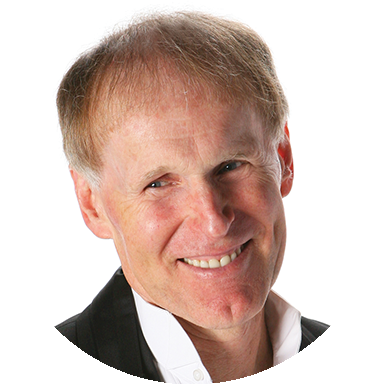
Kirby Shaw brings decades of choral leadership across North America, Europe, and beyond, holding degrees in Music Education and Choral Composition from San Jose State University and a DMA in Choral Conducting from the University of Washington. His work as a clinician, educator, and innovator in vocal jazz has shaped ensembles at College of the Siskiyous, Colorado State University, University of Missouri at Kansas City, and Southern Oregon University, where he currently directs the Jefferson State Choral Coalition.
With over 2,500 choral works in print and nearly 20 million copies sold worldwide, Shaw has become a defining voice in accessible, engaging choral music for all levels. His prolific output reflects deep knowledge of vocal pedagogy, infectious enthusiasm, and the ability to craft arrangements that challenge without overwhelming. A member of the a cappella jazz group Just 4 Kicks and a recent commissioned composer for the Mormon Tabernacle Choir, Shaw continues to shape music education through both his arrangements and his collaborative creative projects, including an original musical adaptation of A Christmas Carol.
Why we love this
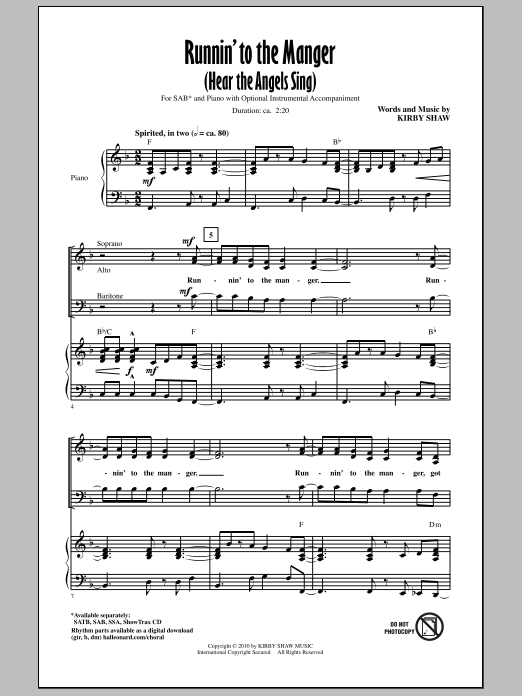
Shaw writes holiday spirituals that sound effortless to sing but carry real musical substance. This SAB arrangement balances accessibility with genuine three-part writing, giving each voice a meaningful line rather than stacking everyone on unison or harmony. The text and music unite without sentimentality, making it equally at home in a secular concert setting or a chapel service.
What to expect
Joy and motion. The spiritual tradition embedded in this arrangement carries both urgency and warmth, with the text painting a vivid journey. The music feels contemporary in its rhythmic energy while honoring the emotional depth of the underlying spiritual tradition.
Who it's for
Choirs with developing musicianship and limited time for complex preparation will find this arrangement immediately singable and rewarding. SAB voicing makes it accessible for mixed ensembles with fewer male singers or smaller voice sections, while Shaw's craftsmanship ensures the musical payoff justifies the effort.
How to get the most out of it
Establish the rhythmic groove early in rehearsal. This arrangement thrives when the pulse feels natural and propulsive, so lock in the foundational pulse before layering the parts.
Balance the middle voice. In SAB writing, altos often disappear if they're not reinforced; make sure the A part has support and confidence so the harmony reads clearly.
Let the text drive the phrasing. The spiritual tradition behind this arrangement values lyrical, speech-like delivery. Avoid over-legit singing; conversational tone will serve the piece better.
Consider the recorded accompaniment as a rehearsal tool first, performance option second. Using it in early rehearsals helps parts lock in; in performance, your ensemble's energy will shine brightest when you own the piece.
How to use it
Position this as a standalone Christmas number that contrasts beautifully with traditional carols and classical sacred works. It works equally well closing a holiday concert or opening one, and its accessibility makes it a strong choice for mixed programming where some singers are guest musicians or early-level participants.
Skills your students will build
Singing independent melodic lines within SAB harmony
Rhythmic precision in spiritual and contemporary styles
Interpreting text with musicality and authenticity
Blending three-part voicing while maintaining voice part clarity
Responding to accompaniment without losing ensemble cohesion
You May Also Like
Scan to Complete Your Purchase
Use your phone's camera to scan the code below
You'll log in on your phone and the order will be added to your account