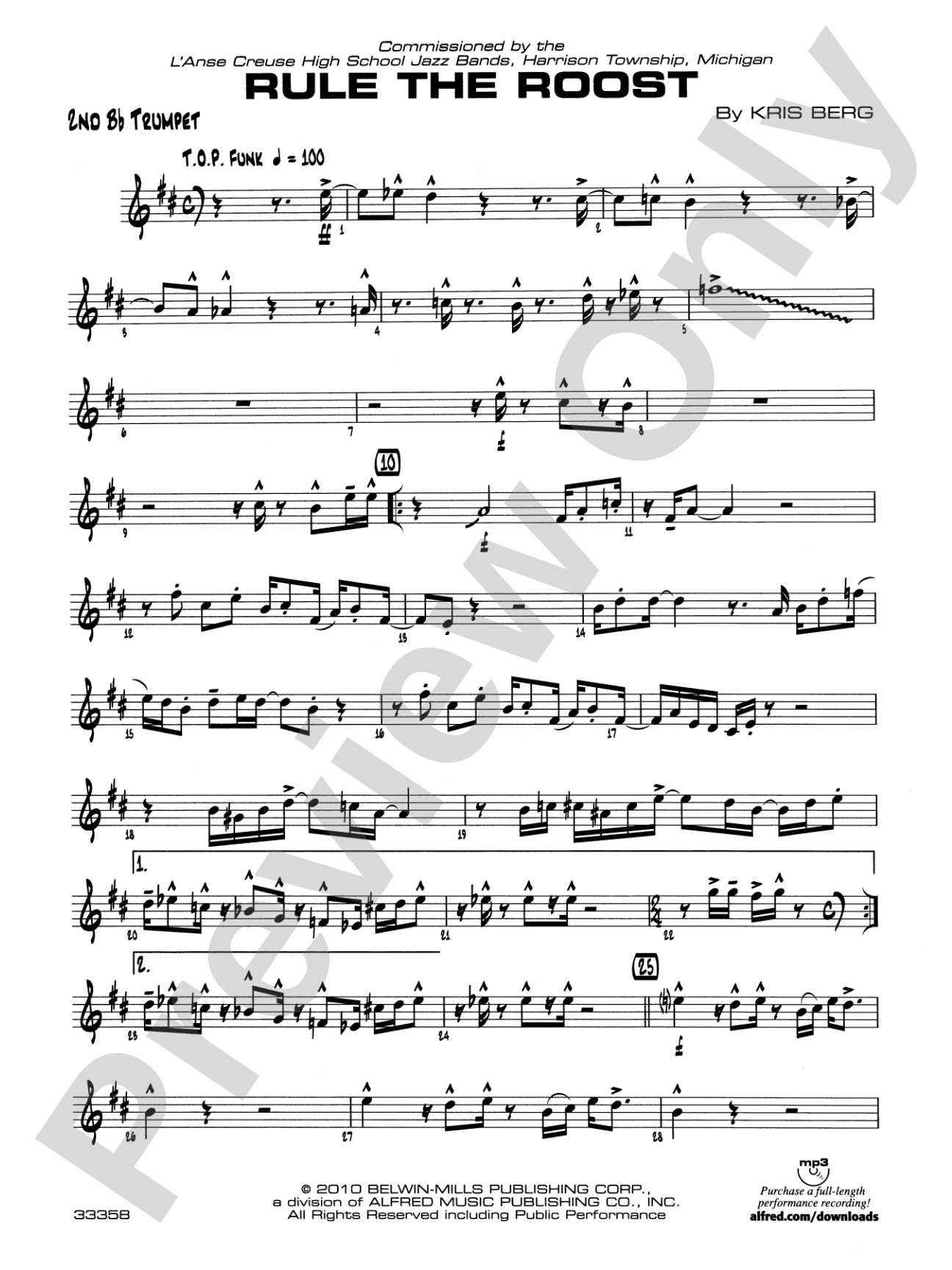
Rule the Roost: 2nd B-flat Trumpet Sheet Music Preview

Rule the Roost: 2nd B-flat Trumpet

By Kris Berg

Grade: 3 (Medium)

Item: 00-PC-0015754_T2

Digital Download
$3.00
Description
The chicken saga continues! Kris Berg brings you this funky Tower of Power groove. Solos are written out for tenor and trombone, lead trumpet range is to written A, and the bass part is critical and somewhat challenging---that's the story. It's a clucking good time.

Don't just read it, hear it, play along with it, and watch your students grow with it. In MakeMusic Cloud, Rule the Roost: 2nd B-flat Trumpet comes alive with professional accompaniment, adjustable tempo, and built-in practice tools that turn solo practice into real progress.

Sample Audio
0:00
0:00
Sample Video
Additional Details
Series: Jazz Band Series
Publisher: Alfred Music
Page Count: 94
SKU: 00-PC-0015754_T2

More about this title

About the Composer: Kris Berg

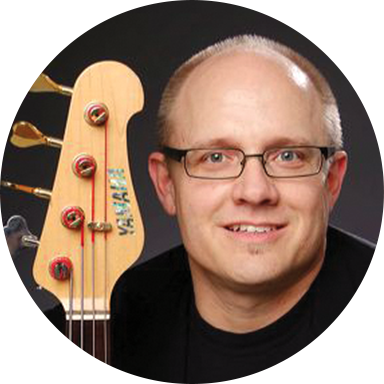
Kris Berg

Kris Berg directs the jazz studies program at Collin County Community College in Texas, where he earned both his bachelor's and master's degrees in jazz studies from the University of North Texas. His big band charts are performed and recorded internationally, and he serves as a best-selling arranger and composer for Belwin Jazz, a division of Alfred Publishing. Berg founded and directs both the Collin Jazz Fest and the Texas All-Star Jazz Camp, and under his leadership, the Collin jazz ensembles have earned multiple invitations to perform at the Montreux Jazz Festival.

As an active clinician and artist for Yamaha Corporation of America, Berg has shared the stage with an impressive range of jazz luminaries including Kurt Elling, Randy Brecker, Peter Erskine, Bob Mintzer, Bobby Shew, and Clark Terry. He authored the popular instructional resource Bass Lines in Minutes and continues to be endorsed by Walter Woods Amplifiers. His work spans festival appearances and clinics across the United States.

Why we love this

Berg's grooves sit solidly in the pocket without sacrificing character. The Tower of Power feel gives this chart immediate swagger, and the written solos for tenor and trombone mean your section leaders can lock into something specific rather than improvising over changes. A Grade 3 piece that doesn't talk down to players and actually demands musicality from the rhythm section.

What to expect

Funky, confident, and fun. The Tower of Power groove carries swagger without strain, and Berg's writing keeps the energy bouncing even when individual sections drop out. It's the kind of piece that makes students feel cool playing it.

Who it's for

Jazz ensembles at the intermediate level looking for music with genuine funk energy and character. Directors who want their players to engage with written solos and develop rhythmic sophistication; players who are ready for a bass part that's genuinely integral to the arrangement, not just supportive.

How to get the most out of it

  • Lock the bass part early in rehearsal; Berg designs the low end to drive the whole ensemble, so spend time getting that line crystal clear and rhythmically locked before layering horns on top.
  • Let the tenor and trombone solos breathe during rehearsals. Work them as written first, then encourage players to add their own inflection and articulation once the notes are secure.
  • Balance the lead trumpet to written A carefully. The range doesn't demand screaming; focus on clarity and punch rather than volume.
  • Use the funk pocket as your rehearsal anchor. If things feel loose, come back to the groove underneath rather than tightening tempo.

How to use it

Pair this with other Berg charts or contemporary funk-inflected big band writing for a cohesive concert section that speaks to current jazz idiom. It works equally well as a second-set opener or as a high-energy closer to a mixed jazz program, and the narrative title makes it memorable for audience announcements.

Skills your students will build

  • Funk and Tower of Power groove pocket and feel
  • Written solo interpretation for jazz voices (tenor saxophone and trombone)
  • Rhythmic precision and ensemble lock, particularly in the rhythm section
  • Balanced ensemble playing in a contemporary jazz context
  • Lead trumpet playing with clarity and articulation above the staff

You May Also Like