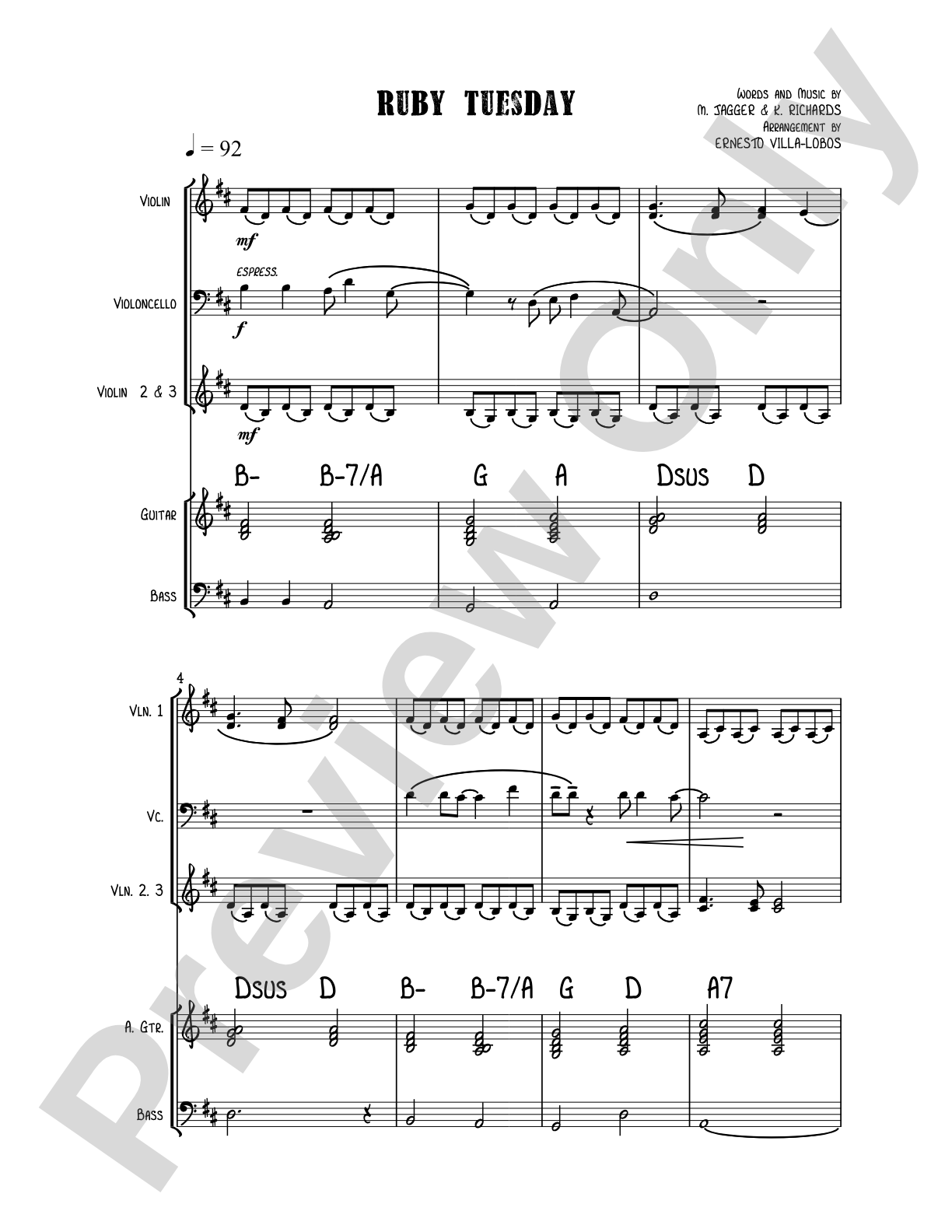
Ruby Tuesday: Solo & Small Ensemble Digital Sheet Music

Ruby Tuesday: Solo & Small Ensemble Digital Sheet Music

The Rolling Stones, Keith Richards, Mick Jagger, Ernesto Villa-Lobos

Item: 00-PS-0011469

Digital Download
$2.99
Description

Ruby Tuesday: Solo & Small Ensemble Digital Sheet Music isn't in MakeMusic Cloud just yet...but it could be. Let us know you'd like to see it, and you'll help shape what comes next. In the meantime, start a free trial and dive into thousands of interactive titles your students can play along with today.

Sample Audio
No sample audio found.
Sample Video
Additional Details
SKU: 00-PS-0011469

More about this title

About the Artist: The Rolling Stones

The Rolling Stones emerged from London in 1962 as one of rock music's most enduring and influential ensembles. Their catalog spans decades of blues-rooted rock, drawing on American blues traditions while developing a signature sound that defined multiple generations of popular music. In the classroom and rehearsal space, their work serves as a bridge between serious musical craft and the idioms students actually listen to outside school.

Why we love this

Ruby Tuesday captures that rare pop-rock sweet spot where melody, harmony, and production sophistication meet accessibility. Students engage with a song they recognize and respect, which transforms their approach to ensemble balance and phrasing. The Villa-Lobos arrangement opens pathways to program contemporary material alongside traditional repertoire without sacrificing musical substance.

What to expect

Ruby Tuesday carries a wistful, introspective quality despite its pop origins. The arrangement invites players to discover the song's underlying harmonic sophistication and emotional restraint, moving beyond surface-level familiarity into genuine interpretive choices about tone, balance, and phrasing.

Who it's for

Solo performers and small ensembles seeking contemporary repertoire that demands serious musicianship without requiring a full band setup. High school musicians, college chamber groups, and advanced middle schoolers benefit from learning how to voice a well-known rock song as an ensemble piece. Directors programming pop-rock material will find this especially useful for mixed-instrument combinations and recital settings.

How to get the most out of it

  • Lock the harmonic movement with your ensemble by rehearsing the chord progression separately before adding the melody line.
  • Shape the vulnerability of the verse by allowing space and restraint before the chorus builds; resist the urge to push too hard early.
  • Bring out the countermelody or inner voices in the arrangement so the texture stays colorful rather than melody-heavy.
  • Use the recorded accompaniment to build confidence with the arrangement's harmonic language, then rehearse with and without it to develop independence.

How to use it

Feature this as a chamber ensemble piece on a recital or concert mixing classical and contemporary works. Use it to bridge formal and informal programming contexts, especially when building a set that speaks to students' musical lives. The digital format makes it flexible for different ensemble sizes and configurations within one rehearsal group.

Skills your students will build

  • Ensemble balance and voice independence in pop-rock idioms
  • Harmonic listening and intonation in jazz-influenced chord progressions
  • Phrasing and dynamics in non-classical musical contexts
  • Reading and interpreting arrangement notation for small groups
  • Stylistic authenticity and rhythmic feel in contemporary music

You May Also Like