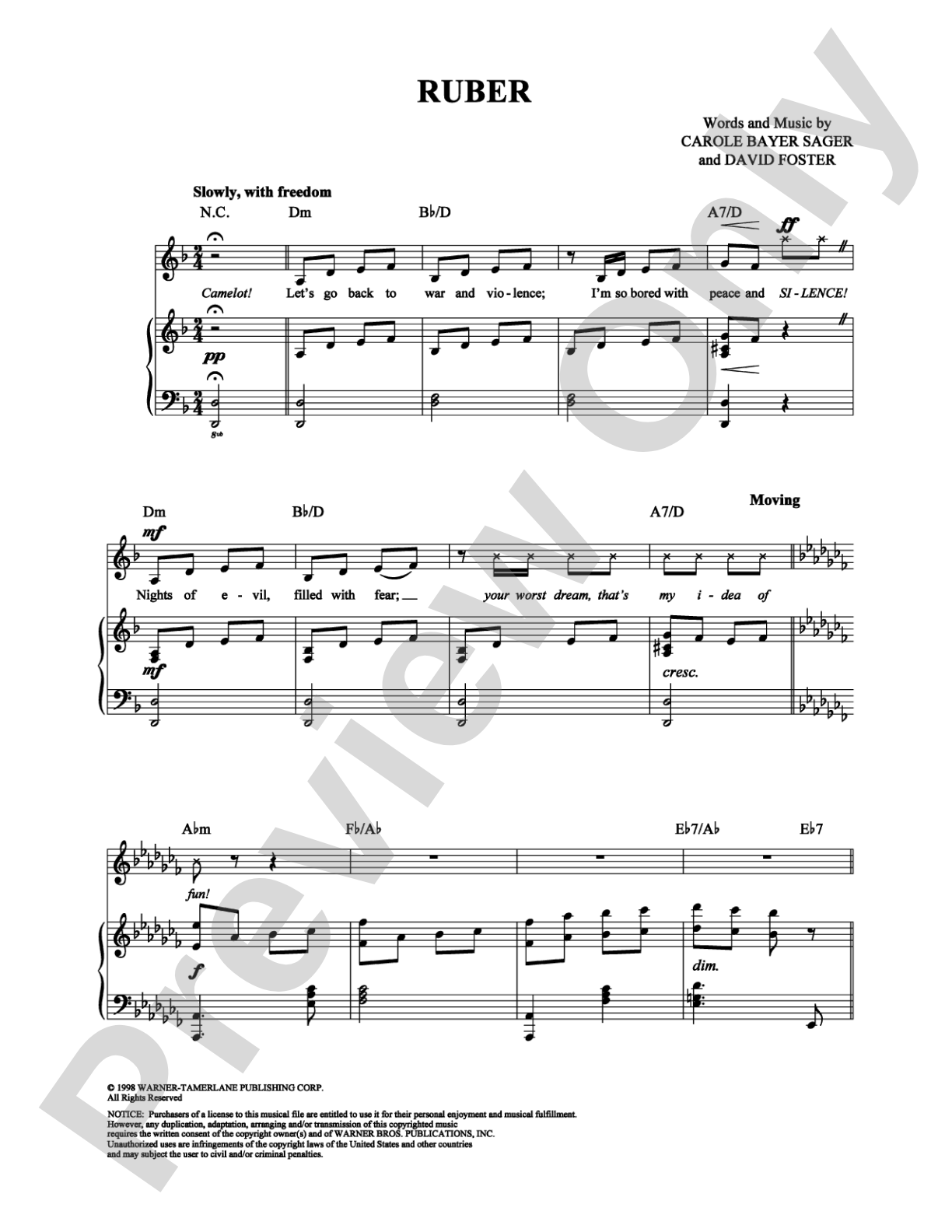
Ruber: Piano/Vocal/Chords Digital Sheet Music

Ruber: Piano/Vocal/Chords Digital Sheet Music

David Foster, Carole Bayer Sager, Gary Oldman

Item: 00-PS-0001407

Digital Download
$3.99
Description

Ruber: Piano/Vocal/Chords Digital Sheet Music isn't in MakeMusic Cloud just yet...but it could be. Let us know you'd like to see it, and you'll help shape what comes next. In the meantime, start a free trial and dive into thousands of interactive titles your students can play along with today.

Sample Audio
No sample audio found.
Sample Video
Additional Details
SKU: 00-PS-0001407

More about this title

About the Artist: Gary Oldman

Gary Oldman is a British actor renowned for his versatility across film, television, and stage. While primarily recognized for his acclaimed acting career spanning decades, Oldman has also ventured into music composition and performance, bringing the same intensity and creative vision he applies to dramatic roles into musical work.

Why we love this

This piece offers pianists and vocalists a chance to explore pop rock material with real dramatic weight. The combination of piano, vocal line, and chord symbols makes it accessible for singers working with accompaniment, while the harmonic structure rewards thoughtful interpretation from musicians who can balance rhythm section feel with lyrical sensitivity.

What to expect

The song carries dramatic intensity tempered with contemporary sensibility. Piano and voice intertwine with the kind of intimate tension that suggests an actor's understanding of pacing, dynamics, and emotional subtext.

Who it's for

Singers preparing material for voice lessons, recitals, or informal performances will find this arrangement practical. Pianists accompanists and collaborative musicians looking to expand their pop rock repertoire will appreciate the straightforward chord structure and clear vocal writing.

How to get the most out of it

  • Pay attention to the chord progression and feel the groove beneath the melody; pop rock succeeds when the harmonic foundation stays conversational rather than stiff.
  • If you're the vocalist, communicate with your pianist about where you want to breathe and where dynamics should swell; these moments shape the emotional arc more than tempo alone.
  • Use the chord symbols to explore rhythmic comping patterns that complement rather than compete with the vocal line.

How to use it

This works well as a contemporary solo or duet in a recital program, particularly when you're seeking material that bridges classical technique with popular song. It can anchor a themed concert exploring actor-musicians or serve as a compelling contrast to art songs and standard repertoire.

Skills your students will build

  • Interpreting chord symbols and understanding harmonic function in pop rock contexts
  • Balancing vocal line with rhythmic accompaniment patterns
  • Sight-reading piano/vocal arrangements with contemporary chord notation
  • Shaping phrasing and dynamics in contemporary music

You May Also Like