Royal Canadian Sketches: B-flat Tenor Saxophone Sheet Music Preview

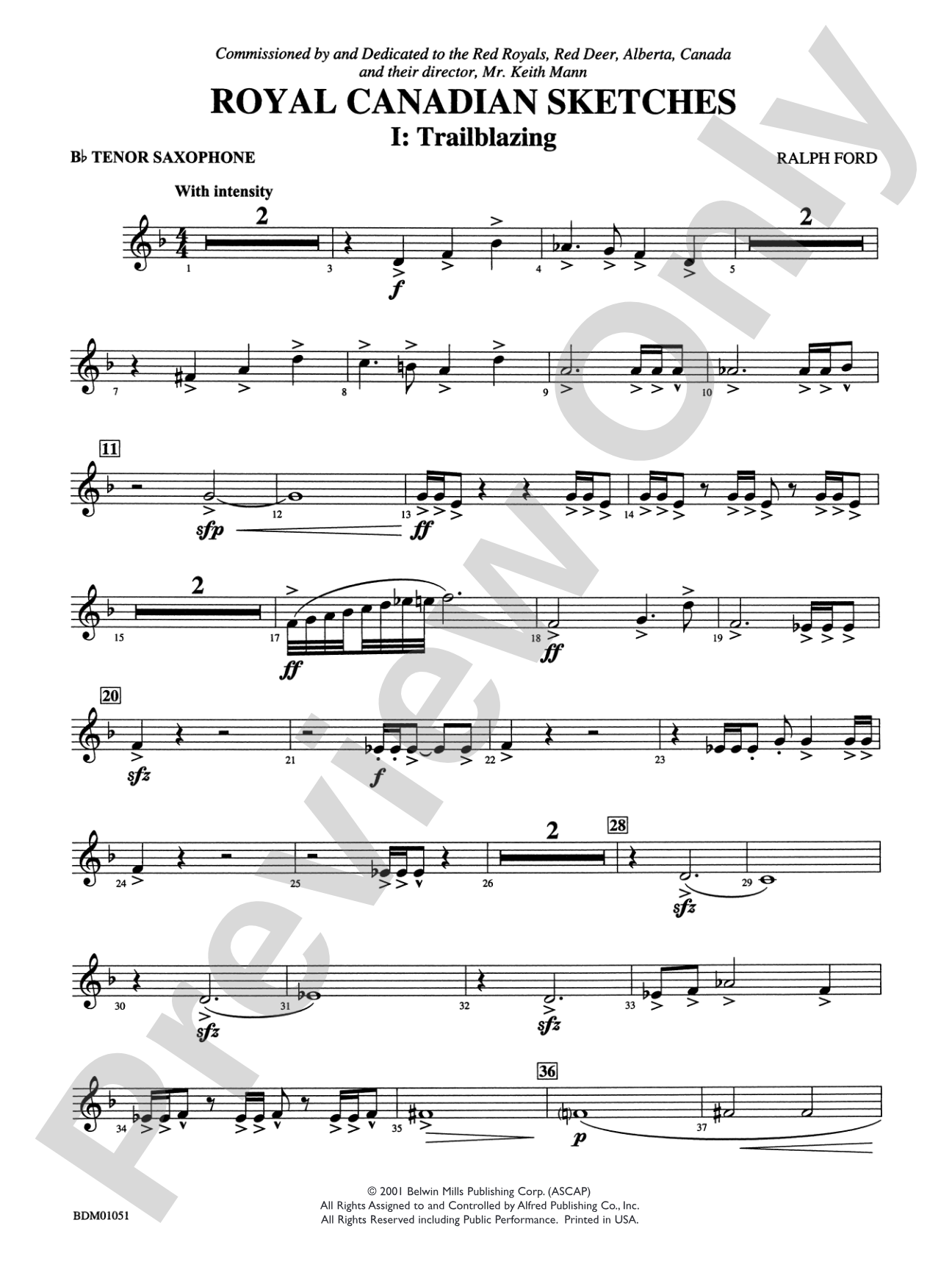
Royal Canadian Sketches: B-flat Tenor Saxophone

By Ralph Ford

Grade: 3 (Medium Easy)

Item: 00-PC-0002152_TX1

Digital Download
$3.00
Description
This bright composition in three movements, is reminiscent of the Alberta, Canada wilderness. Mr. Ford has musically depicted his impressions beginning with aggressive "Trailblazing." The delicate "Autumn Light" is depicted in the second movement. Finally, "Vista" is displayed with brilliant musical force. Wonderfully diverse, this work is an unquestionable champion! (8:57)

Royal Canadian Sketches: B-flat Tenor Saxophone isn't in MakeMusic Cloud just yet...but it could be. Let us know you'd like to see it, and you'll help shape what comes next. In the meantime, start a free trial and dive into thousands of interactive titles your students can play along with today.

Sample Audio
0:00
0:00
Sample Video
Additional Details
Series: Belwin Concert Band
Publisher: Alfred Music
Page Count: 278
SKU: 00-PC-0002152_TX1

More about this title

About the Composer: Ralph Ford

Ralph Ford

Ralph Ford (b. 1963) brings decades of practical experience across composition, arrangement, conducting, and education. After earning his Master of Science degree from Troy State University in 1988, where he also served as staff arranger and faculty member, he moved into exclusive composition and arrangement work with major music publishers, ultimately creating over 250 titles for concert band, orchestra, jazz ensemble, and marching band that are performed by school, university, military, and professional ensembles internationally.

Beyond the concert hall, Ford has worked extensively in media production, broadcast, and advertising, composing and recording music for television, radio, and commercial projects. His multifaceted career in both music education and professional composition gives his band writing particular clarity and practicality for school musicians.

Why we love this

Ford's three-movement structure gives your ensemble a complete concert experience without overextending young musicians. The progression from energetic to reflective to brilliant showcases different aspects of your band's musicianship, and at Grade 3, the writing is transparent enough to let each section shine individually while remaining engaging for audiences.

What to expect

You're moving through a landscape: first charging forward with purpose and urgency, then pausing to take in a moment of quiet golden light filtering through trees, then standing on an overlook taking in a vast, sweeping vista. The music captures these shifts in perspective without sentimentality.

Who it's for

Band directors programming a full concert or looking for a substantial single work that demonstrates ensemble development across three distinct musical moods. Grade 3 bands with solid fundamentals will navigate the writing comfortably and gain confidence performing a piece with genuine artistic arc.

How to get the most out of it

  • Balance the aggressive forward motion in 'Trailblazing' with clarity in each voice. The piece moves fast, so rhythmic precision from the ensemble will make the energy land rather than sound rushed.
  • Approach 'Autumn Light' as a genuine moment of repose. Slow the physical tempo slightly and ask players to listen inward; this movement depends on restraint and tone quality rather than volume.
  • Build 'Vista' gradually. Resist the urge to hit full force immediately; let the brilliant final movement grow from the delicate second movement so the contrast feels earned.

How to use it

Program this as a full concert centerpiece or as the anchor work in a thematic concert about nature and landscape. The three movements work equally well as a standalone suite or paired with shorter pieces that explore similar imagery, giving your program conceptual cohesion without requiring additional large works.

Skills your students will build

  • Sustained balance across multiple sections in an extended ensemble arrangement
  • Tonal control and phrase shaping in lyrical passages
  • Rhythmic precision and forward motion in allegro passages
  • Dynamic contrast between movements and within each movement
  • Listening skills for blend and intonation across changing instrumentation

You May Also Like