Route 66 (arr. Roger Emerson) Sheet Music Preview

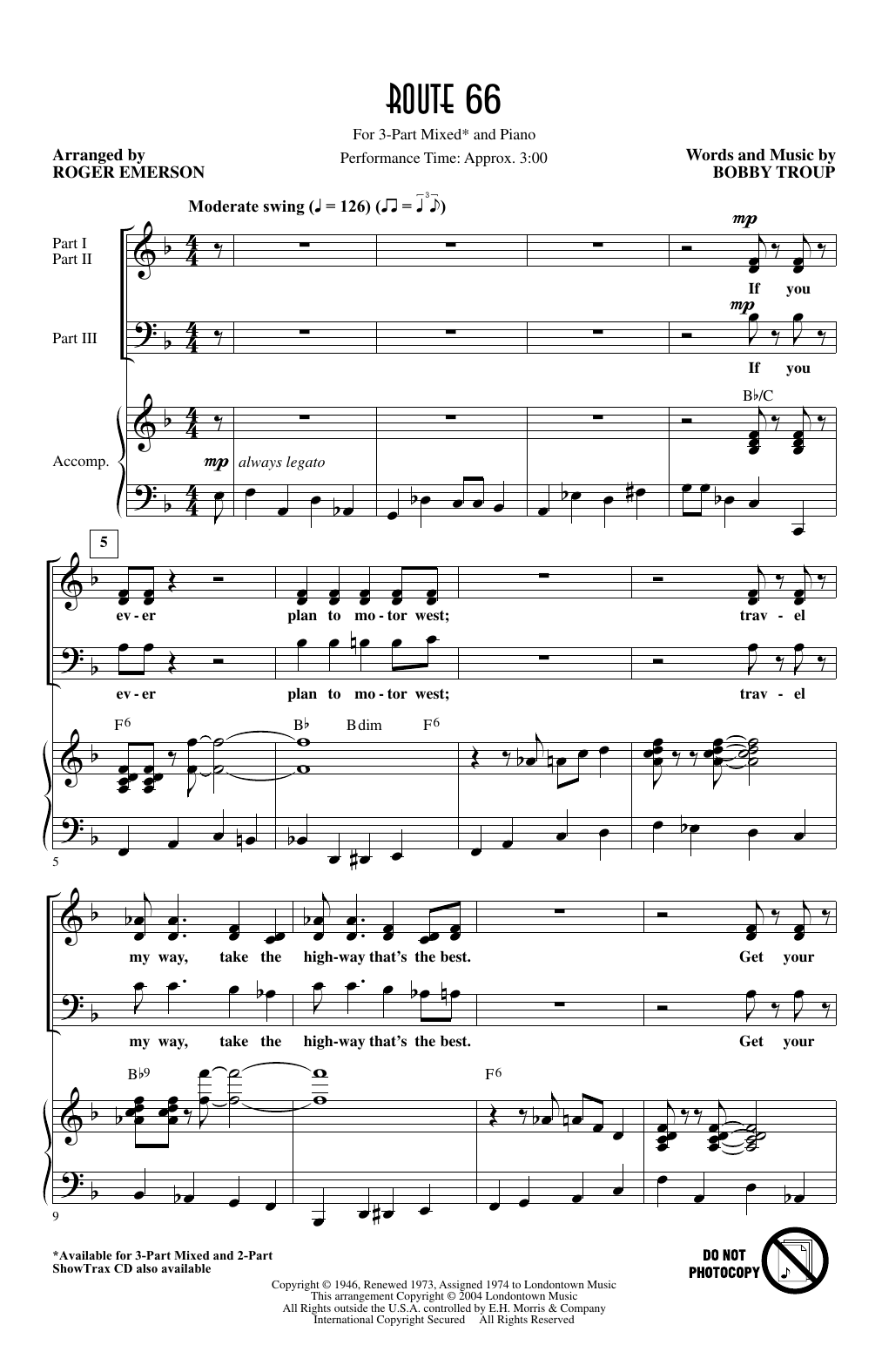
Route 66 (arr. Roger Emerson): 3-Part Mixed Choral Octavo

By Bobby Troup / Arranged by Roger Emerson

Item: 35-DS01880573

Digital Download
$2.50
Description

Route 66 (arr. Roger Emerson): 3-Part Mixed Choral Octavo isn't in MakeMusic Cloud just yet...but it could be. Let us know you'd like to see it, and you'll help shape what comes next. In the meantime, start a free trial and dive into thousands of interactive titles your students can play along with today.

Sample Audio
No sample audio found.
Sample Video
Additional Details
Publisher: Hal Leonard
Page Count: 7
SKU: 35-DS01880573

More about this title

About the Composer: Bobby Troup

Bobby Troup wrote 'Route 66' in 1946, and the song became an instant standard that captured the spirit of American optimism and wanderlust. Originally performed as a jazz number, the composition has since appeared in countless arrangements across multiple genres, proving its remarkable adaptability and enduring appeal. Troup's gift for memorable melody and singable phrasing made him a prolific contributor to the American songbook, and this tune remains one of his most recognizable and frequently performed works.

Why we love this

Roger Emerson's three-part mixed voicing strips away complexity without sacrificing the song's swagger and charm, making it genuinely fun for students to perform. The arrangement respects the jazz heritage while remaining accessible for choirs working at an intermediate level, and its upbeat energy naturally energizes any concert program.

What to expect

The tune bounces with infectious optimism and wanderlust, capturing that classic American road-trip energy. Singers experience the joy of performing a beloved standard while discovering how jazz sensibility can transform even simple three-part writing into something swinging and alive.

Who it's for

Choirs seeking a crowd-pleasing standard that doesn't demand advanced musicianship will find this arrangement ideal for building ensemble confidence and enjoyment. The piece works equally well for middle school, high school, and community choirs looking to program something spirited and recognizable.

How to get the most out of it

  • Shape the melody with gentle swing inflection rather than straight rhythm; the jazz roots of the tune deserve a relaxed, conversational phrasing that sits just behind the beat
  • Balance the three parts so the top line sings through without the supporting voices disappearing; blend matters, but the tune's character depends on hearing it clearly
  • Keep the harmonic backdrop light and rhythmic; let the accompaniment's driving momentum carry the piece forward rather than weighing it down with heavy sonorities

How to use it

Pair this with other American standards or jazz-inflected pop arrangements for a concert celebrating twentieth-century songwriting, or use it as a standalone showstopper that connects instantly with audiences. Its seven pages fit comfortably into spring concerts or end-of-year performances where morale and engagement matter as much as technical complexity.

Skills your students will build

  • Swing rhythm and jazz phrasing conventions
  • Balancing melody with harmonic parts in a three-voice texture
  • Maintaining rhythmic precision in a driving accompaniment-based arrangement
  • Stylistic interpretation of a jazz standard

You May Also Like