Route 66 (arr. Roger Emerson) Sheet Music Preview

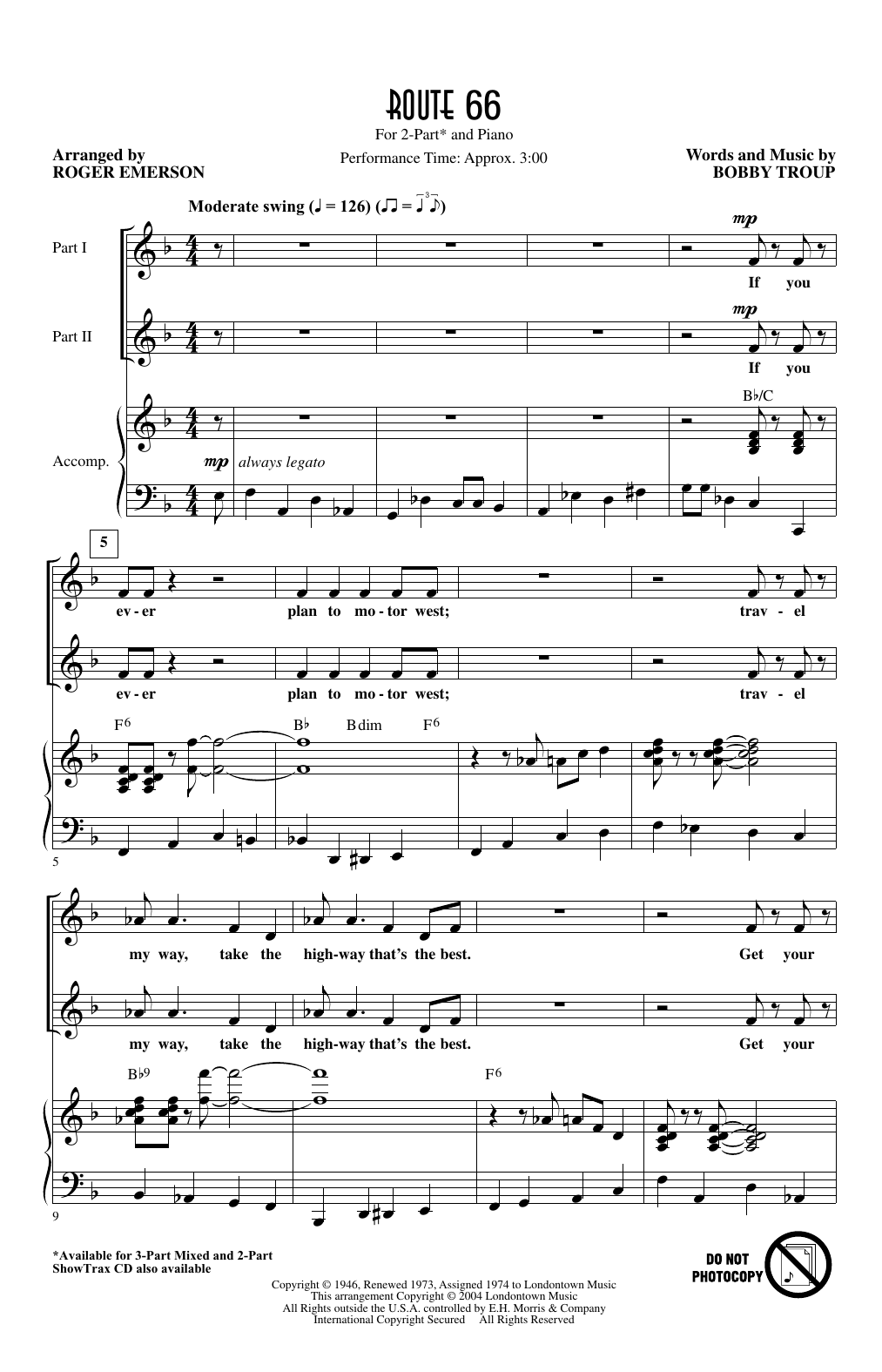
Route 66 (arr. Roger Emerson): 2-Part Choral Octavo

By Bobby Troup / Arranged by Roger Emerson

Item: 35-DS01880571

Digital Download
$2.50
Description

Route 66 (arr. Roger Emerson): 2-Part Choral Octavo isn't in MakeMusic Cloud just yet...but it could be. Let us know you'd like to see it, and you'll help shape what comes next. In the meantime, start a free trial and dive into thousands of interactive titles your students can play along with today.

Sample Audio
No sample audio found.
Sample Video
Additional Details
Publisher: Hal Leonard
Page Count: 7
SKU: 35-DS01880571

More about this title

About the Composer: Bobby Troup

Bobby Troup wrote "Route 66" in 1946, and the song became one of the most enduring standards in American popular music. Originally recorded by Nat King Cole, the tune captures the spirit of post-war optimism and the freedom of the open road with a melody that's both immediately catchy and deeply satisfying to sing.

Troup's gift was his ability to craft songs that work equally well in jazz clubs, on Broadway, and in concert halls. "Route 66" exemplifies this versatility. The song's simple harmonic structure and singable melody make it accessible to singers of all levels, while its jazz roots give it harmonic richness that rewarding to explore.

Why we love this

Roger Emerson's 2-part voicing opens this classic to a wider range of choirs without sacrificing the song's character. The arrangement respects the jazz idiom while keeping the writing clear and singable, making it an excellent choice for building jazz vocabulary in younger or less experienced ensembles.

What to expect

The arrangement captures the optimism and easy swagger of the original tune. There's a lightness to the writing that makes singing it feel like cruising down a highway on a perfect day. The jazz harmonies add sophistication without overwhelming the inherent simplicity of the melody.

Who it's for

This arrangement works for middle school choirs developing jazz repertoire, high school treble or mixed ensembles seeking accessible jazz standards, and community choirs wanting to add American songbook material to their library. Any choir ready to move beyond unison singing but not yet tackling four-part voicings will find this both manageable and musically rewarding.

How to get the most out of it

  • Swing the rhythms naturally. Even written rhythms in jazz arrangements benefit from the subtle push and pull of swing phrasing. Listen to classic vocal recordings to absorb the feel before drilling the notes.
  • Balance the melody between sections if you're doubling parts. The tune should always sit on top, but when both voices carry thematic material, keep dynamic relationships clear so the listener follows the musical line.
  • Shape the phrase endings with a gentle lift rather than a hard cutoff. Jazz standards thrive on conversational phrasing, and the way you release each phrase contributes significantly to the style.
  • Explore the harmonic movement with attention to voice leading. Even in a simple 2-part texture, smooth transitions between chords will reveal the sophistication in Troup's original composition.

How to use it

Pair this with other American standards or jazz classics to build a cohesive set celebrating American songwriting. It's equally at home in a spring pops concert, a jazz showcase, or a program exploring the Great American Songbook with younger singers. The seven-page length makes it substantial enough to anchor a small set but not so demanding that it overshadows other repertoire.

Skills your students will build

  • Swing articulation and phrasing in a jazz context
  • Two-part voicing independence and blend
  • Harmonic literacy through jazz changes
  • Stylistic interpretation beyond classical diction and phrasing
  • Ensemble listening for balance between melody and harmony

You May Also Like